Planning Guides, Style Guide
Marriage Wedding Card: Design & Ordering Guide
Jun
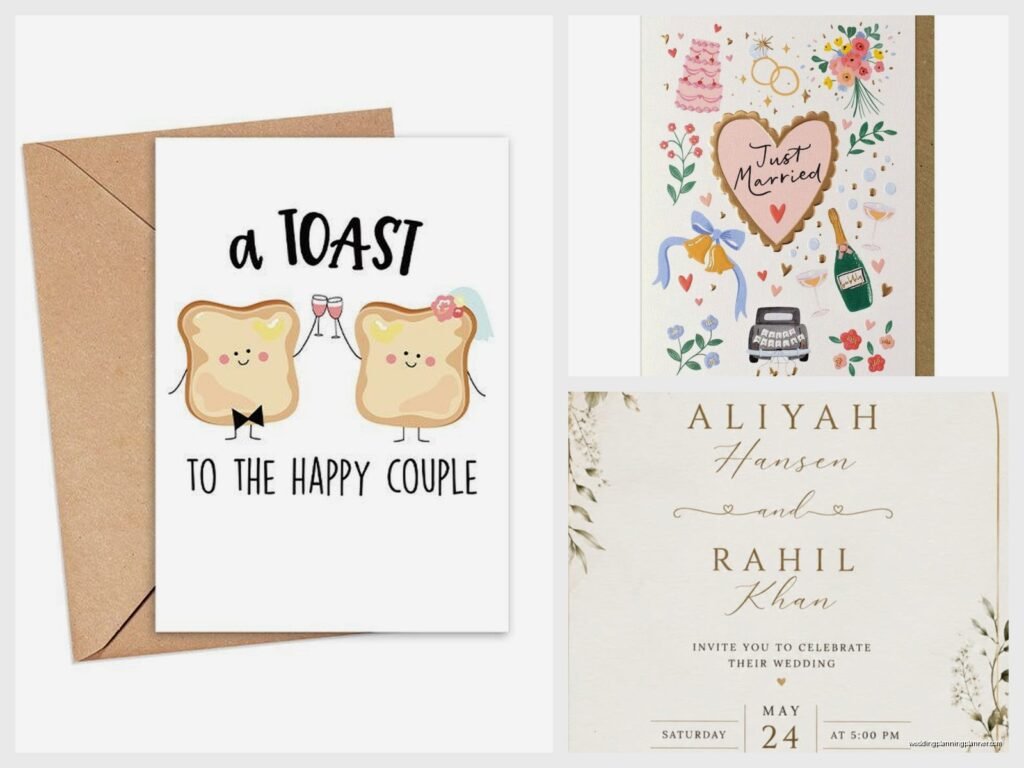
Okay so wedding invitations are basically the first real impression your guests get
And I cannot stress this enough – they’re gonna set the tone for your entire wedding. Like, if you send out a super formal engraved invitation with tissue paper and inner envelopes, people are expecting black tie. If you send a fun illustrated postcard, they know it’s more casual. This seems obvious but you’d be shocked how many couples I work with who don’t connect these dots.
So first thing, and I learned this the hard way back in summer 2021 when I had THREE brides ordering invites in the same week – you need way more time than you think. The timeline is honestly kinda annoying because printers will tell you “oh we can do it in two weeks!” but that doesn’t account for proofing, shipping delays, addressing them, and the fact that you’ll probably hate your first proof and want changes.
Timeline for ordering (work backwards from your wedding date)
Invitations should go out 6-8 weeks before the wedding. That’s non-negotiable. For destination weddings, make it 10-12 weeks. So you need to have them IN HAND at least 2 weeks before that mailing date to address everything.
Which means you’re ordering 10-12 weeks before the wedding at minimum. But actually you need to start the design process like 4-5 months out because there’s gonna be back and forth with designers or online companies.
Save-the-dates are different – those go out 6-8 months before, sometimes even earlier for destination weddings. I usually tell couples to get those designed and ordered around the 8-9 month mark.
Design stuff that actually matters
Look, I’ve seen thousands of wedding invitations at this point. The ones that work best are the ones that feel like you as a couple, not just whatever’s trendy on Pinterest. That said, here’s what you actually need to think about:
Paper weight and type
This is where couples get totally lost. Cardstock weight is measured in pounds (lb) or grams per square meter (gsm). For invitations, you want at least 80lb cover weight (216 gsm) or it feels cheap and flimsy. I usually recommend 100-110lb cover (270-300 gsm) because it feels substantial but isn’t so thick it costs a fortune to mail.
Paper types: there’s matte, glossy, linen, cotton, recycled… honestly matte or linen finishes photograph best and feel the most elegant. Cotton paper is gorgeous but expensive – we’re talking $8-15 per invitation suite instead of $3-6. My cat knocked over my coffee on a cotton paper sample once and it barely absorbed anything though, so there’s that.
Printing methods
This is where people get weird and obsessed and honestly I get it:
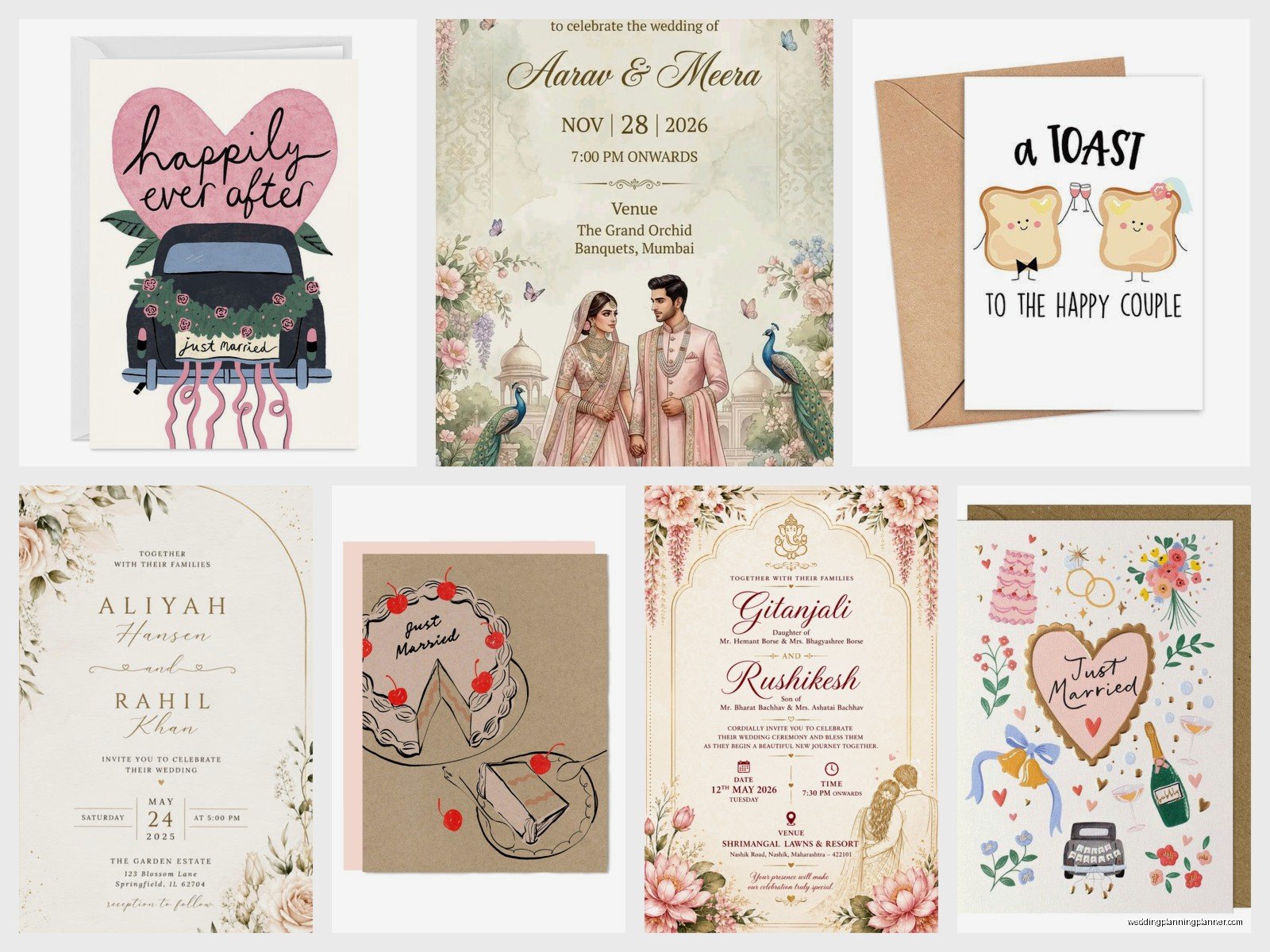
Digital printing: Most affordable, great for designs with lots of colors or photos. Looks clean and modern. This is what most online companies use. Quality has gotten really good in the past few years.
Thermography: That raised, shiny lettering your mom probably had on her wedding invitations. It’s a middle-ground price option and looks formal. Some people love it, some people think it looks dated. I’m neutral on it but it does smudge if you touch it too soon after printing.
Letterpress: This is the fancy one where the text is actually pressed INTO the paper so you can feel the impression. Gorgeous, tactile, expensive. We’re talking $1500-3000+ for 100 invitations depending on complexity. Worth it if you have the budget and want that wow factor.
Foil stamping: Metallic foil pressed onto paper. Looks incredible, especially gold or rose gold foil on dark paper. Price is similar to letterpress. Can’t do super detailed designs though or it doesn’t transfer well.
Engraving: The most traditional and most expensive. Text is etched into a copper plate and then pressed into paper. You can feel the indentation on the back. Very formal, very classic, very pricey.
What actually needs to be on your invitation
Okay so there’s the main invitation card, and then there’s usually additional insert cards. Here’s what goes where:
Main invitation card includes:
- Host line (traditionally whoever’s paying, but honestly most couples now do “Together with their families” or just the couple’s names)
- Request line (“request the honor of your presence” for religious ceremonies, “request the pleasure of your company” for non-religious)
- Couple’s names
- Date and time (spell everything out for formal invites, can use numerals for casual)
- Venue name and city/state
- Reception information IF it’s at the same location (“reception to follow”)
Insert cards you might need:
Reception card: If ceremony and reception are at different locations. Include the venue name, address, and time.
RSVP card: I have THOUGHTS on these. You need a clear deadline (usually 3-4 weeks before the wedding). Include a line for number of guests attending, meal choices if you’re doing plated dinner, and maybe a song request line if you want. Also – and this drives me nuts – pre-address and pre-stamp the return envelopes. If you make your guests find a stamp, some of them just won’t send it back.
Details card: This is for everything else – hotel room blocks, wedding website URL, dress code, transportation info, etc. Don’t cram this stuff onto your main invitation.
Weekend events card: If you’re doing a welcome party, day-after brunch, etc.
How many to actually order
Count your guest list, then divide by household not by person. So a family of four gets ONE invitation. A couple living together gets ONE invitation.
Then add 15-20 extra. You WILL forget people, addresses will be wrong and you’ll need to re-send, you’ll want keepsakes. I had a bride in spring 2023 who ordered exactly her guest count and then her fiancé remembered his entire college friend group… that was a fun phone call to the printer asking for a rush order of 20 more.
Online companies vs. local printers vs. custom designers
So you’ve got options and they’re all totally different price points and experiences:
Online companies (Minted, Zola, Paperless Post, Etsy templates)
Price range: $1.50-$5 per invitation for basic designs
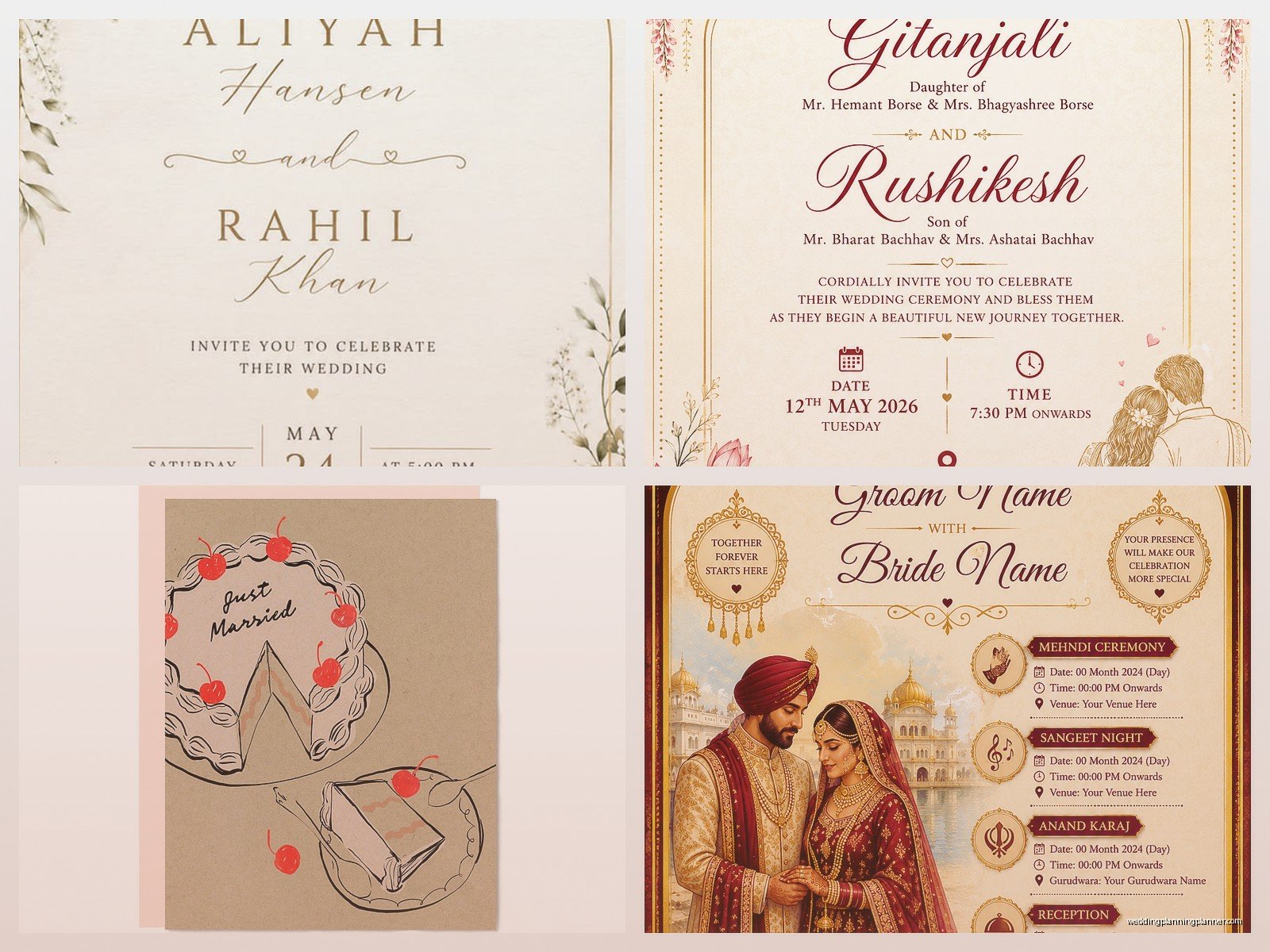
Pros: Cheap, fast, tons of designs to choose from, usually have matching day-of stationery. Many offer free recipient addressing which is HUGE for saving time. Some let you order samples before committing.
Cons: Your invitation might look like someone else’s because they’re templates. Customer service can be hit or miss. Quality varies wildly between companies.
I usually recommend Minted for couples on a budget who still want nice quality. Their foil-pressed options are surprisingly affordable.
Local print shops
Price range: $3-$8 per invitation typically
Pros: You can see paper samples in person, work directly with someone local, support small business, usually faster turnaround for rush orders.
Cons: Design selection might be limited. Some local printers haven’t updated their designs since like 2005 and it shows.
Custom stationery designers
Price range: $800-$3000+ for full invitation suites
Pros: Completely custom design that no one else will have, designer handles everything including sometimes coordination with calligraphers, higher-end printing methods, gorgeous results.
Cons: Expensive, longer timeline, requires more decision-making from you.
Worth it if stationery is a priority for you and you’ve got the budget. Not worth going into debt over when there are beautiful template options available.
Addressing envelopes (this is tedious but important)
You’ve got several options and they’re all gonna take time or money or both:
Hand-address them yourself: Free but time-consuming. Get good pens (I like Pentel Sign Pens or Pigma Microns). Practice first. Your hand will cramp. Pour some wine and make it an activity with your partner or bridesmaids.
Print addresses at home: You can feed envelopes through most printers. Use a nice font. Test it first because envelope feeding is… finicky.
Order printed addressing from your invitation company: Usually $0.50-$1.50 per envelope. Worth it for the time savings honestly.
Hire a calligrapher: Beautiful but expensive – usually $3-$8 per envelope depending on style and your location. Book them early because good calligraphers are booked out months in advance for wedding season.
Whatever you do, use full names and proper titles. “The Johnsons” is fine for Christmas cards but wedding invitations should be “Mr. and Mrs. Michael Johnson” or “Michael and Sarah Johnson” depending on formality level.
Postage is gonna annoy you
Because it’s never just one stamp. If your invitation weighs over 1 oz (and most multi-piece suites do), you need extra postage. Square envelopes cost more to mail than rectangular ones because they can’t go through automated sorting. Envelopes over 1/4 inch thick need extra postage.
Take a fully assembled invitation to the post office and have them weigh it BEFORE you buy stamps. Then buy pretty stamps because why not – florals, love stamps, vintage stamps. Makes the envelope prettier.
Also this is gonna sound paranoid but hand-cancel your invitations at the post office if possible. It means they process them by hand instead of through machines that can smudge or tear them. Not all post offices will do this anymore but it’s worth asking.
Things that randomly drive up costs
- Belly bands, ribbons, or wax seals (pretty but add $1-3 per invite)
- Inner envelopes (traditional but honestly unnecessary unless you’re being super formal)
- Vellum overlays (that translucent paper layer – looks nice but adds cost and weight)
- Custom envelope liners (gorgeous though, I’ll admit)
- Rush fees (avoid these by ordering early I’m begging you)
Matching stationery suite stuff
If you want everything to match – and it does look cohesive when you do – think about ordering these at the same time:
Save-the-dates, invitations (obviously), programs, menus, place cards, table numbers, welcome sign, seating chart, thank you cards. Most companies offer bundles or will give you the design files so you can print some items yourself to save money.
I usually tell couples to splurge on invitations and save-the-dates since guests keep those, then DIY or go cheaper on day-of items that get left behind or thrown out.
Proofing is where mistakes happen so pay attention
When you get your proof (digital or physical), check EVERYTHING:
- Every single name spelled correctly
- Date and time (AM/PM especially – I’ve seen this wrong more than once)
- Venue address and spelling
- Website URL actually works
- RSVP deadline makes sense
- Font sizes are readable (especially for older guests)
- Colors look right (they can look different on screen vs. printed)
Have someone else read it too because you’ll miss your own mistakes. I had a groom who missed that his own last name was spelled wrong until his mom caught it. These things happen when you’re staring at the same text for weeks.
Random tips from years of doing this
Order samples from multiple companies before deciding. Seeing paper quality in person makes a huge difference.
Start a spreadsheet for addresses early and confirm them with guests – people move and don’t update you.
If you’re doing online RSVPs through your website instead of paper cards, you’ll save money but older guests might need help figuring it out… or might just not respond at all which is annoying but happens.
Consider accessibility – use readable fonts (nothing too scripty), good contrast between text and background, clear hierarchy of information.
Don’t overthink it. I’ve seen couples spend months agonizing over invitation designs and honestly? Guests look at them for like 30 seconds, check the date and location, and stick them on their fridge. Make them pretty, make them clear, make them feel like you, but don’t lose sleep over whether the envelope liner should be blush or dusty rose.
Also one more thing that kinda bugs me – the phrase “no kids” or “adults only” doesn’t go ON the invitation. You indicate that through how you address the envelope (just the parents’ names, not “and family”) and maybe include a gentle note on your website. Putting it on the actual invitation looks tacky no matter how cute the wording is.