
Planning Guides, Style Guide
Outdoor Wedding Planner: Professional Services Guide
Oct
What an Outdoor Wedding Planner Actually Does
So you’re thinking about hiring an outdoor wedding planner or maybe you wanna become one, and honestly, it’s such a different beast from indoor venue planning. Like, I had this couple in spring 2023 who thought they could just “wing it” with their backyard ceremony and I showed up for the consultation to find they hadn’t even considered where guests would park or what happens if it rains, and that’s when I realized people really don’t understand what goes into outdoor weddings.
The basic thing is that an outdoor wedding planner handles everything a regular planner does PLUS all the infrastructure stuff that a venue normally provides. You’re literally building a wedding from the ground up, sometimes on a plot of grass or a beach or someone’s farm.
The Infrastructure Planning Nobody Thinks About
First off, you gotta figure out power sources. I can’t tell you how many times couples are like “oh we’ll just play music from a speaker” and then realize their ceremony site is 300 feet from the nearest outlet. You need to coordinate generator rentals, figure out where to place them so they’re not loud during vows, run proper cabling that won’t trip guests in their heels.
Lighting is huge too. Even if your ceremony is at 4pm, your reception will go into the evening and you need ambient lighting, path lighting, restroom lighting, food station lighting. String lights are pretty but they don’t actually illuminate much. I usually work with lighting companies to create a lighting plot—sounds fancy but it’s just a map of where everything goes.
Restroom solutions honestly annoy me because they’re SO expensive and couples always sticker-shock when I tell them luxury portable restrooms cost like $200-400 EACH for a weekend. But you can’t just have regular port-a-potties at a wedding, that’s insane. You need the nice ones with running water, mirrors, actual lighting, maybe even AC if it’s summer.

Weather Contingency Plans (This Is Non-Negotiable)
Okay so this is where outdoor wedding planning gets real. You MUST have a backup plan, and not like a vague “oh we’ll figure it out” plan. I mean a fully executed Plan B that’s ready to deploy.
Tent rentals are the most common solution. But here’s what people don’t realize—you can’t just throw up a tent the morning of. Most tent companies need at least 2-3 days for installation, especially for larger structures. You’re looking at different types too: pole tents (cheaper, need staking into ground), frame tents (more expensive, can go on concrete/decks), clear-top tents (gorgeous but show every single water spot and bird dropping, learned that the hard way).
I always build the tent cost into the budget from day one, even if the couple is like “but the weather will be perfect!” Nah. I’ve seen spontaneous thunderstorms in supposedly dry seasons. The tent is insurance.
Some planners do indoor backup venues but that means basically planning two entire weddings, different layouts, different vendor locations, and it’s kinda exhausting. Plus you’re paying for two spaces which… most couples can’t swing.
Vendor Coordination Gets Complicated
With outdoor weddings, your vendor team expands like crazy. Indoor venues usually have tables, chairs, sometimes even linens. Outside? You’re renting literally everything.
Your vendor list typically includes:
- Rental company for tables, chairs, linens, china, glassware, flatware
- Tent company (separate from rentals usually)
- Lighting company
- Generator rental or power solutions
- Restroom trailer company
- Potentially HVAC (heating or cooling for tents)
- Fencing or barriers if needed
- Dance floor installation
- Parking attendants or valet service
And that’s before you even get to the normal vendors like caterers, florists, photographers. The coordination timeline is bananas because everything has dependencies. The tent goes up first, then power, then lighting gets hung inside the tent, then tables and chairs, then linens and place settings, then florals.
I create what I call a “load-in schedule” that’s basically a minute-by-minute timeline for the two days before the wedding. Sounds controlling but when you have 8 different companies trying to access the same space, someone’s gotta direct traffic.
Site Visits Are Everything
I do like minimum three site visits for outdoor weddings. First one is with the couple to see the space and dream about it. Second one is with key vendors—tent company, caterer, rental company—to walk through logistics. Third one is usually closer to the date to check for any changes (has the grass been maintained, are there new obstacles, did a tree branch fall that needs removing).
During that vendor walkthrough, we’re looking at: where does the truck access, where can we stage rental items before setup, where’s the water source for catering, is the ground level enough for tables or do we need leveling equipment, how’s the cell service for when everyone’s trying to coordinate on wedding day.
One time—this was summer 2021—I did a backyard wedding where we didn’t check the ground firmness and it had rained the week before, and when the tent company tried to drive their truck onto the lawn they left these MASSIVE ruts and the father of the bride nearly had a heart attack. Now I always check weather history and ground conditions.
Permits and Regulations (The Boring But Necessary Stuff)
Depending on where the outdoor wedding is happening, you might need permits. Public parks almost always require them. Some neighborhoods have noise ordinances or restrictions on tent sizes. Beaches often have specific rules about setups and alcohol.
I handle all the permit applications for my clients because it’s tedious and involves a lot of phone calls to municipal offices. You gotta submit applications weeks or months in advance, sometimes there are fees, sometimes you need proof of insurance.
Insurance is actually really important for outdoor weddings. Most venues have their own liability coverage, but someone’s backyard or a rented field doesn’t. I always recommend couples get event insurance, and many vendors require it before they’ll even contract with you. It covers things like property damage, injuries, cancellation due to weather or illness.
The Design Process Is Different
Indoor venues have existing aesthetics you work with or around. Outdoors is a blank canvas which sounds amazing but is actually kinda overwhelming. You’re making decisions about literally everything.
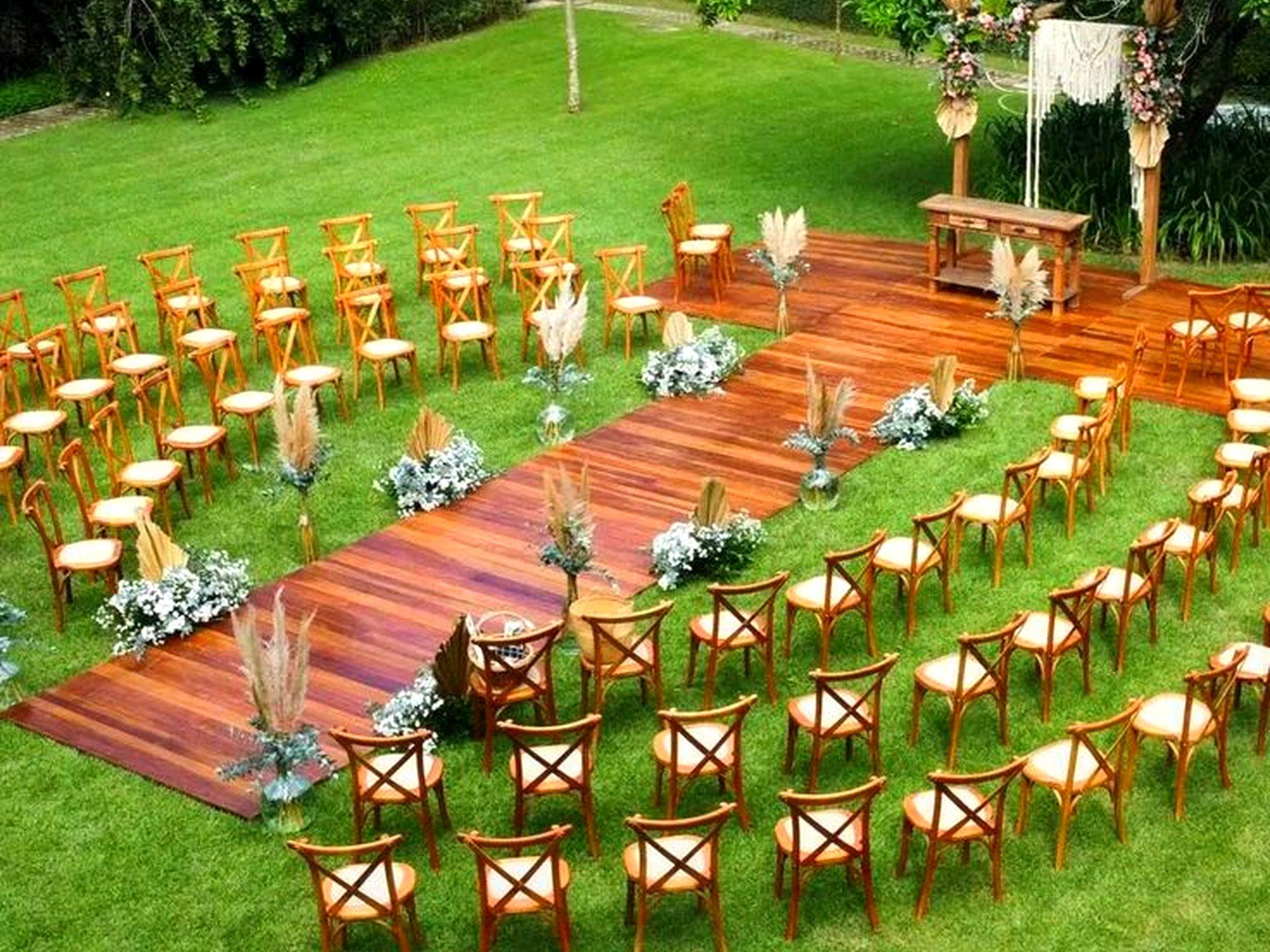
I usually start with the ceremony backdrop because that anchors the whole design. Are we doing a floral arch, a wooden arbor, a fabric installation, or keeping it natural with the landscape as the backdrop? Then we figure out aisle treatment—petals, runner, nothing? Seating arrangement—rows, semi-circle, in-the-round?
For reception, the tent choice affects everything. A clear-top tent at night with chandeliers has a totally different vibe than a sailcloth tent with string lights. I create mood boards but also do what I call “reality boards” where I show photos of similar setups in different weather conditions because that Pinterest inspo shot was probably taken on a perfect 72-degree day.
Color palettes for outdoor weddings need to work with the natural environment. You can’t fight against a vibrant garden in full bloom or autumn leaves—you gotta incorporate those existing colors or go neutral.
Catering Logistics Get Intense
Caterers need so much more for outdoor events. They usually require a prep tent separate from the dining tent, access to power and water, adequate space for their trucks and equipment, and often they’ll upcharge for outdoor events because of the complexity.
I work with caterers to create a kitchen layout within the prep tent. They need space for food warmers, cold storage, plating stations, handwashing sinks, and trash/recycling. Some bring full mobile kitchens, others need more infrastructure provided.
Food and beverage choices matter more outdoors too. Super hot day? Heavy creamy dishes aren’t gonna work. Windy location? Lightweight napkins and papers will blow everywhere. I guide couples toward practical menus that’ll hold up in the elements.
Bar setup is another thing—you need to decide on open bar, beer and wine only, signature cocktails, and then figure out if you’re doing a bartender under the main tent or a separate bar area. I usually prefer separate because it creates flow and keeps the bar line from clogging up the dining space.
Timeline Management
Outdoor wedding timelines need buffer time built in everywhere. Setup takes longer because of variables like weather and ground conditions. Transitions between ceremony and reception can take more time if guests have to walk across a field or… oh my god, my cat just knocked over my coffee, hang on.
Okay back. So yeah, timelines need padding. I typically add 15-20% more time than I would for an indoor wedding. If I think cocktail hour needs an hour, I schedule 75 minutes. If I think dinner service takes 90 minutes, I plan for two hours.
Sunset timing is crucial for outdoor weddings. I use those sun tracking apps to know exactly when golden hour happens and when it’ll get dark, because that affects photography timeline, when we need to turn on artificial lighting, and overall guest comfort.
Guest Comfort Considerations
This is where a good outdoor wedding planner really earns their fee. You’re thinking about stuff the couple would never consider.
Shade for daytime events—tents, umbrellas, maybe a lounge area under trees. Heating for cool evenings—patio heaters, fire pits, blankets in baskets. Cooling for hot days—fans, misting stations, cold towel service, moving ceremony to shadier time.
Bug control is real and it’s gross but necessary. Depending on location and season, you might need citronella candles, bug spray stations, or even professional pest control treatment of the area a few days before.
Seating comfort matters more outdoors. Folding chairs for a 3-hour reception aren’t gonna cut it. I usually recommend chiavari chairs or padded folding chairs at minimum. For elderly guests or those with mobility issues, I designate premium seating closer to restrooms and with easier access paths.
Ground surface matters SO much. If guests are walking on grass in heels, I recommend creating pathways with runners or even temporary flooring. Dance floors are essential unless you want people twisting ankles on uneven ground.
Sound and Acoustics
Sound carries differently outdoors—sometimes it dissipates too quickly, sometimes it carries too far and you’ve got neighbor complaints. I always bring in sound professionals for outdoor weddings, not just a DJ with their regular speakers.
Ceremony sound needs speakers placed strategically so everyone hears vows without blasting the couple. Reception sound needs to account for tent acoustics (or lack thereof) and outdoor ambient noise. I’ve had weddings near highways, train tracks, even an airport flight path, and you gotta plan around that.
If there’s live music, the setup is more complicated. Musicians need protection from elements, proper power, and positioning that works for sound without blocking sightlines.
Day-Of Coordination Is More Hands-On
Indoor weddings, the coordinator is managing people and timeline. Outdoor weddings, you’re also managing the physical space constantly. I’m checking that tent weights are secure if wind picks up, making sure the generator doesn’t run out of fuel, coordinating vendor load-in so trucks aren’t blocking each other.
I bring what I call my “outdoor emergency kit” which is different from my regular emergency kit. It includes things like: tent stakes and mallets, extra extension cords, duct tape and zip ties, bug spray, sunscreen, hand warmers or fans depending on season, umbrellas, towels for wet surfaces, and this might sound weird but I keep a spare tarp because you never know.
Communication on outdoor wedding days is harder because everyone’s spread out across property. I use walkie-talkies with my assistant coordinators and key vendors because cell service might be spotty and you can’t be running back and forth across a field all day.
Breakdown and Cleanup
This is something couples never think about but it’s in my contract—post-event breakdown. Outdoor weddings create more cleanup because everything that was brought in needs to be removed. Rental companies pick up their stuff the next day usually, but there’s trash removal, making sure the site is returned to its original condition, checking for any damage.
If it’s on private property, I coordinate a final walkthrough with the property owner to make sure everything’s good. If it’s a rented space, there’s usually a checkout process with inspection.
I always schedule breakdown time into the event timeline. Like, music ends at 10pm but we’re not outta there until midnight because bartenders need to break down the bar, caterers need to pack up equipment, and the couple’s personal items need to be collected and organized.
Pricing Structure for Outdoor Wedding Planning
Outdoor wedding planning costs more than traditional venue planning because there’s more work involved. I typically charge 20-30% higher for outdoor events, and that’s pretty standard in the industry.
Some planners charge flat fees, others do percentage of total budget. I do flat fees because outdoor wedding budgets can vary wildly depending on how much infrastructure is needed, and I don’t think I should make more money just because a couple chose an expensive tent.
My packages usually include: unlimited communication leading up to the event, all site visits and vendor meetings, creation of detailed floor plans and timelines, full day-of coordination with assistant, and post-event breakdown supervision. For full-service planning, I’m also doing vendor sourcing, contract negotiation, design development, and budget management.
I’m transparent about what’s NOT included—like I don’t set up centerpieces or personally move furniture, that’s what the rental company and setup crew are for. But I’m directing all of it and making sure it matches the plan we created.
Some planners nickel and dime with add-on fees for every little thing and that honestly annoys me because it makes the whole industry look bad, just build your actual costs into your package pricing and be upfront about it.
The investment for professional outdoor wedding planning typically ranges from $3,000 for day-of coordination up to $15,000+ for full-service planning of a large complex event, at least that’s what I see in my market, obviously it varies by region and planner experience
