
Planning Guides, Style Guide
Wedding Ceremony Planner: Professional Services Guide

Oct
What a Wedding Ceremony Planner Actually Does (and Why You Might Need One)
Okay so wedding ceremony planners are kinda different from full wedding planners and I feel like nobody really gets this distinction until they’re knee-deep in planning and realize they’ve got no idea who’s supposed to tell the officiant where to stand. A ceremony planner focuses specifically on the ceremony part—like the actual getting-married bit, not the reception where everyone gets drunk and does the Cupid Shuffle.
The thing is, you can hire a ceremony planner as a standalone service or it might be part of a bigger wedding planning package. I’ve done both, and honestly the standalone ceremony planning became way more popular after 2020 when couples started doing micro-weddings and backyard ceremonies. They’d handle the reception themselves but needed someone who knew how to make a 20-minute ceremony not feel awkward or rushed.
The Services You’re Actually Paying For
When you hire a professional ceremony planner, here’s what you should expect—and I’m gonna be real with you, not every planner offers all of this, so you gotta ask upfront:
Timeline Creation and Ceremony Flow
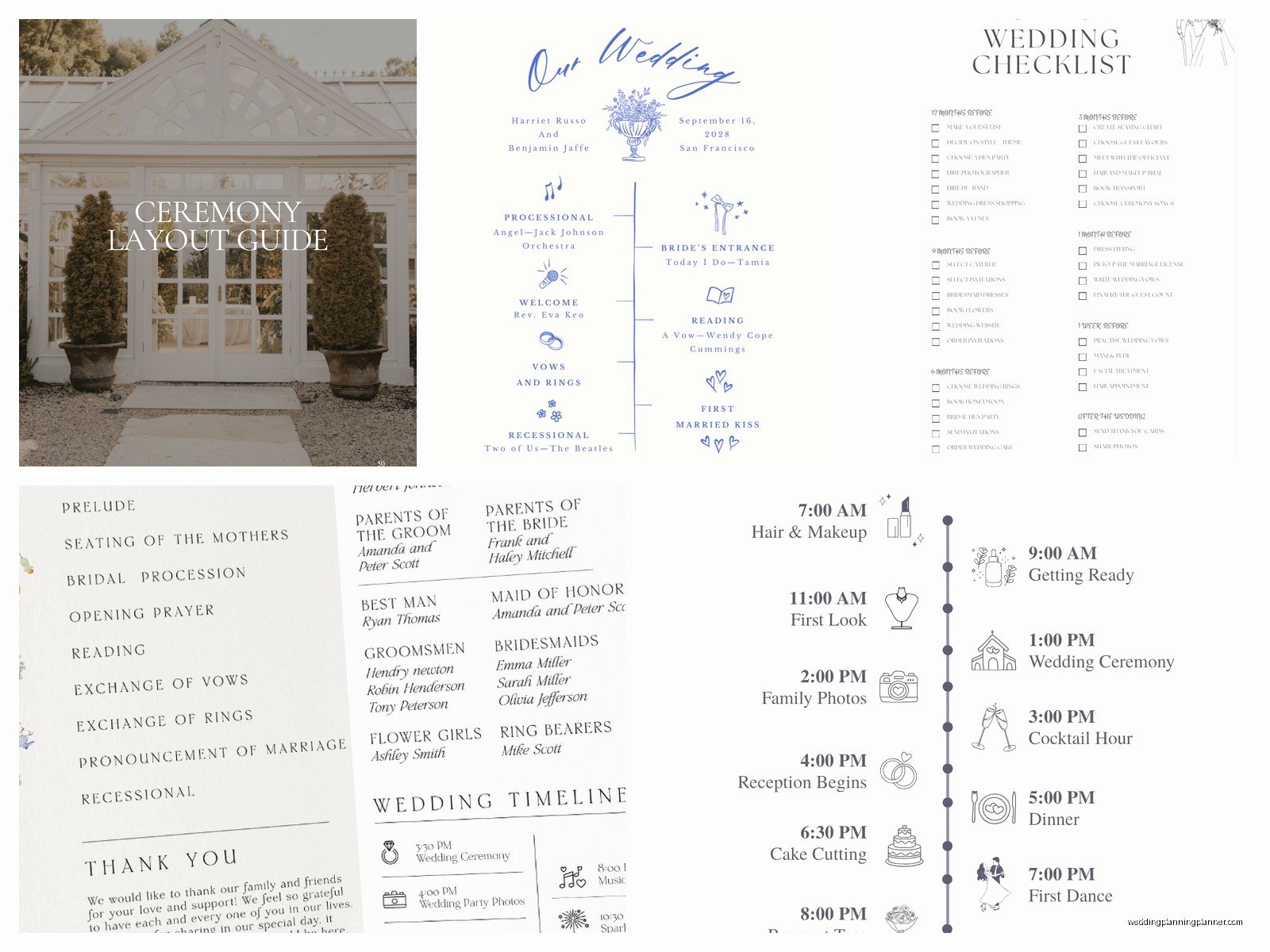
This is probably the biggest thing I do. You need someone to map out every single moment from when guests start arriving until you walk back down the aisle as a married couple. And it’s not just “ceremony starts at 4pm” because like… when do the grandparents get seated? When does the wedding party line up? How long should the processional music play before it gets weird?
I usually create a minute-by-minute timeline. Spring 2023 I had this couple who wanted a 45-minute ceremony with like seven readings and a sand ceremony and a handfasting and I was like okay but your guests are gonna be standing in the sun and someone’s definitely gonna pass out. We compromised at 25 minutes and it was perfect. You have to think about your guests’ comfort, not just what sounds romantic on Pinterest.
Vendor Coordination (Just for Ceremony Stuff)
Your ceremony planner should be talking to your officiant, your ceremony musicians, your florist (for ceremony flowers), and anyone else involved in that specific part of the day. I send out a ceremony-specific timeline to all these people usually about two weeks before the wedding.
What really annoys me is when couples hire a ceremony planner but then don’t actually let them DO the coordination part. Like they’ll keep messaging the officiant directly with changes and then nobody tells me and suddenly day-of I find out the couple rewrote their vows the night before and they’re now 10 minutes long instead of 2 minutes and the whole timeline is screwed.
Processional and Recessional Choreography
This sounds fancy but it literally just means figuring out who walks when and with whom. Do the groomsmen walk in pairs? Does each bridesmaid get escorted by a groomsman? Who walks with the flower girl if she’s nervous?
You’d be surprised how many people don’t think about this until the day of. I’ve seen wedding parties just kinda shuffle around awkwardly trying to figure out the order while 150 guests watch. The ceremony planner should do a walkthrough or at least send very clear written instructions.
Rehearsal Management
Most ceremony planners run the rehearsal, which is usually the night before. This is where you actually walk through everything so people aren’t confused on the actual day. I always tell people the rehearsal is more important than they think because—okay this is gonna sound harsh but your aunt who’s doing a reading has probably never held a microphone at a wedding before and she needs to practice not standing directly in front of the speaker.
At rehearsals I go through the processional order like three times, show people where to stand, explain when to sit vs stand, and make sure the couple knows where they’re supposed to look (at each other, not at the guests, usually). Also someone always forgets to bring the marriage license to the rehearsal when I ask them to and then panics that they lost it.
Ceremony Site Setup Supervision
If your ceremony is at a venue, the planner should know the setup details—how many chairs, aisle runner or no aisle runner, where the arch goes, all that. If it’s somewhere non-traditional like a beach or a backyard, this becomes even more important because you’re starting from scratch.
I had this wedding in summer 2021—actually it was late August and it was SO hot—where the couple wanted a ceremony on their family’s farm. Beautiful idea, but they hadn’t thought about the fact that the ground was uneven and we needed to flag where chairs should go so they didn’t sink into soft dirt. Also we had to have a backup plan for the sound system because there was literally no electricity out in that field.
When You Actually Need a Ceremony Planner vs When You Don’t
Not everyone needs to hire someone specifically for this. If you’re getting married at a venue that does a million weddings and they have a coordinator included, you might be fine. If your ceremony is super simple—like you and ten people at a courthouse or in someone’s living room—you probably don’t need professional help.
But you probably DO need one if:
- Your ceremony is outdoors or at a non-traditional venue
- You’re having a large wedding party (like more than 4 people on each side)
- You’re incorporating cultural or religious traditions you’re not super familiar with
- You’re blending two different cultural/religious backgrounds
- Your ceremony site is different from your reception site
- You’re DIYing most of your wedding and feeling overwhelmed
- You have family drama and need a neutral person to manage everything
That last one is real, by the way. I’ve definitely been hired as the person who can tell difficult family members what to do without it turning into a whole thing.
The Cultural Ceremony Specialist Thing
Some ceremony planners specialize in specific cultural or religious ceremonies—like if you’re having a traditional Indian wedding, a Jewish ceremony, a Catholic mass, whatever. This can be really valuable because there are specific protocols and timings that a general planner might not know.
I mostly do non-religious and Christian ceremonies because that’s what I have experience with, but I always tell couples if they’re doing something outside my expertise, they should find someone who really knows that tradition. Or at minimum, I’ll work closely with their officiant or a cultural advisor to make sure we’re doing everything correctly and respectfully.
What to Ask When You’re Hiring Someone
Okay so when you’re interviewing ceremony planners—and yes you should interview at least two or three—here’s what you actually need to ask:
Experience Questions
How many ceremonies have you planned? What types of venues? Have you worked with my venue before? (That last one is super helpful because if they know the venue, they know the quirks and the staff and where the bathrooms are.)
Ask if they’ve done ceremonies similar to yours in size and style. Someone who’s only done big church weddings might struggle with your intimate backyard vibe, or vice versa.
Service Details
What exactly is included in your package? How many hours of day-of coordination? Do you attend the rehearsal? Do you help with vendor selection or just coordinate the ones we already have? What happens if the ceremony runs over time—are you staying for part of the reception or leaving immediately after?
Some planners offer ceremony-only packages, some include getting-ready time and family photos, some stay through cocktail hour to make sure the transition is smooth. You need to know what you’re getting.
Communication Style
How do you prefer to communicate—email, phone, text? How quickly do you typically respond? This matters more than you’d think because if you’re a texter and they only check email once a week, you’re gonna be frustrated.
Also ask how many meetings are included. I usually do an initial consultation, one planning meeting about 2 months out, and then the rehearsal, plus I’m available by email the whole time. Some planners do more meetings, some do less.
Emergency Planning
What’s your backup plan if you’re sick on the wedding day? Do you have an assistant or a partner planner who can take over? What happens if there’s bad weather and we need to move the ceremony inside or postpone?
I once had to send my assistant to a wedding because I had the actual flu—like could not get out of bed flu—and the couple was fine because we’d talked about this possibility ahead of time and they’d met my assistant at the rehearsal.
The Money Part Nobody Wants to Talk About
Ceremony planning as a standalone service usually costs between $500 and $2,500 depending on where you live and what’s included. In major cities you’re looking at the higher end. If it’s part of a full planning package, it’s harder to separate out the cost.
Things that make it more expensive: complex cultural ceremonies, difficult venue logistics, large wedding parties, multiple ceremony sites (like if you’re doing two ceremonies for different cultural traditions), or if you need a lot of hand-holding because you’re anxious.
Some planners charge hourly, some have flat packages. I do flat packages because I hate tracking hours and it’s easier for couples to budget. But hourly can be good if you really just need like… three hours of help at the rehearsal and day-of and nothing else.
Red Flags to Watch For
If a planner can’t give you references, that’s weird. If they won’t show you sample timelines or explain their process, also weird. If they make you feel stupid for asking questions—run away. Planning a ceremony should not make you feel dumb, it’s literally their job to know this stuff and explain it to you.
Also if someone promises your ceremony will be “magical” or “perfect” or uses a bunch of flowery language but can’t answer basic logistics questions, they might be better at Instagram than actual planning. You want someone who’s gonna tell you that yes you CAN have your dog as ring bearer but here’s what you need to think about re: the dog barking during the vows or getting tangled in someone’s dress.
Oh and if they’re not insured, don’t hire them. Professional liability insurance is basic in this industry.
DIY Ceremony Planning (If You’re Not Hiring Someone)
Look, you can totally do this yourself if you’re organized and not easily stressed. Here’s what you need to handle:
Create a ceremony timeline starting from 45 minutes before the start time. Include: guest arrival, seating of grandparents and parents, wedding party lineup, processional, ceremony elements (vows, readings, rituals), recessional, and family photos if you’re doing those right after.
Make a ceremony script with your officiant. Even if they’re experienced, they need to know what you want. Are you doing unity candles? Who’s doing readings and when? How long should their remarks be?
Figure out your processional order and write it down for everyone. I literally make a diagram with stick figures sometimes because people are visual learners.
Do a venue walkthrough and measure stuff. Where’s the aisle? How wide? Where do people stand? Where’s the sound system? Is there shade? Where do guests enter and exit?
The thing that trips up DIY ceremony planning is usually… okay it’s either sound systems or family drama, honestly. Sometimes both at the same time which is just a nightmare.
Sound System Stuff
If your ceremony is outdoors or in a large space, you probably need amplification. Even if your officiant has a loud voice, your 90-year-old grandmother in the back row can’t hear them. You need to rent or borrow mics, a speaker, maybe a sound system for processional music.
Test everything the day before. I cannot stress this enough. I’ve seen couples assume the venue’s sound system works and then day-of it doesn’t and we’re scrambling.
Working With Your Ceremony Planner (How to Not Drive Them Crazy)
If you do hire someone, here’s how to make it go smoothly: respond to emails in a reasonable timeframe, make decisions when they ask you to, and trust their expertise. You hired them for a reason.
Give them all the vendor contact info upfront. I need to be able to reach your officiant, your musicians, your florist, whoever. Don’t make me chase you for phone numbers.
Be honest about your family dynamics. If your parents are divorced and can’t be in photos together, tell me ahead of time. If your uncle is gonna try to make a speech during the ceremony even though that’s not planned, warn me so I can shut it down politely. I’m not gonna judge your family drama, I’ve seen it all, but I need to know what I’m working with.
Also like… my cat has learned that the night before weddings I’m always packing my emergency kit and she’s started sitting on my clipboard because she knows I need it, which is both annoying and kinda cute? Anyway that’s not relevant but you said to mention something personal.
Day-Of Ceremony Coordination
On the actual wedding day, your ceremony planner should arrive early—usually at least an hour before guest arrival time. They should check that everything’s set up correctly, do a sound check, make sure the marriage license and rings are accounted for, and generally handle all the logistics so you can focus on getting married and not thinking about whether the programs got put on all the chairs.
They should also be the point person for vendors during the ceremony. If the string quartet has a question, they ask the planner, not the bride. If a guest needs directions to their seat, the planner handles it.
After the ceremony, the planner usually sticks around for family photos if those are happening right away, makes sure the ceremony site gets broken down if needed, and ensures the transition to cocktail hour or reception goes smoothly. Some planners hand off to the reception coordinator at this point, some stay longer depending on the package.
The Emergency Kit Thing
Every ceremony planner should have an emergency kit. Mine has: safety pins, double-sided tape, stain remover, tissues, bobby pins, clear nail polish (for stocking runs), pain reliever, antacids, band-aids, a sewing kit, scissors, a lighter (for unity candles), and probably some other stuff I’m forgetting.
I’ve used literally every single item in there at various weddings. The stain remover got red wine out of a bridesmaid dress 20 minutes before the ceremony started. The safety pins have held together more dresses than I can count. Someone always needs tissues or a band-aid or antacids because they’re nervous and their stomach is upset.
