
Planning Guides, Style Guide
Planning Your Own Wedding: DIY Self-Coordination Guide
Apr
So You’re Planning Your Own Wedding Without a Coordinator
Okay so first thing you gotta know is that planning your own wedding is totally doable but it’s also gonna consume your life for like 8-12 months. I had this bride in spring 2023 who fired me halfway through planning because she thought she could save money doing it herself, and then she called me crying three weeks before the wedding begging me to come back. I didn’t, by the way, because my schedule was full but also because that’s just not how this works.
The biggest mistake people make is thinking wedding planning is just picking pretty things and showing up. It’s actually project management with flowers attached. You need spreadsheets. Like, so many spreadsheets.
Start With Your Timeline Because Everything Else Depends On It
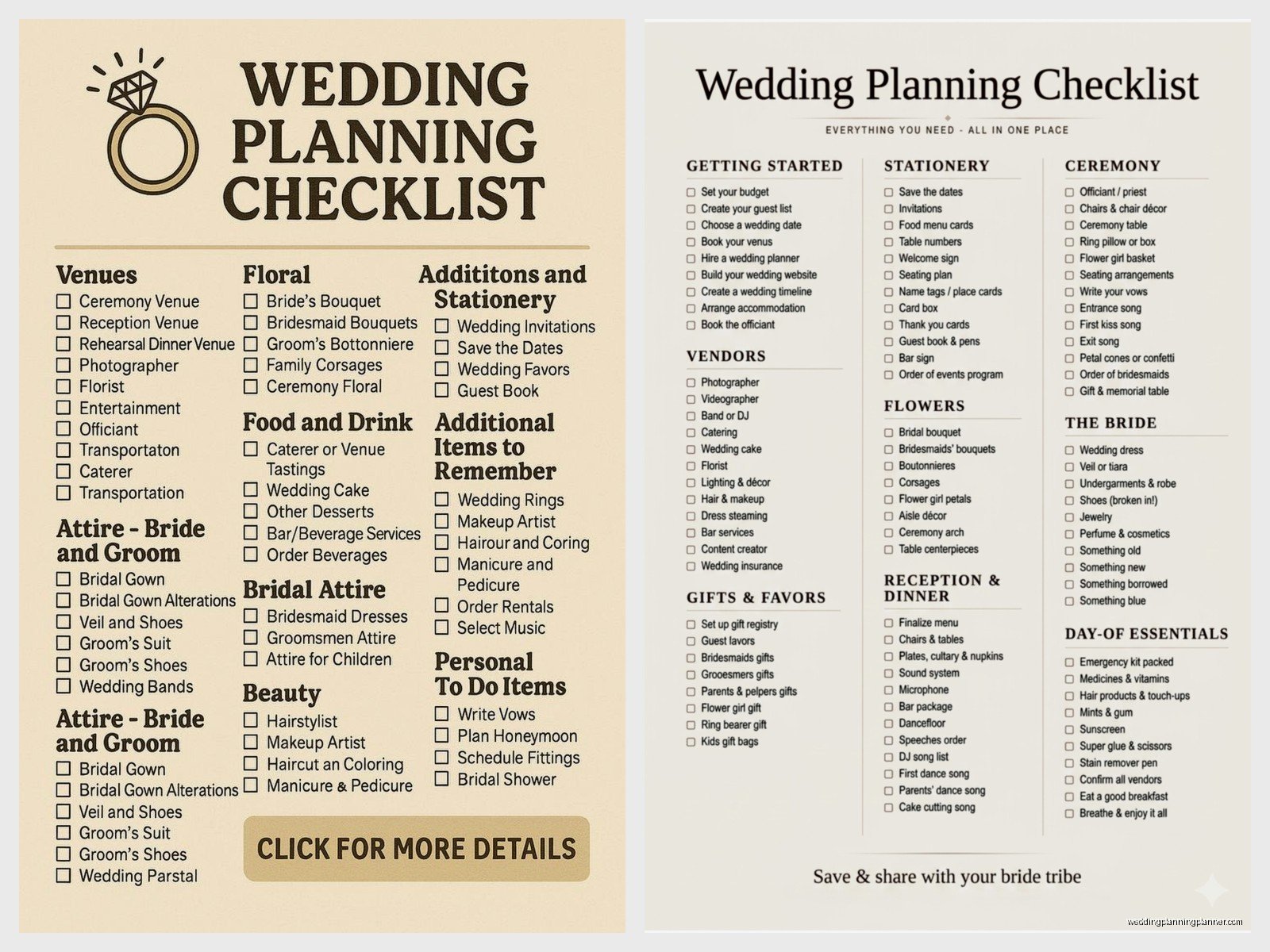
Work backwards from your wedding date. If you’re getting married in less than 6 months, you’re already behind and some vendors won’t even be available. Sorry, but that’s just reality. For a 12-month timeline, here’s what you’re looking at:
- Months 12-10: Book venue, caterer, photographer, and videographer (these go first because they book up fastest)
- Months 9-7: Secure florist, band/DJ, hair and makeup, officiant, and rentals
- Months 6-4: Order invitations, finalize menu, book hotel blocks, arrange transportation
- Months 3-2: Final dress fittings, create seating chart, confirm all vendor details
- Month 1: Final walk-through, make timeline, prepare vendor payments, have mental breakdown (kidding but also not really)
One thing that really annoys me is when people don’t understand that “coordinating your own wedding” doesn’t mean you can actually coordinate on the wedding day itself. You cannot be both the bride and the coordinator on the same day. Physics doesn’t work that way. You’ll need to recruit someone—a super organized friend, a family member who isn’t in the wedding party, or honestly just bite the bullet and hire a day-of coordinator.
The Master Spreadsheet System
I use Google Sheets because you can access it from anywhere and share it with your partner. Create these tabs:
Budget tracker: List every single expense category. And I mean every single one. People always forget about postage, marriage license fees, vendor meals, tips, alterations, and the emergency fund (you need this, trust me). Put your budget amount in one column and actual spend in another. Update it weekly or you’ll lose track and suddenly wonder where $3000 went.
Vendor contact sheet: Name, company, phone, email, contract signed (yes/no), deposit paid, balance due, balance due date. Also add a notes column for random stuff like “doesn’t work Sundays” or “needs parking pass.”
Guest list: This is where things get messy. You need columns for: name, address, invited to ceremony, invited to reception, RSVP status, number of guests, meal choice, dietary restrictions, hotel room needed, and plus-one status. My cat walked across my keyboard once and deleted like 40 rows of guest data and I almost cried, so make sure you’re backing this up.
Task list: Every single thing you need to do, who’s responsible, deadline, and status. This will have like 200+ rows eventually.
Booking Vendors When You Don’t Have a Planner
Read every contract thoroughly. I know it’s boring, but you’re looking for cancellation policies, overtime fees, what happens if they get sick, and what’s actually included versus what costs extra. When I started wedding planning in 2015, I thought contracts were just formalities but then I watched a DJ show up an hour late to a wedding with no consequences because the contract didn’t specify arrival time.
Ask these questions to every vendor:
- What’s your backup plan if you can’t make it?
- What’s included in your base package versus add-ons?
- When do you need final headcount/details/song list/whatever?
- Do you charge for travel or setup time?
- What’s your payment schedule?
- Have you worked at my venue before?
Get everything in writing. Everything. If a vendor says “oh yeah we can definitely do that” in an email, reply with “great, can you add that to the contract?” Because verbal promises mean nothing when something goes wrong.
Creating Your Day-Of Timeline
This is honestly the most important thing you’ll do and also the thing most DIY brides skip because they think they can just wing it. Nah. You need a minute-by-minute timeline for your wedding day, and you need to distribute it to every single vendor, family member involved in setup, and anyone in the wedding party.
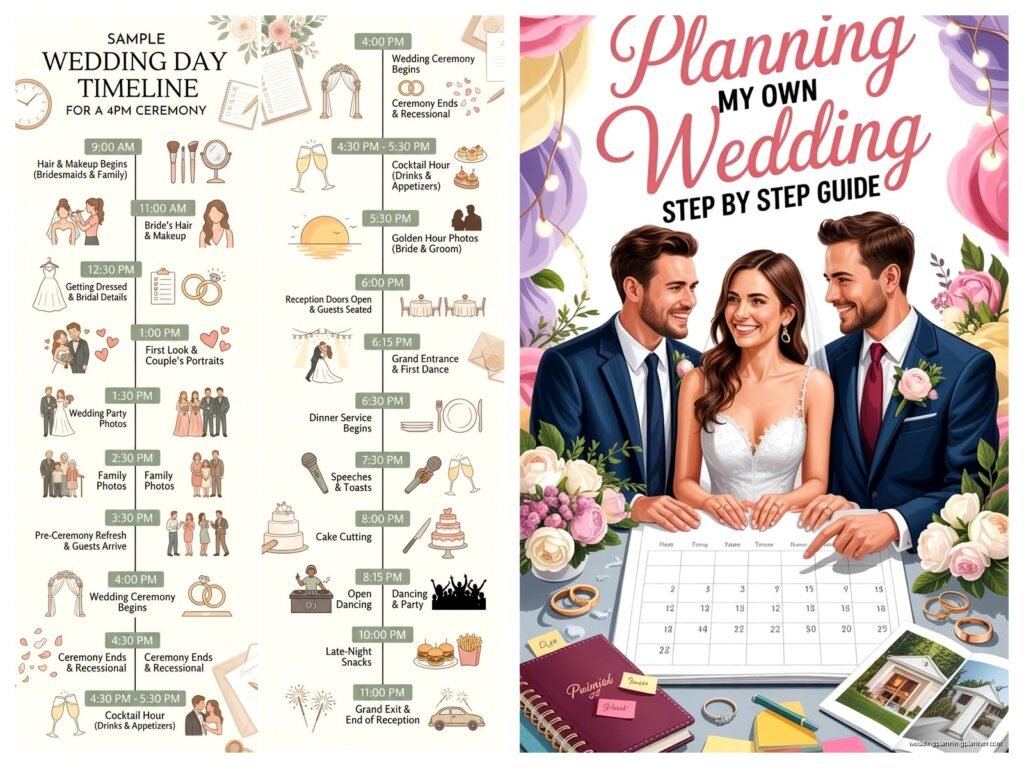
Start with your ceremony time and work backwards. If you’re getting married at 4pm, you need to be dressed and ready for photos by like 2pm, which means hair and makeup needs to start at 10am (depending on size of bridal party), which means you need to eat breakfast by 9am. See how this works?
Then work forwards from the ceremony. Build in buffer time because nothing ever runs exactly on schedule. Your timeline should include:
- Vendor arrival and setup times
- Hair and makeup schedule (by person)
- Photography schedule (getting ready, first look if you’re doing one, family photos, wedding party photos)
- Ceremony start time (and actual start time which is usually 5-10 minutes later)
- Cocktail hour
- Reception entrance
- First dance, parent dances, etc.
- Dinner service (by course if you’re doing plated)
- Toasts and speeches
- Cake cutting
- Open dancing
- Last dance and exit
One thing people don’t think about is transitions. Like, the time between ceremony and reception isn’t just “cocktail hour”—it’s when your ceremony site needs to flip to reception setup (if same location), when you’re doing family photos, when vendors are plating appetizers, when the DJ is setting up and doing sound check… there’s so much happening simultaneously.
The Stuff Nobody Tells You About
Vendor meals. You have to feed your vendors. It’s in most contracts, but even if it’s not, you should do it anyway. They’re working through dinner time. Usually you can do a cheaper vendor meal option, but check your catering contract because some require you to feed vendors the same meal as guests which is kinda annoying but whatever.
Someone needs to be in charge of your personal flowers. Your bouquet can’t just sit somewhere—someone needs to bring it to you at the right time, hold it during hair and makeup if needed, take it during the ceremony when you’re doing ring exchange, etc. Sounds obvious but I’ve seen bouquets forgotten in bridal suites so many times.
You need a point person for vendor questions on the wedding day. If you’re DIY coordinating, this cannot be you once you’re in your dress. Assign someone to be the “ask this person, not the bride” person. Give them the master timeline and vendor contact sheet.
The marriage license. Different states have different rules about when you can get it, how long it’s valid, waiting periods, etc. Don’t forget to actually do this because you can have the most beautiful wedding ever but if you don’t have a valid marriage license you’re just throwing a really expensive party.
Managing RSVPs Without Losing Your Mind
Use a wedding website with RSVP functionality. Minted, The Knot, Zola—they all have this. It’ll save you so much time versus tracking paper RSVPs. But you’ll still have people who don’t respond online and just text you “we’re coming!” so you’ll need to manually update your spreadsheet anyway.
Set your RSVP deadline for at least 3-4 weeks before the wedding, not 2 weeks like you might want to do. You’ll need time to chase down people who don’t respond (and there will be so many), finalize your seating chart, and give final counts to your caterer and rental company.
People will ask to bring random plus-ones you didn’t account for. People will tell you they’re bringing their kids when you specified adults-only. People will tell you they’re vegan three days before the wedding. Build a 5% buffer into your catering count if you can afford it.
Seating Chart Strategy
This takes way longer than you think it will. I usually tell clients to budget like 4-6 hours for this, and that’s with me helping. When you’re doing it yourself, it might take even longer because you’re gonna keep second-guessing yourself.
Start with your VIPs—parents, grandparents, wedding party if they’re not at a head table. Then do friend groups and family clusters. The random coworkers and distant relatives go last because honestly they’re easier to place and won’t be offended if they’re at table 18.
Don’t sit people together just because they’re both single or both the same age or whatever. That’s awkward. Sit people together based on actual connections—mutual friends, similar interests, they’ve met before, etc.
Make a backup plan for last-minute changes because someone will get sick or have an emergency or just not show up even though they RSVP’d yes. Have a few floating seats or be prepared to quickly reorganize.
Week-Of Preparations
Create a wedding day emergency kit. You need: safety pins, fashion tape, stain remover, band-aids, blister pads, pain reliever, antacids, bobby pins, hair ties, clear nail polish, deodorant, mints, tissues, phone chargers, and whatever else you think you might need. Put someone in charge of bringing this and keeping it accessible.
Confirm everything with every vendor 3-5 days before the wedding. Like, actually call or email them. “Hi, just confirming you’ll be at [venue] on [date] at [time].” You’d be surprised how many vendors have the wrong date in their calendar or double-booked themselves.
Prepare all vendor payments and tips in labeled envelopes. Figure out who’s distributing these and when. Some vendors want payment before they leave, some invoice you later, some expect tips in cash day-of. Know which is which.
Write your toasts and speeches if you’re doing any. Practice them. Time them. No one wants to hear a 15-minute best man speech, I don’t care how funny he thinks he is.
What to Delegate Because You Can’t Do Everything
Even if you’re planning the wedding yourself, you can’t execute everything on the actual day. Here’s what you need to hand off:
Setup and breakdown: Recruit friends or family to arrive early for setup and stay late for breakdown. Be specific about what needs to happen—don’t just assume people will figure it out. Like, “the card box needs to go on the gift table which is next to the entrance, not the dessert table” level of specific.
Managing the timeline: Someone needs to be watching the clock and moving things along. Telling the DJ it’s time for first dance, rounding up family for photos, making sure dinner service starts on time, etc.
Handling problems: And there will be problems. A centerpiece tips over, someone’s drunk uncle is causing a scene, the cake delivery is late… you can’t deal with this stuff while you’re supposed to be enjoying your wedding.
Guest management: Someone needs to direct guests where to go, answer questions about parking or bathrooms or whatever, make sure elderly relatives have seats during cocktail hour, etc.
The Rehearsal That You Definitely Need
Do a rehearsal the day before, usually followed by rehearsal dinner. Even if your ceremony is simple, people need to know where to stand, when to walk, what the cues are. Your officiant should run this, but if you’re using a friend as officiant who’s never done this before, you might need to direct it yourself (or watch some YouTube videos together about how wedding ceremonies work, I guess).
Practice the processional at the actual speed you’ll walk. Everyone walks too fast at rehearsal and then wonders why the processional music ends before the bride gets halfway down the aisle. It should take like 45-60 seconds to walk down the aisle, which feels weirdly slow but looks right.
Things I Wish Someone Had Told Me When I Started
You don’t need a wedding favor. Honestly, most people leave them behind or throw them away. If you want to do favors, make them edible or actually useful, but also it’s totally fine to skip this entirely and… wait, I was gonna say use that money for something else but actually just use it for your honeymoon or savings or literally anything else.
Your wedding will not look like Pinterest. It just won’t. And that’s fine. Real weddings have wrinkles and imperfections and things that don’t go exactly as planned. The flowers might be slightly different than you envisioned. The weather might not cooperate. Someone will definitely be late. It’s still gonna be a good day.
People won’t notice half the details you stressed over. They won’t notice that the napkins are blush instead of dusty rose or that you switched from rose gold to gold chargers at the last minute. They’ll notice if they have fun, if the food is good, and if they feel welcomed.
Build in alone time with your partner on the wedding day. Like, actually schedule 10-15 minutes right after the ceremony or during cocktail hour where it’s just you two. Otherwise the whole day is gonna be a blur of talking to guests and you won’t get a moment to actually experience it together.
When to Actually Hire Help
If your wedding is over 100 people, you really should have at least a day-of coordinator. I know you’re trying to save money by doing it yourself, but the day-of coordination fee (usually $800-1500 depending on your market) is worth it to not have your mom or maid of honor running around with your timeline stressed out.
If your venue doesn’t provide setup or you’re doing a lot of DIY decor, hire setup help. Your wedding party should not be setting up tables and chairs on the morning of your wedding. They need to be getting ready with you or at least not sweating through their outfits before the ceremony even starts.
Complex lighting or draping usually needs professionals. You can DIY a lot of things, but unless someone in your friend group actually knows what they’re doing with uplighting or ceiling draping, this isn’t the place to experiment.