Planning Guides, Style Guide
Realistic Wedding Budget: Honest Cost Planning Guide
Apr
Okay so here’s what actually happens with wedding budgets
The average wedding costs like $30,000 but honestly that number is kinda useless because it depends so much on where you live and what you actually want. I had a couple in spring 2023 who came to me with a $15,000 budget and a Pinterest board that would’ve cost $60,000 to execute. That was… a rough first meeting.
First thing you gotta do is figure out what you and your partner actually have to spend. Not what you wish you had or what you think weddings “should” cost. Sit down with your actual bank accounts, savings, and any contributions from family that are CONFIRMED. I’m talking money that’s already promised and you trust will actually show up. Don’t count on your aunt who “might help out” because that’s how you end up scrambling three months before the wedding.
The real breakdown of where money goes
So venues typically eat up like 40-50% of your budget and this is the part that shocked me most when I started planning weddings back in 2015. You’re not just paying for the space—you’re paying for tables, chairs, sometimes linens, coordination staff, liability insurance, and a bunch of other stuff that’s bundled in. Some venues include catering, some don’t, and that makes a HUGE difference in how you budget.
Food and drinks are usually another 30-40% unless you do something really casual. And here’s what annoys me SO MUCH about wedding catering: the “wedding tax” is real. I’ve seen the exact same catering company charge $45 per person for a corporate event and $85 per person for a wedding with literally the same menu. They say it’s because weddings require more detailed service and coordination but like… come on.
Photography typically runs $2,500-$5,000 for someone decent, and you really don’t wanna cheap out here because these are literally the only things you keep after the wedding besides your marriage certificate and maybe some leftover cake in your freezer that you’ll never actually eat on your anniversary.
Flowers are weird because you can spend $500 or $5,000 and guests honestly won’t remember either way. My cat knocked over a centerpiece sample once during a consultation and the bride was more upset about the cost than the actual flowers, which kinda tells you something about floral priorities.
Breaking down your actual budget numbers
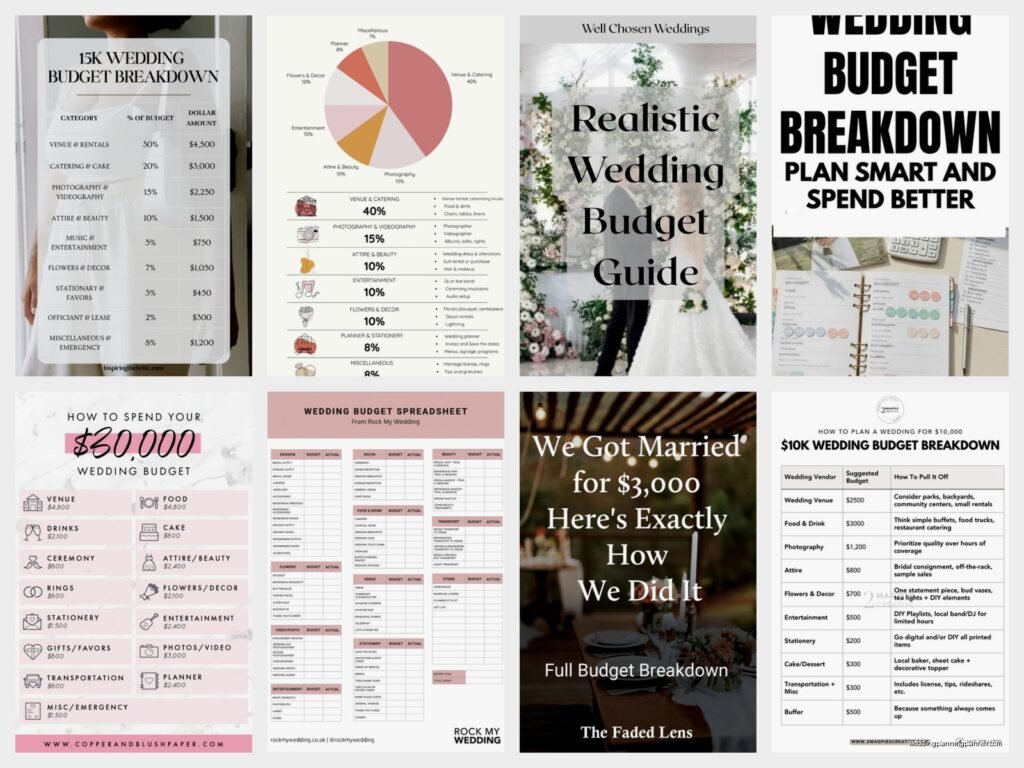
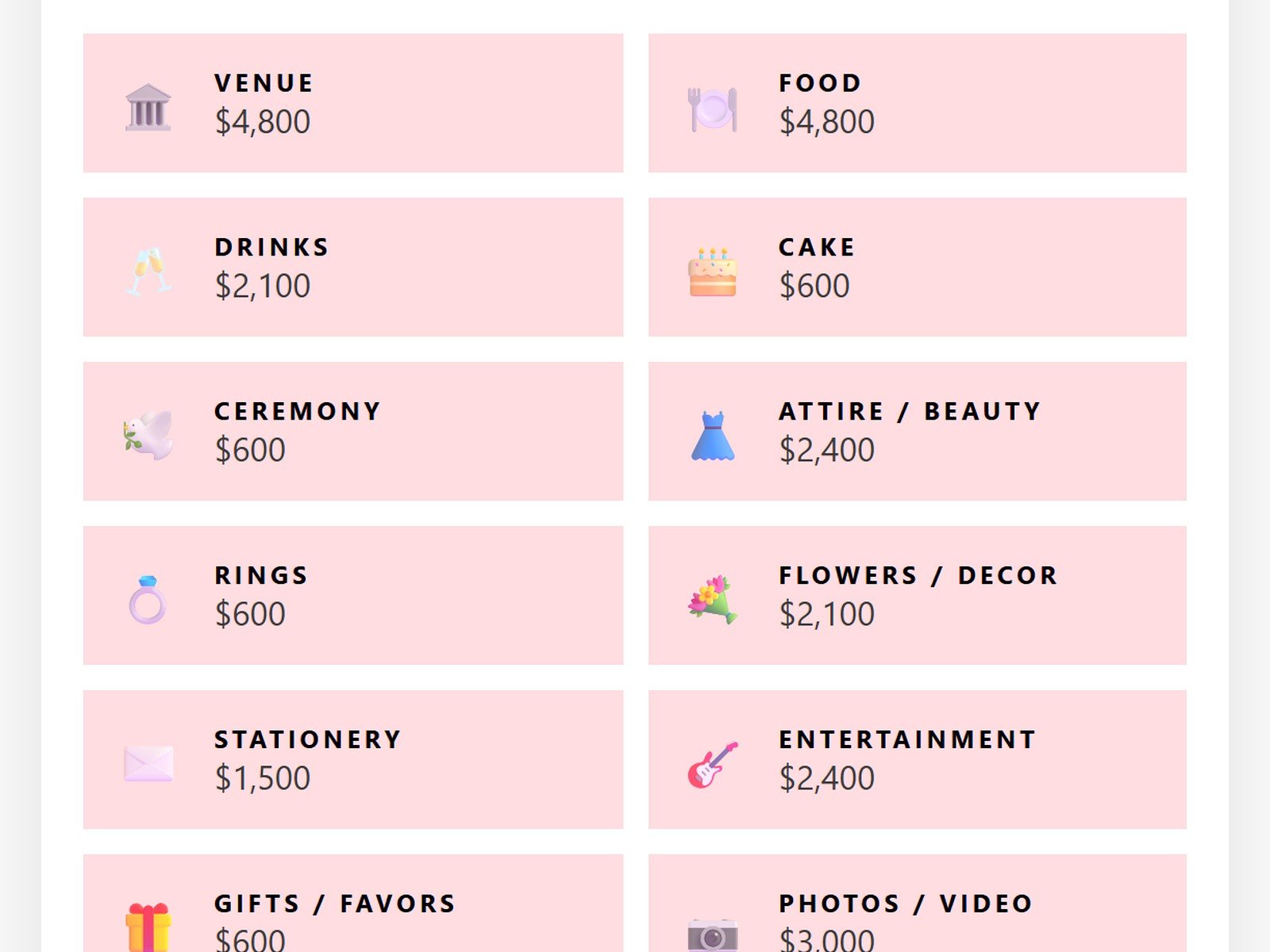
Let’s say you’ve got $25,000 to work with because that’s a pretty common realistic number I see. Here’s how I’d tell you to split it, though obviously this shifts based on your priorities:
- Venue and catering: $10,000-12,000 (this includes food, drinks, rentals)
- Photography: $3,000-3,500
- Attire: $2,000-2,500 (dress, suit, alterations, accessories)
- Flowers and decor: $2,000
- Music/DJ: $1,500
- Invitations and paper goods: $500
- Officiant: $300-500
- Hair and makeup: $500-800
- Transportation: $400
- Favors and gifts: $400
- Miscellaneous and emergency fund: $1,500-2,000
That emergency fund is NON-NEGOTIABLE. Something will come up. Always does. Maybe your dress needs emergency alterations, maybe you need to rent heaters because it’s colder than expected, maybe your uncle drinks the bar dry and you need to… actually that’s on you if you have an open bar with no limits.
The stuff nobody tells you about until it’s too late
Okay so taxes and service charges and gratuities. These add like 25-30% to almost everything. When a venue says “$100 per person” they mean before tax, before the 22% service charge, before the 3% administrative fee they just made up. Your $100 per person just became $130 per person real quick.
Vendor meals are another thing. If you have vendors there for 6+ hours (photographer, videographer, DJ, planner), you gotta feed them. Most caterers charge like $25-35 per vendor meal. For five vendors that’s another $150 you didn’t think about.
Alterations on wedding dresses are EXPENSIVE. I don’t know why I’m always surprised by this after 15 years but a dress that costs $1,500 might need $300-500 in alterations. That’s just how it is. My friend bought a $200 dress on sale and paid $400 to alter it, which is kinda hilarious when you think about it.
Invitations end up costing more than you think because you need save-the-dates, then invitations, then programs, then menus, then table numbers, then place cards, and suddenly you’ve spent $800 on paper. You can definitely cut costs here by doing more digitally or DIY-ing some elements, but factor in your time because addressing 150 envelopes while watching The Great British Baking Show sounds fun until you’re on hour three with hand cramps.
Where you can actually save money without it looking cheap
Friday or Sunday weddings are usually 20-30% cheaper than Saturdays. Same venue, same vendors, just a different day. If your crowd is local and can swing it, this is the easiest way to save thousands.
Off-season weddings (November through March, excluding holidays) also get you better pricing. I had a January wedding in 2022 that was absolutely gorgeous with like ice-themed decor and it cost $18,000 for 120 people with a full bar and amazing food. That same wedding in June would’ve been $28,000 easy.
Buffet or family-style service instead of plated usually saves money and honestly people eat more and enjoy it more anyway. The formal plated dinner is pretty but it’s also kinda stuffy and your vegetarian cousin is gonna get a sad portobello mushroom.
Fake flowers have gotten SO GOOD. I’m not saying do your whole wedding in fake flowers, but mixing in some quality silk flowers with fresh ones for bouquets and centerpieces can cut your floral budget in half. Plus you get to keep your bouquet without it turning brown and crunchy.
DIY your favors or skip them entirely. Ninety percent of wedding favors get left behind or thrown away. If you’re gonna do them, make them edible or actually useful. Those little picture frames with your names on them? Straight to Goodwill.
The budget conversation with family contributions
This is gonna sound cynical but get any family contributions in writing or at least in a clear text/email. I’ve seen too many situations where parents said they’d “help out” and the couple planned accordingly, then six weeks before the wedding the parents are like “oh we meant we’d contribute $2,000” and the couple thought they meant $10,000.
Also, and this is important: money comes with opinions. If your parents are paying for half the wedding, they’re gonna want half the say in decisions. You gotta decide if that’s worth it to you. Some couples take less money to maintain more control, and honestly I respect that.
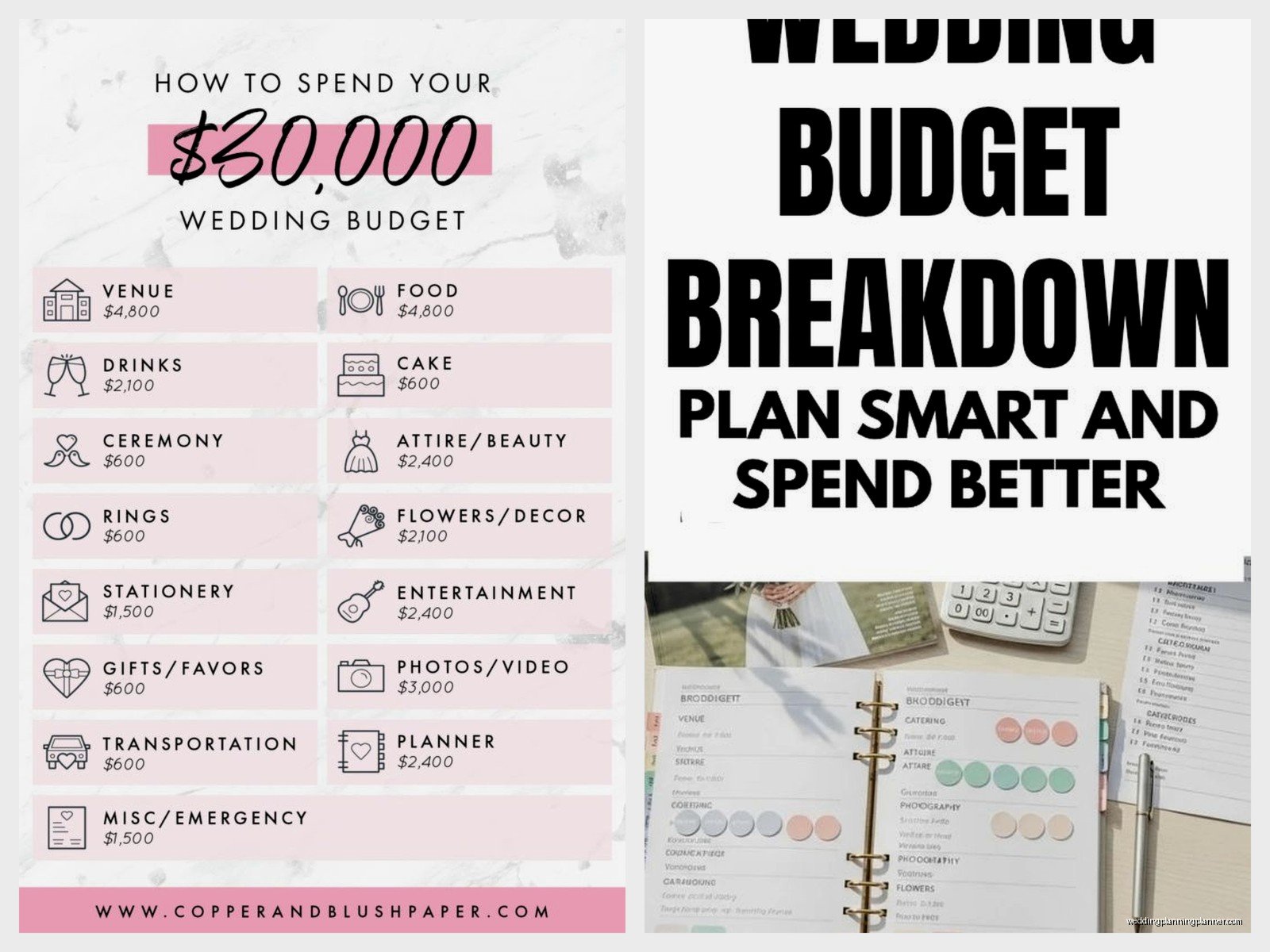
Have a spreadsheet. I know, I know, spreadsheets aren’t romantic, but you need to track every single expense as you go. I use Google Sheets for my clients because both partners can access it and update it in real-time. Put in your budget amount for each category, track deposits, track final payments, track what’s actually been paid.
What to prioritize based on your actual wedding
If you’re having a big wedding with like 150+ people, invest in good food and an open bar (even if it’s just beer and wine). People remember if they had a good time and if they were fed well.
If you’re having a small intimate wedding with 50 people, you can splurge more on things like florals, a nicer venue, or better photography since your per-person costs are lower.
If you’re super into dancing and partying, spend money on a great DJ or band. If you’re more the type to do a short reception and leave early, don’t blow $3,000 on music—get a good playlist and some rented speakers.
Photography matters more if you’re the type who prints photos and makes albums. If you’re honest with yourself and know you’ll look at them once and then they’ll live on a hard drive forever, maybe don’t get the $5,000 package with the leather-bound album.
Tracking costs while you plan
Get everything in writing with contracts. Verbal agreements mean nothing when your florist shows up with carnations instead of peonies because “they’re basically the same thing” (they are not).
Read the cancellation and refund policies CAREFULLY. COVID taught us all that stuff happens and you need to know if you can get your deposits back or reschedule. Most deposits are non-refundable but some vendors are flexible if you rebook with them.
Payment schedules vary but usually it’s like deposit to book (10-50% depending on the vendor), a payment halfway through planning, and final payment 1-2 weeks before the wedding. Factor this into your timeline so you’re not scrambling to come up with $8,000 all at once two weeks before your wedding.
Track your payments obsessively because in the chaos of wedding planning it’s easy to forget who you’ve paid and who you haven’t. I had a client almost pay their photographer twice because they lost track of their records. Luckily their photographer was honest and flagged it, but not everyone would.
The stuff that costs more than you think it should
Rentals add up FAST. If your venue is a blank slate (like a barn or warehouse), you’re renting everything: tables, chairs, linens, plates, glasses, silverware, serving pieces, maybe a tent, maybe heaters or fans, maybe a dance floor, maybe lighting. This can easily hit $3,000-5,000 for a medium-sized wedding and it’s money you’re spending on stuff you give back the next day which feels terrible.
Hotel room blocks sound free but some hotels require you to guarantee a certain number of rooms and if your guests don’t book them, you’re on the hook. Read that contract carefully.
Day-of coordination is like $800-1,500 and you think “I don’t need that, my sister can do it” but your sister wants to enjoy the wedding and not be in charge of making sure the caterer shows up and the flowers get from the ceremony to the reception. Just… trust me on this one. Get a coordinator even if it’s just for the actual day.
Cake costs like $4-8 per person which seems insane for cake but wedding cakes are apparently made of gold or something. You can save money by doing a small cutting cake for photos and then serving sheet cake to guests. They literally won’t know the difference once it’s on their plate.
Being realistic about what you can DIY
I’m all for DIY to save money but be honest about your time, skills, and stress tolerance. Making 150 escort cards the week before your wedding while also working full-time and trying on your dress for the final fitting is a recipe for a breakdown.
Good things to DIY: simple centerpieces, welcome signs, programs, playlist creation, escort cards if you start EARLY
Bad things to DIY: your own flowers (this takes WAY more time and skill than you think), your own cake (food safety and stress), anything that requires you to be working on it the day of the wedding, major decor elements that need to be installed and taken down
Also factor in the cost of supplies for DIY projects because sometimes you’re “saving money” but you spent $200 on materials and 15 hours of your time to make something you could’ve bought for $250. Your time has value.
The conversation with your partner about priorities
You and your partner probably care about different things and that’s fine but you need to talk about it. Maybe you really want a live band and they really want a videographer. Figure out what you each care about most and make sure those things are in the budget.
Some couples do a “must-have, nice-to-have, don’t-care” list for every category and that actually helps a lot with decision-making. Like maybe photography is must-have for both of you, flowers are nice-to-have, and fancy linens are don’t-care. Cool, now you know where to spend and where to save.
Remember that this is just one day. I know everyone says that and it’s annoying but like… it’s true. Going into debt for a wedding is a terrible way to start a marriage. If your budget is $15,000, plan a $15,000 wedding, not a $30,000 wedding that you’ll be paying off for three years.
The guilt around budget is real though. There’s so much pressure to have this perfect Pinterest-worthy wedding and it’s easy to feel like you’re failing if you can’t afford everything you want. But I’ve seen $10,000 weddings that were absolutely beautiful and $80,000 weddings that felt cold and impersonal. Money doesn’t determine how much love is in the room or how good the party is or whether your marriage will be happy.