
Planning Guides, Style Guide
Reception Invites: Post-Ceremony Party Invitation Cards
May
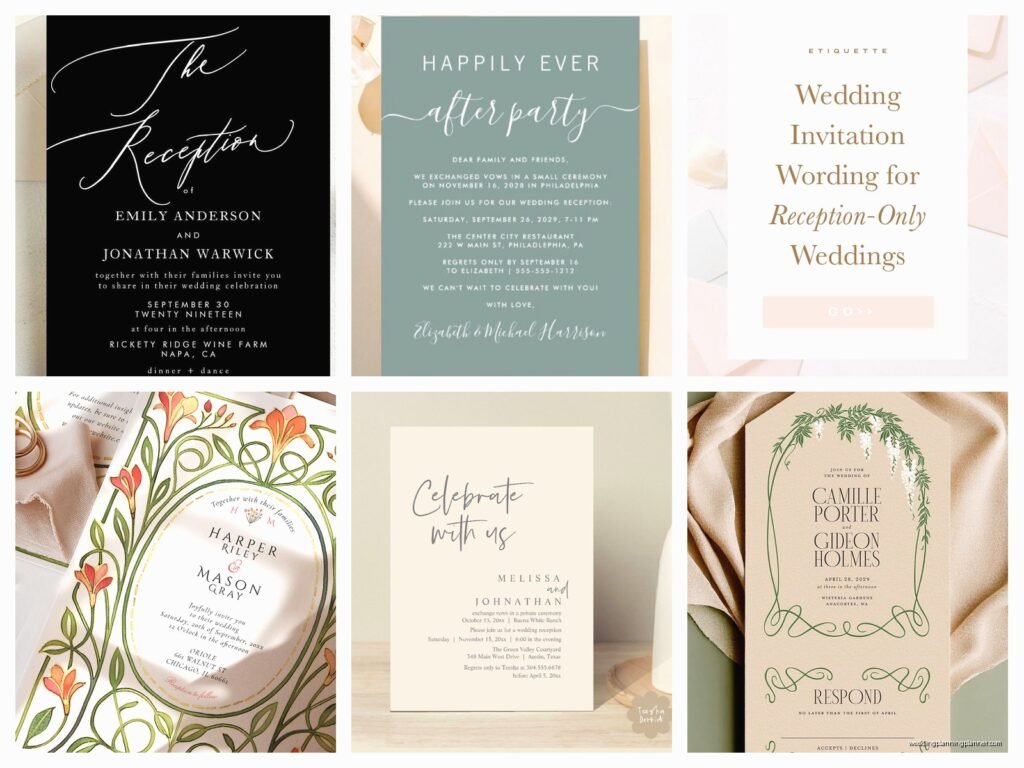
Reception Invites Are Not The Same As Wedding Invites
Okay so first thing you gotta understand is that post-ceremony party invitations are completely different animals from your main wedding invitations. I learned this the hard way in summer 2021 when a bride sent out what she thought were “reception only” cards but they were SO formal and traditional-looking that half her guests showed up at the church anyway, even though the ceremony was private family only. It was a mess.
The whole point of a reception-only invite is that you’re inviting people to celebrate AFTER you’ve already done the legal/ceremonial part. Maybe you eloped, maybe you had a tiny courthouse thing, maybe you did a destination wedding with just parents and now you’re throwing a party back home. Whatever the reason, your invitation needs to make it crystal clear that people aren’t coming to watch you get married—they’re coming to party because you already ARE married.
The Wording Is Everything
This is where people screw up constantly and honestly it annoys me so much because the wording is RIGHT THERE if you just Google it, but everyone wants to reinvent the wheel. You cannot say “request the honor of your presence at the marriage of” because there IS no marriage happening. You’re already married.
Here’s what actually works:
- “Join us for a reception celebrating the marriage of”
- “Help us celebrate our recent marriage”
- “We got married! Now let’s party”
- “Following their wedding in [location], [names] invite you to a celebration”
- “Having exchanged vows in an intimate ceremony”
See how none of those say you’re invited TO a wedding? Because you’re not. You’re invited to celebrate one that happened.
I had this client in spring 2023 who was SO resistant to this concept. She kept saying “but I want it to feel like a real wedding” and I’m like… it IS a real wedding, you just already DID the wedding part. The reception is real! The marriage is real! But if you word it like people are coming to a ceremony, they’re gonna be confused when there’s no ceremony, or worse, they’ll feel hurt that they weren’t invited to the “real” wedding even though that was your whole intention.
Formal Versus Casual Wording
You can totally do formal wording for a reception-only invite, just make sure it’s CLEAR. Something like:
Mr. and Mrs. Robert Chen request the pleasure of your company at a reception in honor of the marriage of their daughter Katherine Marie to Mr. James Abbott, which took place on June 15th in Portland, Oregon
Or go casual if that’s more your vibe:
We tied the knot! Katherine and James are now married and we want to celebrate with you. Join us for dinner, drinks, and dancing on August 20th
Both work. Just pick your lane and commit.
Timing And When To Send These
So this depends entirely on your situation. If you eloped last month and you’re throwing a party in three months, you’re gonna send these out like… now. Standard timeline is 6-8 weeks before your event, same as a regular wedding invitation.
But if you’re doing something weird with timing—like you got married in December and you’re having a summer garden party reception—you might wanna do a save-the-date situation first. I know, I know, save-the-dates for a reception feels extra, but if you’re asking people to travel or it’s during a busy season, give them a heads up.
One thing that drives me crazy is when couples send these out like 2 weeks before the event. Unless it’s a super casual backyard thing with 20 people, that’s not enough time. People have lives, they need to arrange childcare, maybe book a hotel, definitely not schedule something else that night. Respect people’s calendars.
What About People Who Were At The Ceremony
Okay so this is kinda tricky and I see people overthink it constantly. If someone was invited to your intimate ceremony, you should still send them a formal invitation to the reception. It’s just proper etiquette and also it has all the details they need—time, location, dress code, whatever.
You don’t need different wording for them versus people who weren’t at the ceremony. Everyone gets the same invitation. The wording already makes it clear the ceremony happened separately.
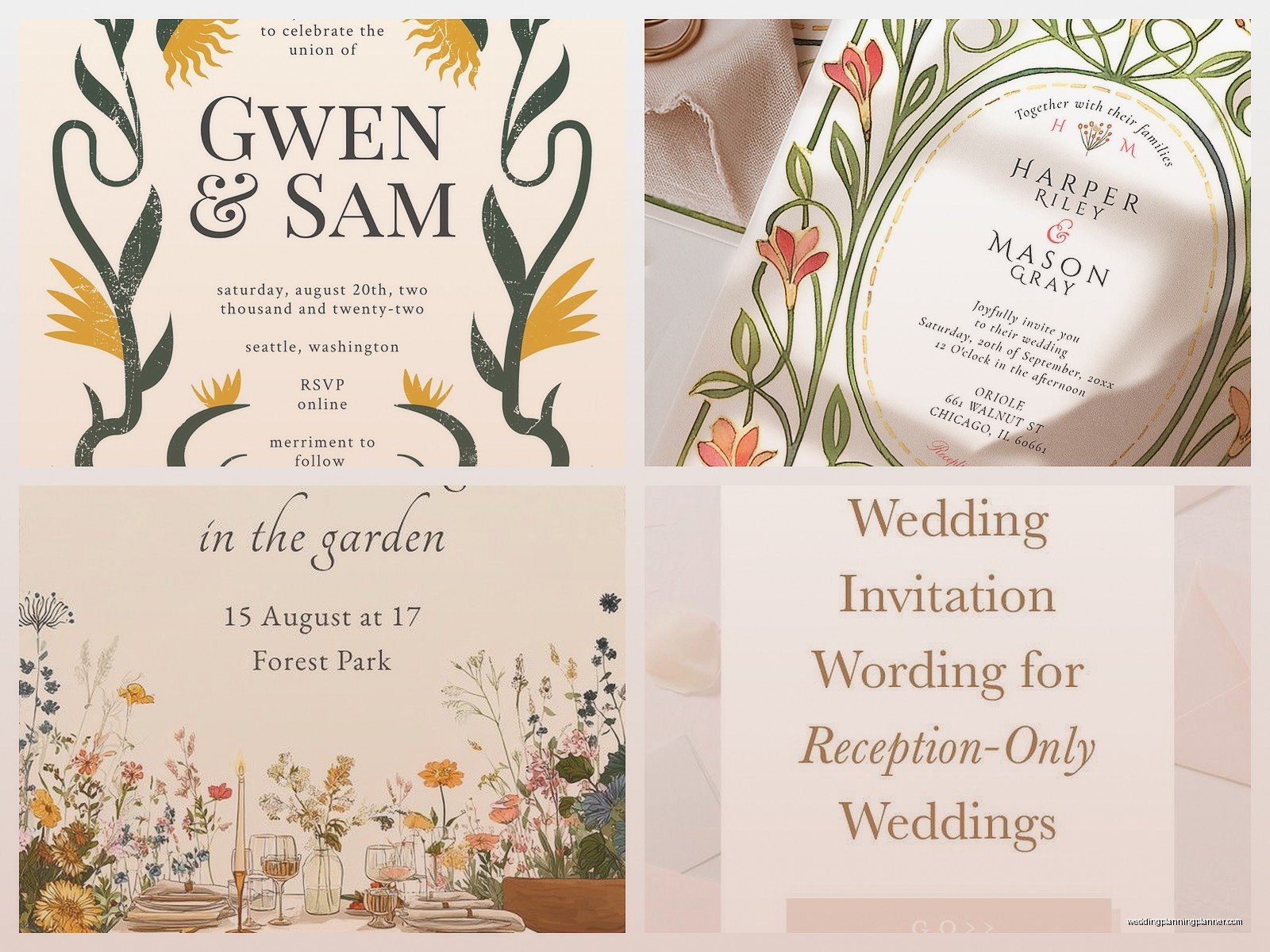
Design Stuff That Actually Matters
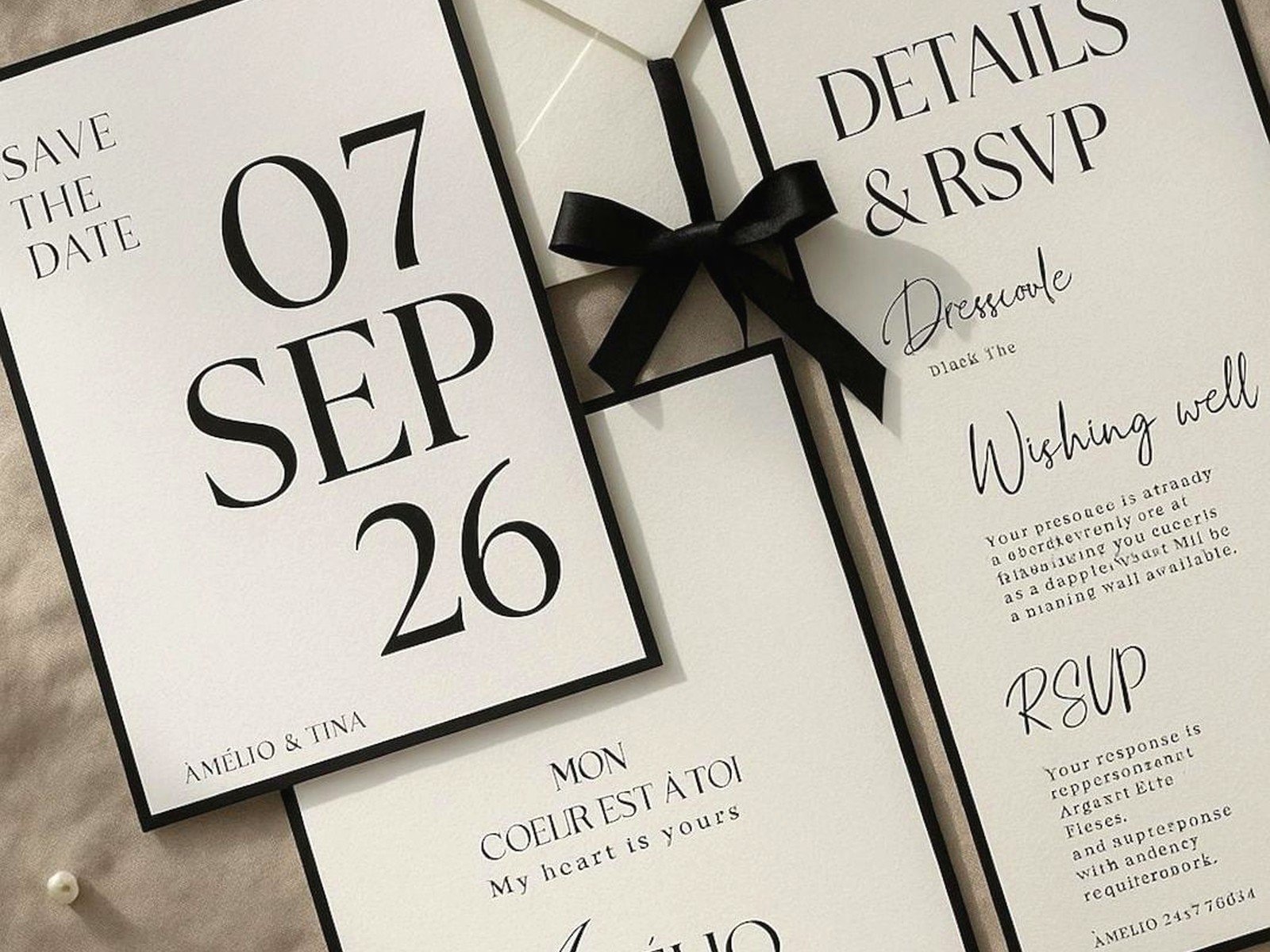
Here’s where you have more freedom than with traditional wedding invites, honestly. Since you’re not inviting people to a ceremony, you can be more playful with the design. I’ve seen reception invites that look like party invitations, concert posters, dinner party cards… my cat just knocked over my coffee while I’m writing this, hang on.
Okay back. So yeah, design-wise you can go traditional if you want—the classic formal invite with engraved text and fancy paper—or you can do something completely different. I worked with a couple who did their reception invites as vinyl record sleeves because they met at a music festival. It was perfect for them and immediately told guests “this is gonna be a fun party” not “this is a stuffy formal wedding.”
Things to include design-wise:
- Your names (obviously)
- Clear indication this is a reception/celebration, not a ceremony
- Date and time
- Full venue address
- Dress code if you have one
- RSVP details and deadline
- Your wedding website if you have one
Things you can skip:
- Ceremony timeline (there isn’t one)
- Programs
- Anything about a processional or vows
Photos On The Invite Yay Or Nay
This is totally personal preference but I think if you eloped or had an intimate ceremony, including a photo from that day on your reception invite is actually really sweet. It answers the unspoken question of “wait did they already get married?” and also it’s just nice. People like seeing you happy.
You don’t need a professional photo necessarily. A good phone pic works if it’s high enough resolution for printing. Just make sure you’re both in it and you look clearly wedding-ish—like you’re dressed up or there’s an obvious wedding-y background or you’re holding a bouquet or whatever.
Some couples do a photo on the save-the-date but not the actual invite. That works too. Or no photo at all is fine, just make sure your wording is clear enough that people understand what they’re being invited to.
The Registry Question
Okay so technically you never put registry info directly on a wedding invitation, but people ask about this constantly with reception invites because it feels more like a party invite and party invites sometimes mention gifts. But nah, same rule applies—registry info goes on your wedding website or gets spread by word of mouth through family and your wedding party.
What you CAN do is include a details card that mentions your wedding website, and people can find registry info there. That’s perfectly acceptable.
Honestly though, if you already had a ceremony—even a small one—you might have already gotten gifts from those guests, so think about whether you even want a registry or if you’d prefer to request no gifts, or maybe ask for contributions to your honeymoon fund or a charity. I had a couple who requested donations to an animal shelter instead of gifts for their reception and it was perfect for them since they’d been living together for years and didn’t need stuff.
Insert Cards And Extra Details
You’ll probably want at least one insert card with your reception invite. This can include:
- Accommodation information for out-of-town guests
- Transportation details if you’re providing shuttles
- Weekend event schedule if you’re doing multiple gatherings
- Dietary restriction questions
- Your wedding website URL
The RSVP card situation is the same as regular wedding invites—you can do a traditional mail-back card with a stamped envelope, or you can do online RSVPs only, or both. I’m gonna be real with you, online RSVPs are so much easier to track and manage, but some older guests really prefer a physical card to mail back. If your guest list skews older, include the physical option.
Addressing And Mailing
Same rules as wedding invites apply here. Use full names, proper titles if people have them, spell everything correctly, double-check addresses. If you’re doing inner and outer envelopes (which is traditional but not required), the outer envelope is formal with titles and full names, inner envelope is more casual.
Get your envelopes hand-canceled at the post office if they’re thick or have any embellishments. It costs a bit extra but it prevents the mail sorting machines from eating your beautiful invitations. I’ve seen too many invitation suites come back destroyed because someone tried to save three dollars on postage.
Also weigh one complete invitation before you order postage. Those tiny RSVP envelopes plus the details card plus the main invite plus a photo card… it adds up and you might need extra postage. Nothing worse than having invitations returned for insufficient postage.
Common Mistakes I See Literally All The Time
Not being clear about what guests are invited to—I can’t stress this enough, if your wording is ambiguous people WILL show up expecting a ceremony or they’ll be confused and call you asking questions.
Forgetting to include an end time. Even though it’s “just” a reception, people want to know if this is a 2-hour cocktail party or an all-night rager. Give them a timeframe.
Making it too formal when your actual event is casual, or vice versa. Your invitation sets expectations, so if you’re sending out black-tie formal invitations but your reception is a backyard BBQ, that’s gonna be weird for everyone.
Not giving enough notice. I mentioned this already but it bears repeating because people keep doing it.
Forgetting to mention if it’s adults-only. If you don’t want kids at your reception, you need to make that clear in how you address the invitations (only the adults’ names) and ideally mention it on your website too.
Budget Reality Check
Reception invitations can actually be less expensive than full wedding invitation suites because you might not need as many insert cards—no ceremony program, no ceremony timeline card, etc. But they can also be exactly the same price if you want them to be fancy.
You can absolutely do digital invitations for a reception if that fits your vibe. I know some people think that’s tacky but honestly I’ve seen gorgeous email invitations and honestly for a more casual post-wedding celebration it can work perfectly. Save your money for the actual party.
If you’re DIYing, templates from Etsy or Minted or whatever are totally fine. Just make sure you proofread like seventeen times because once you print 100 invitations with a typo, you’re kinda stuck with them or you’re reprinting and spending more money.
The Plus-One Situation
This is always complicated but with reception invites it can be extra weird because maybe you didn’t give plus-ones for your intimate ceremony but now you’re having a bigger reception and… do those people get plus-ones now?
My advice is to have a consistent rule. Either everyone in a serious relationship gets a plus-one, or no one does unless they’re married/engaged, or whatever your rule is, but apply it consistently across your guest list. People talk and they’ll notice if you gave some people plus-ones and not others for seemingly arbitrary reasons.
Make it clear on the invitation who’s invited—if it’s just “Sarah Johnson” then just Sarah is invited, if it says “Sarah Johnson and Guest” then she can bring someone. Don’t be vague about this or you’ll end up with people bringing uninvited plus-ones and messing up your headcount.
What If The Ceremony Was Destination
This is super common actually—couples do a destination wedding with like 20 people and then throw a big reception back home for everyone else. Your invitation wording should mention where the ceremony took place, something like “Following their wedding in Tuscany, Italy” or “After exchanging vows in Maui” or whatever. It gives context and also it’s sorta nice to… I mean it lets people know you did something special even if they weren’t there.
Include photos from the destination wedding if you have them. It makes the reception feel more connected to the actual wedding day and helps guests feel included in your story even though they weren’t at the ceremony.