Planning Guides, Style Guide
Wedding And Event Management: Complete Guide
Sep
The Actual Reality of Running Weddings and Events
Okay so wedding and event management is basically controlled chaos mixed with spreadsheets and a lot of texting vendors at weird hours. I’ve been doing this for like 15 years now and honestly the job description I wrote when I started versus what I actually do daily are completely different things.
First thing you gotta know is that event management isn’t just about making things pretty. That’s maybe 20% of it. The rest is logistics, people management, crisis prevention, and occasionally talking someone down from a ledge when the florist says they can’t get peonies in November. Which, like, of course they can’t but clients always want what’s out of season.
Getting Started With The Business Side
You need a business structure first. I went with an LLC because my accountant scared me with stories about personal liability, and after seeing a tent collapse situation in spring 2023 at a corporate event (not mine thank god), I understood why. Get insurance. Seriously. General liability at minimum, and if you’re gonna handle big events, get the event-specific coverage too.
Your contracts need to be ironclad. I learned this the hard way when a bride’s mother tried to sue me because it rained on an outdoor wedding. It rained. Like I control weather now apparently. My contract had a weather clause but it wasn’t specific enough, so I had to spend money on a lawyer to… anyway, get a lawyer to review your contracts before you use them.
Pricing is weird in this industry. Some planners charge flat fees, some do percentage of total budget, some do hourly. I do a hybrid thing now where it’s a base fee plus hourly for anything over a certain number of planning hours. Day-of coordination is different than full-service planning, and you need to price them differently. A day-of coordinator might charge $1,200-$2,500 depending on your market, while full service planning can be anywhere from $3,000 to like $15,000+ for luxury weddings.
The Timeline Thing Everyone Screws Up
Here’s what actually happens with wedding timelines. Clients think they need 6 months to plan. You need at least 12-18 months for a proper wedding, more if they want a specific venue that books up fast. Corporate events can sometimes happen faster because corporations understand that time equals money and they’ll actually make decisions.
Your planning timeline should look something like this:
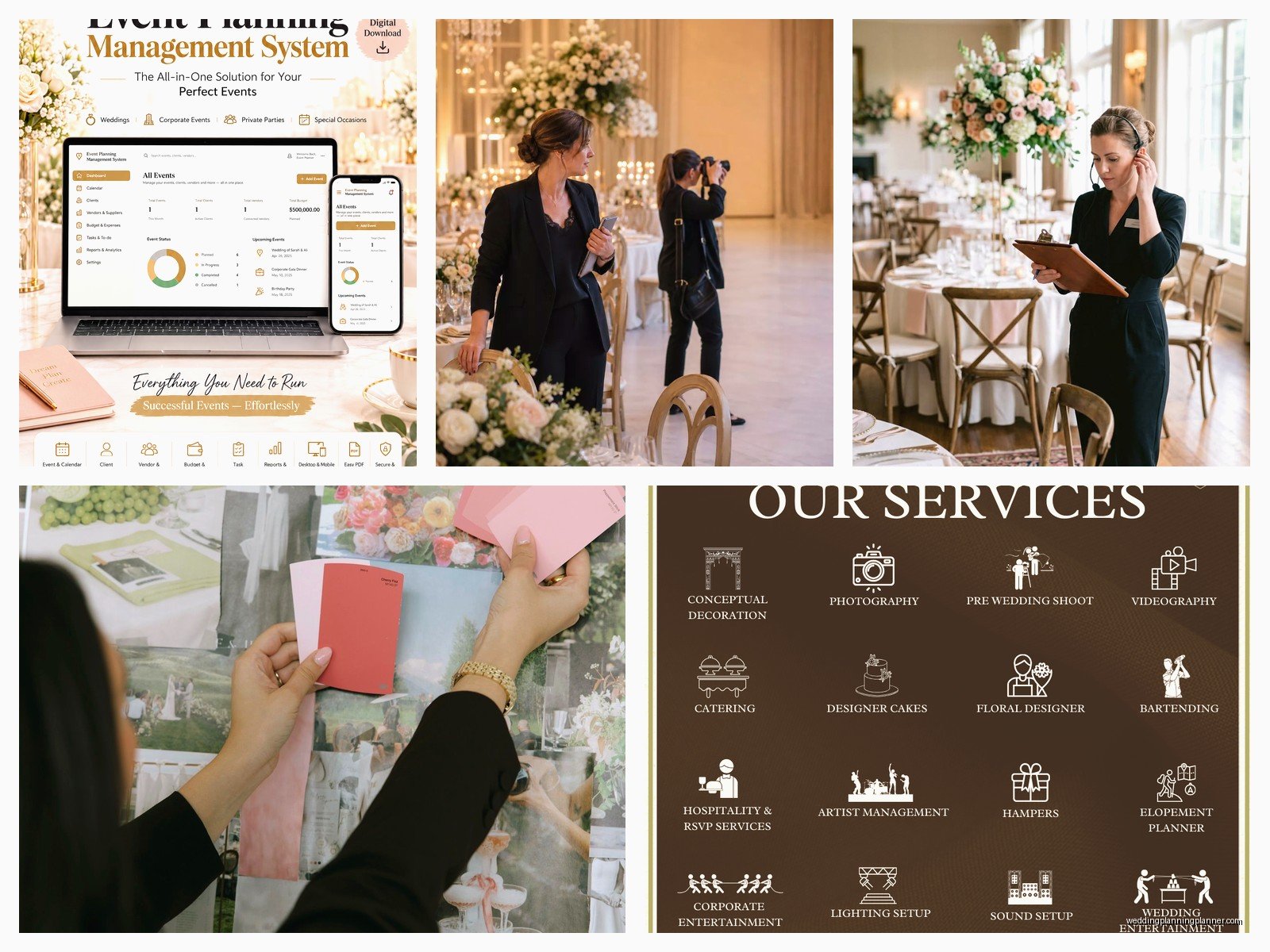
- 12-18 months out: venue, date, rough guest count, book your major vendors (photographer, caterer, band/DJ)
- 9-12 months: invitations, wedding party stuff, book remaining vendors, start thinking about decor
- 6-8 months: menu tasting, finalize design elements, order decorations, book hotel blocks
- 3-4 months: final head count adjustments, create detailed timeline, confirm everything with vendors
- 1-2 months: final meetings with everyone, create seating chart, pick up marriage license, have a mild panic attack
- Week of: final walk-through, confirm setup times, pack emergency kit, sleep poorly
But like, that’s the ideal. In reality, I had a couple last summer who gave me 4 months to plan a 200-person wedding and it nearly killed me. We pulled it off but I definitely developed a stress rash situation that was not cute.
Vendor Management Is Actually The Hardest Part
Nobody tells you that managing vendors is like herding very talented, very temperamental cats. And I say this as someone who has an actual cat named Buttons who is less difficult than some florists I’ve worked with.
You need a solid vendor network. Start by researching vendors in your area, meet them for coffee, see their work in person. I have a list of about 5-7 vendors in each category that I trust and recommend regularly. But I also keep trying new vendors because the industry changes and new talent emerges.
Communication with vendors needs to be crystal clear. I use a shared planning platform now (I like Aisle Planner but there’s also HoneyBook and others) where everyone can see the timeline, access documents, and get updates. Before I used software, I was sending like 40 emails a day and stuff was falling through the cracks constantly.
The thing that really annoys me is when vendors don’t read the timeline document and then show up at the wrong time or… wait, where was I going with this? Oh right, so you need to do timeline confirmations about a week before the event, then again 2 days before. Even then, someone will show up early or late.
Day-Of Coordination vs Full Planning
These are super different services and clients mix them up all the time. Day-of coordination (which is actually more like month-of) means you’re taking over an already-planned event and executing it. The client has booked all vendors, made all decisions, and you’re just making sure it happens smoothly on the actual day.
Full-service planning means you’re there from the beginning. Venue selection, vendor recommendations, design concept, budget management, timeline creation, all of it. It’s way more work and should cost way more money.
I also offer partial planning, which is like, I’ll help with specific things but not everything. Maybe they want help with vendor selection and design but they’ll handle their own invitations and hotel blocks. This is honestly my favorite service level because clients who choose this tend to be more organized and easier to work with.
The Actual Event Day
Event day is gonna be intense no matter how prepared you are. I typically arrive 2-3 hours before guests for a wedding, earlier for setup-heavy events.
My day-of kit has saved so many situations. Here’s what’s in it:
- Sewing kit with multiple thread colors, safety pins, fashion tape
- Stain remover pen (multiple brands because they work differently)
- Super glue, regular glue, mounting putty
- Pain relievers, antacids, band-aids, allergy meds
- Scissors, box cutter, wire cutters, pliers
- Clear nail polish (stops runs in stockings)
- Bobby pins, hair spray, hair ties
- Tissues, mints, protein bars, water bottles
- Phone chargers, extension cord, batteries
- Lighter (for candles, not for stress smoking although…)
- Copies of all vendor contracts and contact info
- Tape (clear, masking, double-sided, gaffer)
I’ve used literally every single thing in this kit multiple times. The stain remover saved a bride who spilled coffee on her dress 20 minutes before the ceremony. The super glue fixed a broken heel. The wire cutters freed a groom whose boutonniere pin somehow got tangled in his jacket lining in a way that defied physics.
Managing The Actual Timeline
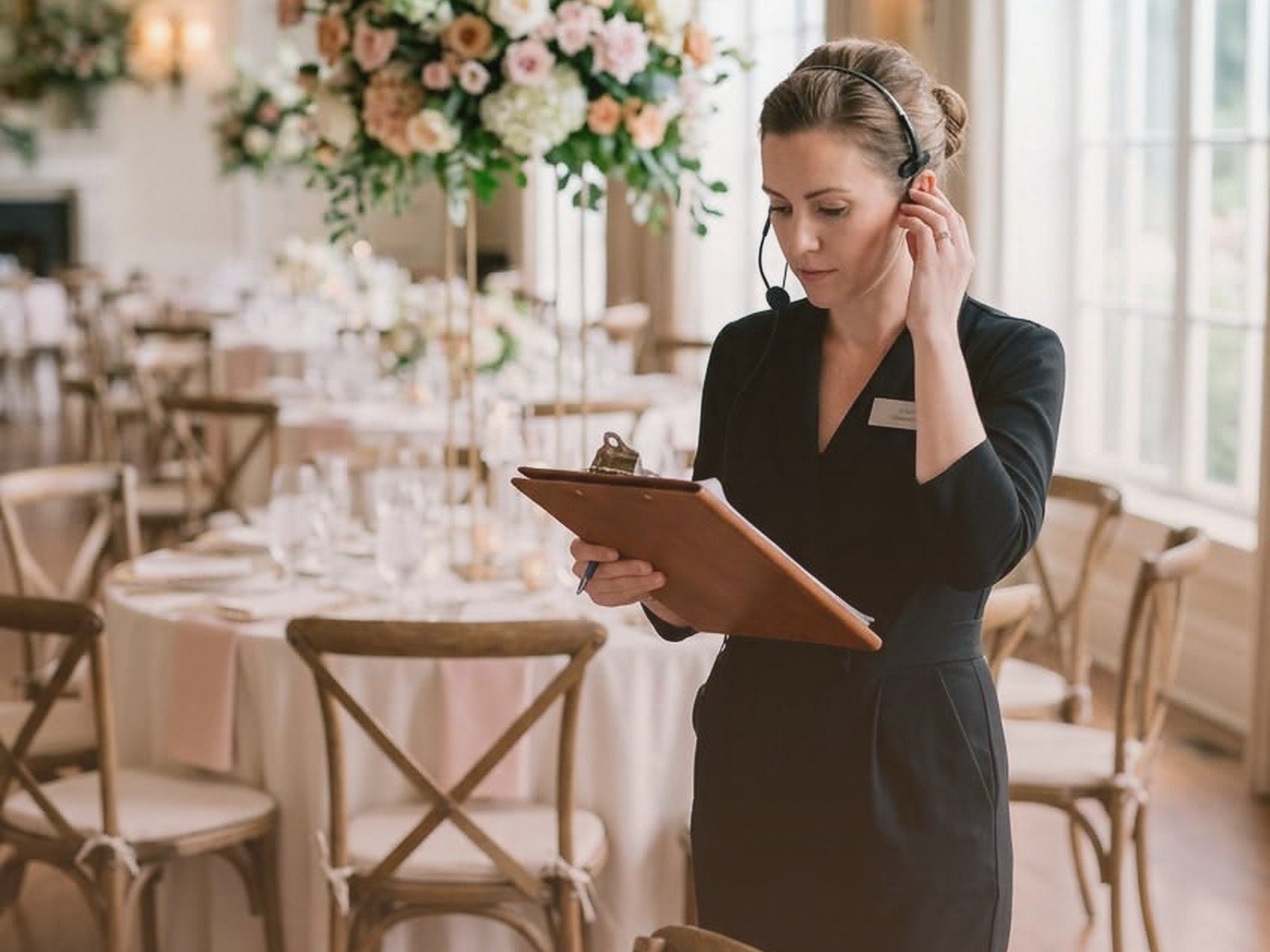
Your timeline needs to be detailed but also flexible. I create a master timeline that includes setup times, vendor arrival times, hair and makeup schedule, photography schedule, ceremony start, cocktail hour, reception entrance, dinner service, toasts, dances, cake cutting, bouquet toss, last dance, and breakdown.
But things will go off schedule. They always do. You need to know what you can compress and what you absolutely cannot. Photography time is usually flexible – if you’re running behind, you can cut a few posed family photos. But ceremony time is not flexible if you have the venue for specific hours or if there’s another event after yours.
I carry a small notepad and I’m constantly updating times and communicating with vendors throughout the day. The DJ needs to know if we’re running 15 minutes behind. The caterer needs to know if cocktail hour is extending. The photographer needs to know if we’re skipping the garter toss because the couple decided last minute they think it’s kinda weird.
Corporate Events Are Different Animals
Corporate events have different priorities than weddings. Usually there’s a business objective – product launch, team building, client appreciation, conference, whatever. You need to understand that objective and design the event around it.
Corporate clients are usually more decisive because they’re spending company money and they have approval processes. But they also might have like 6 people who need to weigh in on every decision, which can slow things down in a different way than an indecisive bride.
The budget conversations are different too. Corporations usually have a set budget and they want to maximize value within it. They care about ROI in a way that wedding clients don’t. You might need to provide post-event reports showing attendance, engagement metrics, social media reach, whatever.
Dealing With People Problems
Okay so this is the part of the job that doesn’t show up in the job description but takes up like 40% of your emotional energy. People are stressed during events, especially weddings, and they take it out on whoever is nearby. Sometimes that’s you.
I had this situation in summer 2021 where a mother-of-the-bride was just… she was dealing with a lot, and she decided that everything I did was wrong. The flowers were too pink. The timeline was too rushed. The DJ was too loud then too quiet then too loud again. At one point she yelled at me because the sunset wasn’t at the right angle for photos. The sunset.
You need thick skin and you need to not take things personally. When someone is being difficult, I try to remember they’re not really mad at me – they’re stressed about the event or they’re dealing with family drama or they’re worried about money or whatever. Doesn’t make it okay to be rude, but it helps me not internalize it.
Setting Boundaries
You gotta set boundaries or clients will text you at 11pm about napkin colors. My contract specifies my working hours and response times. I don’t answer non-emergency calls after 8pm or before 8am. I don’t work on Sundays except for events. Emergency means someone is injured or a vendor completely bailed, not “I’m having second thoughts about the centerpieces.”
Some clients will push boundaries constantly. Those are the ones where you need to decide if the paycheck is worth the stress. I’ve fired clients before. Not many, but it’s happened. Life’s too short to be miserable at a job you created for yourself.
Budget Management
Budgets are where things get real awkward real fast. Clients always want champagne taste on a beer budget, and part of your job is managing expectations without crushing dreams.
I create detailed budget spreadsheets at the beginning of planning. Every category has an estimated cost range based on my experience and local market rates. As we book vendors, I update the actual costs. I also build in a 10-15% buffer for unexpected costs because there are always unexpected costs.
The venues always cost more than people expect once you add in all the rentals and catering minimums. Photography is another category where sticker shock hits hard. A good wedding photographer in my market is gonna be $3,000-$6,000 minimum, and some clients think they should pay like $500 because their cousin has a nice camera.
You need to help clients prioritize. What matters most to them? If photography is their top priority, maybe we save money on flowers or favors. If food is everything, maybe we do a simpler ceremony setup and invest in the reception menu.
The Design and Details Part
Okay so design is fun but it’s also where clients can spiral into Pinterest hell. I’ve seen it happen so many times – they start with a clear vision and then they see 47 different ideas they love and suddenly they want rustic-glam-boho-modern-vintage-industrial aesthetic and it’s just… no. That’s not a thing.
I help clients create a cohesive design concept with a color palette (usually 2-3 main colors plus neutrals), a style direction, and key design elements. We make a mood board. We stick to the mood board. When they send me a random Pinterest pin at 2am that doesn’t match anything we’ve planned, I gently redirect them back to the mood board.
Stationery is my specific area of expertise, and invitations set the tone for the entire event. The design, the wording, the paper quality – all of it tells guests what to expect. A formal black-tie wedding needs formal invitations. A casual backyard wedding can do something more relaxed and fun.
Setup and Breakdown
Setup is where your planning meets reality and you discover which vendors actually read their contracts. I create detailed floor plans and setup diagrams for every event. Where do tables go? Where’s the dance floor? Where does the DJ set up? What about the photo booth? Cocktail tables? Gift table? Place card table?
I’m there for setup supervising everything. The rental company needs to put tables exactly where the floor plan shows. The florist needs to know which centerpiece goes on which table if we’re doing varied arrangements. The caterer needs to know where their service stations go.
Breakdown is less glamorous but equally important. Who’s taking leftover flowers? What about extra favors? Gifts and cards need to go home with someone responsible. The venue needs to be left in whatever condition the contract specifies. Sometimes clients want to keep certain decorations, so you need to coordinate that too.
Marketing Yourself
You need clients, which means you need marketing. I have a website with my portfolio, services, pricing info, and contact form. I’m on Instagram posting behind-the-scenes content, styled shoots, and real wedding photos (with client permission always). I’m in local wedding Facebook groups answering questions and being helpful without being salesy.
Word of mouth is huge in this industry. Happy clients refer their friends. Vendors refer clients to planners they like working with. I’ve gotten more business from vendor referrals than from any paid advertising I’ve ever done.
Styled shoots are great for building your portfolio when you’re starting out. Team up with other vendors, create a beautiful fake wedding or event, photograph it, and everyone uses the images for marketing. Just make sure everyone involved is actually good at what they do or the photos won’t help you.
The Unglamorous Stuff
There’s so much unglamorous work that happens behind the scenes. I spend hours on email. I create documents and spreadsheets and timelines and floor plans. I make phone calls to confirm details. I drive around town for venue visits and vendor meetings. I pack and unpack my setup kit and emergency kit constantly.
The paperwork is endless. Contracts, invoices, receipts, permits, insurance certificates, venue requirements, vendor agreements, payment schedules. I use accounting software now because trying to track everything in spreadsheets was making me crazy.
You’re also gonna spend time on things that don’t directly make money but are necessary for the business. Updating your website, posting on social media, networking events, professional development, answering inquiry emails from people who are just price shopping and have no intention of booking you.
Some days I spend 8 hours at my computer and never actually plan anything. That’s just part of running a business. The events themselves are maybe 20% of the actual work hours, even though they’re the most visible part of what I do.