Planning Guides, Style Guide
Wedding Ceremony Template: Service Script Downloads
Jul
Getting Your Hands on Ceremony Scripts That Actually Work
So you need a ceremony script template and honestly this is one of those things that sounds way easier than it actually is until you’re sitting there at 11pm realizing the wedding is in three days and you have… nothing. I learned this the hard way in spring 2023 when a couple hired me literally two weeks before their wedding because their original planner ghosted them and they needed EVERYTHING including a complete ceremony script because their officiant was the groom’s brother who had never done this before and was low-key panicking.
First thing you gotta know is that ceremony script templates come in about a million varieties and most of them are either too religious, too generic, or written like someone swallowed a Shakespeare anthology. The key is finding something that feels like actual humans would say these words out loud.
Where to Actually Download These Things
Alright so there are legit places to get ceremony scripts and then there are places that will give you something that looks like it was written in 1952. Here’s what I’ve used:
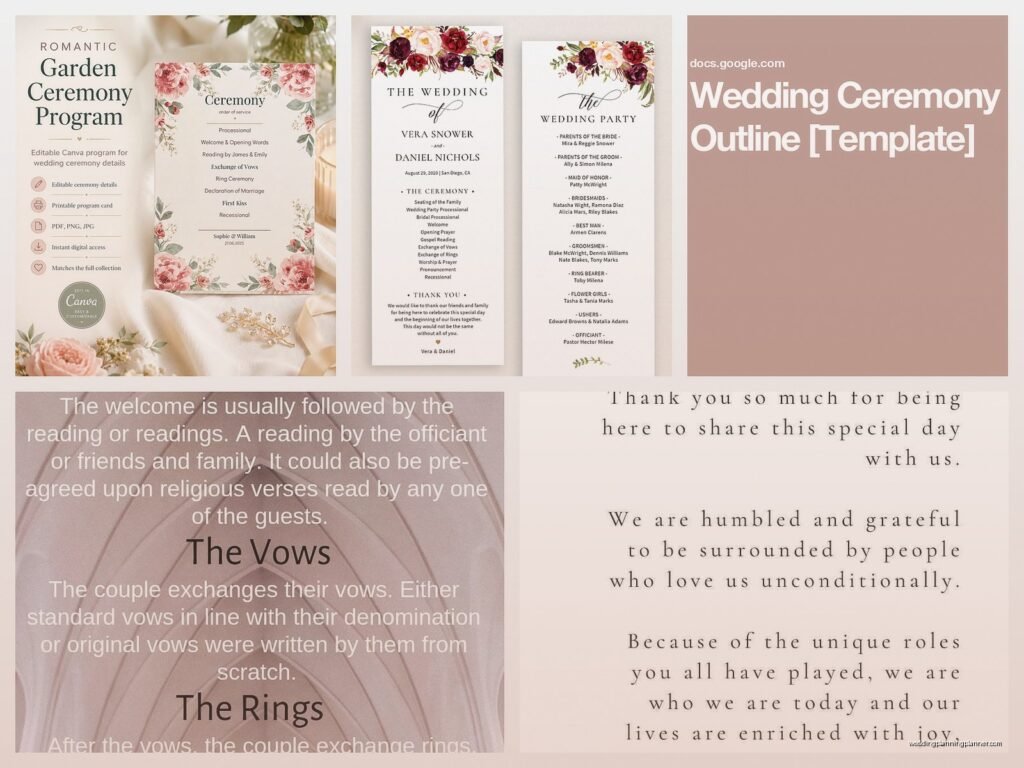
The Knot and WeddingWire both have free downloadable templates. They’re fine. Very standard, very safe, kinda boring if I’m being honest but they work when you need something fast. You can download them as PDFs or Word docs usually.
Etsy is where I actually get most of my ceremony scripts now because you can find ones that are more personalized and unique. Look for sellers who offer editable templates – you want Word or Google Docs format not just a PDF you can’t change. I’ve found some really beautiful non-religious scripts there that don’t sound like a robot wrote them. Prices range from like $5 to $30 which is totally reasonable.
Officiant websites are goldmines honestly. Many professional officiants offer free sample scripts on their websites because they want to show off their style. Just Google “wedding officiant + your city + sample ceremony” and you’ll find tons. Some of my favorite scripts came from random officiant blogs.
Wedding planning books that you can get on Amazon or at the library often have complete ceremony scripts in the appendix. Old school but effective.
What Should Actually Be In Your Script Template
OK so here’s what you need in a basic ceremony structure and this is gonna sound obvious but you’d be surprised how many downloaded scripts skip important parts:
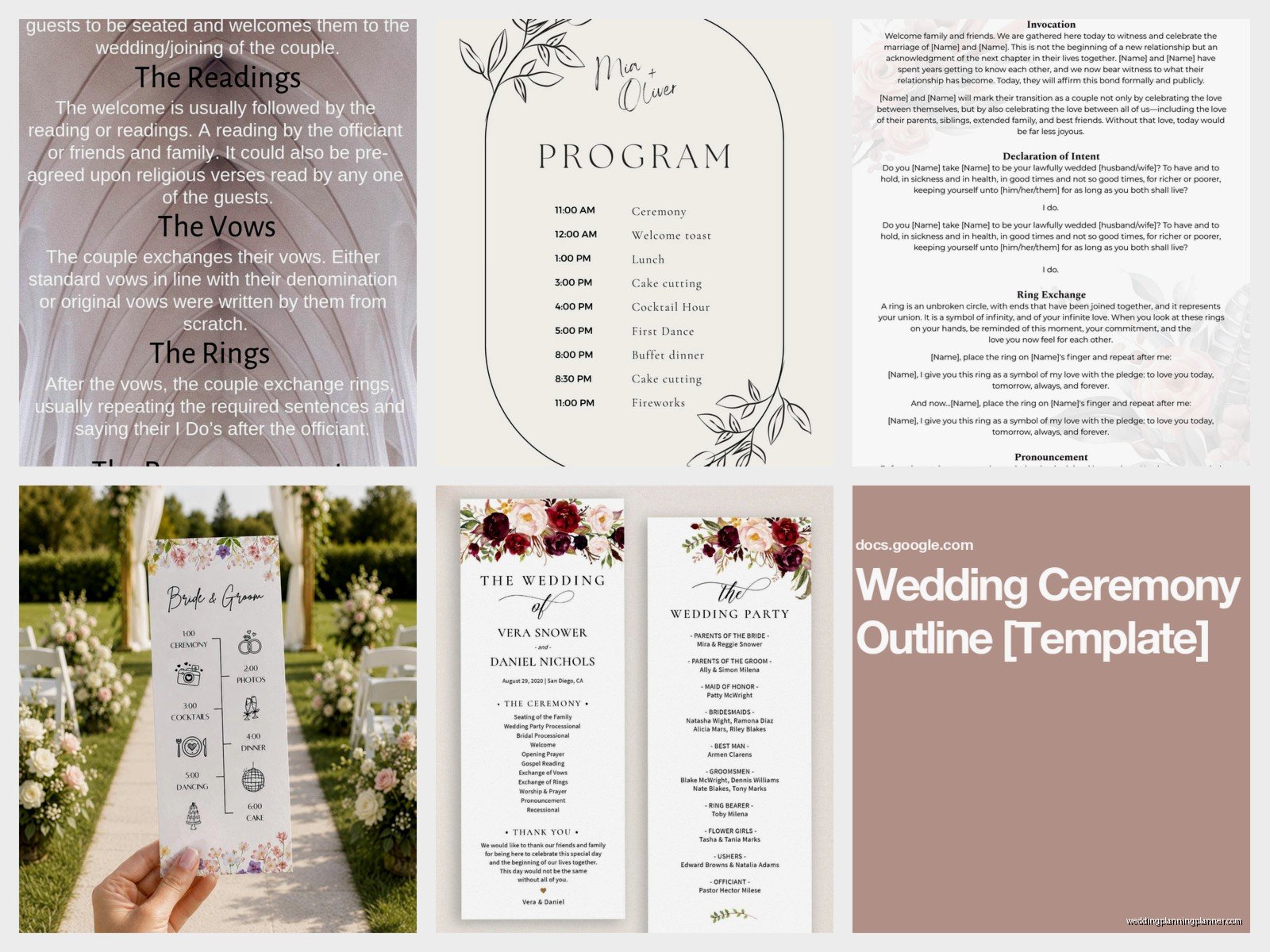
- Processional notes (like who walks in when)
- Welcome and opening remarks from the officiant
- Some kind of statement about why everyone’s gathered
- Reading or poem section (optional but most couples want this)
- The actual vows – either traditional or space for personal vows
- Ring exchange with the words that go with it
- Unity ceremony if they’re doing one – candle, sand, whatever
- Pronouncement (the “I now pronounce you” part)
- The kiss obviously
- Presentation of the couple
- Recessional notes
The thing that annoys me SO MUCH about downloaded templates is when they don’t include the transitional phrases between sections. Like they’ll have the vows and then just… nothing about how the officiant moves from vows to rings. You’re left there trying to figure out what words connect these pieces and it’s awkward.
Customizing Your Downloaded Script
This is where it gets real – you can’t just download a script and call it done. Well you can but it’s gonna sound super impersonal and weird. Here’s what I always do with templates:
Add the couple’s story. Most templates have a spot for this but they don’t give you guidance on what to include. I usually write 2-3 paragraphs about how they met, what they love about each other, maybe a funny story. Keep it under 3 minutes when read aloud or people zone out.
Adjust the language for their beliefs. If you downloaded a Christian ceremony script but the couple isn’t religious, you gotta strip out all the God references and prayers. Replace them with readings from literature or just meaningful quotes. I’ve used everything from Rumi to Dr. Seuss depending on the couple.
Check the pronouns. Some templates still say “husband and wife” or “man and woman” and you need to change that to match your couple obviously. “Spouses,” “partners,” “married couple,” whatever works.
Read it out loud. This is crucial and something I make every officiant do during rehearsal. What looks good on paper sometimes sounds clunky or too formal when spoken. If you’re stumbling over words, simplify them.
Different Types of Scripts You Can Download
Not all ceremonies are created equal and you need different scripts for different situations:
Religious ceremonies – Catholic, Jewish, Hindu, Muslim, whatever. These usually follow pretty strict formats and honestly you’re better off getting the script directly from the religious institution rather than downloading some random version online. The priest/rabbi/imam will have specific requirements.
Non-religious/secular ceremonies – These are the most flexible and where downloaded templates really shine. You can mix and match elements, add whatever readings you want, skip anything that feels too formal.
Interfaith ceremonies – These are tricky because you’re blending traditions. I usually download two different religious scripts and then carefully combine elements from both. It takes more work but it’s worth it to honor both backgrounds.
Short and sweet ceremonies – Some couples want like 10 minutes max. You need a stripped down script for this. Most downloaded templates are 20-30 minutes so you’ll need to cut aggressively.
Elopement scripts – Just the bare legal minimum plus maybe some personal vows. Super simple and you can find these specifically labeled on Etsy.
The Legal Stuff Nobody Tells You
Here’s something important that most downloaded scripts don’t mention clearly – you need to include the legal declaration of intent. This is the part where the officiant asks “Do you take this person” and both people say “I do” or “I will.” This is legally required in most places for the marriage to be valid.
Also the pronouncement needs to include something like “by the power vested in me by the state of [whatever]” – again, legal requirement that lots of pretty Etsy templates forget to include because they’re focused on being poetic.
Check your state or country requirements because they vary. Some places need witnesses verbally acknowledged, some don’t. The script should note where witnesses sign if that’s part of your ceremony.
My Actual Folder System for Scripts
I keep like 15 different ceremony scripts saved in a Google Drive folder organized by type. When I meet with a couple, I’ll send them 3-4 options that match their style and they can pick one as the starting point. Then we customize from there.
You should build your own collection over time. Every time you see a ceremony script you like – whether you downloaded it, got it from a client, or saw it at a wedding you attended – save it. Add notes about what worked and what didn’t. I have this one script from a beach wedding in summer 2021 that was absolutely perfect for the setting and I’ve used variations of it probably ten times since then.
My cat just knocked over my coffee while I’m writing this which is honestly on brand for how chaotic wedding planning can be but anyway…
Formatting Your Downloaded Script
This matters more than you think. The officiant needs to be able to read this thing easily while standing up in front of people. Here’s how I format every script:
- Font size 14 minimum, sometimes 16 for older officiants
- Double-spaced so it’s easy to track where you are
- Bold the parts the officiant says
- Italicize the parts the couple says
- Put stage directions in [brackets] like [Officiant takes rings from best man]
- Number the pages
- Print it single-sided not double-sided because flipping pages is awkward
I learned the formatting thing the hard way when an officiant literally lost his place during a ceremony because the script was in tiny font and single-spaced and he couldn’t find where he was supposed to be. It was like 45 seconds of awkward silence while everyone waited.
What to Do With Unity Ceremonies
If your downloaded script includes a unity ceremony (candle lighting, sand blending, handfasting, whatever), make sure the instructions are crystal clear. I mean step-by-step clear. Like:
[Bride picks up small candle on left. Groom picks up small candle on right. Together they light the large center candle. Officiant says: “This flame represents…”]
Most templates just say “unity candle ceremony” and give you the words but not the physical directions, which leaves everyone standing there unsure of who does what when. You gotta spell it out.
Personal Vows vs. Traditional Vows
Your script template needs to account for whichever type the couple is doing. If they’re writing personal vows, your script should just say:
[Bride and groom will now share their personal vows. Bride goes first.]Then leave space for them to say whatever they wrote. Don’t try to script out personal vows because… they’re personal.
If they’re doing traditional vows, include the full text in the script. There are like five different versions of traditional vows, so make sure you’re using the one they actually want. Some say “till death do us part,” some say “as long as we both shall live,” some say “for all the days of my life.” These differences matter to people.
Scripts for Different Wedding Styles
A formal ballroom wedding needs a different script tone than a backyard BBQ wedding, you know? When you’re downloading templates, think about the overall vibe:
Formal/traditional – More structured language, probably includes some classic readings, longer ceremony, specific processional order
Casual/laid-back – Conversational tone, maybe some humor, shorter overall, less rigid structure
Destination/beach – Usually shorter because of weather/heat, often includes references to the location, very relaxed language
Rustic/barn – Can go either way but usually leans casual, might include nature-themed readings or references
Modern/trendy – Contemporary language, might skip some traditional elements, could include non-traditional readings from movies or songs
Adding Readings and Who Reads Them
Most downloaded scripts have a spot for readings but don’t give you options. I keep a separate document of like 30 different readings – poems, excerpts from books, quotes, religious passages – that I offer to couples. When you find readings you like, save them.
Your script needs to clearly note who’s reading what. I always put it in bold:
[READING: “Union” by Robert Fulghum, read by Sarah Martinez, sister of the bride]That way everyone knows exactly when they’re supposed to step up and do their part.
The Rehearsal Script vs. The Ceremony Script
Something I wish I’d known earlier – you actually need TWO versions of your script sorta. Well, the same script but formatted differently. For the rehearsal, I create a simplified version that just has the blocking and timing notes without all the actual words. Nobody wants to stand through a full rehearsal where you read every single line.
The rehearsal script is more like:
- Processional order and spacing
- Where everyone stands
- When readers come up
- When the couple exchanges vows (but you don’t practice the actual vows)
- Ring exchange blocking
- The kiss and recessional
Then the full detailed script is for the actual ceremony day.
Backup Plans In Your Script
This is something downloaded templates never include but you should add – contingency notes. What if someone starts crying and needs a moment? What if it starts raining mid-ceremony? What if the ring bearer drops the rings?
I add notes like: [If couple gets emotional, pause and wait. Offer tissues if needed.] Or [If wind blows pages, officiant can adlib this section.]
These little additions have saved ceremonies from becoming awkward disasters more times than I can count and it’s honestly just about thinking ahead about what could go wrong which is basically my entire job description anyway.
Editing Downloaded Scripts for Length
Most templates you download are gonna be too long. Like 30-35 minutes when read at normal pace. Most couples want 20-25 minutes max. Here’s what you can cut without losing the important stuff:
- Extra readings – one is usually enough, maybe two if they’re short
- Long explanations of what marriage means – keep it to one paragraph
- Multiple blessings or prayers – pick one
- Lengthy unity ceremony – simplify the wording
- Extended closing remarks – just do the pronouncement and presentation
Time yourself reading it out loud. Add about 15-20% more time for pauses, emotions, laughter, whatever. If you read it in 18 minutes, it’ll probably be 22 minutes in reality.
The script is literally the backbone of the entire ceremony and having a solid template to start from makes everything so much easier than trying to write one from scratch at midnight when you’re exhausted and can’t think straight and your brain has turned to mush from looking at seating charts all day which is exactly where I was with that spring 2023 wedding I mentioned and thank god I had my template folder to pull from because otherwise I would’ve just… I don’t even know what I would’ve done honestly.