
Planning Guides, Style Guide
Wedding Venue Planner: Professional Services Guide
Oct
What Wedding Venue Planners Actually Do (And Why You Might Need One)
So wedding venue planners are different from regular wedding planners and I feel like nobody really gets this distinction until they’re knee-deep in planning and suddenly realize they’ve been talking to the wrong person for three weeks. A venue planner is specifically attached to the venue itself—they work FOR the venue, not for you exactly, though obviously they want your day to go well because it reflects on their space.
These are the people who know every single quirky detail about that barn or ballroom or garden you’re renting. They know the outlet that doesn’t work in the northeast corner, which caterer always shows up late, and exactly how many round tables fit in the main room without making it feel like a sardine situation.
The Actual Services They Provide
Most venue planners will give you a walkthrough when you first tour the space. This is where they’re gonna show you the layout options, explain what’s included in your rental fee (this varies SO MUCH it’s honestly annoying), and tell you about their preferred vendor list. Some venues require you to use their list, others just strongly suggest it, and a few don’t care at all.
Here’s what typically falls under their job:
- Coordinating your site visit and answering pre-booking questions
- Managing your contract and payment schedule
- Providing floor plans and capacity information
- Giving you the rundown on venue rules (and trust me, every venue has weird rules)
- Coordinating with your other vendors about load-in times and setup
- Being present on your wedding day to handle venue-specific issues
- Managing the venue staff (like bartenders, servers if they’re in-house)
- Handling ceremony and reception flip if you’re doing both at the same location
What They DON’T Do (This Trips People Up)
Back in spring 2023, I had this bride who kept emailing the venue planner about her bridesmaid dress drama and asking for timeline advice for hair and makeup. The venue planner finally forwarded me the emails like “can you help explain scope here?” because she was spending hours on stuff that wasn’t her job. The venue planner is not your personal wedding planner, your therapist, or your coordinator for anything happening outside their physical space.
They won’t:
- Design your overall wedding vision or theme
- Coordinate your ceremony if it’s at a different location
- Manage your wedding party or family drama
- Track down your florist who’s running late (unless the florist being late affects their venue schedule)
- Bustle your dress or fix boutonnières
- Hold your bouquet during vows (I mean, maybe if you ask nicely but it’s not their job)
- Create your master timeline for the whole day
How to Actually Work With Them
The venue planner becomes your point person for anything building-related. You need to know if you can hang string lights from the rafters? Ask them. Want to bring in a food truck for late-night snacks? Check with them first because some venues have really specific rules about outside food.
I always tell couples to get clear on a few things right away during that first meeting. Like, write this stuff down because you’re gonna be looking at pretty spaces and your brain will turn to mush:
Questions You Gotta Ask
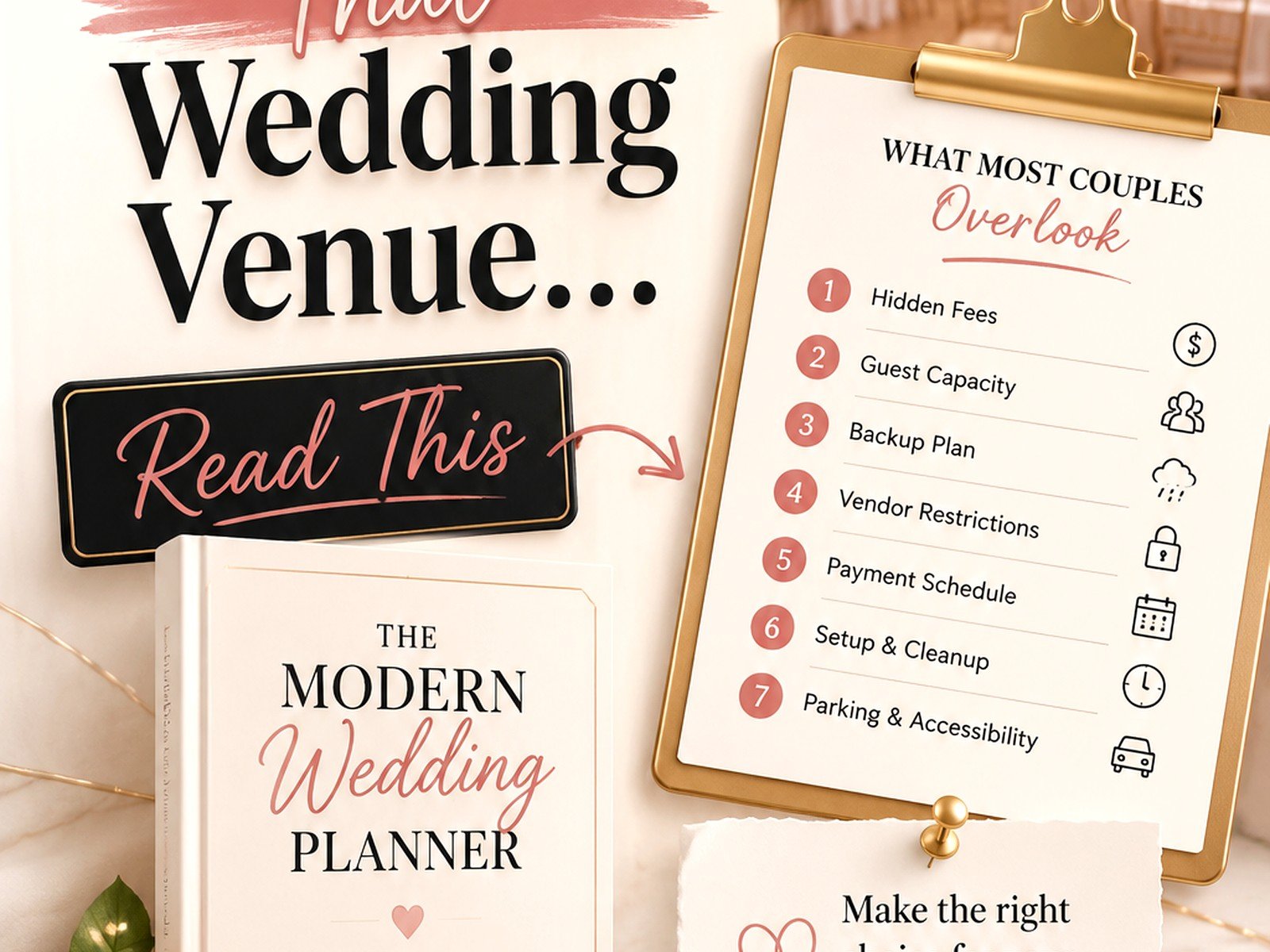
What’s included in the rental fee? Some places give you tables, chairs, linens, dishes, glassware, and basically everything. Others give you four walls and a roof and you’re on your own. I’ve seen rental fees that include a day-of coordinator and others where… well, or you’re paying extra for literally every single thing including someone to unlock the bathrooms.
What are the actual timing restrictions? A venue might say “8 hours” but does that include setup and breakdown? Is there a hard stop time because of neighborhood noise ordinances? Can you get in the day before to decorate?
What’s their backup plan for weather? If you’re booking an outdoor space, this matters SO much. Do they have a covered option? Is it an upcharge? How late can you make the call?
What can’t you do? Every venue has weird restrictions. No red wine (this one always annoys me because adults should be able to drink red wine at a wedding, but insurance is insurance I guess). No open flames. No confetti. No sparklers. No dancing after 10pm. Get the full list upfront.
The Preferred Vendor List Situation
This is kinda political honestly. Venues create preferred vendor lists for a few reasons. Sometimes it’s because they’ve worked with these vendors a million times and know they’re reliable and respectful of the space. Sometimes it’s because these vendors pay to be on the list or there’s some kickback situation happening. Sometimes it’s insurance-related.
If a venue REQUIRES you to use their list, that’s something you need to factor into your decision-making. It might mean you can’t hire your cousin who’s a photographer or that amazing caterer you found on Instagram. Some venues are flexible if you can prove your vendor has proper insurance and will sign their rules agreement.
I worked with a venue in summer 2021 that had the most rigid vendor requirements I’ve ever seen, and the bride was so frustrated because she’d already put a deposit down before realizing she couldn’t bring in her family friend who was gonna do flowers at cost. We had to eat that deposit and find someone from their approved list, which added like $800 to the budget.
Day-Of Coordination vs. Venue Planner
People mix this up constantly and it makes everything confusing. Your venue planner is focused on the venue functioning properly. Your day-of coordinator (if you hire one separately, which I usually recommend) is focused on YOU and your timeline and making sure all your vendors are coordinated and your family knows where to stand.
These two people should definitely communicate with each other, but they have different priorities. The venue planner cares that the catering setup happens on schedule and the bar doesn’t run out of ice. Your day-of coordinator cares that you ate lunch and your grandmother got escorted to her seat and the best man has the rings.
Some venues include a “day-of coordinator” in their package, but you need to clarify what that actually means. Are they coordinating the whole wedding or just the venue aspects? Big difference.
Communication Expectations
Most venue planners are juggling multiple weddings, sometimes multiple weddings in the same weekend. They’re not gonna respond to emails at 11pm or have long phone calls about every little detail. Set up specific check-in points—maybe one call a month leading up to the wedding, then a final walkthrough two weeks before.
Get everything in writing. If they tell you verbally that you can bring in your own wine, get that in an email. If they say you can access the space at 8am instead of 10am, documented it. I’ve seen too many “but they told me I could” situations that turned into disasters because there was no paper trail.
Red Flags to Watch For
If the venue planner seems scattered or disorganized during your initial tour, that’s probably how they’ll be throughout the whole process. You want someone who responds to emails within a reasonable timeframe (like 48 hours), knows the answers to basic questions without having to check with seventeen people, and seems generally on top of things.
If they’re super vague about what’s included or keep saying “we’ll figure it out later” about important details, push for clarity now. Contracts should be specific. “Tables and chairs” should specify how many and what style. “Setup included” should detail exactly what they’re setting up.
Watch out for venues that nickel-and-dime everything. Oh, you want the lights dimmed? That’s a $200 lighting technician fee. You need someone to push the button on the sound system for your ceremony music? That’s a $300 AV fee. Some of this is legitimate, but excessive fees for basic services can be a sign of a venue that’s more focused on maximizing profit than providing good service.
The Contract Deep Dive
Read the entire venue contract before signing, which sounds obvious but you’d be surprised. Pay attention to cancellation policies, what happens if they double-book (yes, this has happened), who’s liable if something breaks, and what the noise/time restrictions actually are.
Look for clauses about damage deposits. Some venues hold onto these for weeks after your wedding looking for any tiny thing to charge you for. Others are reasonable and just want to make sure nobody punches a hole in the wall or breaks a window.
My cat knocked over my coffee while I was reviewing a venue contract last month and I almost missed a clause about a mandatory venue planner fee that was separate from the rental cost—would’ve been an extra $800 surprise if I hadn’t caught it. Sometimes the important stuff is buried in paragraph seventeen of the fine print.
Making the Most of Your Venue Planner
These people are genuinely valuable resources if you use them right. They’ve seen hundreds of weddings at this specific location. They know what works and what doesn’t in that particular space. Ask them for advice about layout, timing, what previous couples have done that worked really well.
But also respect their time and expertise. Don’t email them about stuff that’s not venue-related. Don’t expect them to be available 24/7. Don’t change your mind about major setup details the day before your wedding (this happens more than you’d think and it stresses everyone out).
Create a shared document or planning software access so they can see your timeline and vendor contact information. The more informed they are about the overall plan, the better they can support you on the actual day.
When to Escalate Issues
If you’re having problems with your venue planner—they’re not responding, they’re giving you conflicting information, they seem checked out—talk to their manager or the venue owner. Most venues care a lot about their reputation and will address legitimate concerns.
But pick your battles. If something is genuinely going to affect your wedding day, speak up. If it’s just a personality clash or minor annoyance, sometimes you gotta just roll with it and focus on the bigger picture.
Costs and Tipping
Venue planner services are usually built into your rental fee, but some venues charge separately. This can range from like $500 to $3000 depending on the venue, the location, and what’s included. Higher-end venues in major cities obviously cost more.
Tipping is kinda weird because they’re often salaried employees, but if your venue planner goes above and beyond, a tip is definitely appreciated. I usually suggest $100-$300 depending on how involved they were and how smoothly everything went. Some couples also write a really nice thank-you note or leave a glowing review, which helps them professionally.
If there’s venue staff working your event—bartenders, servers, setup crew—clarify whether gratuity is included in your contract or if you need to tip separately. This varies wildly by venue and region.
The Reality Check
Your venue planner can make your day so much smoother or they can be just… there. The good ones anticipate problems before they happen, communicate clearly, and make you feel confident that the venue side of things is completely handled. The mediocre ones do the bare minimum and disappear once the contract is signed.
You can’t always predict which you’re gonna get, but asking for references from recent couples who got married there helps. And honestly, trust your gut during that initial meeting. If someone seems flaky or dismissive or like they’re already annoyed by your questions, that’s probably not gonna improve over the next eight months of planning.
