
Planning Guides, Style Guide
Party Event Planning: Complete Guide
May
Getting Your Party Planning Started
So the first thing you gotta do is figure out what kind of party you’re actually throwing because honestly this changes everything. I had this client back in spring 2023 who kept saying “just a small gathering” and then mentioned she wanted 80 people and a full bar setup and I was like… okay so not small then. You need to know if this is a birthday, anniversary, retirement, graduation, or just a “because we feel like it” party. Each one has different expectations.
Write down your guest count first. Not an estimate, an actual number. Then add 10% because people always think of someone else later. This number determines your venue size, your catering amounts, your seating arrangements, literally everything flows from this.
Budget Reality Check
I’m gonna be real with you – most people underestimate party costs by like 40%. It’s wild. Start with your absolute maximum number, the one that would make you slightly uncomfortable to spend. That’s probably closer to what you’ll actually need. Break it down into categories:
- Venue rental (if not at home)
- Food and beverages
- Decorations
- Entertainment or music
- Invitations and paper goods
- Rentals (tables, chairs, linens, dishes)
- Staff or servers if needed
- Miscellaneous (this will be 15% of your budget, trust me)
The miscellaneous category is what saves you when you suddenly realize you need extension cords, or extra ice, or that thing you completely forgot about. Always have a buffer.
Timeline Planning
If your party is in less than 3 weeks, you’re in rush mode and some things just aren’t gonna happen. Accept that now. For a proper party with 30+ people, you want at least 6-8 weeks. Here’s how I usually break it down:
8 weeks out: Book your venue if you’re using one. Send save-the-dates if it’s a big deal. Lock in your caterer or start planning your menu if you’re doing it yourself. This is also when you should start thinking about a theme, though honestly themes are optional and sometimes people get too obsessed with them when—sorry, getting sidetracked.
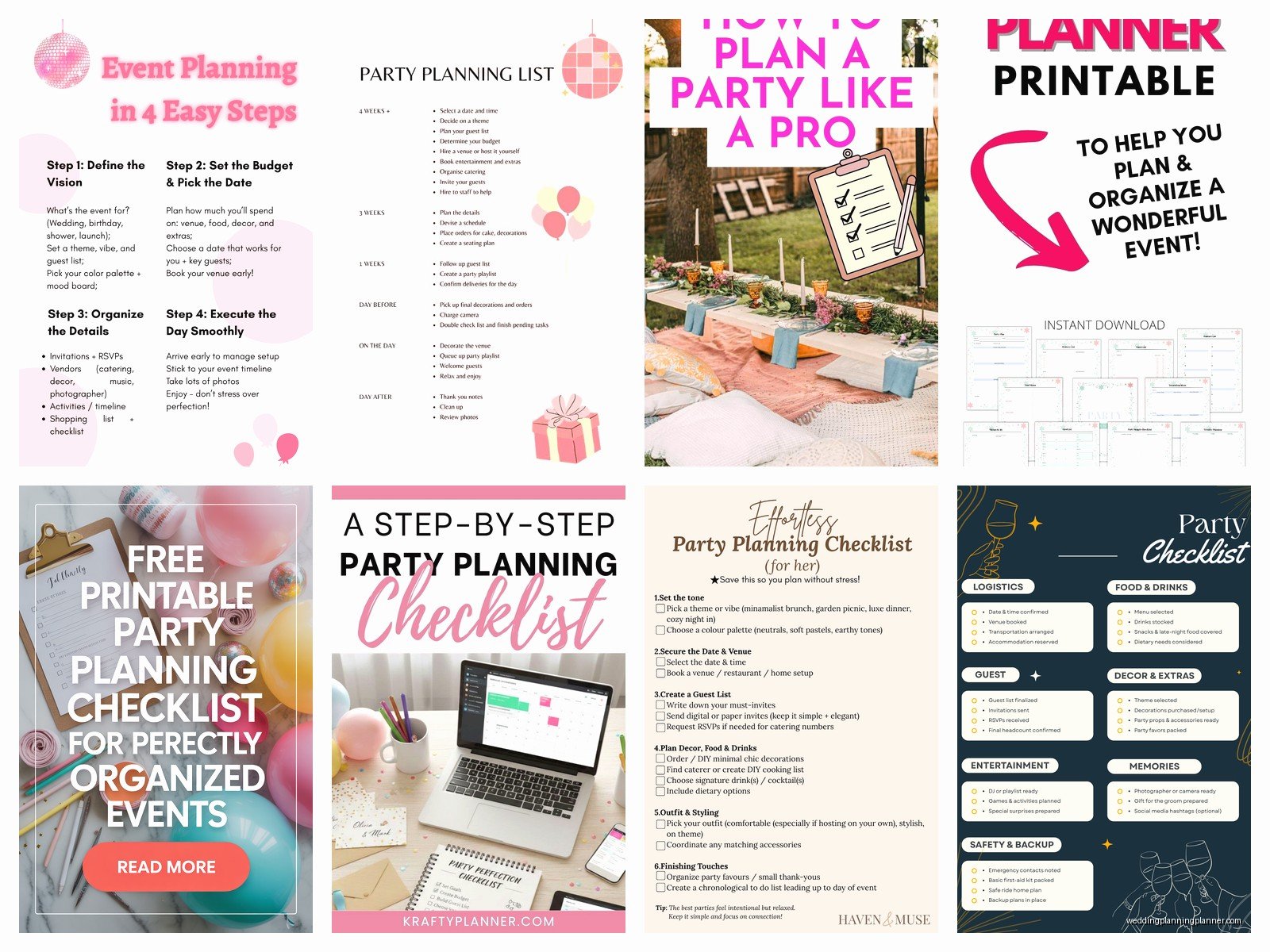
6 weeks out: Order or make invitations. Finalize your guest list. Book entertainment, DJ, or create your playlist. Reserve any rental equipment. Figure out your drink situation.
4 weeks out: Send invitations. Start shopping for decorations. Confirm all your vendors. Plan your lighting situation because bad lighting ruins photos and atmosphere.
2 weeks out: Follow up with people who haven’t RSVP’d, which is so annoying by the way – like why do people think RSVP is optional? It literally means “please respond” but I have to chase down grown adults who can’t send a simple text back. Anyway. Finalize your food quantities based on actual headcount. Buy non-perishable supplies. Create your setup timeline and diagram.
1 week out: Confirm final headcount with caterer or adjust your shopping list. Buy perishables. Prep anything that can be prepped early. Charge all your devices for photos. Clean your venue space if it’s at home.
2 days out: Shop for last-minute fresh items. Set up what you can early. Chill beverages. Make ice or buy extra bags.
Venue Selection
Home parties are cheaper but way more work. You’re doing all the setup, all the cleanup, and people will definitely go into rooms you don’t want them in. I remember my cat knocked over an entire tray of appetizers during my own sister’s baby shower at my place in summer 2021, right before guests arrived, and I just… sometimes home venues have unexpected variables.
If you’re renting a space, visit it in person. Photos lie. Check these things:
- Parking situation and accessibility
- Bathroom quantity and cleanliness
- Kitchen access if you need it
- Tables and chairs included or extra cost
- Sound system availability
- Lighting options and natural light
- Climate control that actually works
- Load-in and load-out rules and timing
- Cleanup expectations and fees
- Alcohol policies and permits needed
Some venues nickel-and-dime you with fees for everything. Get the total cost in writing with all the fees listed out.
Food and Drink Strategy
The general rule is people eat more than you think during cocktail parties and less than you think during seated dinners. For appetizers, plan 5-7 pieces per person for the first hour, then 3-4 pieces per hour after that. If it’s a full meal, you need about 1.5 pounds of food per person total when you factor in sides and everything.
Dietary restrictions are non-negotiable now. You need vegetarian options at minimum, and it’s smart to have something gluten-free and dairy-free available. Ask about restrictions on your invitations or you’ll find out the day of the party that someone can’t eat anything you prepared.
Drink Calculations
For a party with alcohol, assume each person drinks 2 drinks in the first hour and 1 per hour after that. So for a 4-hour party, that’s about 5 drinks per person. A standard bottle of wine gives you 5 glasses. A liter of liquor makes about 22 drinks. Beer is one per person per calculation obviously.
Non-alcoholic options matter more than you think. Have actual good options, not just water and one sad bottle of warm soda. Sparkling water, lemonade, iced tea, fancy sodas – people appreciate it.
Ice. You need so much more ice than seems logical. One pound per person minimum, more if it’s summer or you’re chilling drinks in tubs. Buy it the day before and store it in coolers.
Decoration Approach
Honestly you can spend $50 or $5000 on decorations and create good vibes with either budget. It’s about cohesion not cost. Pick 2-3 colors max. Stick with them. Trying to incorporate every color makes it look like a preschool threw up everywhere.
Focus your decoration budget on the areas people will actually be: entrance, food table, main gathering space. Don’t waste money decorating corners nobody will see or care about. Lighting does more for ambiance than any decoration – string lights, candles, uplighting, whatever fits your vibe.
Fresh flowers are beautiful but expensive and wilty. Sometimes good quality faux flowers mixed with real greenery looks better and lasts through the whole event without drooping.
Setup Flow
Think about traffic patterns. Where will people enter, where will they naturally gather, where’s the food, where’s the drinks, where’s the bathroom? You want to spread things out so you don’t get bottlenecks. The bar should never be right next to the food table or you create a mob situation.
Set up the food table so people can access from both sides if possible. Put plates and napkins at the start, utensils at the end after they’ve gotten food. Seems obvious but you’d be surprised how many people do it backward.
Entertainment and Music
If you’re hiring a DJ or band, meet them beforehand or at least have a detailed phone conversation. Give them a “do not play” list along with your preferences. I once had a DJ at a corporate anniversary party who kept playing explicit rap despite being told multiple times it was a multigenerational family event and I wanted to just… anyway.
For playlist parties, make it longer than you think you need. A 4-hour party needs at least 6 hours of music so you don’t hear repeats and have buffer time. Match the music energy to the party phase – start chill, build up during peak time, wind down toward the end.
Test your sound system before the party. Nothing worse than realizing your Bluetooth speaker can’t fill the space or your connection keeps dropping.
Activities and Games
These are optional and honestly depend on your crowd. Some groups love organized activities, some find them forced and awkward. Know your audience. If you do games, have all supplies ready and instructions written out clearly. Assign someone to manage it who’s outgoing because games die without an enthusiastic leader.
Staffing and Help
You cannot host and do everything yourself. You just can’t. Even for smaller parties, recruit help. For parties over 30 people, seriously consider hiring servers or bartenders. It’s usually $25-40 per hour per person, and it means you can actually enjoy your event instead of spending it in the kitchen.
If you’re using friends as helpers, be specific about tasks and timing. “Can you help?” is too vague. “Can you arrive at 2pm to help set up tables and then manage the drinks table from 4-6pm?” is clear and actionable.
Day-Of Timeline
Work backward from your start time. If guests arrive at 6pm, you want setup done by 5:30pm to give yourself breathing room. That means you’re starting setup at… depends on complexity, but usually 3-4 hours before for a full party.
Create a written timeline. Sounds excessive but when you’re stressed and running around, having it written down keeps you on track. Include specific tasks like “4pm: arrange food table, 4:30pm: set out appetizers, 5pm: start playlist, 5:15pm: final bathroom check, 5:30pm: get dressed and breathe.”
Get yourself ready early. You need to be completely ready 30 minutes before guests arrive because someone will show up early. They always do.
Emergency Kit
Keep a box with these items accessible:
- Stain remover pen
- Safety pins
- Tape (regular and double-sided)
- Scissors
- Sharpie
- Phone charger
- Pain reliever
- Band-aids
- Bobby pins
- Lighter or matches
- Extra batteries
- Small sewing kit
You won’t need most of it, but when you need it, you really need it.
Managing the Event
Once the party starts, your job is to facilitate not micromanage. Greet people as they arrive. Introduce people who don’t know each other. Keep an eye on food levels and refill before things are empty. Monitor the temperature – rooms get hot when full of people.
Don’t disappear into the kitchen for long stretches. If something needs doing, delegate it or let it wait unless it’s truly urgent. Your presence as host matters more than perfectly timed appetizer refills.
Watch for anyone standing alone and bring them into a conversation. Notice when someone’s drink is empty and offer a refill. These small attention things make people feel welcomed and taken care of.
Handling Issues
Something will go wrong. Maybe small, maybe bigger, but something always does. The cake arrives damaged, someone spills red wine on your carpet, the music stops working, whatever. Take a breath, fix what you can, let go of what you can’t. Guests usually don’t notice problems as much as you think they do.
Have a backup plan for weather if your event is outdoors or partially outdoors. Even if the forecast looks perfect, have a rain plan ready.
Cleanup Strategy
As the party winds down, you can start subtle cleanup. Clear obviously empty plates and cups. But don’t start full teardown while guests are still there – it’s kinda rude and makes people feel like they should leave.
If you’re at a rental venue, know exactly what you’re responsible for cleaning versus what they handle. Take photos of the space before you leave to prove its condition in case any damage disputes come up later.
For home parties, accept that full cleanup is tomorrow’s problem. Do the bare minimum tonight – trash out, perishables refrigerated, any major spills cleaned. The detail work can wait until you’re rested.
If people offer to help clean up, let them. Have specific tasks ready: “can you collect all the cups?” or “can you break down those chairs?” People genuinely want to help, and it builds community to let them contribute.