Planning Guides, Style Guide
Partial Wedding Planning: Complete Guide
May
Okay So Partial Planning Is Actually Perfect For A Lot Of Couples
Look, partial wedding planning is honestly what most couples actually need but don’t realize exists. It’s that middle ground between doing everything yourself (nightmare) and hiring someone for full-service planning (expensive). I had this bride in spring 2023 who came to me literally crying because she’d been DIYing everything for eight months and just… couldn’t anymore. She didn’t want to give up control of everything, but she was drowning in vendor emails and timeline spreadsheets.
What Partial Planning Actually Means
So partial planning goes by like a million names—month-of coordination, partial coordination, wedding management—and honestly it drives me crazy because every planner defines it differently. There’s no industry standard which is super annoying when you’re trying to compare packages.
Basically you’re hiring a planner to step in at a certain point in your planning process. Could be three months out, could be six months, sometimes even a year before if you want help with specific things but not everything. You’ve already done the big stuff—booked your venue, photographer, caterer, whatever—but you need someone to actually execute your vision and manage the chaos on the day itself.
The way I structure it is you get me for vendor coordination, timeline creation, rehearsal management, and full day-of coordination. Some planners include design help, some don’t. I throw in a few design consultations because honestly I can’t help myself, but that’s not standard.
When To Actually Hire A Partial Planner
Here’s the thing—most venues and planners will tell you to book at least three months before your wedding. I say four to six months is better if you can swing it. Why? Because by three months out, if you’ve made any vendor mistakes or timeline issues, they’re harder to fix.
I took on a couple once with just six weeks before their wedding and like… I did it, but it was stressful for everyone. Their vendor contracts were a mess, they’d booked a photographer who couldn’t stay past 8pm (WHO DOES THAT), and nobody had thought about what happens during cocktail hour. We made it work but my cat definitely suffered from my stress levels that month—poor Buttons got way less lap time than usual.
The sweet spot is booking your partial planner right after you’ve secured your major vendors. So you’ve got venue, catering, photography locked down, and now you bring in someone to handle the rest and make sure everything actually works together.
What’s Included vs What’s Not
This is where it gets tricky and why you gotta read contracts carefully. My partial planning package includes:
- Unlimited email support from when you book me
- Two or three in-person meetings (depending on how far out we are)
- Vendor coordination and confirmation
- Timeline creation and distribution
- Rehearsal coordination
- Full day-of coordination with an assistant
- Setup and breakdown management
- Problem-solving on the day (this is huge)
What I don’t include that full-service planners do:
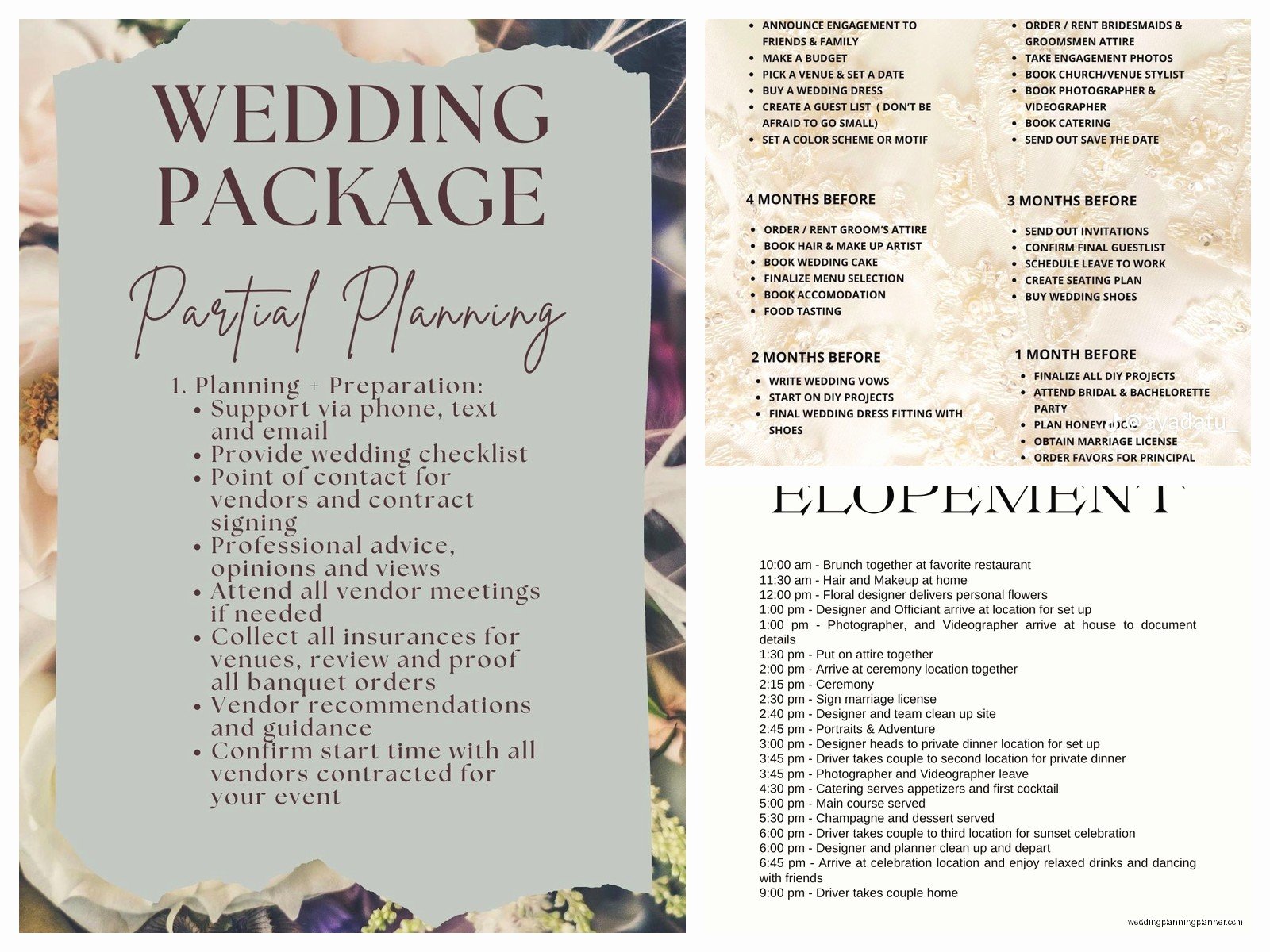
- Venue research and tours
- Vendor recommendations and booking (I’ll give you names if you ask, but I’m not doing the research and negotiations)
- Budget creation and management
- Design concept development
- Invitation consultation (though I do this separately as a stationer, but that’s a whole different contract)
- Guest list management
Some planners include design help, floor plan creation, or additional meetings. You really need to ask specifically what’s included because “partial planning” could mean totally different things.
The Timeline Thing Everyone Messes Up
Okay so one of the main reasons people hire partial planners is the timeline, and I need to explain why this matters so much. You might think “it’s just a schedule, I can make that myself” but here’s what I’ve learned after doing this for 15 years—couples have no idea how long things actually take.
You think getting 150 people through a buffet line takes 30 minutes? Try 45-60. You think your photographer needs 20 minutes for family photos? Nah, you need at least 45 if you have a normal-sized family, and that’s if everyone actually shows up on time which they won’t.
I create timelines that account for actual human behavior, not ideal situations. I build in buffer time. I coordinate with every single vendor so they know when they’re setting up, breaking down, when they need to be where. Your DJ needs to know when toasts are happening. Your caterer needs to know when you’re cutting the cake. Your photographer needs to know when you’re doing your first look—or if there even is a first look because some couples forget to mention that until… anyway.
The Vendor Coordination Part
This is probably the most valuable thing I do for partial planning clients. About six weeks before your wedding, I reach out to every single vendor you’ve booked. I introduce myself, get their contact info, confirm their arrival times, find out what they need from the venue, ask about any special requirements.
Then I create a master vendor list with everyone’s contact info, arrival times, setup needs, and any notes. This goes to you and to each vendor. Everyone knows who’s who and what’s happening when.
The week of the wedding, I confirm everything again. Day before, I text everyone. Day of, I’m the point person for all vendor questions and issues. You don’t answer a single vendor call or text on your wedding day. That’s the whole point.
I had this wedding where the florist showed up an hour late because of traffic and the ceremony was supposed to start in 90 minutes. The bride had no idea because I just… handled it. Rearranged the timeline slightly, had the florist prioritize ceremony arrangements over cocktail area florals, everything was done before guests arrived. That’s what you’re paying for.
Rehearsal Coordination
Most partial planning packages include rehearsal coordination and honestly this alone is worth hiring someone. Rehearsals without a coordinator are chaotic. Everyone’s standing around, someone’s dad is trying to be in charge but doesn’t actually know what should happen, the wedding party is goofing off, and you’re not actually practicing anything useful.
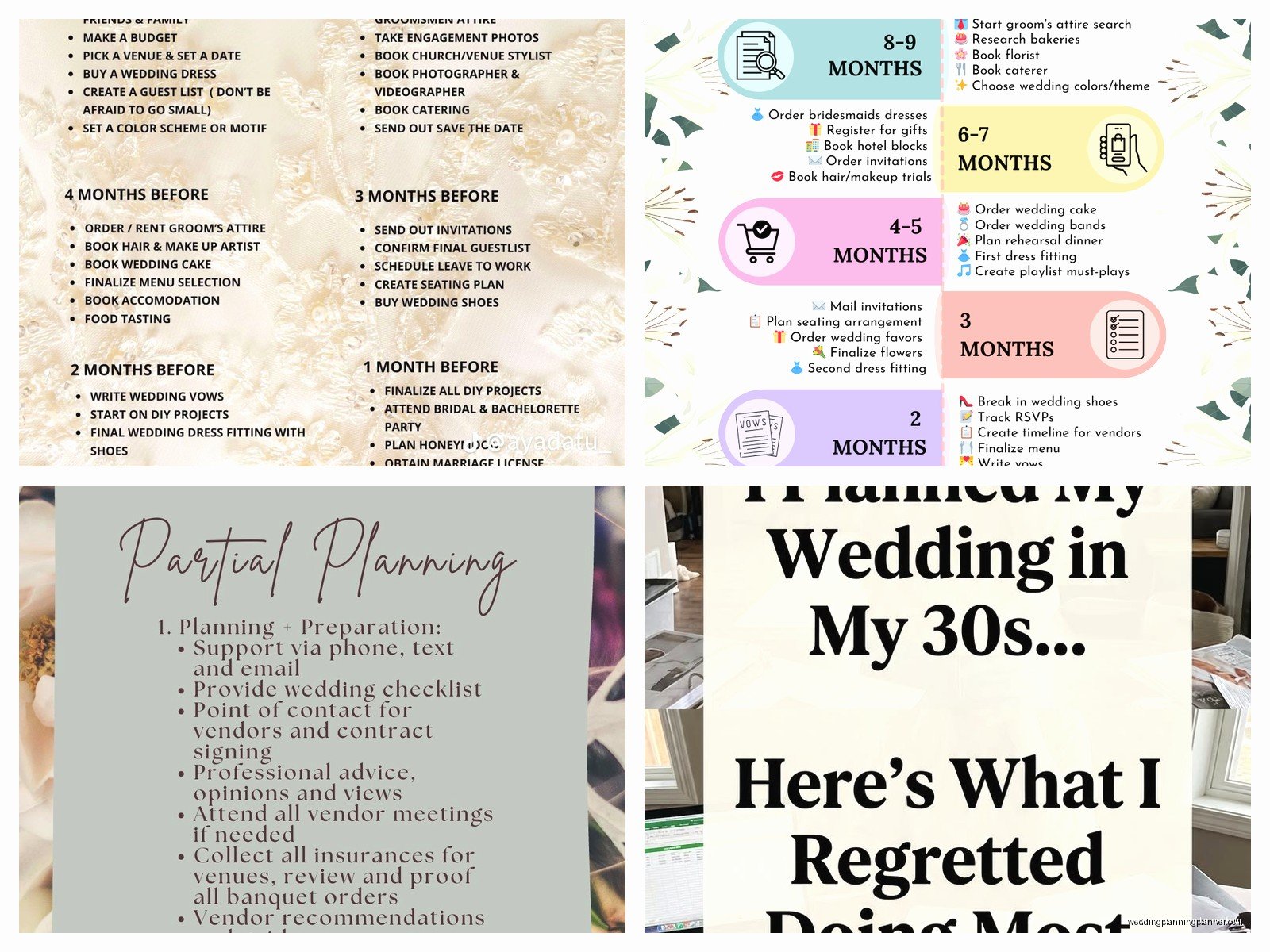
I run rehearsals in about 45 minutes. I line everyone up, we walk through the processional twice (once to learn it, once to practice), we go over where everyone stands, we practice the recessional, done. Then everyone can go to the rehearsal dinner and actually relax.
I also use rehearsal time to scope out the venue, check on setup logistics, figure out where vendors will load in, identify any potential issues. It’s like a pre-game survey.
Day-Of Coordination Details
Okay so day-of coordination is when I actually earn my money. I usually arrive at the venue about 3-4 hours before the ceremony. Earlier if there’s a lot of setup or if it’s a tent wedding or something complicated.
Here’s what I’m doing during that time:
- Overseeing all vendor load-in and setup
- Placing your ceremony programs, escort cards, favors, signage—all the little stuff you’ve been collecting for months
- Checking the floor plan against actual table setup
- Distributing final payments and tips to vendors (if you’ve given them to me beforehand)
- Steaming your dress or suit if needed
- Pinning boutonnieres on everyone in the wedding party because nobody knows how to do this properly
- Keeping everyone on schedule
- Handling any last-minute problems
During the ceremony I’m in the back making sure the processional happens correctly, cueing musicians or the DJ, holding the bride’s bouquet during the vows, making sure the flower girl doesn’t wander off—whatever needs to happen.
During cocktail hour I’m usually flipping the ceremony space or coordinating with venue staff to do so. Checking on catering setup. Making sure the reception space is ready. Gathering the wedding party for any photos that are happening during this time.
During the reception I’m basically invisible but everywhere. Cueing the DJ for announcements. Making sure catering is on schedule. Cutting the cake (actually cutting it into slices, not just the ceremonial cut you do). Handling any guest issues or questions. Coordinating the sparkler sendoff or whatever your exit is. My assistant and I are just constantly moving and problem-solving.
The Emergency Kit Situation
Every partial planner should bring an emergency kit and if they don’t, that’s a red flag. Mine is basically a small suitcase at this point. I’ve got:
- Sewing kit with thread in multiple colors
- Fashion tape and safety pins
- Stain remover pen
- Clear nail polish (for stocking runs)
- Pain relievers, antacids, band-aids
- Tissues and blotting papers
- Bobby pins and hair ties
- Deodorant and mints
- Super glue (you’d be surprised)
- Scissors and box cutter
- Lighter (for candles and also for burning stray threads on dresses)
- Snacks for the wedding party
I’ve used every single item in that kit at various weddings. The super glue once saved a groom’s shoe that literally fell apart an hour before the ceremony.
Questions To Ask When You’re Hiring
When you’re interviewing partial planners, here’s what you actually need to ask:
What exactly is included in your package? Get specifics. How many meetings? How many hours on the wedding day? Do they bring an assistant? What happens if the wedding goes longer than expected?
When do you start working with us? Some planners don’t really engage until a month before. I think that’s too late but some people do it that way.
How do you handle vendor coordination? What’s their process? When do they reach out? How do they communicate information?
What’s your backup plan if you’re sick? Every planner should have a network of other planners who can step in during emergencies.
Can we see a sample timeline you’ve created? This will show you how detailed they are and whether their style matches what you need.
What’s your refund/cancellation policy? What happens if you need to postpone your wedding? (Very relevant question these days.)
Also just… meet with them and see if you like them. You’re gonna be texting this person a lot in the months before your wedding and they’re gonna be with you all day on the wedding itself. If they annoy you in the consultation, they’re gonna annoy you later.
What Partial Planning Costs
Prices are all over the place depending on your location and the planner’s experience. In my area (mid-sized city, not NYC or LA), partial planning ranges from about $1,500 to $4,000. I charge $2,800 for my standard package.
In bigger cities you might see $3,000-$6,000. In smaller towns or rural areas, maybe $1,000-$2,500. It also depends on your guest count—coordinating a 50-person wedding is different from coordinating a 250-person wedding.
Some planners charge hourly instead of a flat fee, which I personally think is kinda risky because you don’t know what your final cost will be. But some couples prefer it if they have a really simple wedding and don’t think they need much coordination.
Common Mistakes People Make With Partial Planning
The biggest mistake is waiting too long to book. By the time some couples realize they need help, good planners are already booked. Wedding season is real and we fill up fast, especially for Saturdays in peak months.
Another mistake is not being honest about what you’ve already done or not done. I need to know if you haven’t actually confirmed your vendors in six months or if you’re having doubts about your caterer or whatever. I can’t help if I don’t know what’s actually going on.
Some couples also think partial planning means they can just hand everything off and not think about it anymore. Nah, you still need to make decisions and respond to my questions and actually do the things you said you’d do. I’m coordinating and executing, not taking over your entire wedding.
Oh and not reading the contract carefully is a big one. Know what’s included, what’s not, how many hours you’re getting, all of it. I had a bride get upset that I didn’t help her with her invitation wording when that was never in our contract and we’d never discussed it. Just… read the contract.
DIY vs Partial Planning
Some couples ask me if they really need partial planning or if they can just DIY the whole thing. Honestly? You can DIY it if you’re super organized, have a simple wedding, have helpful family and friends, and don’t mind spending your wedding day managing stuff instead of enjoying it.
But here’s what usually happens with DIY coordination: you assign tasks to your wedding party or family members, and they either forget or do it wrong or get overwhelmed or drunk. Your maid of honor doesn’t actually want to spend your wedding day tracking down vendors and solving problems. She wants to celebrate with you.
Also you can’t predict what will go wrong. I’ve handled missing ceremony chairs, broken cake stands, lost rings (found them), drunk uncles who needed to be managed, vendors who showed up at wrong locations, wardrobe malfunctions, medical emergencies (called 911 once for a guest), weather issues… the list goes on and on.
Summer 2021 was wild because we were doing all these postponed COVID weddings and everyone was rusty—vendors, venues, everyone. I did a wedding where the caterer forgot half the appetizers and I had to coordinate with the venue kitchen to quickly supplement with their backup options while keeping the couple completely unaware anything was wrong. You can’t plan for that stuff, you just need someone who can think on their feet.
Working With Your Partial Planner
Once you’ve hired someone, actually use them. Send them your questions. Ask for their opinion on stuff. Tell them about any family drama or logistical concerns. The more information I have, the better I can help.
Keep your planner updated on any vendor changes, timeline preferences, family situations that might affect the day. If your parents are divorced and can’t be in the same room, I need to know that before the rehearsal, not during it.
Respond to emails in a timely way. When I send you a timeline draft and ask for feedback, actually review it and get back to me. I’m working on multiple weddings at once and if you’re not responding, it slows down my ability to finalize everything.
Trust your planner’s advice. If I tell you something is gonna be a problem or suggest a different approach, I’m saying that based on experience. You can still make your own choices obviously, but at least consider what I’m telling you.
What Happens After The Wedding
My contract includes post-wedding breakdown coordination, which means I make sure everything gets packed up properly and that you get all your personal items, gifts, decor, whatever. Some couples forget about this part and then realize all their card box money and expensive vases are still at the venue.
I usually stay until all vendors have cleared out and the venue is released properly. Then I follow up a few days later to make sure you got everything and to send any vendor contacts you might need for thank you notes or reviews.
Some planners offer a post-wedding meeting to debrief and go over anything that came up. I don’t formally do that but I’m always available if couples want to chat about how things went.
And honestly most couples are so happy after their wedding that they’re just ready to be done with planning and move on to married life, which is exactly how it should be. That’s the whole point—you hire me so you can actually enjoy your wedding day instead of stressing about logistics and vendor management and whether the centerpieces are centered or… whatever. You get to just be present and celebrate, and I make sure everything else happens the way it’s supposed to.