Planning Guides, Style Guide
Wedding Reception Seating: Complete Guide
May
Okay so seating charts are literally the thing that keeps couples up at night
The number of times I’ve gotten a panicked text at 11pm about “Can we seat Aunt Margaret with Uncle Tom even though they haven’t spoken since 2015?” is honestly ridiculous. Wedding reception seating is one of those tasks that seems simple until you actually sit down to do it and then suddenly you’re moving digital name cards around for three hours straight.
First thing – you need to decide if you’re even doing assigned seating. Some couples are like “nah, let’s just do open seating” and I’m gonna be honest with you, that works for like 30 people MAX. I had a couple in spring 2023 who insisted on open seating for 150 guests and it was chaos. Complete chaos. Elderly relatives standing around confused, people saving seats with their purses, groups fragmenting because tables filled up unevenly. Don’t do this to yourselves unless your wedding is super small and casual.
Assigned Seats vs Assigned Tables
So there’s two approaches here. You can assign people to specific tables (Table 5, Table 12, whatever) and let them pick their own seat at that table. Or you can assign actual seats with place cards at each spot. I usually recommend just assigned tables for most weddings because it’s less controlling and people appreciate having SOME choice. Plus it’s way less work for you.
The only times I push for assigned seats are when you’ve got a really specific setup – like a long feasting table where the flow matters, or when you’re doing something fancy with custom menus at each place setting, or honestly when you have that one family that’s so dramatic you need to control exactly who sits next to whom.
Start With Your VIPs
Okay so you’re gonna start with the head table or sweetheart table situation. Are you doing a head table with your wedding party? Just the two of you? Including parents? This is your anchor point for everything else.
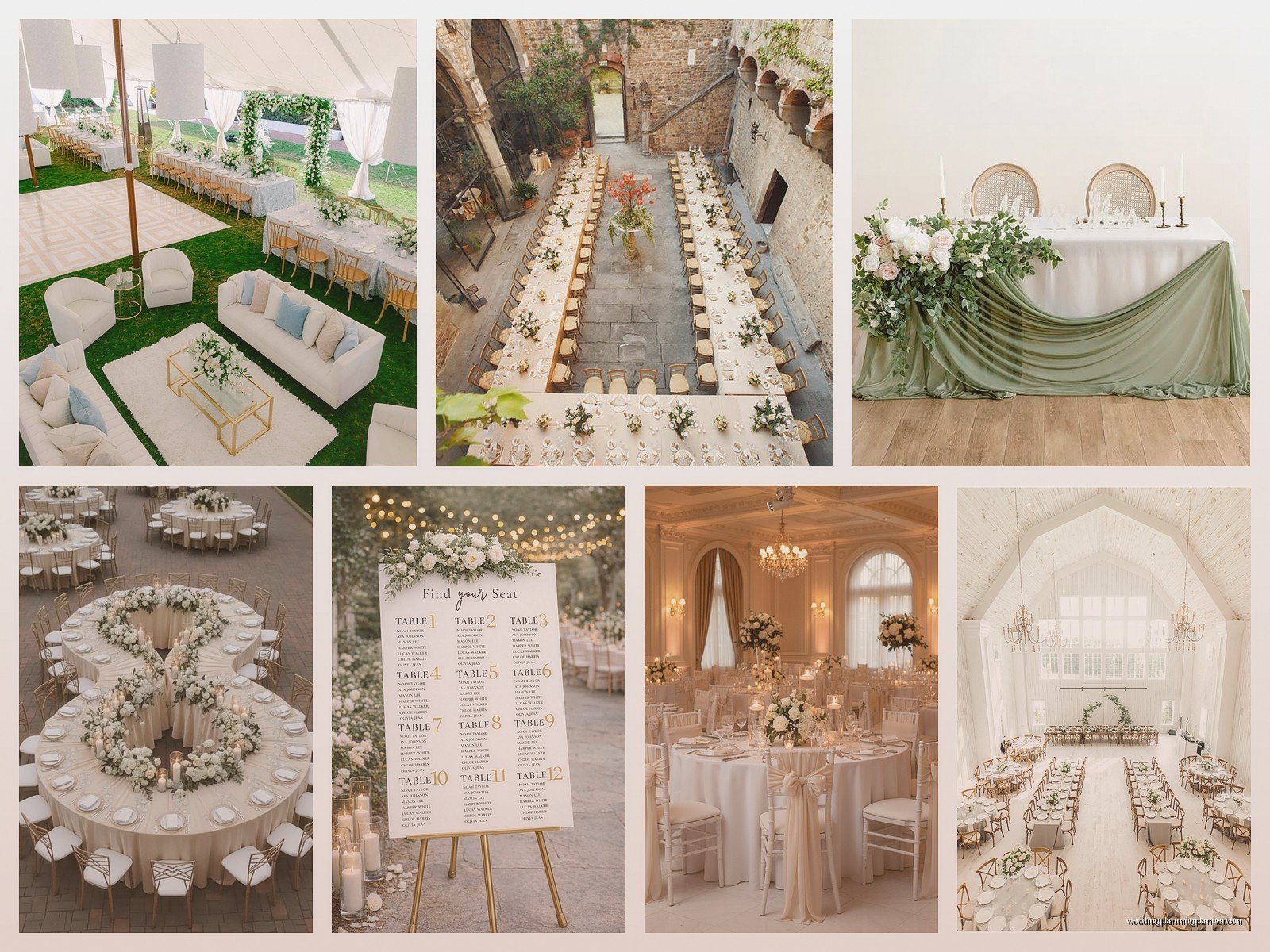
Head tables are kinda traditional but they come with logistics. If you seat your entire wedding party at a long head table, that’s potentially 10-14 people and their partners need to sit… where exactly? I see couples forget about this ALL the time. Your maid of honor’s husband needs a seat, your best man’s girlfriend needs a seat. You can’t just strand them at random tables.
Sweetheart tables (just you two) solve this problem but some couples feel weird being isolated. There’s no wrong answer, just think it through before you commit.
Then figure out your parents and grandparents. Do your parents want to sit together or separately? Are they divorced and remarried? Do they actually like their table mates or are you forcing them to host people they barely know? I had this one wedding where the bride seated her parents with like four random couples they’d never met and her mom was SO annoyed – she basically felt like she was working the room instead of enjoying her daughter’s wedding.
The Guest List Spreadsheet Is Your Best Friend
You need a spreadsheet. I don’t care if you hate spreadsheets. Get one. Include columns for: name, relationship to bride/groom, plus-one status, any dietary restrictions, and honestly a notes column for stuff like “cannot sit near Jennifer” or “hard of hearing, needs end seat.”
Group people by natural categories first: family, college friends, work friends, bride’s childhood friends, groom’s soccer team, whatever. This gives you your initial clusters. Most people are happiest sitting with folks they actually know rather than being scattered around for some arbitrary balance.
Table Size Math That’ll Make Your Head Hurt
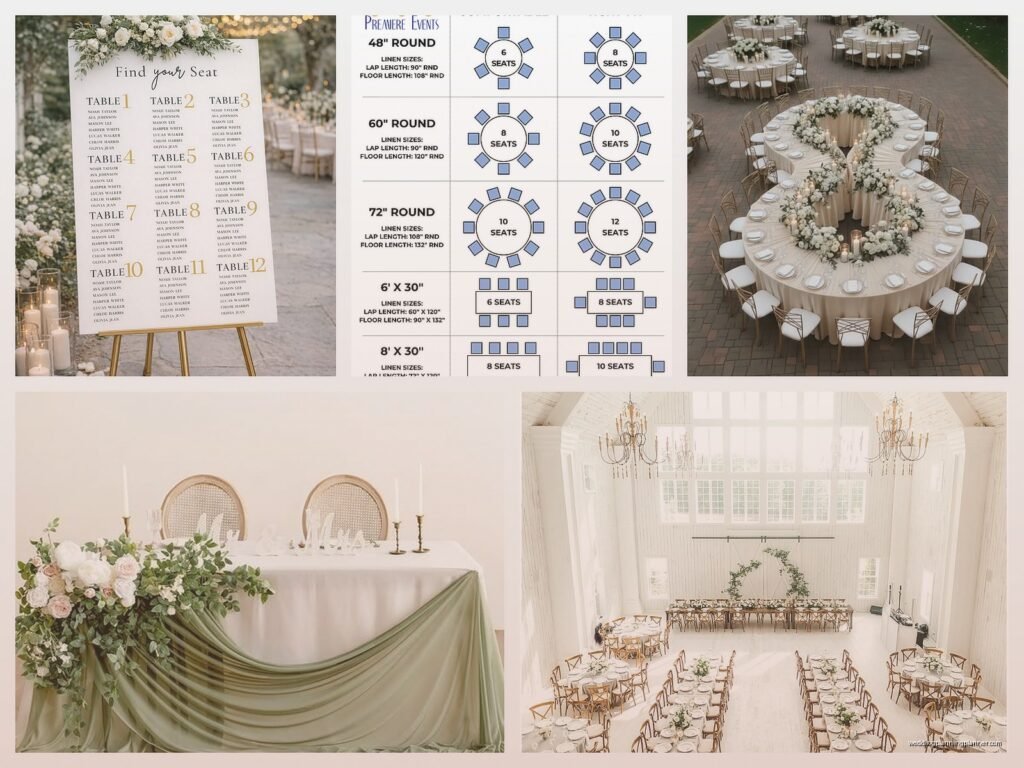
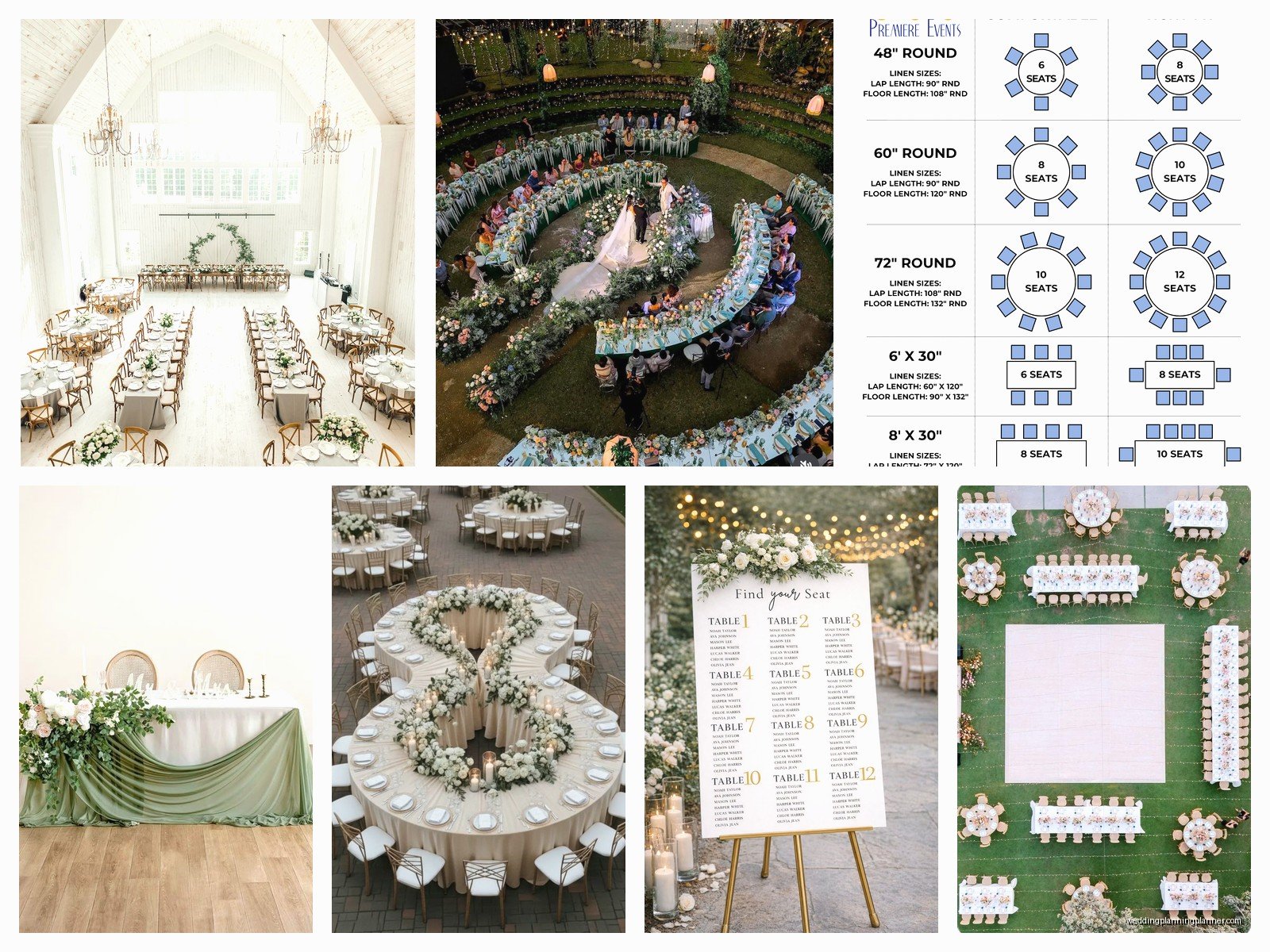
Standard round tables seat 8-10 people comfortably. Sometimes venues push 10-12 but that’s tight and conversation gets hard across a big circle. Rectangular tables vary wildly – an 8-foot table might seat 8-10 depending on width.
Here’s where it gets annoying – your guest count never divides evenly into table sizes. You’ve got 127 guests and tables of 10? Cool, that’s 12 tables with some being 10 and some being… 7? Do you do all tables of 8 and have one table of 7? Do you squeeze people and do tables of 11?
What I usually do: aim for consistency but accept that one or two tables might be slightly different. A table of 7 isn’t the end of the world. Just don’t put your least favorite relatives at the small table because that feels obvious and mean.
The Actual Process of Building Your Chart
Get some kind of tool. There are apps like AllSeated or WeddingWire’s seating chart thing. Honestly though? I still sometimes use PowerPoint with circles and text boxes because I’m old school and it works. My cat walked across my keyboard once and deleted an entire seating chart and I nearly cried, so like, save your work constantly.
Start placing your obvious groups. The family table(s), the college friend table, the work colleagues table. See what you have left. You’ll probably have some stragglers – couples or individuals who don’t fit neatly into one group.
Here’s a trick: look for connections you might not have thought of. Oh, these two couples both have toddlers? Seat them together. These three people all live in Denver now even though they’re from different friend groups? There’s your connection. You’re basically playing matchmaker but for dinner conversation.
The Politics and Drama Section
This is where it gets real. Divorced parents who hate each other. Cousins who had a falling out. That bridesmaid who’s mad she wasn’t picked as maid of honor. The friend who got too drunk at your birthday party and said something offensive to your other friend.
You have to decide how much you care. Some drama you can ignore – put them at opposite ends of the room and call it good. Some drama requires actual separation strategy.
What really annoys me is when couples don’t TELL me about the drama until after I’ve done the whole chart. Like, “Oh by the way, my brother and his ex-wife both coming and they’re in a custody battle” – THAT WOULD HAVE BEEN HELPFUL INFORMATION EARLIER, KAREN.
Write down your conflicts. Be specific. Then plan around them. It’s not being petty, it’s being practical. Nobody wants their wedding reception to turn into a Jerry Springer episode.
Kids and Families
Are you doing a kids table? Multiple kids tables by age? Integrating kids with parents?
Kids tables can be great if you have enough kids to make it work – like 8-12 kids in a similar age range. Put them near their parents but not right next to the dance floor or the bar. Give them activities. One couple I worked with put coloring books and crayons at the kids table and it was perfect.
But if you only have like three kids, don’t make them sit alone together. That’s weird. Keep them with their families.
Also consider: do parents WANT their kids at a separate table? Some parents prefer having their kids right there. Ask around before you make assumptions.
Singles and Plus-Ones
The whole plus-one thing is its own nightmare but from a seating perspective, here’s what matters: don’t isolate people who came alone. Cluster your single friends together at a fun table. They’ll appreciate it more than being the seventh wheel at a table of couples.
If someone brought a date you’ve never met, try to seat them with other friendly, social people. Not your weird uncle who only talks about his model train collection (sorry to people who love model trains but you know what I mean).
Accessibility Stuff You Can’t Forget
Elderly guests need to be close to restrooms and away from speakers. People in wheelchairs need tables near accessible pathways – and make sure there’s actual space for the wheelchair, not just an empty chair they’re supposed to transfer into.
Anyone who’s hard of hearing should be positioned where they can see faces clearly and aren’t fighting with music volume. Put them away from the DJ/band.
Pregnant guests might want easier access to exits (bathrooms again). People with young babies might appreciate being near an exit too in case they need to step out.
This sounds like a lot but it’s just being thoughtful. You want everyone to be comfortable.
The Actual Layout in the Room
Your venue will have limitations. Some rooms are long and narrow, some are square, some have columns in annoying places or a dance floor that’s off to one side.
Get the floor plan from your venue. Most places can provide this. Look at where the head table goes, where the dance floor is, where the DJ sets up, where the entrance is, where the bar is.
Generally you want: VIP tables (family, close friends) closest to you. People need to be able to see you without craning their necks. Nobody wants to be in a corner behind a column watching your wedding on the big screen because they can’t actually see you in person.
Don’t put anyone directly in front of speakers. Just don’t. They won’t be able to hear anything and they’ll be miserable.
Tables near the dance floor are actually desirable for some people – your party friends will love it. But maybe don’t put great-grandma right next to where people are gonna be doing the Cupid Shuffle.
The Escort Card vs Seating Chart Display Thing
You need to tell people where to sit. Options are:
Escort cards – individual cards (one per person or per couple) that tell them their table number. These go on a table at the entrance. People find their card, see their table number, go sit down. You can do this with literally anything – cards in a frame, tags on bottles, names written on leaves, whatever Pinterest told you to do.
Seating chart display – one big chart or sign that lists everyone’s name and table assignment. People look at the chart, remember their number, find their table. This is cheaper than individual cards but requires people to actually read and remember.
I’ve had couples do both which is redundant but okay, sure, if you want… or wait, sometimes that actually makes sense if you’re doing a really elaborate escort card display that people might want to take home as favors, and then you also have a backup chart.
Just make sure it’s readable. Fancy calligraphy is gorgeous but if people can’t read their names, what’s the point?
Table Numbers vs Table Names
Numbers are straightforward. Table 1, Table 2, done. Easy for everyone to find.
Names are cute but make sure they make sense. If you do “cities we’ve visited together,” people need to be able to locate Paris vs Prague when they’re looking around a room. Big clear signs.
Whatever you choose, your escort cards/chart and your actual table markers need to MATCH. I cannot tell you how many times there’s been a mismatch and chaos ensues.
When to Finalize Everything
Most venues need final counts 1-2 weeks before the wedding. You should have your seating chart basically done by then too, but realistically you’ll be making tweaks until the last minute because people drop out or suddenly bring a plus-one they didn’t mention or whatever.
Build in buffer time. Don’t wait until the night before to start this. I watched a bride in summer 2021 literally doing her seating chart at the rehearsal dinner and she was in tears because it was so stressful and she kept getting conflicting advice from family members who were looking over her shoulder.
Do it a week or two out, let it sit, come back to it with fresh eyes, make adjustments, then lock it in.
Day-Of Adjustments
Someone will not show up. Someone will bring an unexpected guest. Someone will ask to be moved. Have your coordinator or a trusted family member ready to handle this – it shouldn’t be you.
Extra place cards are smart. Blank ones. Just in case.
And honestly? Once everyone sits down and dinner starts, nobody remembers the seating chart drama. They’re eating and drinking and having fun. All that stress you had about whether Jake and Emma should be at the same table? Nobody cares anymore. They’re just happy to be celebrating with you.
The goal isn’t perfection, it’s creating an environment where your guests can relax and enjoy themselves. Sometimes that means making tough calls about who sits where. Sometimes it means accepting that you can’t make everyone happy. But you’ll figure it out, and even if it’s not exactly what you envisioned, it’ll be fine. People are adaptable. They’ll make conversation with whoever you put them next to, and by the time dancing starts, everyone’s mingling anyway and the whole seating arrangement becomes kind of irrelevant except for dinner service.
Just don’t forget to actually seat yourselves somewhere. I’ve seen couples get so focused on everyone else that they forget they need chairs too and then they’re scrambling at the last minute. Learn from others’ mistakes on that one.