
Planning Guides, Style Guide
Walima Invitation: Design & Ordering Guide
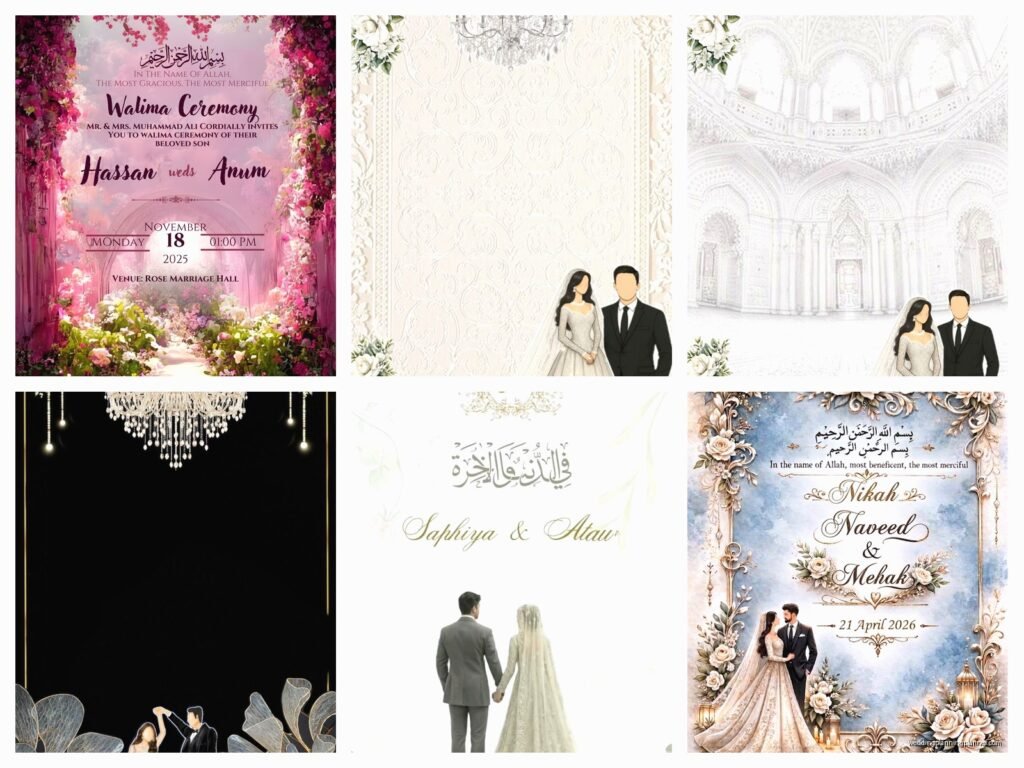
Jun
Getting Your Walima Invitations Right Without Losing Your Mind
Okay so Walima invitations are actually way more complicated than people think and I learned this the hard way back in summer 2021 when I had this couple who ordered their invitations like three weeks before their event and then freaked out because the colors didn’t match their decor. Like, we could’ve avoided that entire meltdown if they’d just started earlier but anyway.
First thing you gotta know is that Walima invites are different from Nikah invites. The Walima is the reception, the celebration, the big party essentially, so your invitation can be a bit more relaxed than the Nikah one. Some couples do a combined invite for both events which honestly makes life easier but if you’re doing separate ones, the Walima invite gets to be more fun and colorful usually.
Timeline – When to Actually Order These Things
I’m gonna be real with you, start looking at designs like 4-5 months before your Walima date. Place your order at least 8-10 weeks before the event. This gives you time for design revisions, printing, any mistakes (and there will be mistakes trust me), and mailing time if you’re sending them out. Digital invites need less time obviously but even those need like 6 weeks minimum because you’ll change your mind about the design seventeen times.
For mailing, send physical invitations 6-8 weeks before the Walima. Some families do 4 weeks but that’s cutting it close especially if you have international guests or elderly relatives who need more time to plan.
Design Elements That Actually Matter
So the design is where people either nail it or completely overthink everything. Your Walima invitation should include these basics:
- The hosts’ names (usually both families for Walima)
- Couple’s names – full names, not nicknames
- Date and time (be specific about whether it’s 7pm sharp or 7pm onwards)
- Venue name and full address
- Dress code if you have one
- RSVP details with a deadline
- Contact information
The wording can be in English, Urdu, Arabic, or a mix. I’ve seen gorgeous bilingual invitations that have English on one side and Urdu on the other. Just make sure if you’re using Arabic or Urdu text that you have someone who actually reads the language proofread it because Google Translate is gonna mess that up.
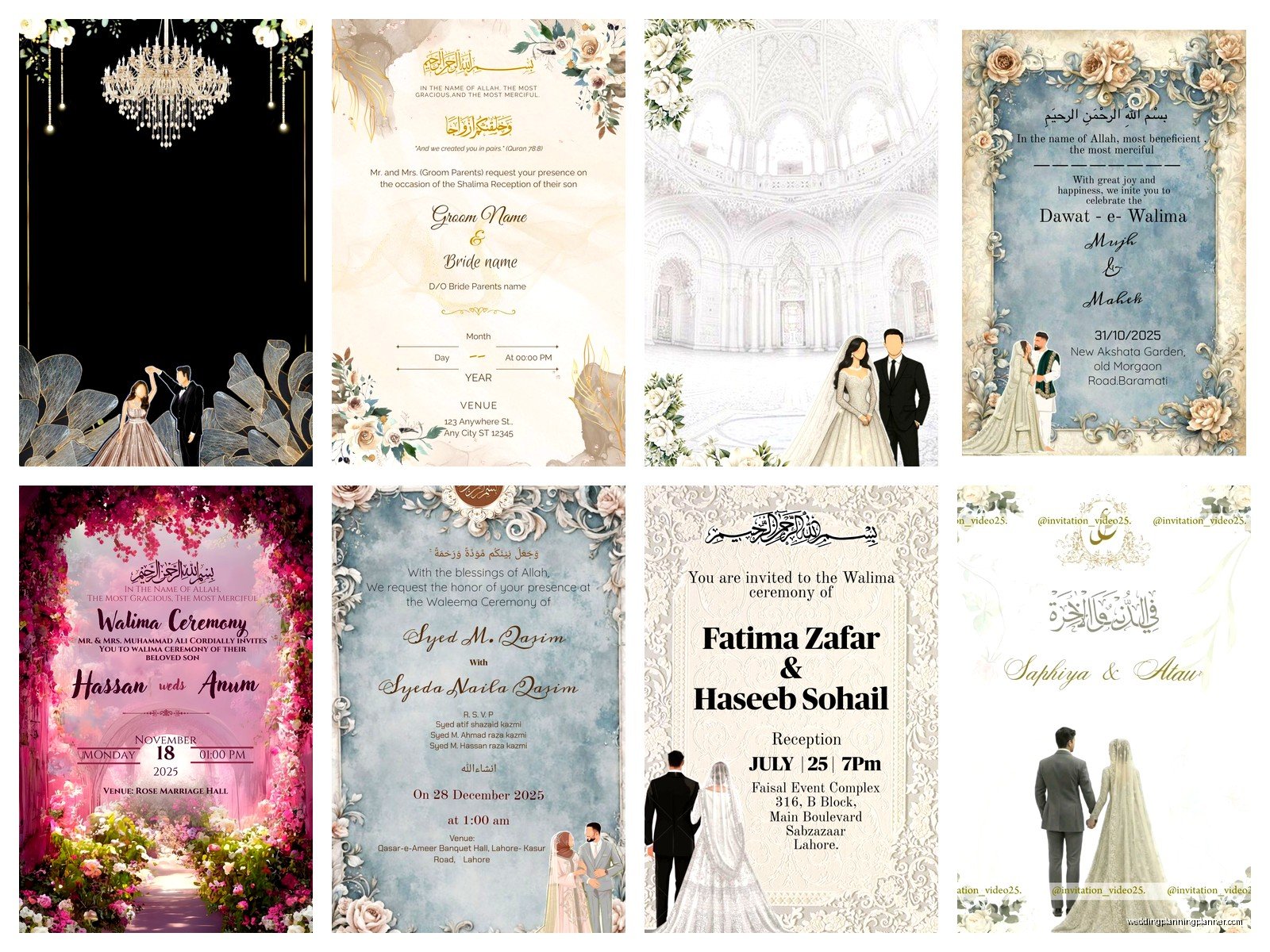
Color Schemes and Cultural Touches
Traditional Walima colors tend toward pastels, whites, golds, and softer tones compared to the reds and maroons of mehndi or nikah events. But honestly I’ve seen people do jewel tones, navy and gold, even black and gold for evening Walimas. The “rules” are more like suggestions at this point.
What really annoys me though is when couples pick colors that photograph terribly. Like this one time someone insisted on a yellow-green combination that looked amazing in person but in photos it just looked… off. And guess what everyone’s gonna see? The photos. So maybe take a picture of your sample before committing.
Islamic motifs are common – geometric patterns, arabesque designs, mosque silhouettes, crescent moons. But you don’t have to go full traditional if that’s not your vibe. I’ve done minimalist Walima invites that were just elegant typography with a single gold foil line and they were stunning.
Physical vs Digital Invitations
This is where it gets interesting because like half your guest list will prefer physical invites and half will be fine with digital. Here’s what I usually tell couples:
Physical invitations: These are for older relatives, VIP guests, and anyone you want to honor with a formal invite. They’re more expensive obviously but they feel special. Budget around $3-8 per invite for decent quality, more if you want fancy finishes.
Digital invitations: Perfect for younger guests, last-minute additions, and international guests where shipping is a nightmare. You can use services like Paperless Post, Greenvelope, or even custom-designed PDFs sent via WhatsApp (which is honestly what most people end up doing anyway).
Pro tip: order physical invites for your A-list and do digital for everyone else. Nobody needs to know you’re doing two different types.
Printing Options and What They Actually Mean
Okay so printers will throw these terms at you and you’ll nod like you understand but here’s the real breakdown:
Digital printing: This is your standard, affordable option. Good quality, quick turnaround, perfect for most people. Colors are bright and consistent.
Letterpress: That fancy pressed-into-the-paper look. Gorgeous but expensive, like $15-25 per invite. Only worth it if you have a small guest list or you’re really into that aesthetic.
Foil stamping: Metallic foil pressed onto paper. Looks expensive, is kinda expensive ($8-15 per invite), but makes everything look luxurious. Gold, rose gold, and silver are most common.
Thermography: Raised printing that mimics letterpress but cheaper. It’s like $4-7 per invite and honestly most guests can’t tell the difference.
I usually recommend digital printing with a foil accent if you want something special but don’t wanna spend a fortune.
Paper Quality Because Apparently That Matters
The paper weight thing confuses everyone. Here’s what you need to know: 80lb-100lb cover stock is standard and perfectly fine. 110lb-130lb is heavier, feels more luxurious. Anything over 130lb is excessive unless you’re trying to make a statement.
Finishes: matte is classic and elegant, glossy is more vibrant but can look cheap if not done well, linen texture adds sophistication. I’m personally team matte for formal events but that’s just me.
Where to Actually Order From
You’ve got options and they all have pros and cons:
Local print shops: You can see samples in person, support local business, and usually get faster turnaround. They might be pricier but you can negotiate and make changes easier.
Online services (Minted, Shutterfly, Vistaprint): Cheaper, tons of templates, but you can’t see the quality until it arrives. Minted is higher quality than Vistaprint generally. Shutterfly is middle ground.
Etsy designers: Custom work, unique designs, and you’re supporting small businesses. Prices vary wildly. Make sure they have good reviews and clear communication.
Specialized South Asian wedding vendors: They understand cultural requirements, have relevant designs, and know the correct wording. Check Instagram and local community groups for recommendations.
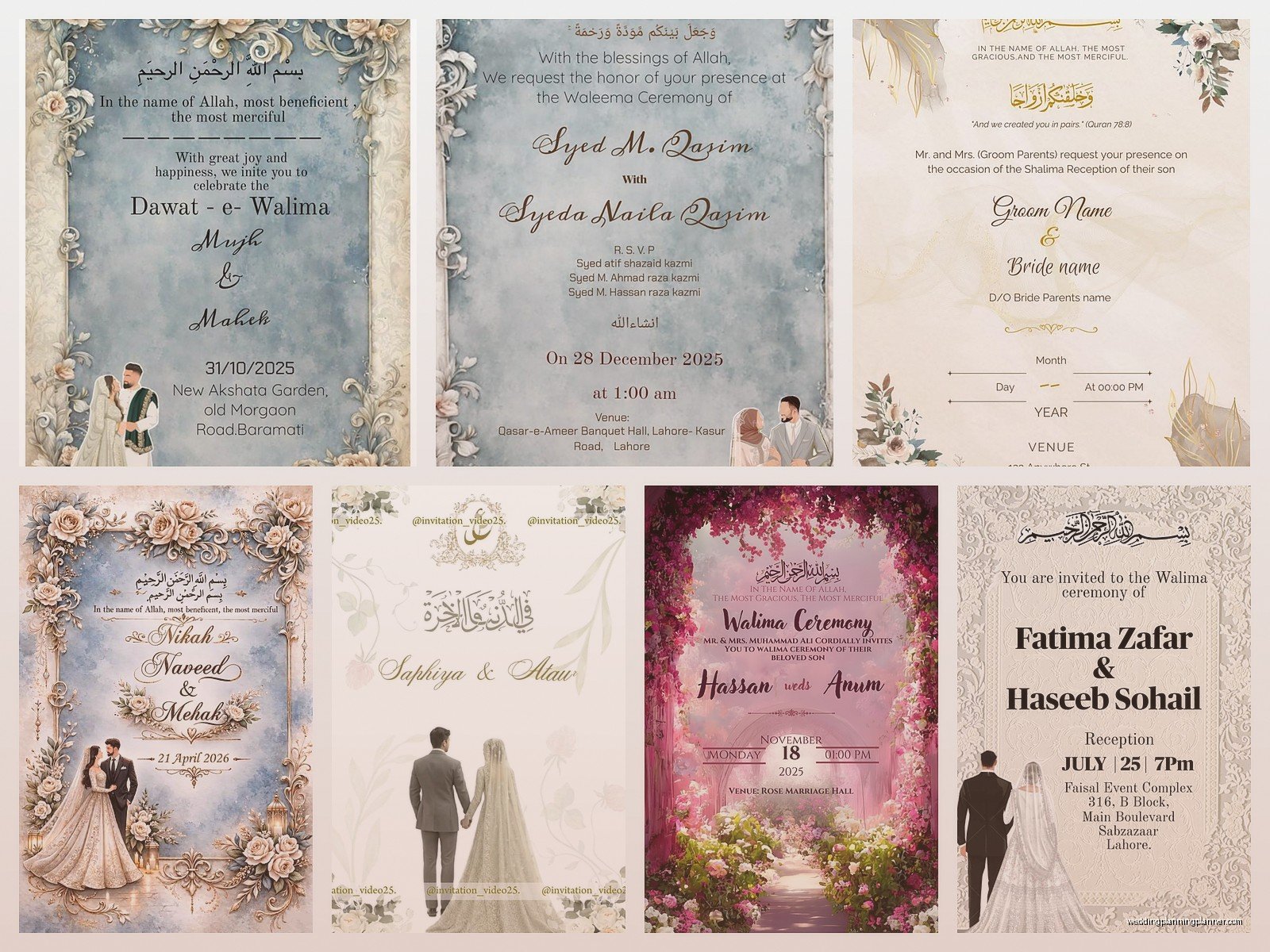
I had this couple in spring 2023 who ordered from three different places to compare quality and honestly the mid-priced Etsy designer beat both the expensive local shop and the cheap online service. So like… price doesn’t always equal quality.
Inserts and Additional Cards
You might need extra cards for:
- Reception details if venue is different from main event
- Accommodation information for out-of-town guests
- Registry information (though some people find this tacky for Walima so ask your parents first)
- Dress code details especially if you want specific colors
- Directions or parking information
- RSVP cards with pre-stamped envelopes
Honestly though you can put most of this on a wedding website and just include the website URL on the invite. Saves money and paper.
The Actual Ordering Process
Here’s how to not mess this up:
Order samples first if possible. Like 2-3 different designs. See them in person. Show them to your mom, your mother-in-law, your opinionated aunt. Get feedback before ordering 200 copies.
Proofread everything three times minimum. Then have someone else proofread. Then proofread again. I cannot tell you how many invitations I’ve seen with typos in the date or venue name. It’s painful.
Order 15-20% extra invitations. You’ll need extras for last-minute additions, keepsakes, mistakes, and people who lose theirs. It’s cheaper to order extra upfront than to do a second print run.
Ask about turnaround time specifically. “2-3 weeks” could mean two weeks or could mean a month depending on their workload. Get a specific date.
Envelope Situations
Your envelopes matter more than you think. They’re the first thing people see and if they look cheap or the addressing is messy it sets a tone.
Options for addressing: hire a calligrapher ($2-5 per envelope but looks incredible), print labels (cheap but can look informal), print directly on envelopes (middle ground), or hand-write them yourself if you have nice handwriting and patience.
Get envelope liners if you wanna add a pop of color or pattern inside. They’re like $1-2 extra per invite but they make everything look more expensive. My cat knocked over my coffee onto a stack of envelope liners once and I had to reorder them which was annoying but also entirely my fault for working with coffee nearby.
Wording That Doesn’t Sound Weird
Traditional Walima invitation wording usually starts with the hosts (both families) inviting guests to celebrate the marriage. Something like:
“Mr. and Mrs. [Bride’s Parents] and Mr. and Mrs. [Groom’s Parents] request the honor of your presence at the Walima reception celebrating the marriage of their children [Names]”
But you can totally modernize this or make it more casual depending on your family’s vibe. Some couples host their own Walima and word it as “Together with their families, [Couple Names] invite you to celebrate…”
Just make sure the wording matches the formality level of your event because a super casual invitation for a black-tie Walima will confuse people.
Budget Reality Check
Let’s talk numbers because everyone wants to know but nobody wants to ask. For decent quality physical invitations you’re looking at:
- Budget option: $1-3 per invite (digital printing, basic paper, no frills)
- Mid-range: $4-8 per invite (better paper, maybe foil accent, nicer design)
- Luxury: $10-25+ per invite (letterpress, custom design, fancy finishes)
Don’t forget to add postage costs. A standard invite with one insert is usually fine with regular postage but if yours is heavy or oversized you’ll need extra stamps. Go to the post office and have them weigh a complete invitation before you buy stamps in bulk.
Common Mistakes I See All The Time
People forget to include the year in the date which seems obvious but happens constantly. They also mess up the timeline – like the Nikah is at 2pm and Walima at 4pm same day but they send separate invites with different dates and confuse everyone.
Another thing is unclear RSVP instructions. “Please RSVP” means nothing if you don’t say how or by when. Give a specific date and method – phone number, email, wedding website link, whatever.
And please please please don’t use tiny font sizes to fit more information. If your guests need reading glasses to see the venue address you’ve failed. 10-point font minimum for body text.
The Digital Route Details
If you’re going digital, use a proper invitation service or hire a designer to make a nice PDF. Don’t just… type something in Word and screenshot it. I’ve seen this happen and it’s not cute.
Good digital invitation platforms: Paperless Post (has South Asian designs), Evite (free but ads), Greenvelope (eco-friendly angle), or custom designs from Etsy designers sent as PDFs.
Create a WhatsApp group for close family and send the digital invite there, but also send individual messages to important guests so it feels personal. For email invites, send them BCC so people’s email addresses stay private.
Assembly and Mailing
When your invites arrive, check everything before assembling. Make sure they printed correctly, colors look right, no smudges or errors. Then set up an assembly line situation – it goes faster with help.
Standard assembly order: invitation on bottom, then reception card, then any other inserts, RSVP card and envelope on top. Put everything in the envelope with print side up so when recipients open it they see the invitation first.
Take one fully assembled invite to the post office to weigh before mailing everything. Square envelopes cost extra postage even if they’re the right weight because they’re annoying to process apparently. Also hand-cancel them if you have fancy envelopes so they don’t get destroyed by sorting machines.
Track your RSVPs in a spreadsheet because people will tell you they’re coming and then forget, or they’ll RSVP for their entire extended family without asking. You need a system to keep track or you’ll lose your mind trying to remember who said what.