
Planning Guides, Style Guide
Hindu Wedding Invitation Cards: Design & Ordering Guide
Jun
Okay so Hindu wedding invitation cards are basically their own universe
Hindu wedding invitations are not like your standard “join us for our celebration” cards. They’re elaborate, symbolic, and honestly kinda overwhelming if you’ve never ordered them before. I remember in spring 2023 working with this couple who waited until THREE MONTHS before their wedding to start thinking about invites and I nearly lost my mind because Hindu wedding cards need actual planning time.
First thing you gotta know is that these aren’t just invitations. They’re basically announcing one of the most significant events in two families’ lives, and every element means something. The colors, the gods and goddesses depicted, the wording, the actual physical weight of the card—it all matters to someone in the family.
The whole Ganesh thing and religious symbols
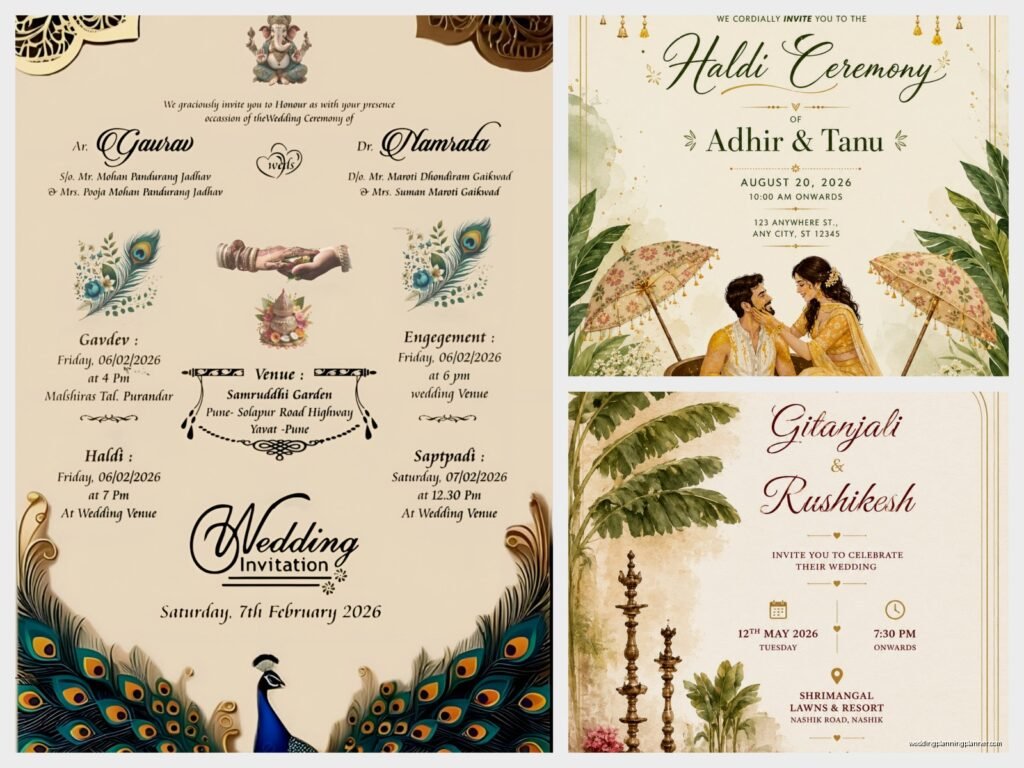
Most Hindu wedding invitations will feature Lord Ganesh because he’s the remover of obstacles, and you definitely want obstacles removed before a wedding. You’ll also see other deities depending on regional preferences—Lakshmi for prosperity, Saraswati for knowledge and arts, sometimes all of them together.
Some families are super particular about which deity appears where on the card. I had a mother-of-the-bride once who rejected an entire proof because Ganesh was on the left side instead of the right, and honestly I didn’t even know that was a thing until that moment. So yeah, always ask about religious preferences before you finalize designs.
The “Om” symbol or the Swastika (which is a sacred Hindu symbol, totally different from the Nazi appropriation) might appear too. These are auspicious symbols. If you’re ordering for yourself, talk to your parents or older relatives about which symbols matter most to your family because regional and family traditions vary SO much.
Colors have actual meanings here
Red and gold are classic—red symbolizes prosperity and fertility, gold represents wealth and grandeur. But you’ll also see:
- Orange and yellow for joy and celebration
- Pink for happiness and romance
- Green for new beginnings and harvest
- Purple for luxury (though this is less traditional)
What really annoys me is when couples pick colors just because they’re trendy without understanding what they mean, and then a grandmother gets upset at the wedding because the invitations were navy blue which isn’t considered particularly auspicious. Like, I get that navy is having a moment, but maybe save it for the cocktail napkins instead of the main invitation card.
The structure and what goes inside
Hindu wedding invitations usually come as boxed sets or folders with multiple inserts. You’re not just sending one card—you might have:
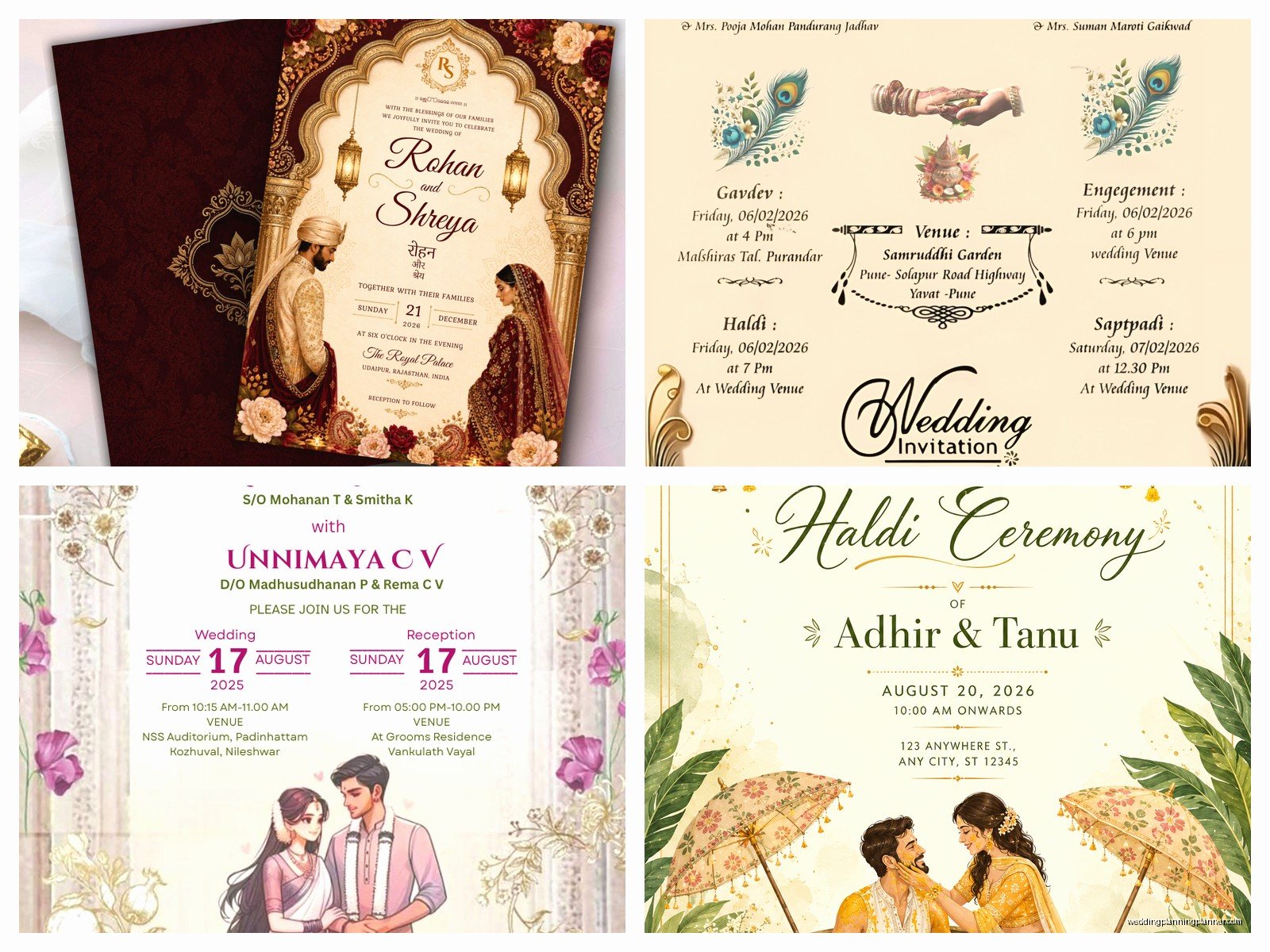
A main invitation card with the ceremony details, an insert for the reception (if separate), cards for specific events like the Sangeet or Mehendi ceremony, RSVP cards, direction cards, accommodation information, and sometimes a sleeve or folder holding everything together.
The wording is different too. You’ll often see phrases like “With the blessings of” followed by parents’ names, or references to “Shubh Vivah” (auspicious wedding). The invitation might include a Sanskrit shloka or verse. Some families want the invitation to read like it’s coming from the parents, not the couple, because traditionally the parents host the wedding.
North Indian vs South Indian styles
This is where it gets fun. North Indian invitations tend to be more elaborate with lots of embellishments—think scroll cards, boxes with dry fruits and sweets, LED lights (yes really), or cards shaped like temples. They’re often in reds, golds, and maroons.
South Indian invitations are typically more elegant and understated. You’ll see more mango motifs, paisley patterns, and temple border designs. Colors might include mustard yellow, cream, and red. The wording often includes more Tamil, Telugu, Malayalam or Kannada script depending on the specific region.
But honestly, with modern couples, these lines are blurring. I’ve seen Tamil couples use North Indian style boxes because they liked the look.
Material and craftsmanship options
The materials available for Hindu wedding cards are actually insane. You’ve got:
- Standard cardstock (budget-friendly but still nice)
- Handmade paper with embedded flowers or gold leaf
- Velvet or silk fabric cards
- Laser-cut designs in wood or acrylic
- Metal cards (usually brass or copper)
- Scroll invitations in boxes
- Accordion-fold cards
My cat knocked over an entire display of laser-cut sample cards once during a client meeting and I’m still finding little wooden elephants behind furniture, but anyway—laser-cut designs are gorgeous if you have the budget. They’re intricate and photograph beautifully.
Embellishments include embossing, foil stamping, rhinestones, ribbons, tassels, and even small idols of deities tucked into the card box. Some cards come with actual dried rose petals or saffron packets as blessings.
Where to actually order these
You’ve got several options and the right one depends on your budget, timeline, and how hands-on you wanna be.
Online specialty retailers
Websites like 123WeddingCards, IndianWeddingCard, Parekh Cards, and ShaadiSagaai specialize in Hindu wedding invitations. They have huge catalogs organized by style, religion, and region. You can filter by price and see real photos of the cards.
Pros: Convenient, lots of options, usually have customization tools, ship anywhere. Cons: You can’t feel the actual card quality until it arrives, color matching on screens isn’t perfect.
I usually recommend ordering samples first. Most sites charge like $5-15 per sample which feels annoying but it’s worth it to see the actual weight and color of the card.
Local Indian wedding card shops
If you live near a large Indian community, there are probably specialty stores. In areas like Edison NJ, Artesia CA, or Devon Avenue in Chicago, you’ll find shops packed floor-to-ceiling with sample books.
Pros: You can touch and see everything in person, staff usually knows their stuff about regional traditions, you can negotiate prices. Cons: Can be overwhelming, pushy salespeople sometimes, limited hours.
When you visit these shops, bring your mom or future mother-in-law if possible because they’ll know what questions to ask about traditions.
Etsy and independent designers
For couples wanting something more modern or unique, Etsy has designers creating contemporary Hindu wedding invitations. You can get custom illustrations, digital invitations, or minimalist designs that still incorporate traditional elements.
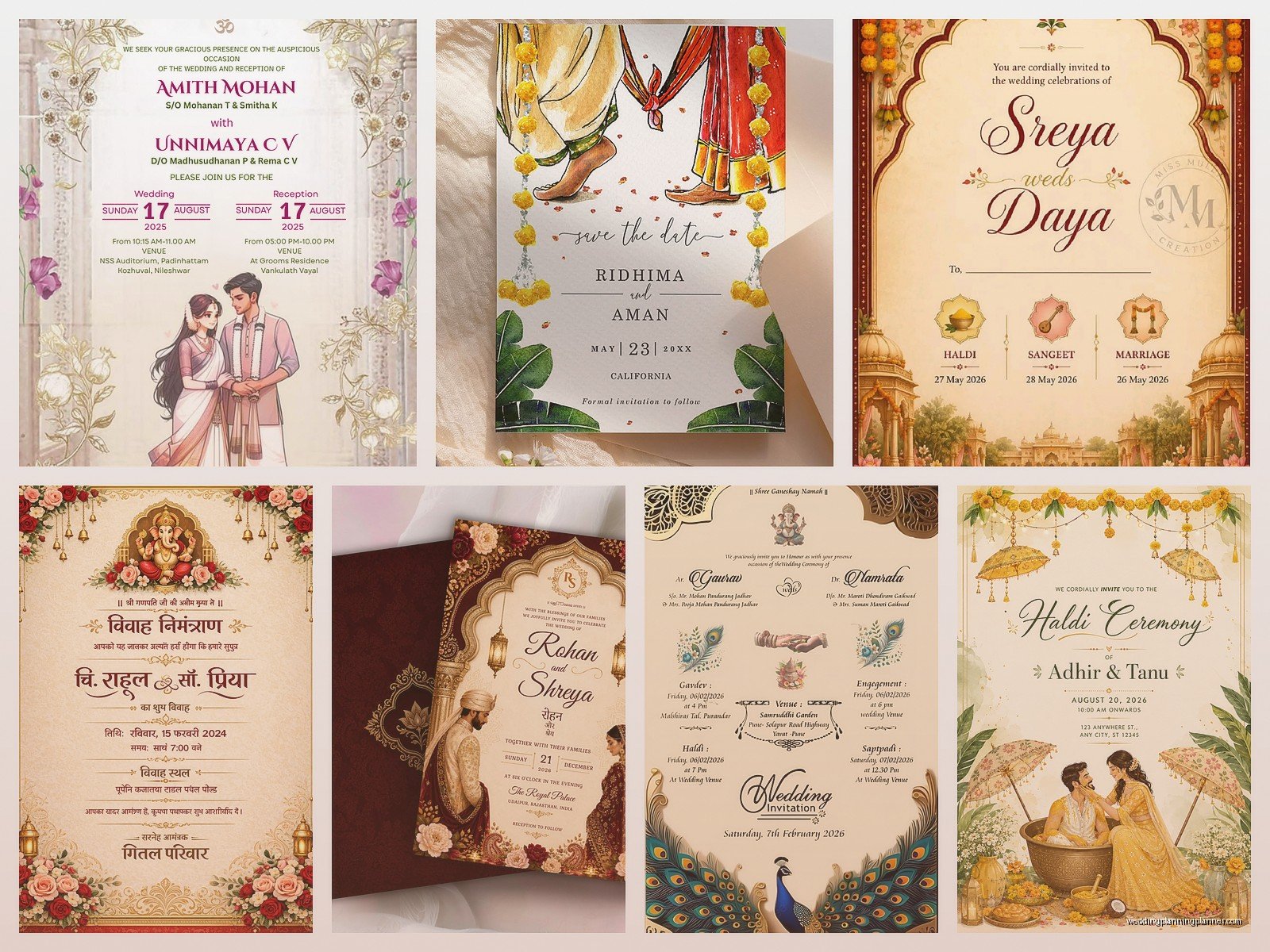
Pros: Unique designs, support small businesses, very customizable. Cons: Usually more expensive, longer lead times, might require more back-and-forth communication.
Timeline and quantities
Start looking at cards at least 4-6 months before your wedding. Hindu weddings often have larger guest lists than Western weddings, so you might be ordering 300-500 invitations or more.
Order about 10-15% more than your guest count. You’ll want extras for keepsakes, last-minute additions, and mistakes. Also people lose them or spill chai on them or whatever.
The production time varies wildly. Standard printed cards might take 2-3 weeks. Custom designed cards with lots of embellishments can take 6-8 weeks. Rush orders are possible but expensive and stressful.
Mail them out 6-8 weeks before the wedding, maybe even earlier if you have lots of out-of-town or international guests. Hindu weddings are multi-day affairs so people need time to plan travel and… actually this reminds me, make sure your accommodation information is super clear because I’ve had guests show up at the wrong hotel more times than I can count.
Budgeting for these cards
Hindu wedding invitations range from like $2 per card to $50+ per card for the really elaborate boxed sets. Most couples spend between $5-15 per invitation.
For 300 invitations at $8 each, you’re looking at $2400 just for invites. Add in postage (these cards are often heavy so they need extra stamps), and you could be at $3000+ easily.
Ways to save money: Skip the super elaborate boxes and go for flat cards with nice embellishments instead. Use digital invites for some events like the Sangeet but send physical cards for the main ceremony. Order from India if you have time—cards are often cheaper there but shipping and customs can be unpredictable.
What to splurge on vs save on
Splurge on the main wedding ceremony invitation. This is the card people keep and frame. Make it beautiful with quality paper and printing.
Save on the insert cards for other events—these can be simpler cardstock. Also save on the RSVP cards by using online RSVP options instead. Honestly most people are gonna text you their RSVP anyway regardless of what card you include.
Wording and language considerations
Decide early whether you want the invitation in English only, bilingual, or primarily in Hindi/Tamil/Gujarati/etc. with English translation. Many families want both languages to honor tradition while being accessible to all guests.
Traditional Sanskrit shlokas are common at the top of invitations. Your printer should have standard options, or your family priest might suggest specific verses. Don’t just Google translate something because religious text needs to be accurate and properly formatted.
The format usually goes: religious verse, parents’ names and invitation, bride and groom names, ceremony details (date, time, venue), reception details if applicable, and RSVP information. Some invitations include the couple’s engagement story or how they met which is sweet but makes the card more crowded.
Proofreading is gonna save your life
Get multiple people to proofread before you approve the final proof. Check the spelling of names (especially Sanskrit spellings), dates, times, venue addresses, and phone numbers. I’ve seen invitations printed with the wrong wedding date more than once and it’s a nightmare to fix.
If you have text in multiple languages, get a native speaker to check the translation. Google Translate will make you look ridiculous with religious or formal text.
Check the dates against a calendar. Make sure you’re not printing “Saturday, June 15th” when June 15th is actually a Sunday. Sounds obvious but it happens.
Assembly and extras to consider
If you’re ordering elaborate boxed invitations, ask whether they come assembled. Some printers charge extra for assembly which can add $2-3 per invitation. You can assemble them yourself to save money but it takes HOURS and you’ll need a clean workspace and probably some help.
Consider whether you want to include: a wedding website card with QR code, a map or directions insert (especially important for venues in remote areas), dress code information (because some guests won’t know what to wear to a Hindu ceremony), parking information, and maybe a schedule of events if it’s a multi-day celebration.
Some couples include small gifts with the invitation like sweets, dry fruits, or small packets of kumkum and rice. This is traditional but adds cost and weight for shipping.
Digital options are becoming more accepted
While traditional families might resist, digital invitations are gaining acceptance especially for younger, tech-savvy crowds or for pre-wedding events. You can create beautiful animated invitations with traditional motifs, music, and video elements.
Websites like Witty Vows, WedMeGood, and even Paperless Post have Hindu wedding invitation templates. These are great for destination weddings where physical mail is complicated or for environmentally conscious couples.
Even if you send physical invitations, create a matching digital version to send as a reminder or for last-minute additions to the guest list. Just make sure the design aesthetic matches so it doesn’t look like two different weddings.