Planning Guides, Style Guide
Wedding Invitation Greetings: Design & Ordering Guide
Jun
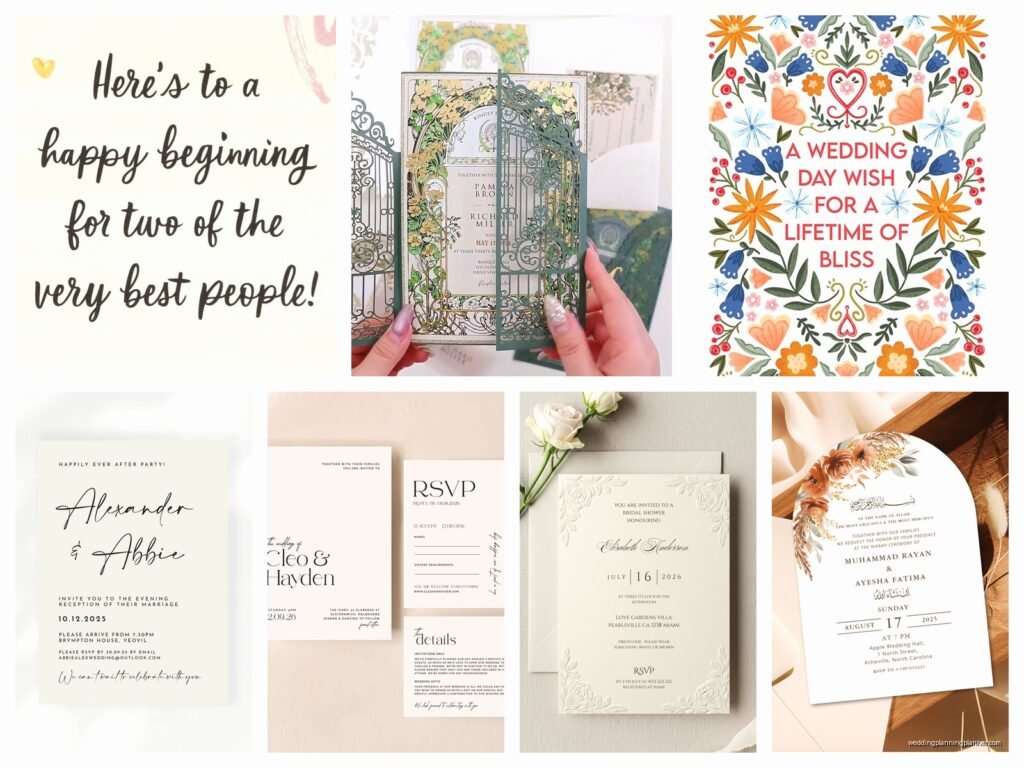
Okay So Wedding Invitation Greetings Are Actually Way More Complicated Than You Think
The greeting is literally the first thing people read on your invitation and it sets the whole tone, but somehow couples always leave this part until the last minute and then panic. I had this bride last spring 2023 who changed her greeting format like six times because her parents got divorced between the engagement and the wedding, and suddenly the “Mr. and Mrs. John Smith” thing became this whole diplomatic nightmare.
The greeting (or “host line” if you wanna get technical about it) tells your guests who’s hosting the wedding. Traditionally that was always the bride’s parents because they paid for everything, but now? It’s all over the place. Parents, both sets of parents, the couple themselves, deceased parents being honored, stepparents, grandparents who raised someone—I’ve seen it all.
Traditional Format When Bride’s Parents Host
If you’re going the classic route and the bride’s parents are hosting and paying, it looks like this:
Mr. and Mrs. Robert James Anderson
request the honour of your presence
at the marriage of their daughter
Jessica Marie
Notice it says “honour” with a U—that’s the formal British spelling that wedding invitations have used forever. You can absolutely use “honor” the American way, but the U version is considered more formal. What really annoyed me is when vendors try to tell couples they HAVE to use the U spelling or it’s “wrong.” Like, nah, it’s your wedding invitation, spell it however you want.
When Both Sets of Parents Host
This is probably the most common situation I see now. Both families contribute, both families get named:
Mr. and Mrs. Robert Anderson
and
Mr. and Mrs. Christopher Taylor
request the honour of your presence
at the marriage of their children
Jessica Marie Anderson
and
Michael James Taylor
Notice how the bride’s parents still go first? That’s traditional, but honestly if the groom’s family is paying for most of it, you can flip it. I’ve done it both ways.
The Couple Hosting Themselves
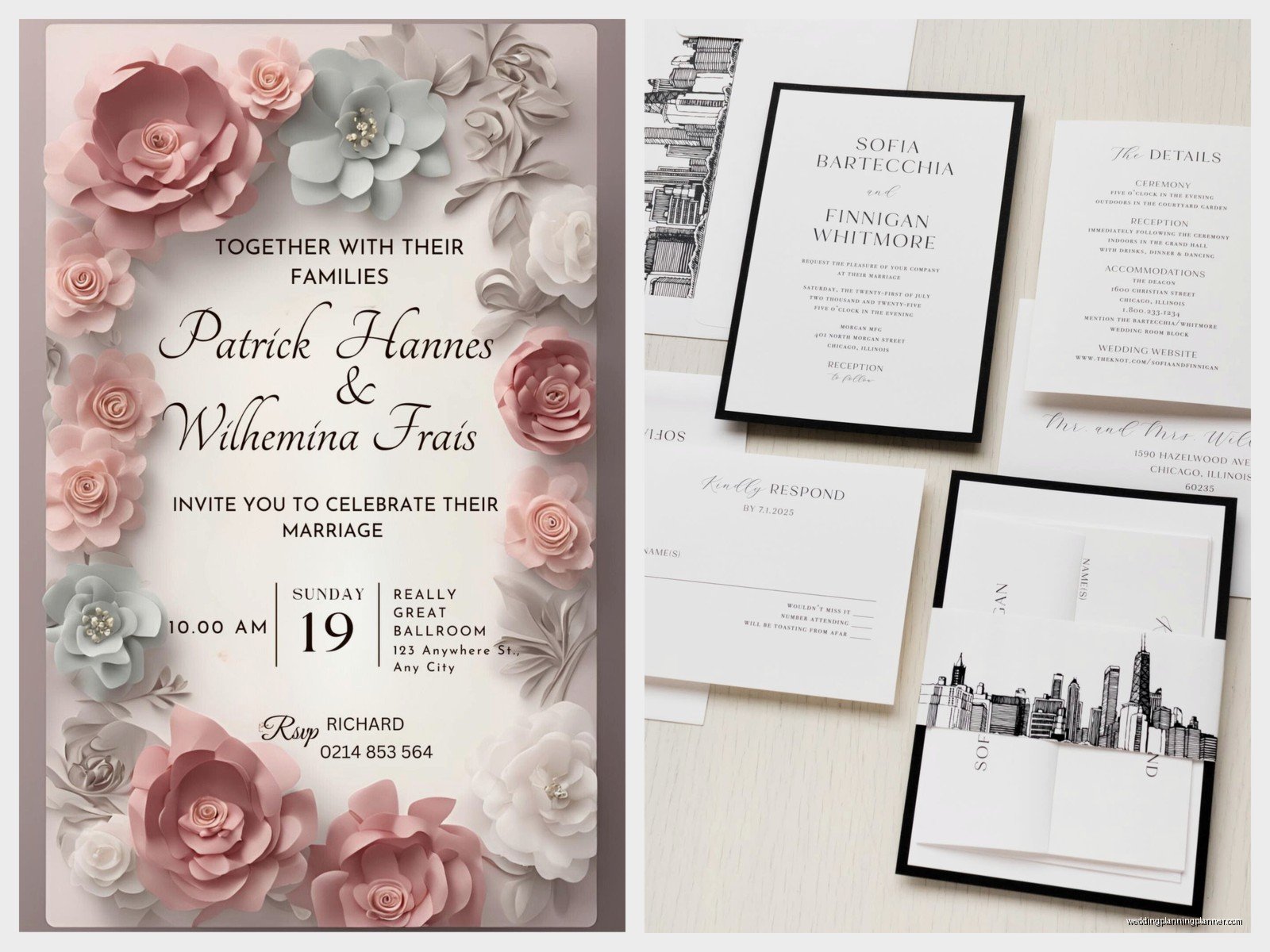
When you’re paying for your own wedding or you just want to keep it simple, you can have the couple as the hosts. This is super common for second marriages, older couples, or people who’ve been living together forever:
Jessica Marie Anderson
and
Michael James Taylor
request the pleasure of your company
at their marriage
Or even more casual: Together with their families, Jessica and Michael invite you to celebrate their wedding
See how it says “pleasure of your company” instead of “honour of your presence”? That’s actually the correct wording when the couple hosts. The “honour of your presence” is specifically for when parents host. Do people mix these up? All the time. Does it actually matter? Depends on how traditional your crowd is.
Divorced Parents Situations
Okay this is where it gets tricky and I’m gonna be honest, this is the part that causes the most drama in my consultations. If the bride’s parents are divorced and both remarried, and everyone gets along, you can do:
Mrs. Sarah Anderson and Mr. Thomas Burke
and
Mr. Robert Anderson and Mrs. Patricia Anderson
request the honour of your presence
The mom goes first (if she raised the bride), then her new spouse’s name. Then dad and his new wife. Each couple gets their own line. Never write “Mr. and Mrs. Thomas Burke” if Sarah kept her maiden name or her first married name—you gotta use her actual name.
If they’re divorced but not remarried, you do them on separate lines with no “and” between them:
Mrs. Sarah Anderson
Mr. Robert Anderson
request the honour of your presence
The missing “and” signals they’re not together. It’s subtle but it matters to people who know these things.
Deceased Parents
This one always makes me emotional honestly. If you want to honor a deceased parent, you can’t have them as a host (because they’re not hosting), but you can mention them in the bride or groom’s name line:
Mr. Thomas Anderson
requests the honour of your presence
at the marriage of his daughter
Jessica Marie
daughter of the late Mrs. Sarah Anderson
I had a bride in summer 2021 whose mom had passed away from COVID and we spent like an hour just figuring out the wording that felt right to her. There’s no perfect way to do it, but acknowledging them matters so much to some families.
Stepparents Who Raised You
If your stepparent actually raised you and you consider them a real parent, absolutely include them. You can do:
Mr. and Mrs. Thomas Burke
request the honour of your presence
at the marriage of her daughter
Jessica Marie Anderson
The “her daughter” clarifies that Jessica is Sarah’s daughter, not Thomas’s. Or you can just… not clarify and let people figure it out themselves, which is also fine.
Same-Sex Couples
The formatting is exactly the same, you just choose whose family goes first. Alphabetical by last name is common, or whoever’s family is hosting goes first:
Mr. and Mrs. Robert Anderson
and
Mr. and Mrs. James Martinez
request the honour of your presence
at the marriage of their sons
Michael Anderson
and
David Martinez
Or daughters, obviously. The wording is the same regardless.
Design Stuff That Actually Matters
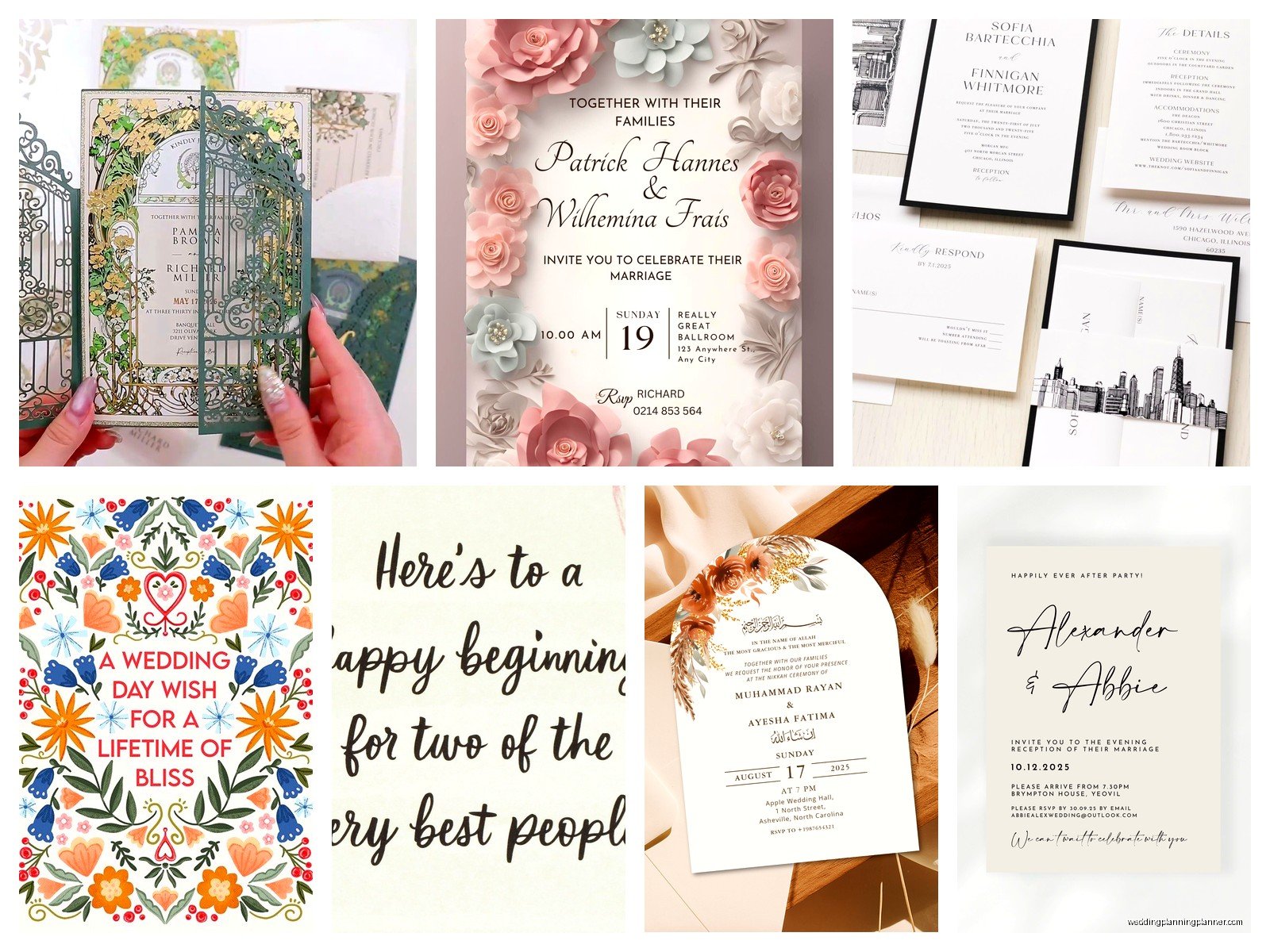
Okay so you’ve figured out your wording, now you gotta actually design this thing. The greeting is usually the largest text block on the invitation, or like, it should be one of the most prominent elements along with the couple’s names.
Font choice is huge here. You want something readable because these are names and titles, and if Great Aunt Martha can’t read who’s hosting, someone’s gonna be offended. I usually recommend a classic serif font for traditional weddings—think Garamond, Didot, Caslon. For modern weddings, a clean sans-serif like Montserrat or Futura works great.
The greeting should be centered on formal invitations. Left-aligned can work for modern or casual vibes, but centered is safer. And please, PLEASE don’t use more than two fonts on the entire invitation. The greeting can be in your main font, names can be in a fancier script, but that’s it. I see couples try to use like five different fonts and it looks like a ransom note.
Spacing and Hierarchy
The visual hierarchy should go: host names → request line → couple’s names → date → time → location. The couple’s names should be the biggest or most decorative element, but the host line needs to be clear and readable.
Leave enough white space around the greeting. Cramped invitations look cheap even if you spent a fortune on them. I learned this the hard way when I first started and was trying to fit too much information on a 5×7 card… it just looked crowded and stressful, which is not the vibe.
Ordering Logistics
Once you’ve got your design and wording finalized, you gotta actually order these things. Here’s what I tell every client:
Order your invitations 4-6 months before the wedding. You need them in hand 8-10 weeks before the wedding to address and mail them. Rush fees are expensive and stressful.
Get a proof. Always. I don’t care if you’re ordering from Minted or Etsy or a fancy letterpress studio—demand a physical proof or at least a detailed PDF proof. I’ve seen too many couples skip this and then get 150 invitations with a typo or the wrong date.
Order 15-20% extra invitations. You’ll mess up addressing some envelopes (everyone does), you’ll want extras for your wedding album and scrapbook, distant relatives will suddenly appear, whatever. The overage is worth it. Reordering later costs way more per piece.
Printing Methods
Digital printing is the most affordable and looks perfectly fine for most weddings. Colors are vibrant, turnaround is quick, you can do it for like $2-3 per invitation.
Letterpress is gorgeous and traditional—you get that tactile debossed impression in the paper. But it’s pricey, usually $8-15 per invitation, and it takes longer. The greeting looks stunning in letterpress though, especially in a deep color on thick cotton paper.
Foil stamping is having a moment right now. You can foil just the names or the whole greeting in gold, rose gold, silver, whatever. It’s more expensive than digital but less than letterpress usually.
Thermography is that raised, shiny printing that feels fancy when you run your finger over it. It’s kinda old-fashioned now but some people love it. Less expensive than letterpress, more formal-looking than flat digital.
Common Mistakes People Make
Using nicknames in the greeting. Unless you’re going super casual, use legal names. “Bob and Sue” should be “Robert and Susan.” The invitation itself can be formal even if your wedding is casual.
Forgetting middle names or using the wrong ones. Triple-check this with your parents. My cat knocked over my coffee on a proof once and I had to reorder because the stain was right over the middle name, and that’s when the bride realized we had her middle name wrong anyway, so… maybe that was a blessing.
Not accounting for family drama. If your parents are fighting over who gets listed first, maybe just have the couple host and avoid the whole thing. Your invitation shouldn’t cause a family crisis.
Choosing a font that’s illegible. That beautiful script font might look gorgeous on screen but if no one can read “Anderson” vs “Andersen,” what’s the point?
Timing for Different Invitation Styles
If you’re doing save-the-dates, those go out 6-8 months before. Those can be super casual and don’t need the formal greeting—just “Save the Date for the wedding of Jessica and Michael” is totally fine.
The actual invitation goes out 8-10 weeks before the wedding. That’s when you need the proper formal greeting with all the host information.
If you’re doing a two-card suite with a ceremony card and reception card (like for a church ceremony and separate reception venue), the greeting only goes on the ceremony card. The reception card just says “Reception to follow” or gives the reception details.
Working With Your Printer or Stationer
When you’re ordering, give them the exact wording in a document, don’t just tell them verbally. Email it. Put it in writing. Titles, spellings, middle names, everything.
Ask about their revision policy. Most good stationers include one or two rounds of revisions in their pricing. If you’re working with an online template company, you might be on your own for proofing.
Confirm the paper weight and color in person if possible. “White” can range from bright white to ecru to ivory, and it looks different in person than on a screen. I always recommend at least 110lb cardstock for the invitation itself—anything thinner feels flimsy.
Get a timeline from them in writing. When will you see the proof? When will the final order ship? When will it arrive? Build in buffer time because printing delays happen, especially during busy wedding season (May through October).
The Wording Variations You Can Use
Instead of “request the honour of your presence,” you can use:
– “invite you to celebrate”
– “would be delighted to have you join”
– “joyfully invite you”
– “request the pleasure of your company”
For religious ceremonies, “honour of your presence” is traditional. For non-religious or casual weddings, “pleasure of your company” or “invite you to celebrate” works better.
You can also do something completely custom. I’ve seen “Together with their families, [names] invite you to share in their joy” or “Join us for the wedding celebration of [names].” The rules are more like guidelines anyway, and honestly if you’re paying for a custom invitation, make it say what you want it to say.
Just make sure whatever wording you choose matches the formality level of your wedding. A black-tie ballroom wedding probably shouldn’t have an invitation that says “Come party with us at our wedding!”—unless that’s genuinely your vibe, in which case go for it.
Proofreading Is Everything
Read it out loud. Read it backwards. Have three other people read it. Check the date against a calendar—I’ve seen couples put “Saturday, June 15th” when June 15th is actually a Sunday. Check the year (yes, people forget this or put the wrong year). Verify the venue name and address. Make sure the time is AM or PM.
Check every single name spelling. Both sets of parents, the couple, anyone mentioned. Check titles—is it Dr. or Doctor? Judge? Reverend? Military rank? These matter to people.
Look at the overall layout. Does the greeting balance with the rest of the text? Is anything weirdly spaced or orphaned on a line by itself?
The greeting is literally the foundation of your invitation, and getting it right means understanding both the traditional etiquette rules and knowing when you can break them. Most couples land somewhere in the middle—respectful of tradition but personalized to their actual situation. And honestly, that’s exactly where you should be.