Planning Guides, Style Guide
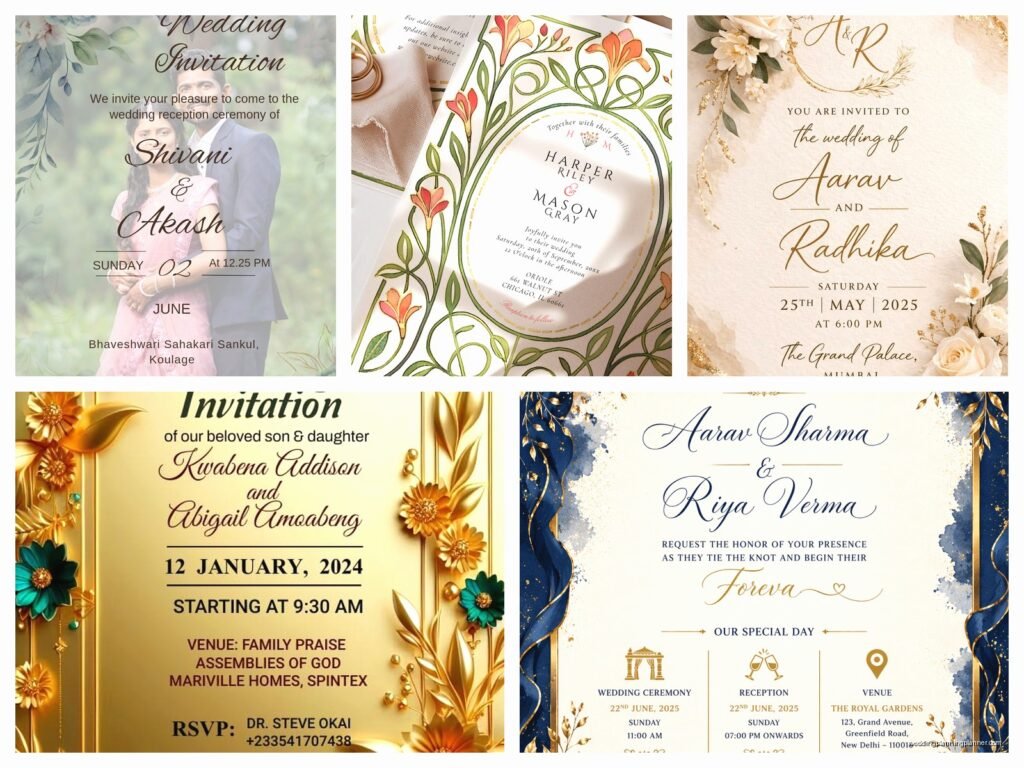
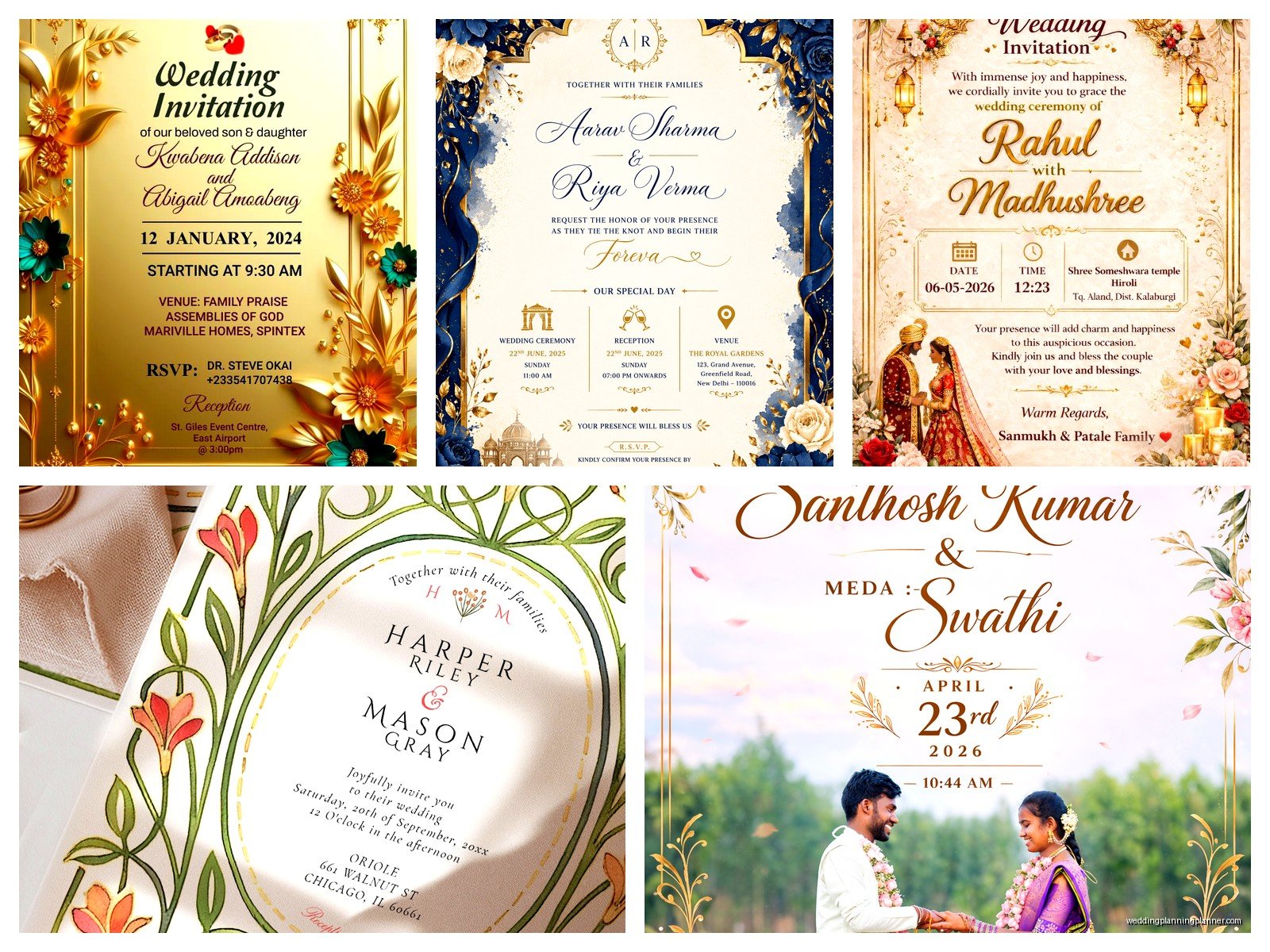
Marriage Invitation Card: Traditional Wedding Card Design
May
Traditional Wedding Card Design That Actually Works
So traditional wedding invitations are having this massive comeback and honestly I’m not surprised because there’s something about holding a properly designed card with gold foil and that thick cotton paper that just… you can’t replicate that with a digital invite no matter how many animations you add. I’ve been doing this for almost 15 years now and the number of couples asking for traditional designs has literally tripled since like 2019.
What Makes a Design Actually Traditional
Okay so first thing – traditional doesn’t mean boring or old-fashioned necessarily. It means you’re pulling from established design principles that have been around for decades or even centuries depending on your cultural background. Classic traditional Western wedding invitations typically feature formal fonts (think engraved script or serif typefaces), symmetrical layouts, formal wording, and often incorporate elements like borders, monograms, or family crests if you’re fancy like that.
The color palette usually sticks to neutrals – ivory, cream, white, with accents in gold, silver, navy, or burgundy. I had this couple back in summer 2021 who wanted “traditional but not stuffy” and we ended up doing this gorgeous cream cardstock with a subtle damask pattern embossed into the background and copper foil accents. It was traditional in structure but felt fresh because of that copper.
Paper Stock Is Where You Actually Start
I’m gonna be real with you – if you cheap out on paper, everyone will notice. Traditional invitations need weight to them, literally. You want at least 110lb cardstock, but honestly 120lb or even 130lb feels way better. Cotton paper (like Crane’s Lettra or similar) has this texture that screams quality and it takes letterpress and foil stamping beautifully.
The finish matters too. Smooth works for engraving and thermography. Textured (like laid or linen finish) gives you that tactile element. Eggshell finish is kinda the middle ground – subtle texture but still refined. One thing that annoys me SO much is when people pick this beautiful traditional design and then print it on regular printer paper or flimsy cardstock because “it’s just the invite” – nah, the invitation sets expectations for your entire wedding.
Layout and Composition Rules
Traditional layouts follow pretty strict hierarchy rules. You’re working with centered text almost always, with the most important information getting the most visual weight. Here’s the typical order from top to bottom:
- Host line (who’s hosting – traditionally the bride’s parents but this varies now)
- Request line (“request the honour of your presence” for religious ceremonies, “request the pleasure of your company” for non-religious)
- Couple’s names (bride’s name traditionally first if her parents are hosting, otherwise alphabetical or however you want)
- Date and time spelled out completely
- Venue name and location
- Reception information if it’s at the same location
Everything is spelled out in traditional invitations – no numerals for dates, no abbreviations except for Mr., Mrs., Dr., etc. So you write “Saturday, the twenty-first of June” not “Saturday, June 21st” and definitely not “6/21/24” which I’ve seen people try to do and it just…
Typography That Works
This is where people get overwhelmed because there are approximately eight million fonts out there. For traditional invites, you’re looking at three main categories:
Script fonts – These are your fancy calligraphy-style fonts. Copperplate, Edwardian Script, Snell Roundhand, or Bickham Script are classics. Use these for names or the main request line. Don’t use script for everything or it becomes illegible – my cat walked across my keyboard once and honestly that’s what an all-script invitation looks like.
Serif fonts – Garamond, Caslon, Baskerville, Times New Roman (yes really, it works for formal invites). These are readable and elegant. Use them for body text, dates, venue information.
Sans serif for accents – Sparingly. Maybe for a modern monogram or minimal detail, but traditional designs really lean into those serifs.
You typically want 2-3 fonts maximum on a traditional invitation. One script, one serif, maybe one more for contrast. I worked with this bride in spring 2023 who insisted on using five different fonts because she loved them all and the final product looked like a ransom note honestly. We had to redesign the whole thing three weeks before printing which was… stressful doesn’t even cover it.
Borders, Frames, and Decorative Elements
Traditional invitations often incorporate borders or frames to contain the text. These can be simple (a thin single line border) or ornate (flourishes, botanical elements, geometric patterns). The key is matching the formality of the border to your overall wedding vibe.
Monograms are huge in traditional design. You can create one using the couple’s first initials with the last initial in the center (larger), or just do a simple overlapping of initials. Monograms work great as a design element at the top of the invitation or as a seal on the envelope.
Damask patterns, filigree, Art Deco geometric designs, botanical illustrations – these all work as background elements or accent details. Just don’t go overboard. White space is your friend even in traditional design.
Printing Methods That Match Traditional Aesthetics
The printing method you choose dramatically affects the final look. Here’s what actually works for traditional designs:
Letterpress – This is the gold standard. It creates an impression in the paper that you can feel. It’s expensive (usually $800-2000+ for 100 invitations depending on colors and complexity) but the quality is unmatched. Works best on cotton paper.
Engraving – The original formal printing method. Creates raised text you can feel from the front and an indentation on the back. Very traditional, very expensive, very elegant. Think old-money wedding vibes.
Thermography – Raises the ink to create a shiny, raised effect. It’s like engraving’s more affordable cousin (usually $400-800 for 100). Looks great, feels slightly raised, but can be sensitive to heat so don’t leave these in a hot car.
Foil stamping – Metallic foil pressed onto paper. Gold, silver, rose gold, copper – adds luxury without full engraving costs. You can combine foil with digital printing for a layered look.
Digital printing – Modern inkjet or laser printing on quality paper. Not traditional in method but if you’re on a budget (like under $300 for everything), you can still achieve a traditional look with proper design and good paper. Just skip this if you’re doing a black-tie formal wedding where guests will expect letterpress.
Color Schemes for Traditional Designs
I always tell couples to think about their venue and season when choosing colors. Traditional doesn’t mean you’re stuck with just white and gold, but your palette should feel timeless rather than trendy.
Classic combos that work: ivory and gold, white and navy, cream and burgundy, blush and gold, sage and cream, black and white (very formal), chocolate brown and ivory. Jewel tones work beautifully for fall and winter weddings – emerald, sapphire, ruby accents on cream or ivory backgrounds.
The base of your invitation should almost always be a neutral – white, ivory, cream, or ecru. Then you bring in color through ink, foil, liners, or ribbon details. I’ve seen people try to do a royal blue cardstock base with gold text and while it can work for certain cultural traditions, for Western traditional design it reads more… prom invitation? You want elegant, not loud.
Wording That Sounds Right
Traditional wording is formal and follows specific patterns. If the bride’s parents are hosting traditionally you’d write:
Mr. and Mrs. Robert James Sullivan
request the honour of your presence
at the marriage of their daughter
Katherine Marie
to
Mr. William Charles Anderson
If both sets of parents are hosting:
Mr. and Mrs. Robert Sullivan
and
Mr. and Mrs. Charles Anderson
request the honour of your presence
at the marriage of their children
Katherine Marie
and
William Charles
If the couple is hosting themselves (super common now):
Katherine Marie Sullivan
and
William Charles Anderson
request the honour of your presence
at their marriage
Notice “honour” is spelled the British way – that’s traditional. “Honor” works too but “honour” is more formal. Religious ceremonies use “honour of your presence” – non-religious use “pleasure of your company.”
The Invitation Suite Components
A full traditional invitation suite includes multiple pieces and honestly this is where costs add up fast:
- Main invitation card
- Reception card (if reception is at different location or different time)
- Response card with envelope
- Accommodations card
- Direction card or map (less common now with GPS but some couples still include them)
- Weekend events card if you’re doing welcome dinner, brunch, etc.
- Outer envelope
- Inner envelope (optional but traditional for formal weddings)
- Envelope liner (adds color/pattern inside the envelope)
- Belly band, ribbon, or wax seal to hold everything together
You don’t need every single component. At minimum you need the invitation, response card with envelope, and outer envelope. Everything else is optional based on your needs and budget.
Envelope Addressing
Traditional etiquette says you hand-address envelopes or use calligraphy – no printed labels. I know, I know, that’s a lot if you’re inviting 150 people. But it does look more elegant and personal.
You can hire a calligrapher (usually $2-5 per envelope), use digital calligraphy printing (less expensive, still pretty), or carefully hand-write them yourself if you have decent handwriting. The outer envelope gets full formal names and addresses. If you’re using inner envelopes, those get just the names in a more casual form.
One thing that’s kinda fallen out of practice but is still technically correct for uber-traditional weddings – you don’t write anything on the back flap of the outer envelope. Return address goes on the back flap or front upper left corner.
Timing and Ordering
Order your invitations 4-6 months before your wedding date. This gives you time for design, proofing (always order a printed proof before the full run), printing, addressing, and assembly. Mail them 8-10 weeks before the wedding (12 weeks if it’s a destination wedding).
Order 10-15% extra invitations beyond your guest count. You’ll want extras for keepsakes, last-minute additions, mistakes during addressing, and that one person who definitely lost theirs and will ask for another one.
Budget Reality Check
Traditional invitations with quality paper and proper printing methods aren’t cheap. Here’s what you’re realistically looking at:
Budget option (digital printing on nice paper): $200-500 for 100 suites
Mid-range (thermography or simple foil): $600-1200 for 100 suites
High-end (letterpress, engraving, multiple colors): $1500-3000+ for 100 suites
These prices include the full suite – invitation, response card, envelopes. Add $200-400 for calligraphy addressing. Add another $100-300 if you want envelope liners, wax seals, silk ribbon, or other fancy finishing touches.
Working With a Stationer vs DIY
You can absolutely DIY traditional invitations if you’re comfortable with design software and have time. Buy quality paper from a specialty retailer, design in Canva or Adobe Illustrator, and print through a professional printing service. You’ll save money but spend significantly more time.
Working with a stationer (hi, that’s me) means you get expertise in design, etiquette, paper selection, and we handle all the coordination with printers. We also catch mistakes before they’re printed – like when the groom’s name is spelled wrong or the date is actually a Tuesday not a Saturday (yes this happens more than you’d think).
The middle ground is using an online stationer like Minted, Paperless Post’s paper options, or Zola. You get templates that follow traditional design rules, customization options, and they handle printing and can do addressing too. Quality is generally good though not quite at the level of custom letterpress from a dedicated print shop.
Whatever route you go, start early, get second opinions on wording and design, and order that proof before committing to 150 invitations because reprinting is gonna cost you basically the same as the original order and nobody wants that stress six weeks before their wedding when you’re already dealing with seating charts and vendor payments and your future mother-in-law’s opinions about literally everything