
Planning Guides, Style Guide
Recycled Paper Wedding Invitations: Eco-Conscious Options
May
Okay So Recycled Paper Invitations Are Actually Pretty Straightforward
Look, recycled paper wedding invitations aren’t some crazy niche thing anymore. I’ve been doing this for almost two decades and around 2019 or so, every third couple started asking about eco-friendly options. The whole sustainability conversation just exploded and honestly it’s about time because the wedding industry generates an insane amount of waste.
The main thing you gotta know is that “recycled paper” isn’t just one thing. There’s post-consumer recycled content (PCR), which means paper made from stuff people already used and threw in recycling bins. Then there’s pre-consumer recycled content, which is basically scraps from manufacturing processes. You want high PCR percentages—like 30% minimum, but 100% is obviously better.
What Actually Counts as Recycled Paper
So I had this couple in spring 2023 who came to me super proud because they found “recycled” invitations online. When I looked at the specs, it was like 10% post-consumer content and the rest was virgin paper with a slightly brown tint. That’s greenwashing, my friend. Don’t fall for it.
Real recycled paper options include:
- 100% post-consumer waste paper (PCW) – this is the gold standard
- Tree-free paper made from cotton, hemp, or bamboo
- Seed paper that you can literally plant after the wedding
- Handmade paper with recycled fibers mixed in
- Paper with high percentages of agricultural waste like sugarcane bagasse
You’ll also see certifications like FSC (Forest Stewardship Council) which is great but that’s more about sustainable forestry than recycling. Still good though! Just different.
The Texture Thing Nobody Warns You About
Here’s what annoys me about recycled paper and nobody talks about this enough: the texture can be wildly inconsistent between batches. I once ordered samples from a supplier, loved them, client approved everything, we placed the full order for 200 invitations and when they arrived the paper felt completely different. Like, same product name, same specs, totally different hand-feel. The fibers were more visible and it had this almost rough quality that wasn’t there before.
Always—and I mean always—order your actual invitation stock from the same batch. Ask your printer or supplier about batch consistency. If you’re ordering DIY paper to print at home, buy extra because if you run out halfway through and reorder, the new batch might not match.
Printing Methods That Actually Work on Recycled Stock
Not all printing methods play nice with recycled paper. The texture and absorbency are different from regular paper so you need to plan accordingly.
Digital printing works pretty well on most recycled stocks. It’s cost-effective for smaller quantities (under 100 invitations) and you can do full color. The ink sits on top of the paper rather than soaking in, which is good for textured surfaces.
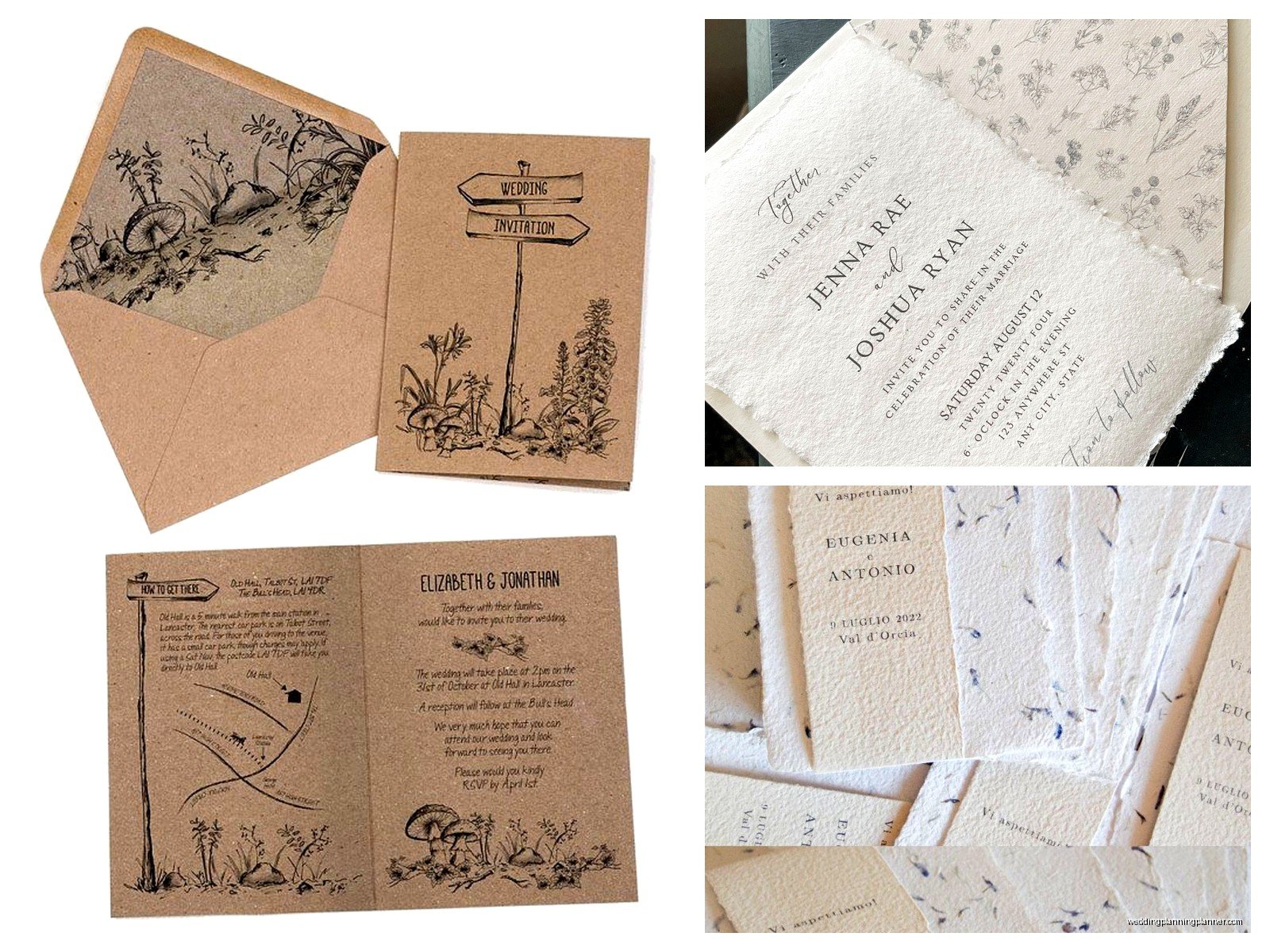
Letterpress is gorgeous on recycled paper and actually one of my favorite combinations. That deep impression looks amazing against the natural texture of recycled fibers. But it’s pricey—expect to pay $8-15 per invitation suite at minimum. Also you’re limited to one or two colors usually unless you wanna blow your budget entirely.
Thermography is that raised printing technique that kinda mimics engraving. It can work on smoother recycled papers but I’ve seen it bubble weird on highly textured stocks. Do a test print first.
Foil stamping is tricky. The heat and pressure needed for foiling doesn’t always work great with softer recycled papers. Some stocks handle it fine, others… not so much. My cat literally knocked over a sample board of foil-stamped recycled invites last month and I’m still finding pieces under the couch but anyway, test this method thoroughly.
Colors and Finishes You Can Expect
Recycled paper usually comes in natural tones—cream, ivory, light brown, grey. You can find bleached white recycled paper but honestly that kinda defeats part of the eco-purpose because bleaching uses harsh chemicals. The natural look is part of the charm anyway.
Some cool options I’ve worked with:
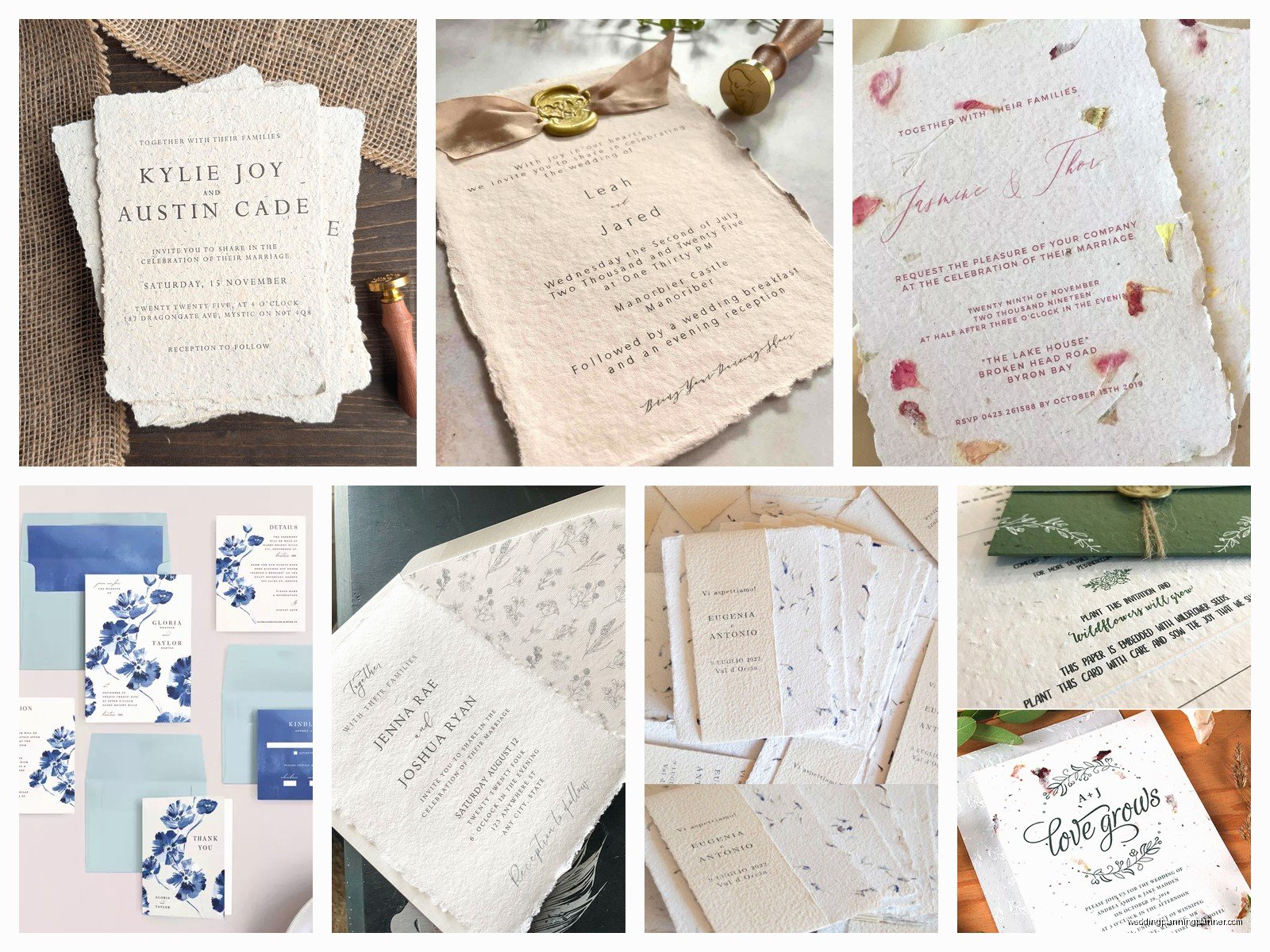
- Speckled paper with visible fibers and flecks (really popular right now)
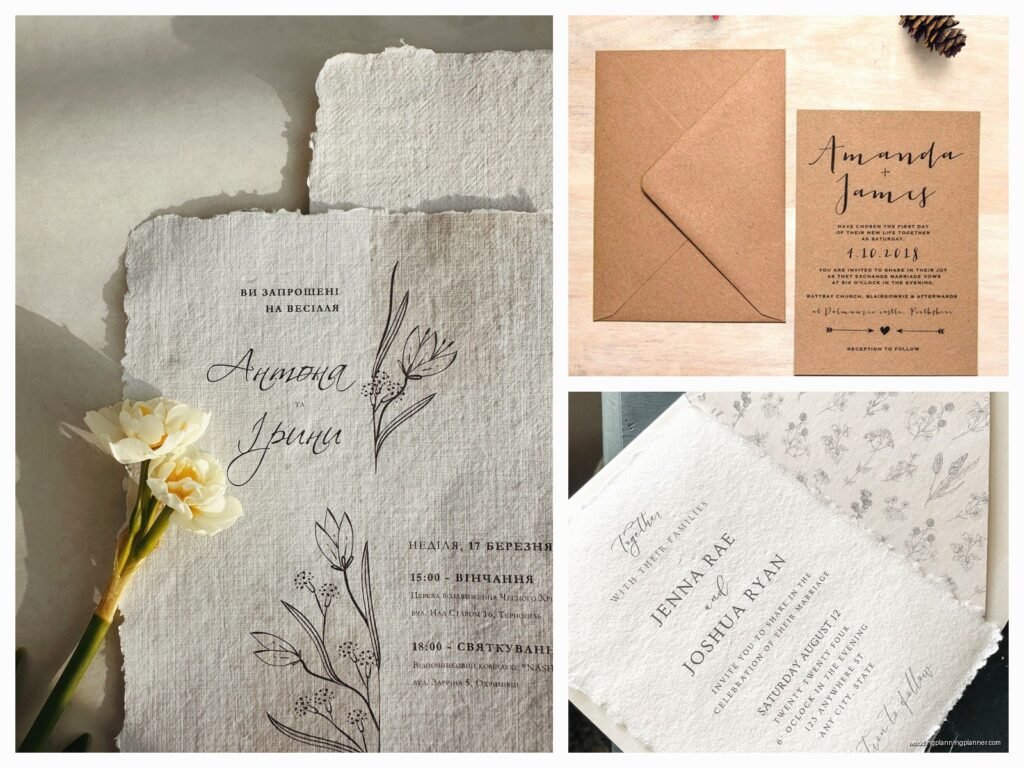
- Deckled edges that give it a handmade artisan vibe
- Kraft paper which is naturally brown and super rustic
- Cotton paper which is incredibly soft and luxurious
- Lokta paper from Nepal made from lokta bush bark
The thing about recycled paper is that imperfections are expected. You might see slight variations in color, small specks, or subtle texture differences. That’s not a defect—it’s literally proof that the paper is made from recycled materials.
Where to Actually Buy This Stuff
Okay so sourcing is gonna depend on whether you’re going DIY or working with a professional printer.
For DIY brides: Papers & More, LCI Paper, and even some Etsy sellers carry recycled cardstock you can run through your home printer. Just check the weight—you want at least 80lb cover stock for invitations, preferably 100lb. Anything lighter feels cheap and flimsy.
Working with a stationer: Most professional wedding stationers have access to eco-friendly paper lines. Neenah, Mohawk, and French Paper all make recycled options. Just tell your stationer sustainability is a priority and they should have samples to show you.
Seed paper suppliers: Botanical PaperWorks is the big name here. Their seed paper comes embedded with wildflower seeds or herb seeds. It’s thicker and more rustic looking, definitely not for everyone, but couples who love it REALLY love it.
The Whole Suite Situation
You don’t have to make everything recycled. Like, I get it, you want to be eco-conscious but also you have a vision. Mix and match!
Common approaches:
- Main invitation on recycled paper, enclosures on regular paper
- Everything recycled but use digital printing instead of letterpress to save trees through efficiency
- Recycled paper for save-the-dates, splurge on nicer paper for the actual invitation
- Skip some enclosures entirely and direct people to a wedding website (honestly the most eco-friendly option)
I had this bride in summer 2021 who wanted seed paper for everything—invitation, RSVP card, detail cards, the works. The problem is seed paper doesn’t go through printers well and hand-writing 150 invitations wasn’t gonna happen. We compromised: seed paper save-the-dates that made a statement, then regular recycled paper for the invitation suite. She was happy, I was happy, nobody died from hand-cramping.
Envelopes Are Actually the Tricky Part
Finding recycled envelopes that match your invitation paper is… well it’s a whole thing. Envelope suppliers often have limited recycled options and the colors might not match exactly.
Your options:
- Order envelopes from the same paper manufacturer as your invitations
- Go with a contrasting envelope color and call it a design choice
- Use kraft envelopes which are readily available and cheap
- Spend extra for custom-made envelopes from your invitation paper
For lining envelopes, you can use recycled tissue paper or skip linings altogether. Honestly envelope linings are pretty but they’re not necessary and that’s extra paper waste anyway.
Printing Addresses on Recycled Envelopes
If you’re printing addresses at home, do test runs. Recycled envelopes can be thicker or more textured than standard ones and might jam in your printer. I’ve seen people waste 30 envelopes trying to get their printer settings right, so seriously, test first.
Hand calligraphy looks beautiful on recycled envelopes. The natural texture actually makes the ink stand out more. If you’re hiring a calligrapher, mention you’re using recycled envelopes because some inks perform differently on textured surfaces.
Digital calligraphy (printed to look like hand calligraphy) works fine but make sure your printer can handle the envelope thickness.
Cost Breakdown Because Yeah It Matters
Let’s be real about pricing. Recycled paper usually costs more than regular paper, but not always dramatically more.
Rough estimates for 100 invitations:
- DIY on basic recycled cardstock: $150-300 total
- Professional digital printing on recycled stock: $400-700
- Letterpress on recycled paper: $1,200-2,500
- Seed paper with professional printing: $800-1,500
- Fully custom with recycled handmade paper: $2,000+
You can save money by reducing your enclosure cards. Do you really need a separate reception card, directions card, hotel card, and registry card? Nah. Put that info on your wedding website and include one detail card with the website URL.
Hidden Costs Nobody Mentions
Postage might cost more if your recycled paper invitations are thick or have deckled edges that make them non-standard size. Those weird dimensional surcharges from USPS are annoying but they’re real. Take a fully assembled invitation to the post office and have them weigh it before you buy stamps.
Also if you’re using seed paper, it’s heavier. Like noticeably heavier. Budget for extra postage.
Design Considerations That Actually Matter
The natural texture of recycled paper is a design element itself, so you don’t need to go crazy with embellishments. Simple, clean designs often look best.
Things that work well:
- Minimalist typography with lots of white (well, cream) space
- Line drawings or simple botanical illustrations
- Single color printing instead of full color
- Letting the paper texture be the star
Things that can look messy:
- Tiny detailed fonts on heavily textured paper
- Full-bleed color printing that emphasizes paper inconsistencies
- Too many design elements competing with the paper texture
I’ve noticed that couples going with recycled paper usually lean toward rustic, bohemian, or natural wedding themes. But honestly you can make it work for almost any style. I’ve seen elegant formal invitations on cream recycled cotton paper that looked expensive and sophisticated.
The Whole “Is It Actually Eco-Friendly” Question
Okay so here’s the thing—and this might sound cynical but it’s true—mailing physical invitations is never gonna be the most environmentally friendly option. Even on recycled paper. The most eco-friendly invitation is an email or a wedding website announcement.
But I get it. Weddings are special and physical invitations are part of the tradition and experience. If you’re gonna do paper invitations, recycled paper is definitely better than virgin paper. You’re reducing demand for new tree harvesting and giving already-used materials another life.
To maximize the eco-friendliness:
- Print only what you need (don’t over-order by 50 “just in case”)
- Use soy-based or vegetable-based inks
- Skip the plastic envelope liners and belly bands
- Choose a local printer to reduce shipping emissions
- Go with digital RSVPs instead of mailed response cards
- Use vintage stamps instead of new ones if you’re into that aesthetic
Some couples include a little note on their invitation about the recycled paper choice, kinda like “These invitations are printed on 100% recycled paper because we care about the planet” or whatever. It’s not necessary but it can be a nice touch and might inspire your guests.
Common Problems and How to Fix Them
Problem: Your printer keeps jamming with the recycled cardstock.
Solution: Feed one sheet at a time, adjust your printer settings to “thick paper” or “cardstock,” or honestly just take it to a print shop.
Problem: The ink is bleeding or looking blotchy.
Solution: Recycled paper is more absorbent. Use less ink-heavy fonts, switch to laser printing instead of inkjet, or seal the paper with a spray fixative first (though that adds chemicals so… yeah).
Problem: The paper feels too rough or rustic for your vision.
Solution: Look for cotton-based recycled paper instead of wood-pulp recycled paper. Cotton is smoother and more refined.
Problem: You can’t find envelopes that match.
Solution: Embrace the contrast or order custom envelopes made from your invitation paper (expensive but solves the problem).
Timeline Stuff You Should Know
Order samples way earlier than you think you need to. Like, 10-12 months before the wedding if possible. Some recycled paper suppliers have limited stock or longer lead times than regular paper suppliers.
Once you’ve chosen your paper and design, order your invitations at least 4 months before your wedding date. That gives you time for:
- Printing (2-4 weeks for professional printing)
- Addressing envelopes (1-3 weeks depending on method)
- Assembly (1 week if you’re doing it yourself)
- Mailing (send 6-8 weeks before the wedding)
- Buffer time for mistakes because something always goes wrong
I once had a situation where a couple ordered their recycled paper invitations only 6 weeks before their wedding and the supplier was backordered and… it was stressful for everyone involved. Don’t do that to yourself or your stationer.
Real Talk About Guest Reactions
Most guests won’t notice or care that your invitations are on recycled paper unless you tell them. Some older relatives might think the paper looks “cheap” because it’s not bright white and perfectly smooth, but that’s their problem not yours.
If you’re worried about perception, go for the smoother recycled options like cotton paper or high-quality PCR paper that’s been bleached. But honestly, I think the textured look is beautiful and if sustainability matters to you, own that choice.
The couples I work with who choose recycled paper are usually doing it because it aligns with their values, not because they’re trying to impress anyone. And that’s the right reason to make any wedding decision, if you ask me.
