
Planning Guides, Style Guide
Sustainable Wedding Invitations: Eco-Friendly Green Options
May
Okay so sustainable wedding invitations are actually way easier than you think
The paper thing is where most people start and honestly it’s the most obvious choice. Recycled paper sounds boring but it’s come SO far since like 2015 when everything looked kinda beige and sad. I had this couple in spring 2023 who were absolutely adamant about recycled content and we found this gorgeous cotton paper that was 100% post-consumer waste and you literally couldn’t tell the difference from virgin paper. Actually it looked better because it had this subtle texture that made the letterpress pop.
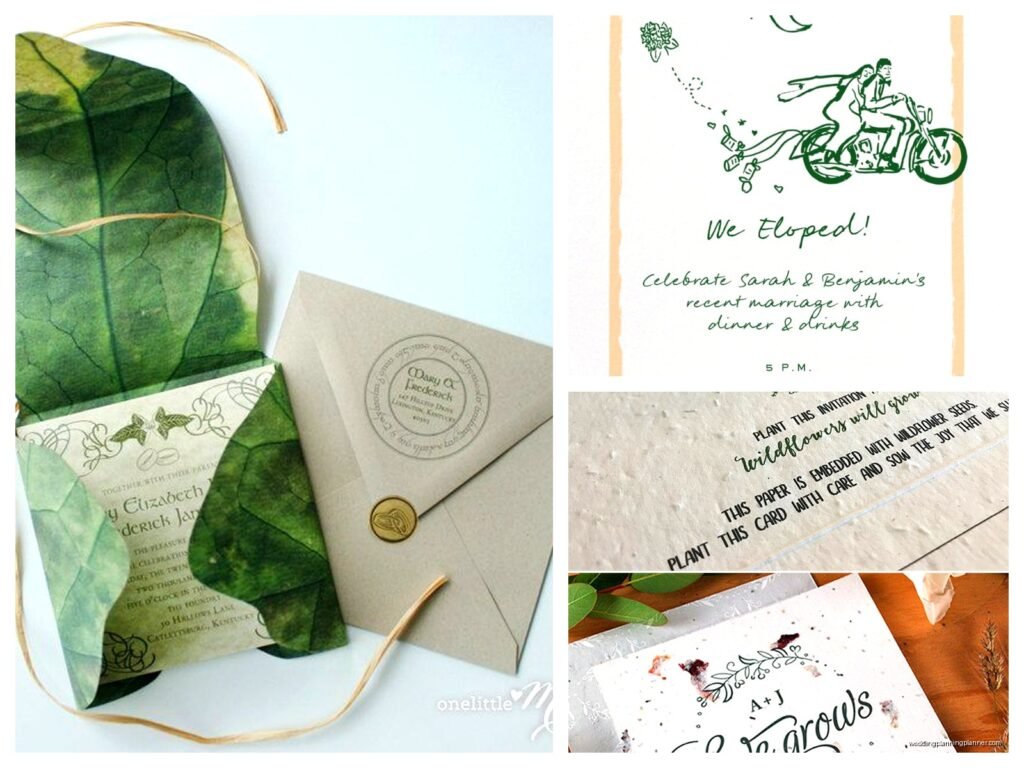
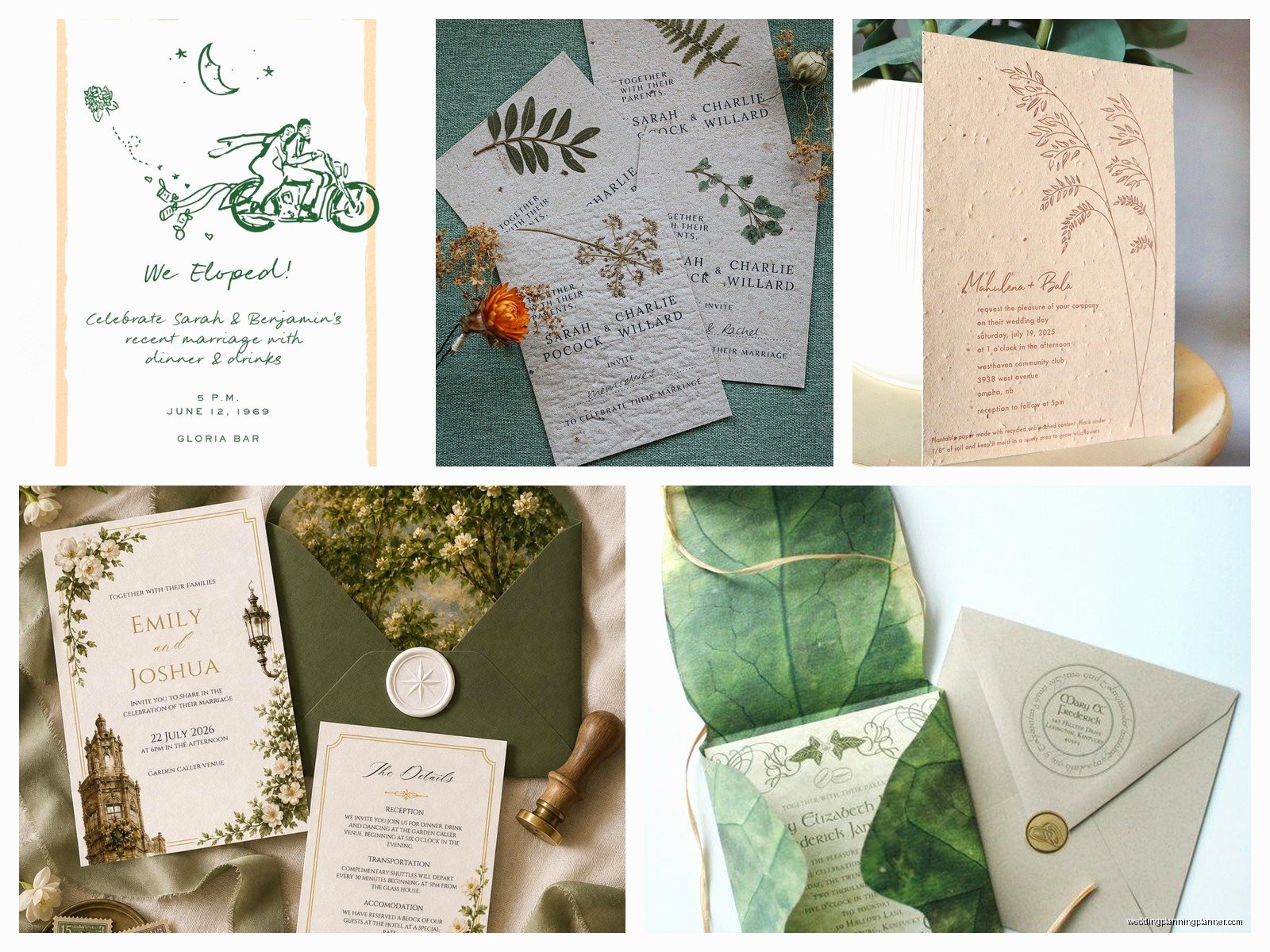
Tree-free paper is another option and this is where it gets interesting. Bamboo paper, hemp paper, even paper made from agricultural waste like sugarcane bagasse. The bamboo stuff grows insanely fast so it’s actually renewable, not just recycled. You can also find seed paper which I’ll get to in a second because that’s its own whole thing.
Seed paper is either amazing or a total gimmick depending on who you ask
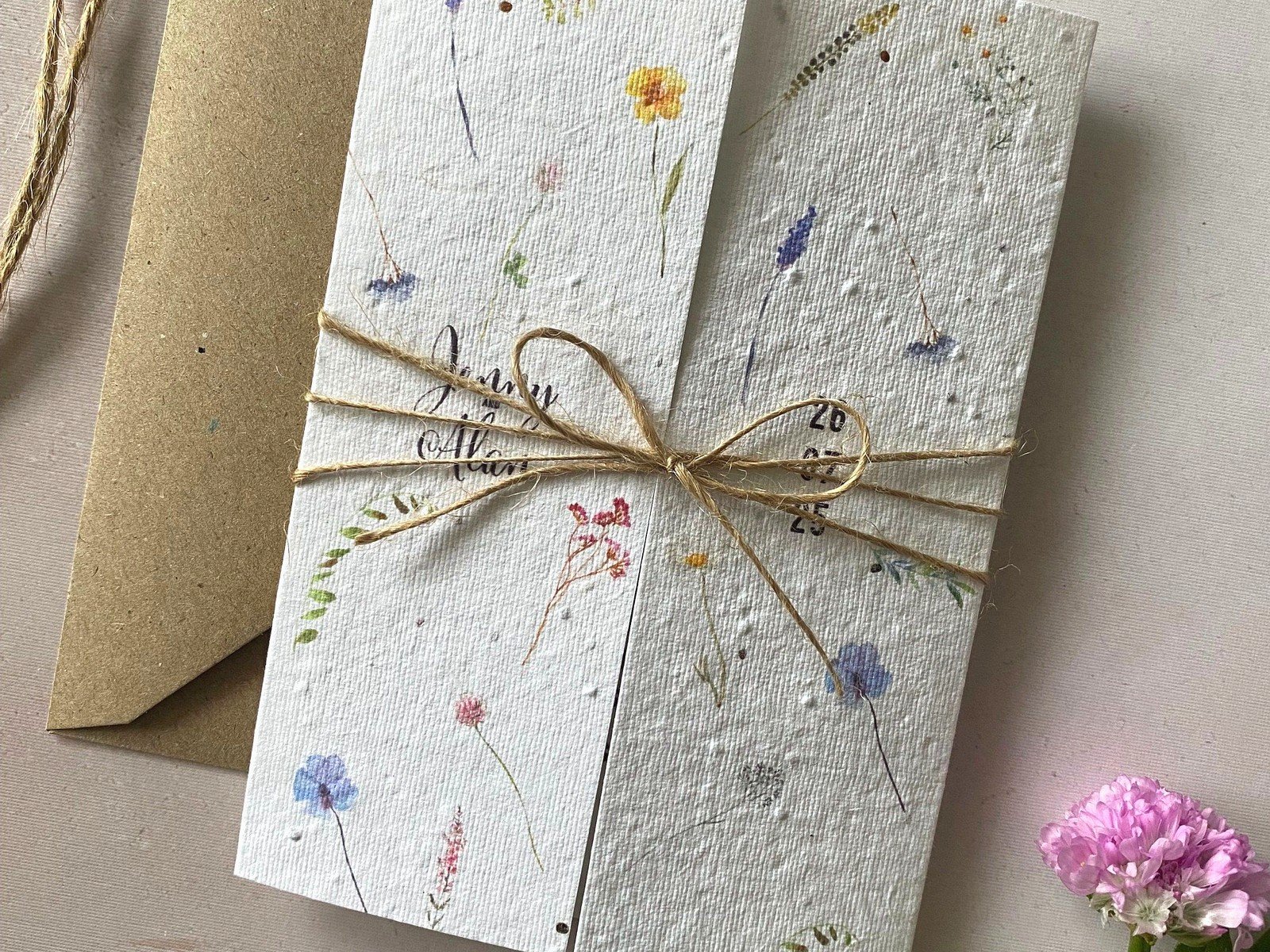
So seed paper has actual seeds embedded in it and your guests can plant it after the wedding. Sounds cute right? Here’s the thing that annoyed me about seed paper for YEARS – half the time people just throw it away anyway because who actually remembers to plant a piece of paper? And the seeds are usually wildflowers which, okay great, but in some regions those can be invasive species. I always tell couples to check what seeds are actually in there and whether they’re native to where most of your guests live.
That said, when it works it really works. I did a wedding in summer 2021 where the bride included planting instructions on a separate card and actually followed up with guests about it. She sent photos in a group email six weeks later asking people to share pics of their sprouts. Like maybe 30% of guests actually did it? Which honestly is better than I expected. The paper itself photographs beautifully too, very organic looking.
Digital invitations are the most sustainable option but also the most controversial
Look, I’m a stationery consultant so theoretically I should hate digital invites but I gotta be honest with you – they make sense for a lot of couples. Paperless Post, Greenvelope, Joy – these platforms have gotten really sophisticated. You can do custom designs, animations, the whole thing. Zero waste, zero shipping, instant delivery.
The pushback I get is always from older family members who don’t check email or from couples who feel like it’s “not formal enough” for a wedding. Which, okay, I get it. There’s something about receiving a physical invitation in the mail that feels special. But also we’re talking about sustainability here and nothing beats zero paper waste.
Middle ground option: send digital save-the-dates and then do minimal printed invitations. Or do a beautiful printed invitation for your ceremony and digital-only for other events like the rehearsal dinner or morning-after brunch.
Printing methods matter more than people realize
Letterpress is gorgeous and actually pretty eco-friendly if you find the right printer. It uses less ink than offset printing and the ink itself can be soy-based or vegetable-based instead of petroleum-based. The plates can be reused or recycled. I love letterpress because it has that tactile quality that makes invitations feel luxurious without being wasteful… well, as long as you’re using sustainable paper.
Digital printing has gotten way better in terms of environmental impact. Look for printers who use water-based inks or eco-solvent inks. HP Indigo presses are pretty standard now and they have better sustainability credentials than older digital printing methods.
What you wanna avoid is foil stamping if you’re going full eco-warrior mode. Traditional foil stamping uses metallic foils that aren’t recyclable and the process involves heat and adhesive. There are some companies doing “eco-foil” now but honestly I haven’t been impressed enough to recommend it widely.
The whole suite thing – do you actually need all those pieces?
This is where I see couples create waste without even thinking about it. The traditional invitation suite has like seven pieces: outer envelope, inner envelope, invitation card, RSVP card, RSVP envelope, reception card, details card, tissue paper (which literally serves no purpose anymore), and maybe a belly band or wax seal.
You don’t need all that. Seriously.
Bare minimum sustainable suite: one card with all the info, one envelope, done. Put your RSVP on your wedding website. I know some people clutch their pearls at this but it works perfectly fine and cuts your paper usage by like 60%.
If you want a bit more: invitation card, one details card with everything else, envelope. Skip the inner envelope – that’s a holdover from when mail was unreliable and dirty. Your mail is fine now.
Envelopes are their own sustainability puzzle
Most envelopes are recyclable but the ones with plastic windows aren’t, and neither are the ones with full-coverage printing on the inside (like those cute patterned liners everyone loves). If you’re going sustainable, stick with plain recycled envelopes or ones with minimal printing.
Envelope liners are kinda my guilty pleasure though – they make such a difference when someone opens the invitation. You can do them sustainably by using recycled paper liners or even fabric scraps if you’re feeling crafty, though that’s way too much work for most couples. Or just skip them entirely and use a colored envelope instead.
For addressing: avoid labels if you can because they’re usually plastic-based. Hand calligraphy is beautiful but expensive. Digital calligraphy printed directly on the envelope is a good middle option. Or just use a nice font and print them yourself.
Local printers vs. online companies
I always push couples toward local printers when possible because shipping is a huge carbon footprint issue. If you’re ordering from Minted or Paperless Post or whatever, that’s a lot of transportation. A local letterpress studio or print shop means you can pick up your order, check quality in person, and support small business.
That said, some online companies have really stepped up their sustainability game. Minted has a recycling program and carbon-neutral shipping. Basic Invite uses recycled paper options. You just have to do your research and actually read their sustainability pages instead of just assuming.
What about all the extra stuff?
Belly bands, wax seals, ribbon, vellum overlays – this is where couples go overboard. And look, I love a gorgeous invitation as much as anyone, but every extra element is more material waste.
If you’re gonna do embellishments, make them count. One wax seal using traditional wax (which is actually pretty sustainable since it’s mostly beeswax and resin) looks better than three different elements competing for attention. Or use a simple twine tie instead of synthetic ribbon.
Vellum overlays are tricky because most vellum isn’t recyclable due to its coating. There are some eco-friendly vellum options made from cotton or recycled materials but they’re harder to find and more expensive.
My cat knocked over my coffee right as I was writing this and now I’m distracted thinking about whether I need to blot my keyboard but anyway…
Postage and mailing considerations
Heavier invitations cost more to mail and use more fuel to transport. Keep your suite under one ounce if possible – that’s usually the invitation card, one enclosure card, and a standard envelope. Anything over that and you’re paying extra postage AND creating a bigger carbon footprint.
Those oversized square envelopes everyone thinks are so chic? They cost more to mail because they can’t go through standard sorting machines. Plus they often get damaged in transit which means reprints which means more waste.
Standard A7 envelopes (5.25 x 7.25 inches) are your most sustainable option for mailing. They’re the right size for invitation cards, they process smoothly through postal equipment, and they’re the cheapest postage rate.
Timing and quantities to reduce waste
Order the right amount. This sounds obvious but I’ve seen so many couples order way too many invitations “just in case” and then they’re stuck with 50 extra invitations they’ll never use. Most printers recommend ordering 10-15 extra for keepsakes and last-minute additions. That’s plenty.
Also think about your timeline – if you send save-the-dates, you don’t need to send invitations super early. Save-the-dates go out 6-8 months before, invitations go out 6-8 weeks before. This gives you time to finalize your guest list and avoid printing invitations for people who already said they can’t come.
Alternative sustainable invitation ideas that actually work
Fabric invitations sound weird but I’ve seen them done beautifully. Print on organic cotton or linen using eco-friendly ink and guests can use them as napkins or handkerchiefs later. More expensive upfront but zero waste if people actually use them.
Wood veneer invitations are another option – thin sheets of wood that you can print or engrave on. They’re biodegradable, unique, and really lightweight for mailing. The cost is usually higher but they make a statement.
Recycled invitations made from your own paper waste – okay this is super niche but I had a client who worked with a paper maker to create custom paper from their own recycled documents and fabric scraps. The invitations literally contained shredded pieces of love letters they’d written each other. Insanely romantic and completely unique, though also insanely expensive and time-consuming so… maybe not for everyone.
What about the RSVP situation specifically
RSVP cards and their accompanying envelopes are SO WASTEFUL. You’re literally sending paper so people can send paper back to you. Plus you have to provide postage for the return envelope which is another cost and environmental impact.
Online RSVPs through your wedding website are the obvious sustainable choice. I know some people worry about older guests not being able to navigate websites but honestly? Most people figure it out, and you can always have a phone number they can call as a backup option.
If you absolutely must do paper RSVPs, consider postcard-style RSVPs instead of a card with an envelope. They cost less to mail, use half the paper, and are just as functional.
Working with your stationer or designer on sustainable options
Not all stationers are knowledgeable about eco-friendly options, which is kinda frustrating when you’re trying to make sustainable choices. Ask specific questions: What’s the post-consumer recycled content of your paper? What kind of ink do you use? Where are your envelopes sourced? Do you have carbon-neutral shipping?
A good stationer should be able to answer these questions or find out for you. If they brush off your sustainability concerns or act like you’re being difficult, find someone else. There are enough eco-conscious designers and printers out there now that you don’t have to compromise.
Also be upfront about your budget because sustainable options aren’t always more expensive but they can be. Recycled paper is usually comparable to regular paper, but things like custom seed paper or working with a local letterpress artist might cost more. Know what you’re willing to spend and where you’re willing to compromise.
The certification and greenwashing problem
FSC certification (Forest Stewardship Council) is the main thing to look for in paper products. It means the paper comes from responsibly managed forests. But here’s what annoyed me recently – I’ve seen companies slap “eco-friendly” on their products when literally the only sustainable thing about them is that the paper is FSC-certified but they’re using petroleum-based inks and non-recyclable envelopes and shipping everything in plastic packaging.
Read the fine print. Ask questions. “Eco-friendly” doesn’t mean anything unless you know specifically what makes it eco-friendly.
Some other certifications to look for: Green Seal, Rainforest Alliance, PCF (Processed Chlorine Free), and TCF (Totally Chlorine Free). These indicate different aspects of environmental responsibility in paper production.
The whole sustainable invitation thing can feel overwhelming when you start digging into it because there are so many factors to consider – paper sourcing, ink types, printing methods, transportation, end-of-life recyclability – but you don’t have to be perfect about all of it. Pick the areas that matter most to you and focus there. Maybe you really care about recycled content so you prioritize that over printing method. Or maybe reducing shipping is your main concern so you go with a local printer even if their paper options are slightly less sustainable. It’s all about making better choices where you can, not being absolutely perfect about every single detail because that’ll just drive you crazy and also probably drive your partner crazy and then you’ll be fighting about invitation paper stock which is sorta ridiculous when you think about it