Planning Guides, Style Guide
Unique Wedding Seating Chart: Complete Guide
Apr
So You Need a Unique Seating Chart That Actually Works
Okay so seating charts are honestly where most couples start pulling their hair out and I totally get it. You’ve got Uncle Mike who can’t sit near Aunt Susan because of that thing from 2019, your college roommate who doesn’t know anyone, and your mom’s second cousin who needs to be close to the bathroom. Fun times.
The thing is, a unique seating chart doesn’t have to mean complicated. It just means you’re doing something that fits your vibe and actually makes sense for your guest list. I had this couple in spring 2023 who wanted to do a completely non-traditional setup and we ended up with something that looked chaotic on paper but worked perfectly because we followed some basic rules underneath all the creativity.
Figure Out Your Actual Layout First
Before you start getting excited about displaying names on vintage keys or whatever Pinterest told you to do, you gotta know your venue layout. Like actually know it. How many people fit at each table? Are we doing rounds, rectangles, a mix? Is there a dance floor eating up space? Where are the bathrooms, the bar, the exits?
I always tell couples to get the floor plan from their venue and actually draw it out or use one of those digital seating chart tools. You can’t make a unique display for your chart if you don’t know what you’re displaying. That’s just facts.
Here’s what you need to know:
- Total guest count (be realistic about RSVPs)
- Table sizes and shapes available
- Any fixed elements like columns, stages, or that weird architectural thing every venue seems to have
- Space for vendors, gift tables, dessert stations
- Access points for catering staff
The Grouping Strategy That Actually Makes Sense
This is where I see people mess up constantly and it annoys me so much because it’s avoidable. They try to make the seating chart unique and forget that the actual seat assignments need to be functional. Your aesthetic mirror with calligraphy looks gorgeous but if you’ve seated your vegan friends at the table farthest from the kitchen while the meat-eaters are up front, you’re gonna have problems.
Start by making groups. I usually do:
- Immediate family and wedding party
- Extended family
- Work friends
- College friends
- High school friends
- Neighbors or community connections
- Plus-ones who don’t know many people
Then you start thinking about who needs to be near what. Elderly guests near bathrooms and exits. Parents with small kids near exits too (trust me on this). Your party crowd can be farther from grandma’s table. People who’ll want to chat with you during dinner should be closer to your table.
Unconventional Table Arrangements
If you want unique, this is where you can actually get creative without making your life harder. I worked with a couple who did “family style” long tables instead of rounds, and we named each table after places they’d traveled together. Another couple did a mix of high-tops, regular rounds, and lounge furniture areas because their reception was more cocktail-party vibe than formal dinner.
Some options that work:
- All long tables (very trendy right now, easier to decorate, better for conversation flow)
- Mix of table sizes to accommodate different group sizes naturally
- One giant table if your guest count is under 40
- Curved or serpentine table arrangements
- Clusters of small tables instead of traditional spacing
- Lounge areas with couches for older guests who can’t stand long
The long tables thing is kinda having a moment and I see why – it photographs beautifully and you can fit more people in less space, which… okay that sounds unromantic but it’s true.
Display Ideas That Don’t Suck
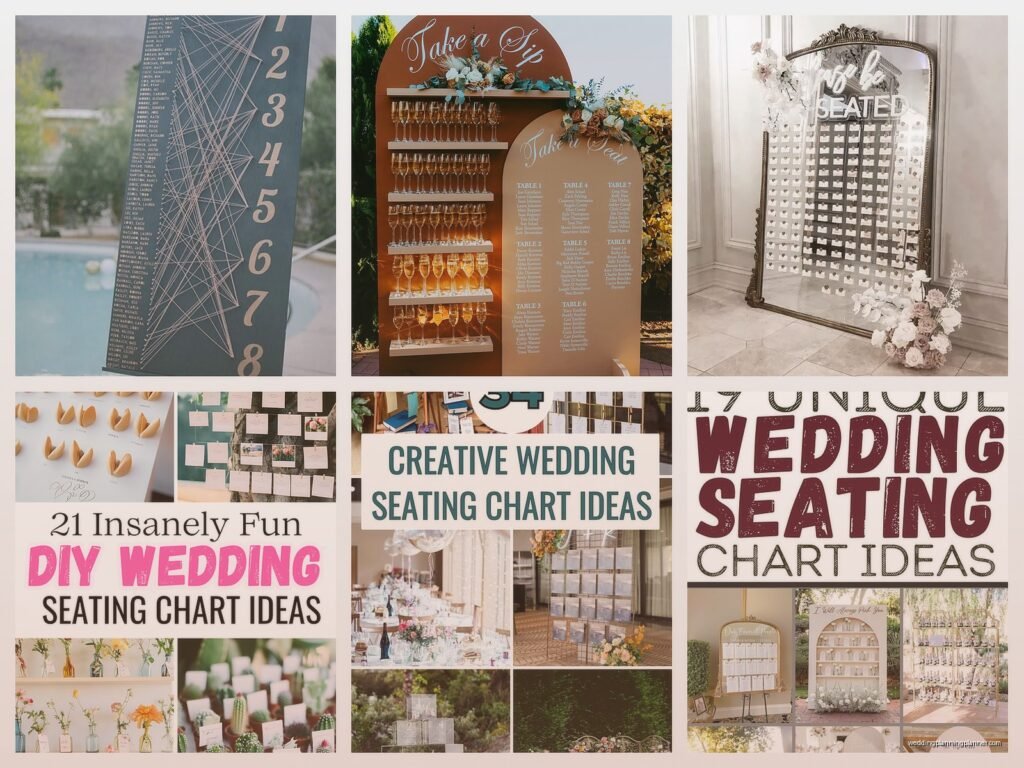
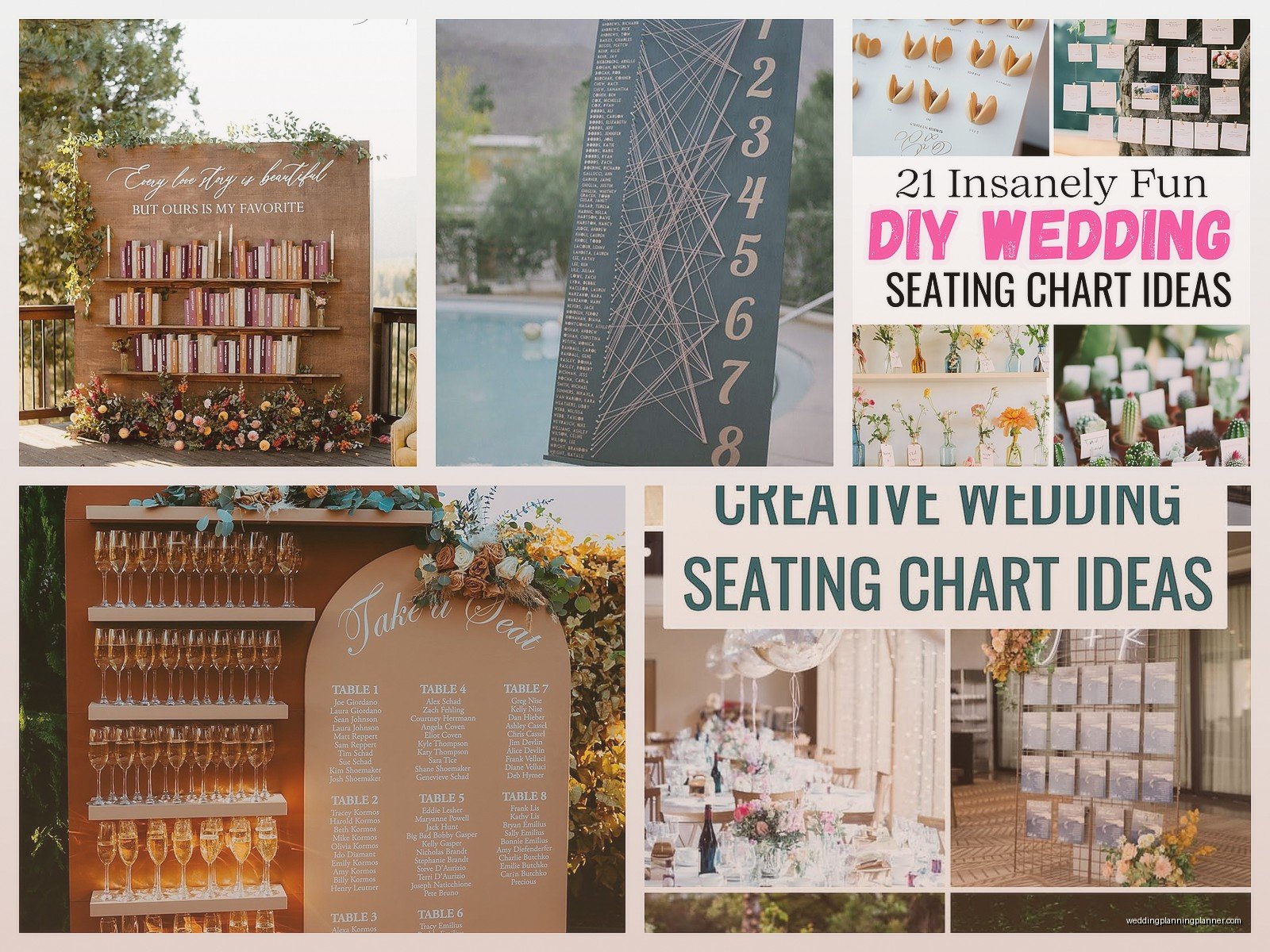
Right so this is what everyone thinks of when they hear “unique seating chart” – the actual display at your venue entrance. I’ve seen everything from beautiful to absolute disasters that caused a 30-minute bottleneck at the reception entrance.
Whatever you choose needs to be READABLE and LOGICAL. I cannot stress this enough. Your guests are probably hungry, maybe tipsy from cocktail hour, and they just want to find their seat. Don’t make them solve a puzzle.
Mirror or Acrylic Displays
These are super popular and they do look amazing. You can do calligraphy or vinyl lettering on a large mirror or clear acrylic sheet. Lean it on an easel at the entrance. My cat knocked over a sample acrylic chart in my home office once and it didn’t break, so they’re pretty sturdy, which is good because drunk Uncle Mike definitely bumped into one at a wedding I planned in summer 2021.
Pro tip: if you’re doing this, organize it alphabetically by last name or by table number in a grid. Don’t get cute with the organization or people will stand there forever.
Hanging Displays
Paper or cards hanging from a frame, branch, or that wooden hexagon thing everyone’s using now. This works great for outdoor weddings or garden vibes. You can use escort cards that guests take with them to their table.
Just make sure they’re secured well – I’ve seen wind blow these everywhere and it’s not cute, it’s chaos.
The Board or Frame Method
Cork boards, vintage window frames, old doors, whatever. Pin or attach cards with table assignments. This is probably the easiest DIY option and you can find the base at thrift stores or… I mean, your aunt probably has something in her garage.
Unique Objects as Displays
Okay this is where people get really creative. I’ve seen seating charts on:
- Vintage suitcases stacked with cards inside
- A old ladder with cards attached to rungs
- Wine bottles with scrolls inside
- A living plant wall with cards tucked into greenery
- Vintage books stacked with cards on top
- A world map with pins and tags
These look great in photos but make absolutely sure guests can access them easily and read them quickly. I’ve seen the wine bottle thing cause confusion because people couldn’t figure out which bottle was theirs without pulling them all out.
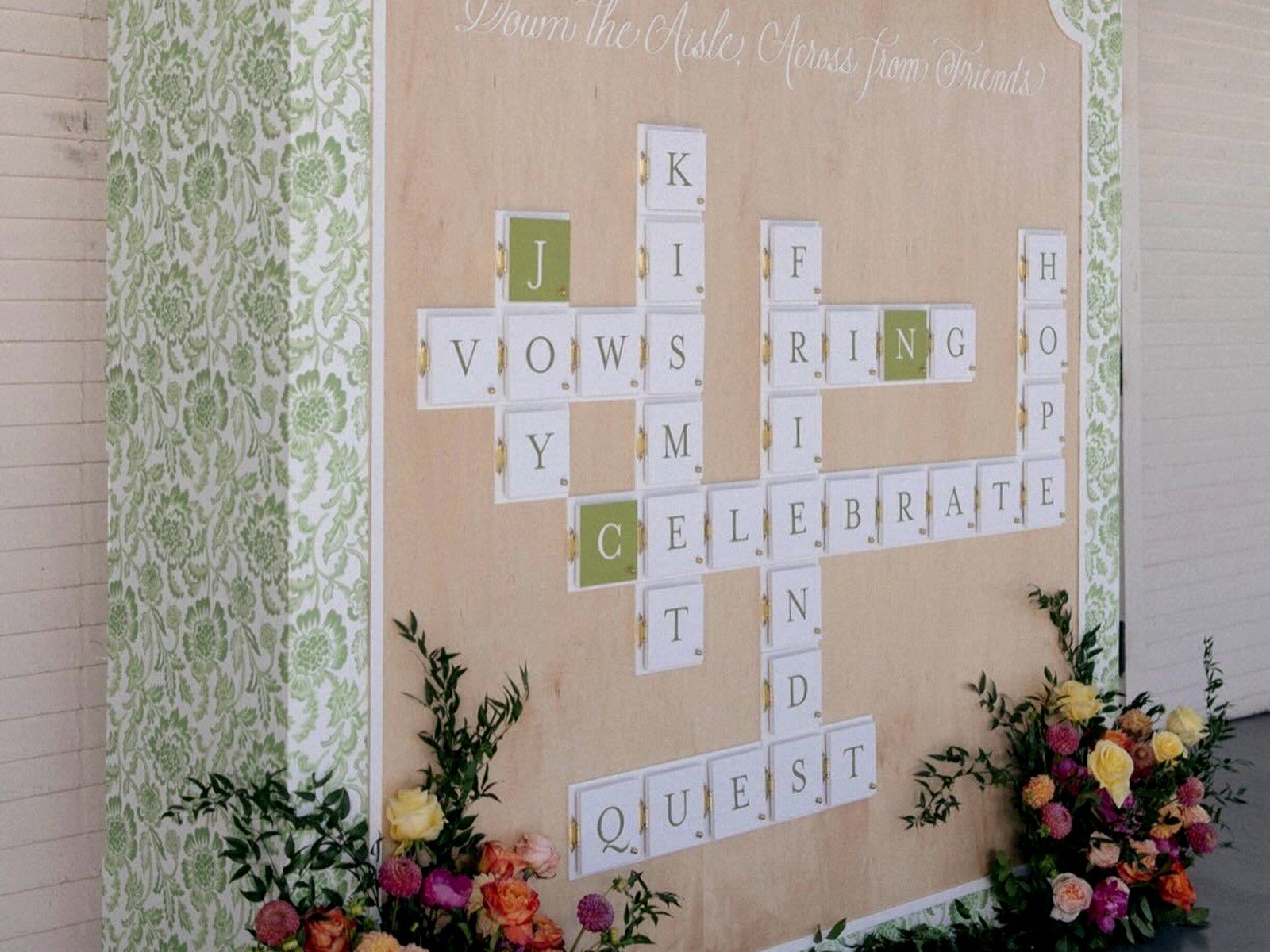
Table Names vs Numbers
So traditionally it’s table numbers but you can do names instead if you want something more personal. I usually recommend names when you’ve got a smaller wedding (under 100 people) because it’s easier to remember “Tuscany” than “Table 14.”
Popular naming themes:
- Places you’ve traveled together
- Favorite movies, books, or TV shows
- Important dates or milestones
- Things you love (types of wine, flowers, songs)
- Streets where you’ve lived
- Inside jokes (but make sure guests understand them somewhat)
The catch with names is that you still need to organize them logically on your display. Alphabetical usually works best. And honestly? Some older guests prefer numbers because it’s just clearer. You can always do both – “Table 1: Paris” or whatever.
Escort Cards vs Seating Chart Display
There’s two ways to do this and it sorta depends on your venue flow and guest count.
Option 1: Large display chart where everyone looks at one board/mirror/thing to find their table assignment. Good for larger weddings, takes up less space, easier to change if you need to.
Option 2: Individual escort cards that guests pick up and take with them. These can double as favors or have their menu choice on them. Takes more space to display but feels more personal and guests like having something to hold.
I usually suggest the large display for 100+ guests and escort cards for smaller weddings, but that’s just me.
The Logistics Nobody Tells You About
Okay so you’ve designed this beautiful unique seating chart, now here’s the stuff that’ll actually make or break it working smoothly.
Timing and Setup
Your seating chart needs to be set up before cocktail hour ends. Not during dinner, not as people are walking in. BEFORE. I had a situation where the couple wanted to do this elaborate hanging display but hadn’t told their coordinator, and we were literally hanging cards while guests were trying to read them. It was a mess.
Also, you need someone designated to answer questions because there will be questions. Someone will claim they can’t find their name (they’re looking at the wrong last name). Someone will want to switch tables. Someone will be confused. Have a point person with the master list.
Last-Minute Changes
This is why I always suggest having your seating chart finalized but keeping the display method flexible. Guest cancellations happen. Someone brings an unexpected plus-one. You might need to shuffle people around.
If you’re doing calligraphy on a mirror, changing it is hard. If you’re doing printed cards you can replace, that’s easier. Just something to think about when choosing your display method.
Lighting Matters
I cannot tell you how many times I’ve seen a gorgeous seating chart that nobody can read because it’s too dark in the venue entrance. If your reception is evening or in a dimly lit space, you need to light your seating chart. Uplighting, a small spotlight, candles nearby (not too close if it’s paper), whatever. People need to actually see it.
The Assigned Seats vs Just Tables Debate
Most weddings do assigned tables with open seating at each table, meaning you tell guests which table but not which specific chair. This is fine for most situations and gives people some autonomy.
But sometimes you want to do fully assigned seats with place cards at each spot. Do this if:
- You’re doing a plated dinner with different meal choices
- You have a really formal wedding
- You want specific people next to each other for photos or whatever
- Your family dynamics are complicated and you need that level of control
Honestly though? Assigned tables is usually enough. Let people choose their actual chair within the table. It gives them some control and you don’t have to micromanage quite as much.
Digital Seating Chart Tools That Help
Look, you can do this with paper and pencil if you want but digital tools make it so much easier to move people around when you’re trying to figure out the puzzle. I usually recommend:
- AllSeated (good for floor plans and 3D views)
- Wedding Wire’s tool (free, basic but functional)
- Social Tables (professional level, might be overkill)
- Even a spreadsheet works if you’re organized
These let you drag and drop guests between tables and see your counts in real-time. Way better than crossing out names on paper for the fifteenth time.
Working With Your Venue and Caterer
Your venue and caterer need your final seating chart usually a week before the wedding. They’re using it to plan service flow, set tables, arrange place settings if you’re doing those. Don’t wait until the last minute because they can’t just magically rearrange a room the day-of.
Also ask your venue about their table numbers or if you need to provide them. Some venues have standard table numbers, some expect you to bring your own. Find this out early or you’ll be scrambling.
Common Mistakes to Avoid
After doing this for years, I’ve seen the same mistakes over and over, so here’s what NOT to do:
Don’t seat all the single people together at a “singles table” – it’s awkward and feels forced. Mix them in with couples or with people they actually know.
Don’t put kids at a separate kids table unless the parents specifically request it. Most parents want their young kids near them.
Don’t seat people facing a wall or a corner if you can avoid it. Everyone wants to see the action.
Don’t assume people will figure it out on their own if your display is confusing. Test it on someone who doesn’t know your plan.
Don’t forget to account for vendors who need seats – your photographer, videographer, DJ, coordinator might need to eat too.
Don’t wait until the week before to start this. Seriously, start at least a month out when you have your final RSVP count.
What to Do When Someone Complains
Someone will probably complain about their table assignment. It happens at like 60% of weddings I plan. They wanted to sit closer to you, or they don’t know anyone at their table, or they have beef with someone you didn’t know about.
Have your coordinator or a designated person handle this, not you. You’re getting married, you don’t need to deal with seating drama on your wedding day. Empower someone to make small adjustments if needed or politely tell guests that the seating is set.
Usually once dinner starts and drinks are flowing, people forget they were annoyed anyway. Just saying.
Making It Actually Unique to You
The “unique” part should reflect you as a couple, not just look cool on Instagram. I mean yeah, Instagram matters I guess, but your guests are gonna remember if the seating made sense and if they had fun at their table way more than if your display was trendy.
Think about what makes sense for your wedding style. Backyard BBQ wedding? Maybe a casual wooden board with handwritten names. Formal ballroom? An elegant mirror with calligraphy. Beach wedding? Cards attached to driftwood or shells. You get the idea.
And honestly the most unique seating charts I’ve seen weren’t necessarily the most elaborate displays – they were the ones where the couple really thought about who should sit together and created tables where conversation would flow naturally and people would connect. That’s way more important than having the fanciest escort card display, though you can have both if you plan it right.
One couple I worked with did a seating chart on a vintage window frame they found at an estate sale, and they painted it their wedding colors and did hand calligraphy. It cost them maybe $50 total and looked better than some displays I’ve seen that cost hundreds. The key was that it fit their rustic-vintage vibe perfectly and was clearly organized alphabetically so guests found their tables fast.
Just remember that your seating chart is functional first, decorative second. Make it easy to read, easy to access, and organized logically. Then add your unique creative touches on top of that solid foundation. That way you get something that looks amazing AND actually works, which is kinda the whole point.