
Planning Guides, Style Guide
Wedding Invitation Packages: Complete Suite Deals
May
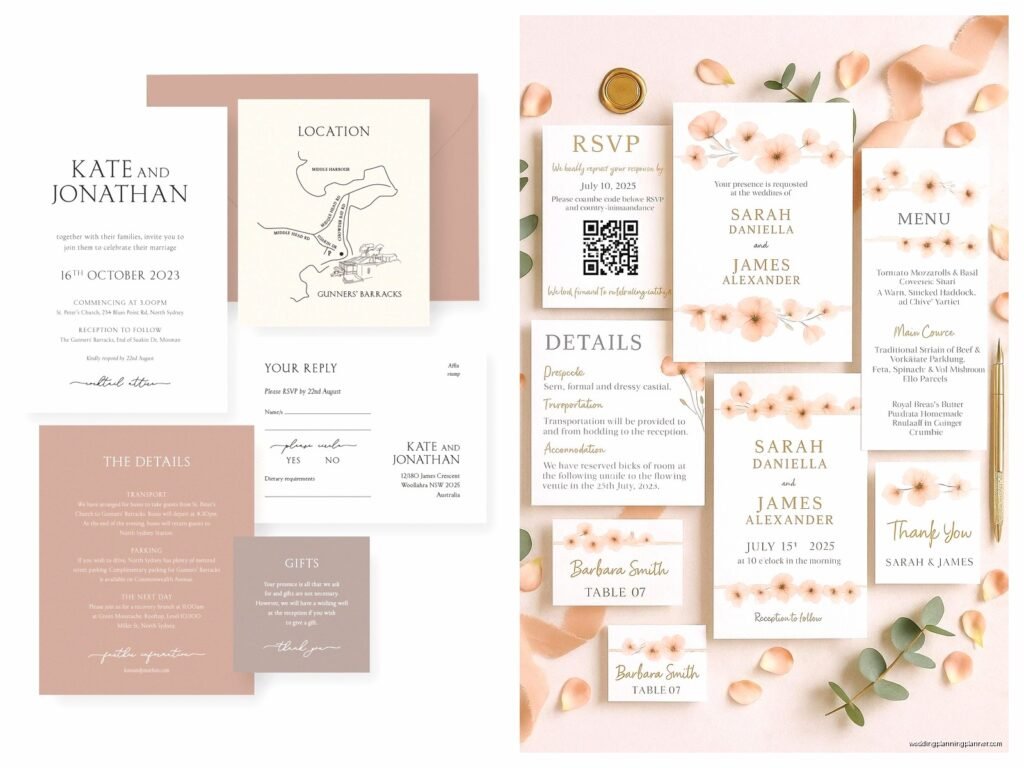
What Wedding Invitation Packages Actually Include
So invitation suites are basically bundles where you get all your paper goods in one go instead of ordering each piece separately. The main invite is obviously the star, but then you’ve got response cards, detail cards, envelope liners, belly bands, wax seals… it adds up fast. Most packages include 3-5 components minimum, and honestly that’s where you start seeing real savings compared to buying everything à la carte.
The typical basic package has your invitation, an RSVP card, and envelopes for both. Mid-tier packages add detail cards (for accommodations, website info, registry details even though we’re not supposed to put registry on invites but people do it anyway), plus maybe some decorative elements. Premium packages go all out with custom envelope liners, vellum overlays, ribbon, wax seals, and sometimes even day-of stationery like menus or programs.
I had this bride back in spring 2023 who ordered invites separately from different vendors because she thought she’d save money – she spent like three weeks trying to match paper weights and colors across four different companies and nearly had a breakdown when nothing looked cohesive. That’s exactly what packages prevent.
Breaking Down the Components You Actually Need
The main invitation is non-negotiable obviously. It’s got your names, date, time, venue. Standard size is 5×7 but I’ve seen everything from 4×6 to 6×9. Horizontal layouts are having a moment right now but vertical is still classic.
RSVP cards are kinda essential unless you’re doing online-only RSVPs, which… look, I get it, it’s 2024, but half your guests over 60 are gonna call you anyway instead of using your website. The RSVP card should have a response deadline (usually 3-4 weeks before the wedding), meal choices if you’re doing plated dinner, and a line for number of guests attending.
Detail cards are where you put everything else – hotel blocks, transportation, dress code, wedding website. Some couples try to cram all this on the main invite and it looks cluttered. Just use a detail card. Your invitation should be elegant, not an information dump.
Reception cards are separate if your ceremony and reception are at different locations or different times. Like if you’re doing a 2pm ceremony and 6pm reception, you need to be clear about that or people will show up at 2pm expecting dinner immediately and get cranky.
The Decorative Stuff That Might Be Worth It
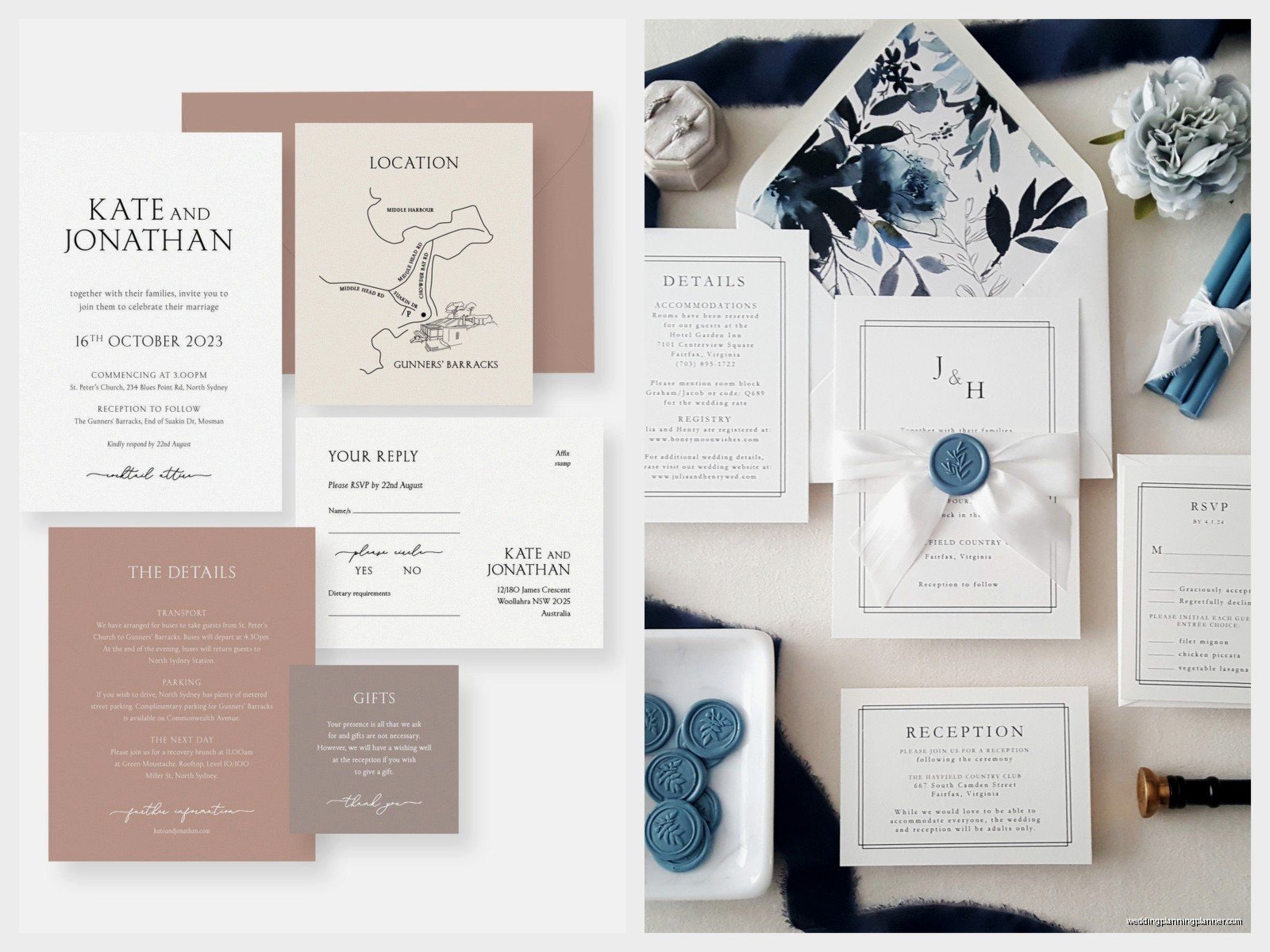
Envelope liners add a pop of color or pattern when someone opens the envelope. They’re usually included in mid-to-high tier packages. Are they necessary? Nah. Do they look nice? Yeah, actually they do. I always think of them as the moment your guests go “oh, this is gonna be fancy.”
Belly bands or vellum wraps hold everything together and look polished. Belly bands are paper strips (sometimes with your names or monogram), vellum is that translucent paper that goes over the invite. Both serve the same purpose – keeping your suite bundled and adding a layer of sophistication.
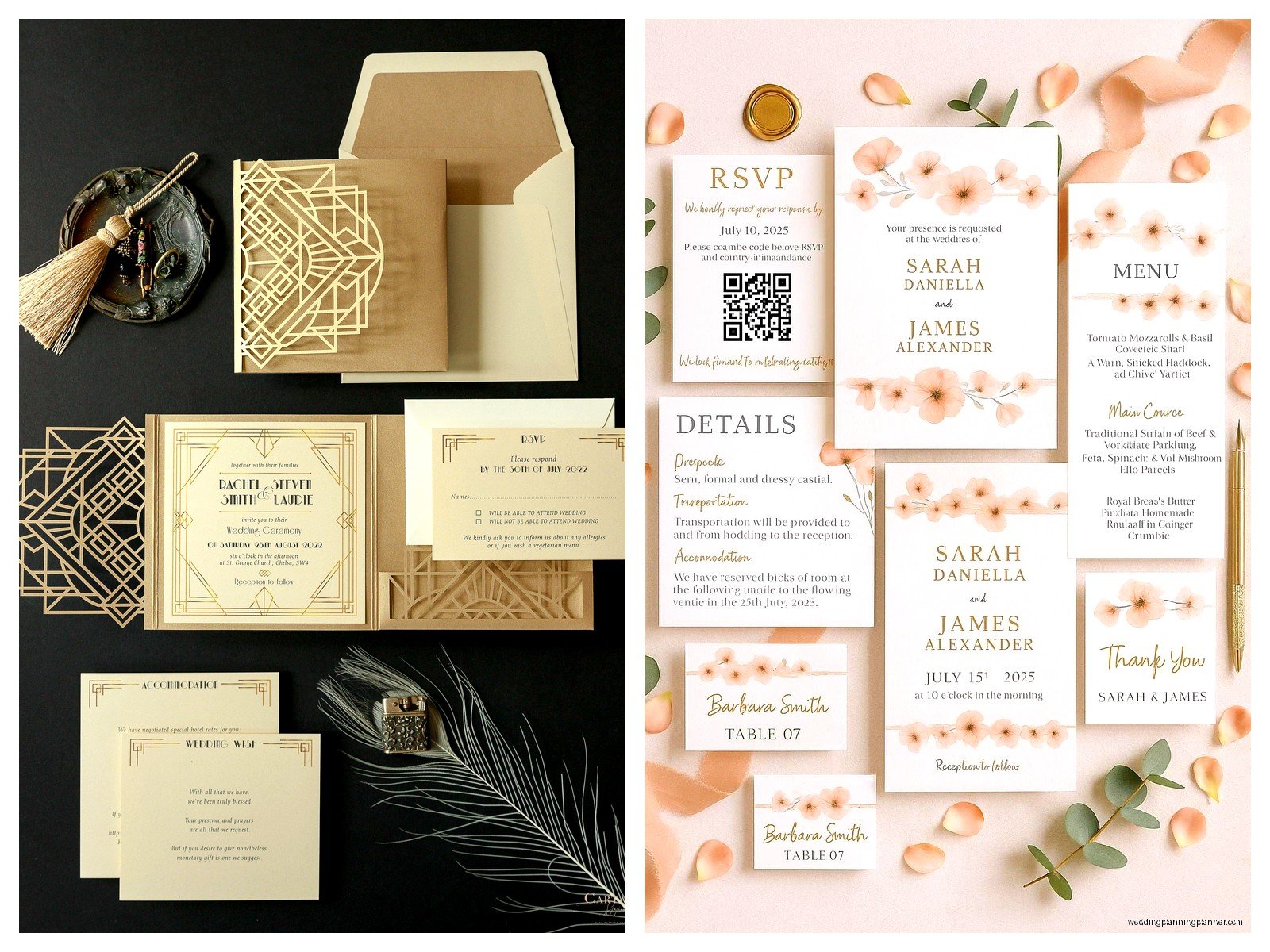
Wax seals are having a HUGE moment and they’re included in a lot of premium packages now. They used to be this expensive add-on but competition has driven prices down. Custom monogram stamps are everywhere. Just know that wax seals can affect postage – they make envelopes non-machinable so you might pay extra at the post office, which is something that annoyed me so much when I first started because literally no one tells couples this upfront and then they’re shocked at the post office.
Package Pricing Tiers and What You Get
Basic packages usually run $3-$6 per suite. You’re getting the invitation, RSVP card, and envelopes. Printing is typically digital or thermography (that raised printing that looks fancy but isn’t letterpress). Paper quality is decent, design options are somewhat limited to templates.
Mid-tier packages are like $6-$12 per suite. This is where you see more customization, better paper stocks (usually 110-130 lb cardstock), envelope liners, maybe a belly band or some ribbon. You might get letterpress or foil stamping options. Design is more flexible – you can usually modify templates significantly or do semi-custom work.
Premium packages start at $12 and go up to… honestly I’ve seen $30+ per suite for ultra-luxury stuff. Full letterpress, custom illustrations, hand-painted elements, silk ribbon, multiple envelope liners, wax seals with custom stamps, edge painting on the paper. Everything’s fully customized. The paper is thick and gorgeous, like 220 lb cotton or above.
Most of my couples land in that $7-10 range and get something really nice. You don’t need to spend $25 per invitation unless you want to or your budget allows.
Online vs. Local Stationery Studios
Big online companies like Minted, Zola, Shutterfly – they’re gonna have package deals that are pretty affordable. You’re looking at $300-600 for 100 suites usually. The design process is template-based, you upload your info, pick colors, done. Turnaround is quick, like 2-3 weeks. The trade-off is you’re getting mass-produced stuff that… look, it’s fine, but you might see your exact invitation at someone else’s wedding.
Local stationery designers and boutique online studios charge more but you’re getting custom or semi-custom work. Packages might be $800-2000 for 100 suites depending on complexity. You work directly with a designer, you get something unique, the paper quality is usually better. Turnaround is longer though – expect 6-8 weeks minimum, sometimes 12 weeks for letterpress.
I always tell couples to get samples before committing. Like actually hold the paper, see the colors in person, check the print quality. Most companies charge $5-15 for sample kits and it’s worth every penny.
What to Ask When Comparing Packages
First question: what’s included in the base price? Some vendors advertise low prices but then charge extra for envelopes or RSVP postage or addressing. Get the total cost for everything you need.
Ask about paper weight and type. 80 lb paper is flimsy – you want at least 100 lb for invitations, preferably 110-130 lb. Cotton paper feels more luxurious than regular cardstock. Linen texture is popular right now.
Printing method matters. Digital printing is most affordable and works for most designs. Thermography is that raised printing that looks expensive. Letterpress is actual impression into thick paper and it’s gorgeous but pricey. Foil stamping adds metallic elements and is also more expensive. Some packages include one method, others let you mix.
How many revisions do you get? Most designers include 2-3 rounds of changes. After that you’re paying extra. Read the contract.
Timeline is crucial. When do you need to place your order? How long until you get proofs? When will final invitations ship? I had a bride in summer 2021 who ordered invites 6 weeks before her wedding and the vendor’s turnaround was 8 weeks and she just… didn’t read that part. We had to rush order from a different company and pay double.
Ask about addressing options. Some packages include printed guest addresses on envelopes, others charge extra. Calligraphy addressing is usually an add-on that costs $2-4 per envelope. Digital calligraphy (printed to look like hand calligraphy) is cheaper at $0.50-1 per envelope.
Assembly: DIY or Professional
This is where packages can save you sanity or drive you crazy. Some vendors ship everything pre-assembled – you just address and mail. Others send components and you’re assembling 150 invitation suites yourself while watching Netflix at 11pm wondering why you didn’t just elope.
Assembly isn’t hard but it’s time-consuming. You’re layering the invite, detail cards, RSVP card, tucking everything into the envelope with the liner, adding belly bands or vellum, maybe wax seals. Figure 2-3 minutes per suite if you’re being careful. That’s 5-7 hours for 150 invitations.
Professional assembly costs $1-3 per suite usually. Worth it if you hate tedious tasks or don’t have time. I’ve done both and honestly… my cat knocked over an entire box of assembled invitations once and I had to start over, so maybe professional assembly isn’t the worst idea.
Postage Nobody Tells You About
Standard wedding invitations need extra postage. A 5×7 invite in a standard envelope with all the components weighs more than 1 oz usually. You’re looking at $0.88-1.10 per invite instead of a regular stamp. Oversized envelopes (square or bigger than 6×9) cost even more.
RSVP card postage is separate – you need to put stamps on those return envelopes unless you want to deal with guests who won’t mail them back because they don’t have stamps. Budget for that.
Non-machinable surcharge applies if your envelopes are square, have wax seals, or are rigid. That’s an extra $0.28 per piece. Take one fully assembled invitation to the post office and have them weigh it before you buy 150 stamps.
Vintage stamps are pretty but you’ll need multiple stamps to meet postage requirements and it gets expensive. Also hand-canceling – where the post office manually processes your invites so they don’t get mangled by machines – isn’t always available anymore, which is annoying because it used to be standard.
Timing Your Invitation Order
Order invitations 4-6 months before your wedding. This gives you time for design, proofs, printing, shipping, assembly, and addressing. Mail invitations 8 weeks before the wedding (6 weeks minimum, 10-12 weeks if it’s a destination wedding or holiday weekend).
Save-the-dates go out 6-8 months before, so you might order those before your invitation package. Some vendors bundle save-the-dates with invitation packages at a discount, which is smart if you like their style.
Order 10-15 extra invitations beyond your guest count. You’ll need them for keepsakes, last-minute additions, or replacements for mistakes. Ordering extras later costs more because of setup fees.
What Actually Makes a Package a Good Deal
You’re getting a deal when the package price is less than buying components separately AND includes things you actually want. Some packages load up on stuff you don’t need just to make it look like a better value. Do you really need programs and menus if you’re having a cocktail-style reception? Probably not.
Calculate the per-item cost. If a package is $1200 for 120 suites with 5 components, that’s $10 per suite or $2 per component. Compare that to buying the invitation alone ($4), RSVP card ($1.50), detail card ($1.50), envelope liner ($2), and belly band ($1.50) separately – that’s $10.50, so the package saves you a bit plus ensures everything matches.
The best packages include design consultation, multiple revision rounds, and quality materials. Cheap packages that nickel-and-dime you for every change or use thin paper aren’t worth the savings.
Common Package Mistakes
Couples order too few invitations trying to save money, then need more and the reorder costs twice as much per piece. Just order enough from the start.
Not reading what’s included leads to surprise costs. “Envelopes sold separately” means you’re paying extra for… envelopes. Which you need. Read the fine print.
Ordering too early before your details are finalized means you’re stuck with invites that have the wrong venue or time because things changed. Have your venue, date, and time locked down before ordering.
Skipping proofreading is how you get 150 invitations with “Saterday” or the wrong date. Proofread everything three times. Have someone else proofread. Then proofread again.
Choosing design over readability – if guests can’t read your fancy script font, they won’t know when to show up or… actually that reminds me of this invite I saw where the time was in this elaborate calligraphy and half the guests showed up an hour late because they read “5:00” as “6:00” and the couple was furious but like, maybe pick a legible font for the important information.
Not considering your wedding vibe. If you’re having a casual backyard wedding, ultra-formal engraved invitations feel off. Match your invitation style to your wedding style. Rustic wedding? Maybe kraft paper and simple typography. Black-tie ballroom? Go for elegant letterpress or foil.
Alternatives to Traditional Packages
All-digital invitations are becoming more accepted. You lose the tangible keepsake aspect but save hundreds of dollars. Companies like Paperless Post or Greenvelope offer beautiful designs. Just know some guests (especially older relatives) prefer physical invitations.
Postcard invitations skip the envelope entirely and cost way less to mail. They work for casual weddings but aren’t formal enough for black-tie events.
Separated components where you buy the invitation from one vendor and print RSVP cards yourself or use online RSVPs can save money if you’re strategic about it. Just make sure everything coordinates.
Day-of-wedding stationery packages sometimes bundle invitations with programs, menus, place cards, and signage. If you need all that anyway, bundling saves money. If you only need invitations, don’t pay for stuff you won’t use just because it’s a “package.”
Some stationery designers offer payment plans where you pay half upfront and half on delivery. Helpful if you’re spacing out wedding expenses. Ask about it.
The main thing is figuring out what you actually need versus what looks nice in a package deal. I’ve seen couples pay for elaborate packages with like seven components when they really just needed an invite and RSVP card. Be realistic about your wedding style and budget, get samples from a few vendors, and don’t let anyone upsell you on stuff you’re gonna throw away