Planning Guides, Style Guide
Sample Wedding Reception Program: Sample Ideas & Examples
Apr
Okay So Wedding Reception Programs Actually Matter
Reception programs are honestly one of those things couples either completely forget about or obsess over for no reason, and I’m gonna help you figure out what actually makes sense. The timeline matters way more than you think because your guests need to know when they can hit the bar versus when they need to sit down and pretend to care about speeches.
So here’s the thing – a reception program is basically your event flow from the moment guests arrive at the reception venue until they stumble out at the end of the night. You can print it, display it on a big sign, include it in your ceremony program, or honestly just let your DJ announce everything. But having SOME kind of structure? That’s what separates a smooth reception from chaos.
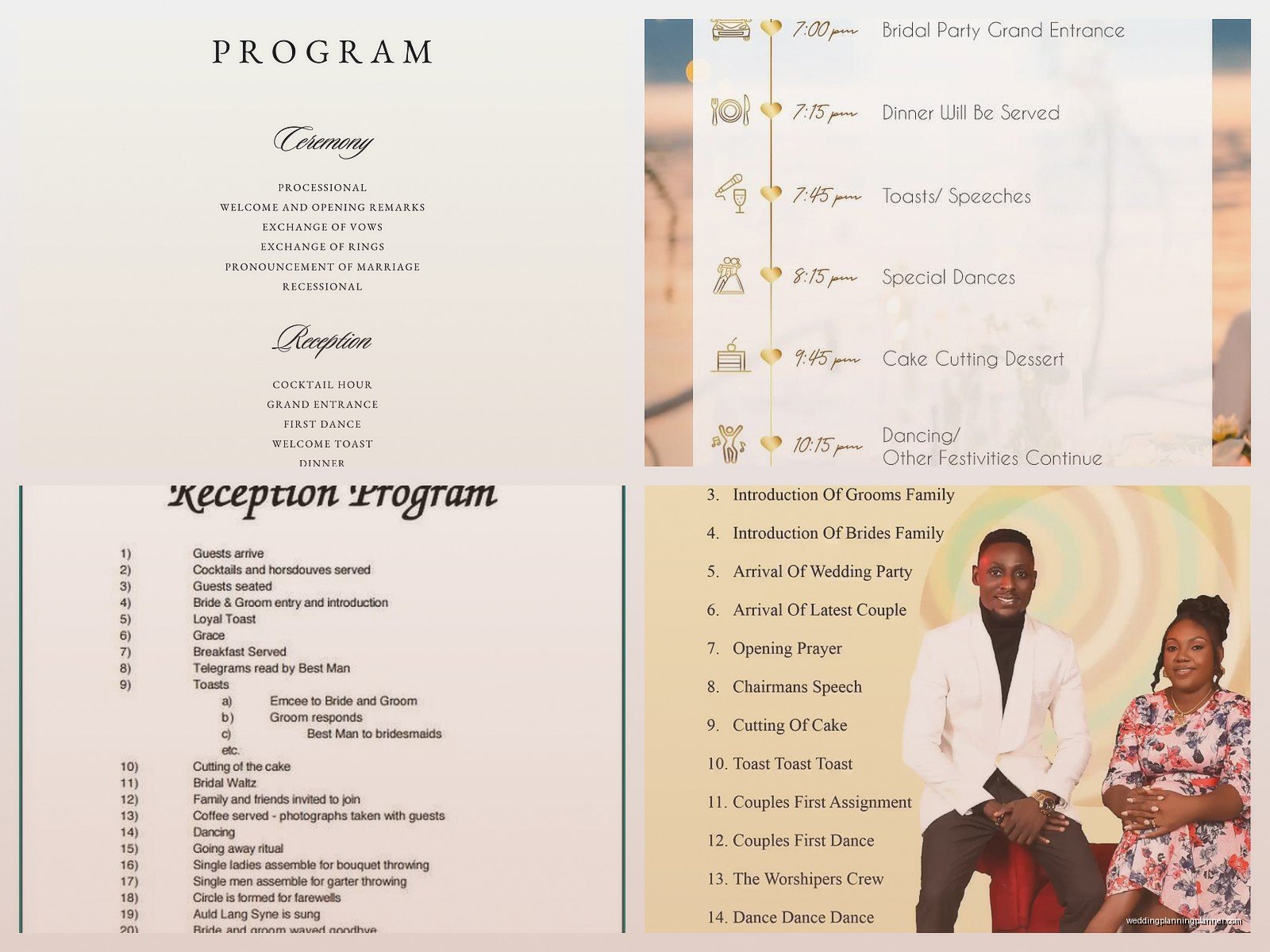
The Standard Timeline Everyone Uses
Most receptions follow this basic flow and you can tweak it however you want:
- Cocktail Hour – Usually starts right after ceremony while you’re taking photos (5:00-6:00 PM for example)
- Grand Entrance – Wedding party introduced, then you two make your big entrance (6:00 PM)
- First Dance – Some couples do this right away, others wait until after dinner
- Welcome Toast – Usually parents or whoever is hosting says something quick
- Dinner Service – Whether it’s plated, buffet, or family style (6:15-7:30 PM typically)
- Toasts/Speeches – Best man, maid of honor, maybe parents (during or after dinner)
- Cake Cutting – Can happen anytime honestly but usually around 8:00 PM
- Special Dances – Parent dances if you’re doing them
- Open Dancing – The rest of the night until last call
- Bouquet/Garter Toss – If you’re into that sort of thing (a lot of couples skip this now)
- Last Dance & Send-Off – Final song and your exit
Example One: The Classic Evening Reception
This is what like 70% of my couples end up doing because it just works:
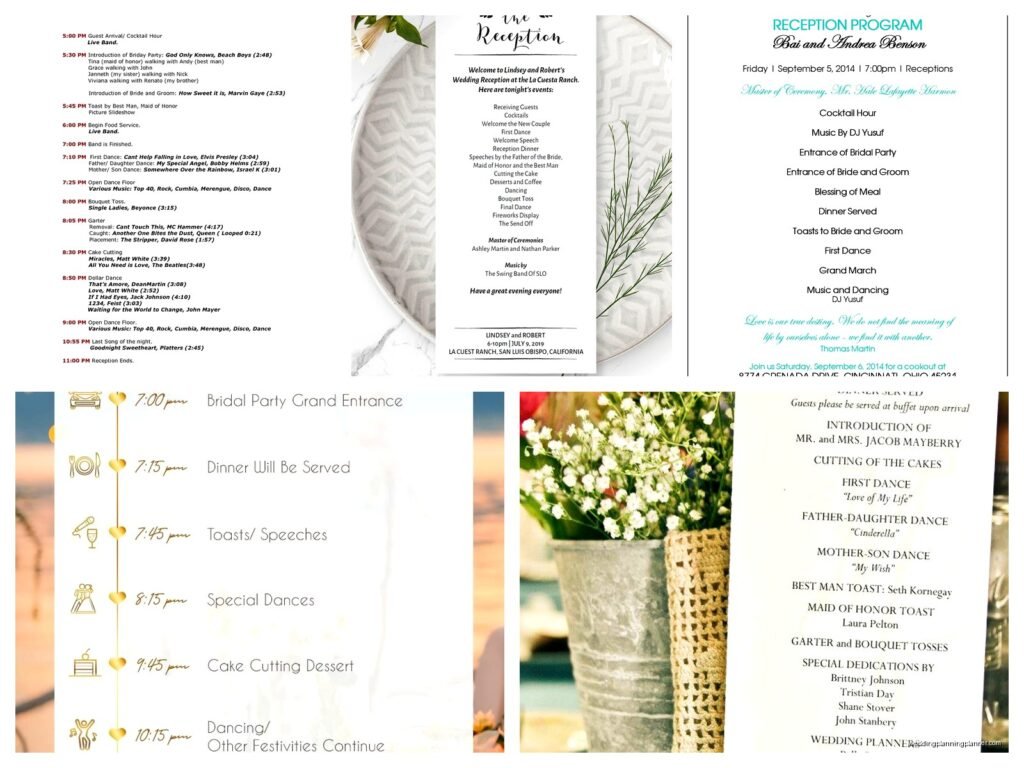
5:00 PM – Cocktail Hour Begins
Guests enjoy drinks and appetizers on the terrace
6:00 PM – Grand Entrance
Introduction of wedding party and newlyweds
6:10 PM – Welcome & Blessing
Father of the bride welcomes guests
6:15 PM – Dinner Service
Salad, entree, and sides served
7:15 PM – Toasts
Maid of honor and best man
7:45 PM – First Dance
Followed by parent dances
8:00 PM – Cake Cutting
8:15 PM – Open Dancing
10:45 PM – Last Dance
Sparkler send-off to follow
11:00 PM – Reception Ends
See how straightforward that is? You don’t need to overthink this part. What drives me absolutely crazy though is when couples don’t communicate the timeline to their vendors and then everyone’s confused about when cake cutting is happening or… sorry, got distracted because my cat just knocked over my coffee mug but anyway, vendor communication is key.
Example Two: The Brunch or Lunch Reception
Had this adorable couple in spring 2023 who did a morning ceremony and brunch reception and honestly? It was so refreshing and way less stressful:
10:00 AM – Ceremony
10:45 AM – Cocktails & Mimosas
Light refreshments while transition happens
11:15 AM – Brunch Service Begins
Buffet style with breakfast favorites and lunch options
11:30 AM – Welcome Toast
12:00 PM – Cake Cutting
12:15 PM – First Dance
12:30 PM – Open Dancing
2:00 PM – Farewell
Brunch receptions are kinda genius because people are fresher, you save money on the venue and catering, and you can still do all the traditional stuff but in like half the time. Plus everyone has the rest of their day free which guests actually appreciate more than you’d think.
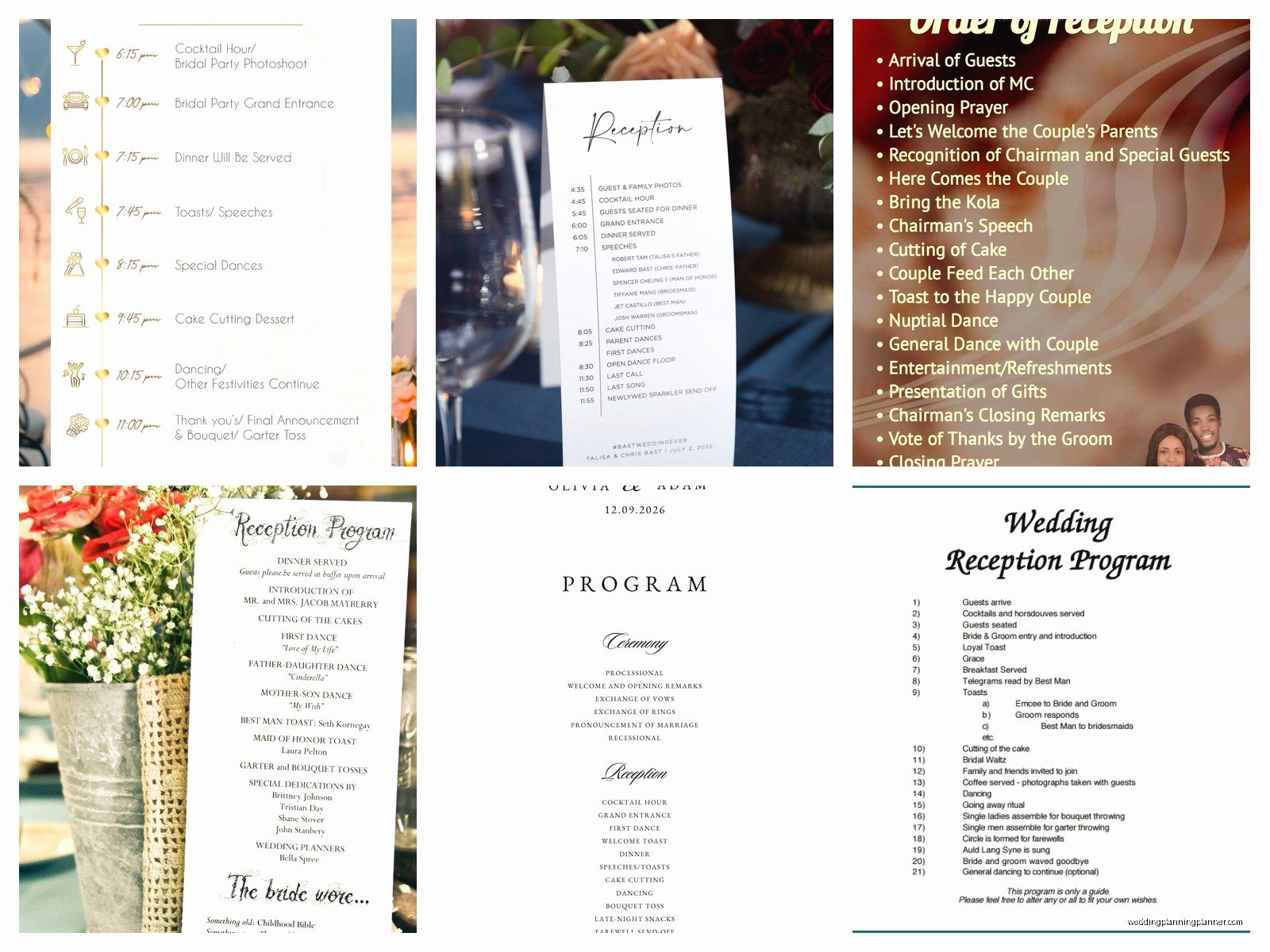
What Actually Needs To Be On A Printed Program
If you’re gonna print programs for each table or make a big display sign, here’s what you actually need versus what’s just filler:
Must Include:
- Start time of reception events (not every minute but major moments)
- Dinner service timing so guests know when to expect food
- When speeches/toasts happen
- General flow of the evening
Nice To Include:
- Names of who’s giving toasts
- Song choices for special dances if you want
- Quick thank you message to guests
- Hashtag for social media if you’re using one
Don’t Bother With:
- Super detailed minute-by-minute schedule (too rigid and you’ll run late anyway)
- Long explanations of why you chose certain traditions
- Your entire love story – save that for the ceremony program
Example Three: The Relaxed Backyard Vibe
This is for couples who want structure but don’t want it to feel like a corporate conference schedule:
Welcome! We’re so happy you’re here to celebrate with us.
This Evening’s Festivities:
Around 5:30 – Grab a drink and some appetizers
Around 6:00 – We’ll make our entrance (finally!)
Around 6:30 – Dinner is served – buffet style, so come hungry
Around 7:30 – Our favorite people will embarrass us with speeches
Around 8:00 – Let’s dance!
Around 10:30 – Last call and fond farewells
Notice how I used “around” for everything? That takes the pressure off and guests don’t feel like they’re watching the clock.
Mixing Up The Order Because Rules Are Made Up Anyway
You don’t have to follow the traditional order at all. I had this couple in summer 2021 who did their first dance RIGHT after the ceremony during cocktail hour while guests watched from the patio with drinks, and it was actually really intimate and sweet. Then they could just relax during dinner instead of being nervous about performing later.
Some variations I’ve seen work really well:
Speeches During Dinner: This keeps guests seated and entertained while they eat. Just make sure the speeches happen DURING the meal service, not before, or people get hangry.
Cake Cutting Early: Do it right after grand entrance so your baker can start serving slices with dinner or as dessert. You don’t have to save it for later just because that’s “traditional.”
Parent Dances Before Dinner: Gets the emotional stuff out of the way early, and then you can just party the rest of the night.
No Formal Program At All: Some couples just let things flow naturally with their DJ or band directing traffic. This works better for smaller weddings (under 75 people) where it’s more like a party than an event.
Example Four: The “We’re Doing Our Own Thing” Timeline
6:00 PM – Cocktail Hour & Lawn Games
6:45 PM – First Dance (yes, before we even sit down)
Followed by parent dances
7:00 PM – Everyone Find Your Seats
Dinner service begins
7:45 PM – Toasts happen while you’re eating dessert
8:15 PM – Open Dancing For The Rest Of Forever
9:00 PM – Cake Cutting (we’re serving it as a late night snack)
11:00 PM – Sparkler Exit
What Your DJ or Band Actually Needs
Your entertainment needs a more detailed timeline than your guests do, just FYI. They need to know exact song choices, pronunciation of names for introductions, when to make announcements versus when to just keep music going, and… okay this is important… they need to know who’s in charge of making timeline decisions if things run late.
Give them a timeline that looks like:
5:00 PM – Background music during cocktail hour (jazz playlist)
6:00 PM – Lower music for grand entrance
6:02 PM – Announce wedding party (list names with pronunciation)
6:05 PM – Announce bride & groom to “Crazy In Love” by Beyoncé
6:08 PM – Invite guests to be seated
6:10 PM – Hand mic to father of bride for welcome
6:15 PM – Dinner music (low volume, specific playlist)
And so on. See the difference? Your guests need the casual version, your vendors need the production schedule.
Common Timeline Mistakes That’ll Mess Up Your Night
Alright so here’s what actually goes wrong that nobody tells you about:
Too Many Speeches: I had this wedding where SEVEN people gave toasts and it took like 90 minutes and guests were literally falling asleep at their tables. Limit it to 3-4 max, and give each person a time limit (3-5 minutes). Your best man’s rambling story about college isn’t as entertaining as he thinks it is.
Waiting Too Long For First Dance: If you wait until 9 PM for your first dance, half your older guests have already left and everyone’s tired. Do it earlier when energy is high.
Not Building In Buffer Time: Everything runs late at weddings. Everything. If your ceremony ends at 4:30 but your cocktail hour is scheduled for 4:30-5:30 and you need 30 minutes for family photos… you see the problem right? Build in 15-20 minute buffers.
Forgetting To Feed Your Vendors: This isn’t really program-related but I’m gonna mention it anyway – your photographer, DJ, and coordinator need to eat. Schedule that into your timeline or they’ll be grumpy and their blood sugar will crash.
Example Five: The Super Detailed Control Freak Version
Some couples need to plan every single minute and you know what, that’s totally fine too:
4:30 PM – Guests arrive at reception venue
4:35 PM – Bar opens, signature cocktails available
4:45 PM – Appetizer service begins
5:15 PM – Guest book attendant reminds people to sign
5:30 PM – DJ announces everyone should find their seats
5:35 PM – Wedding party lines up for entrance
5:40 PM – Grand entrance begins
5:50 PM – Bride and groom entrance
5:55 PM – Welcome toast by father of bride (max 3 minutes)
6:00 PM – Blessing before meal
6:05 PM – First course served
6:25 PM – Entrees served (starting with head table)
6:55 PM – Maid of honor toast (max 5 minutes)
7:00 PM – Best man toast (max 5 minutes)
7:10 PM – Clear dinner plates
7:20 PM – First dance
7:25 PM – Father-daughter dance
7:28 PM – Mother-son dance
7:32 PM – Invite all guests to dance floor
8:00 PM – Cake cutting
8:05 PM – Cake service begins
8:30 PM – Bouquet toss
8:35 PM – Garter toss
10:30 PM – Last dance announced
10:45 PM – Guests receive sparklers for exit
11:00 PM – Venue must be cleared
Display Options Beyond Just Printing Programs
Most couples don’t actually print individual programs anymore because it’s kinda wasteful and expensive. Instead:
- Welcome Sign at Entrance: Big poster board or acrylic sign with the evening’s timeline
- Table Tent Cards: One per table instead of one per person
- Include It In Ceremony Program: Flip side has reception info
- Wedding Website: Post the schedule there and mention it during ceremony
- Let Your DJ Handle It: They announce everything anyway so maybe you don’t need it printed at all
- Projected Display: Some venues have screens where you can display your timeline digitally
I always tell couples that the program is really more for YOU and your vendors than for guests anyway. Guests just want to know when food is happening and when they can leave without being rude.
Cultural and Religious Considerations
Different cultures have totally different reception structures and you should absolutely incorporate what matters to you. Jewish weddings have the hora, Indian weddings might have multiple outfit changes and specific ceremonies, Greek weddings have their plate smashing moment, Filipino wedows have the money dance – whatever traditions you’re including, make sure they’re clearly listed in your timeline with maybe a tiny explanation for guests who might not be familiar.
Like you could write:
8:30 PM – The Hora
Traditional Jewish celebration dance – everyone’s invited to join the circle!
That way people know what’s happening and that they’re welcome to participate.
Real Talk About What Actually Matters
Here’s the thing I’ve learned after planning hundreds of weddings – your guests will not remember your perfectly timed program. They’ll remember if they had fun, if the food was good, if the bar was open, and if they felt welcomed. The program is just the skeleton that holds everything together.
What annoyed me so much about one wedding I did was this bride who literally had her timeline down to 30-second increments and then had a meltdown when we ran 8 minutes behind schedule because photos took longer than expected. Like bestie, nobody noticed except you, and now you’ve stressed yourself out for no reason when you should be enjoying your wedding.
So make a program, yes, but hold it loosely. Things will run late. Your aunt will give a surprise speech even though she wasn’t on the list. The cake delivery might be delayed. Your first dance song might skip halfway through (yes I’ve seen this happen). Roll with it.
The best wedding programs are the ones that give structure without being rigid, inform without being bossy, and basically just help everyone know what’s happening next so they can relax and have a good time. That’s literally it. You don’t need calligraphy and custom illustrations and matching ribbons – you just need clear information presented in whatever format works for your vibe.