Planning Guides, Style Guide
Postcard Wedding Invitations: Casual Flat Card Designs
May
Why Postcard Invitations Actually Make Sense
Okay so postcard wedding invitations are having a moment and honestly I’m here for it. They’re flat, they’re simple, you don’t need envelopes (well, kinda), and they cost way less than traditional folded invitations. I had this couple back in summer 2021 who were planning a backyard wedding and the bride literally said “I want something that feels like we’re inviting people to a really good party, not a stuffy event” and we went with postcards and it was perfect.
The main thing about postcard invitations is they’re casual by nature. Like, you can’t really make a postcard feel ultra-formal no matter how hard you try. Which is exactly why they work so well for certain weddings – beach ceremonies, brewery receptions, barn venues, garden parties, anything where you’re wearing like… nice sandals instead of heels, you know?
The Technical Stuff You Gotta Know
Postcard invitations are usually printed on cardstock between 14pt and 18pt thickness. Anything thinner feels cheap and flimsy, anything thicker and you’re gonna pay more in postage because USPS has rules about this stuff. The standard size is 4×6 inches or 5×7 inches. I always tell people to go with 5×7 because it gives you more room for information and it feels more substantial when someone pulls it from their mailbox.
Here’s what annoyed me for like two years straight – clients would design these gorgeous postcards and then realize they forgot to leave space for the mailing address and stamp. The BACK of your postcard needs a clear area for addressing, and you need to follow postal regulations or your invites might get rejected or charged extra postage. The right side is for the address, the left side can have a message or design continuation, and you need at least a half-inch margin on all sides.
Single-Sided vs Double-Sided Design
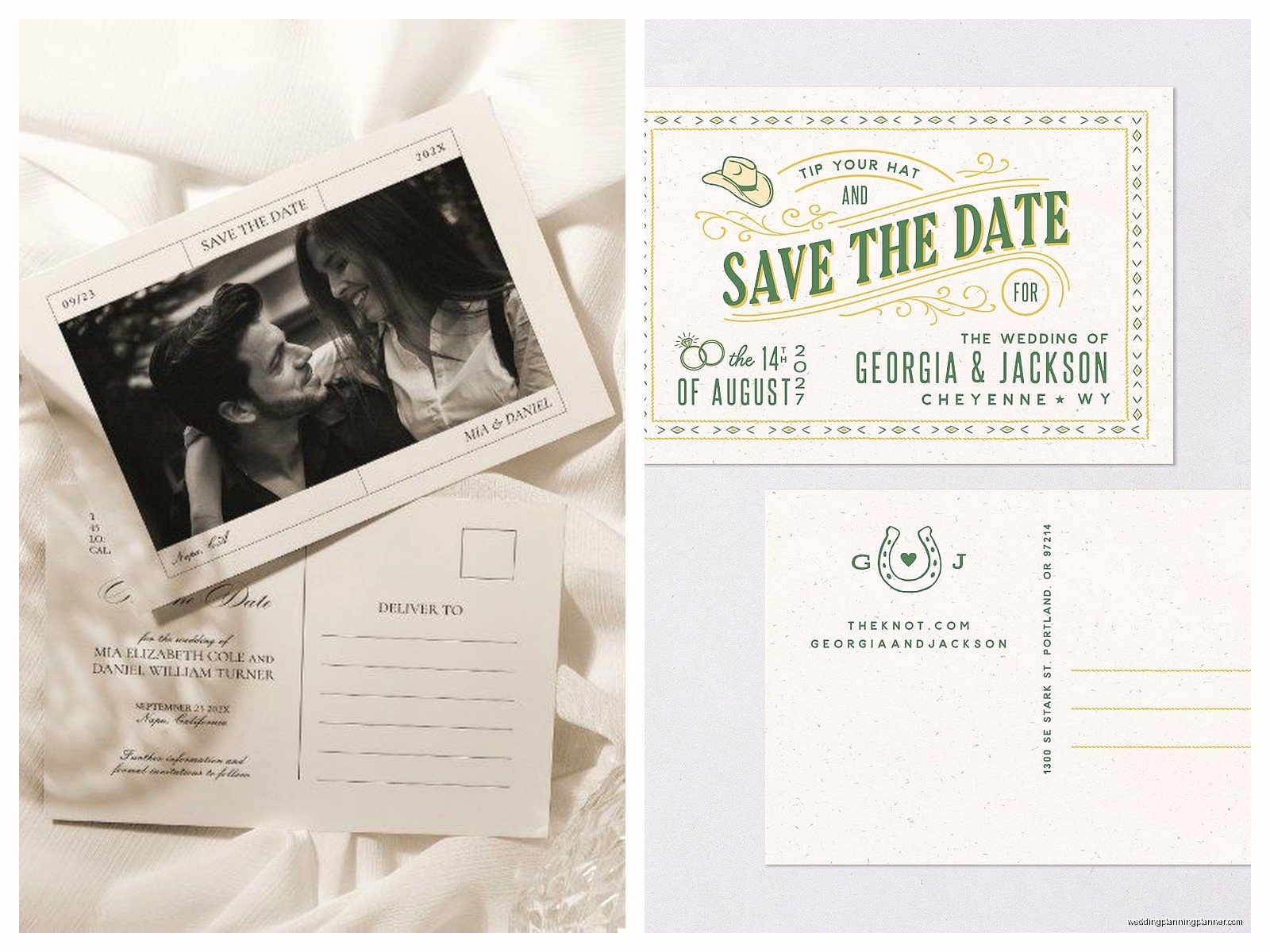
You’ve got two options here. Single-sided means all your wedding info is on the front, and the back is blank (or has a simple design) plus space for addressing. Double-sided means your invitation details are split between both sides, which looks really cool but can be tricky because you still need that addressing space.
I usually recommend single-sided for destination weddings where you need to include a lot of details – hotel blocks, website info, maybe a weekend schedule. Put everything on the front, keep the back clean for mailing. Double-sided works better when you’re doing something more minimal or when you want to include a photo on one side.
Design Elements That Actually Work
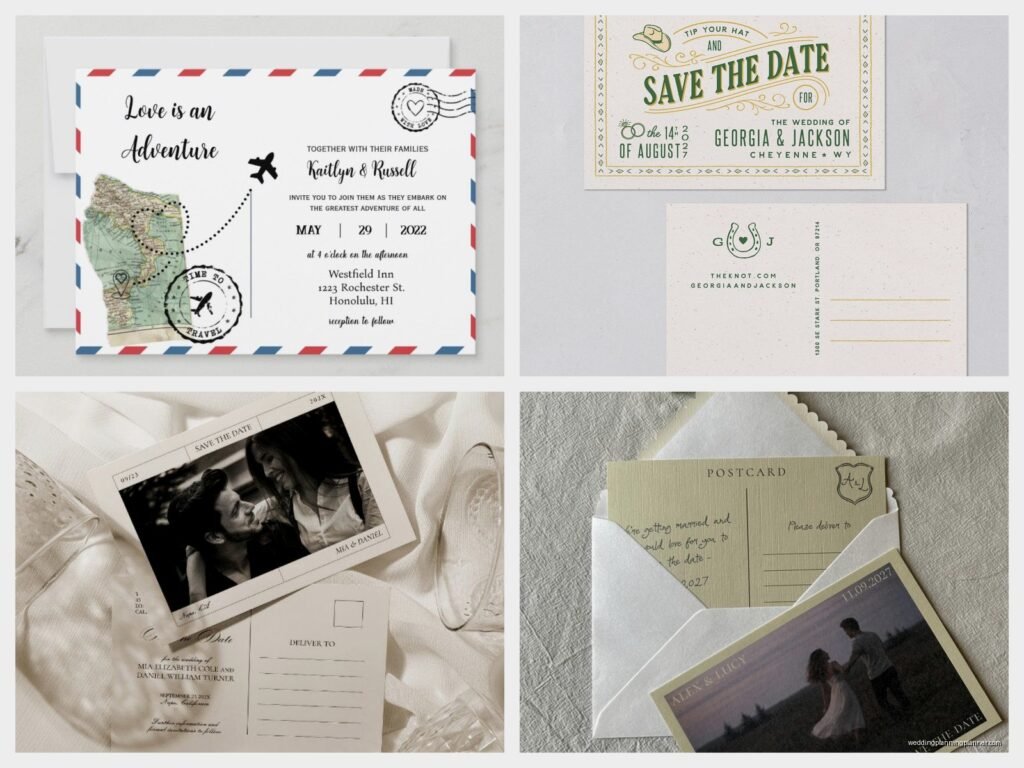
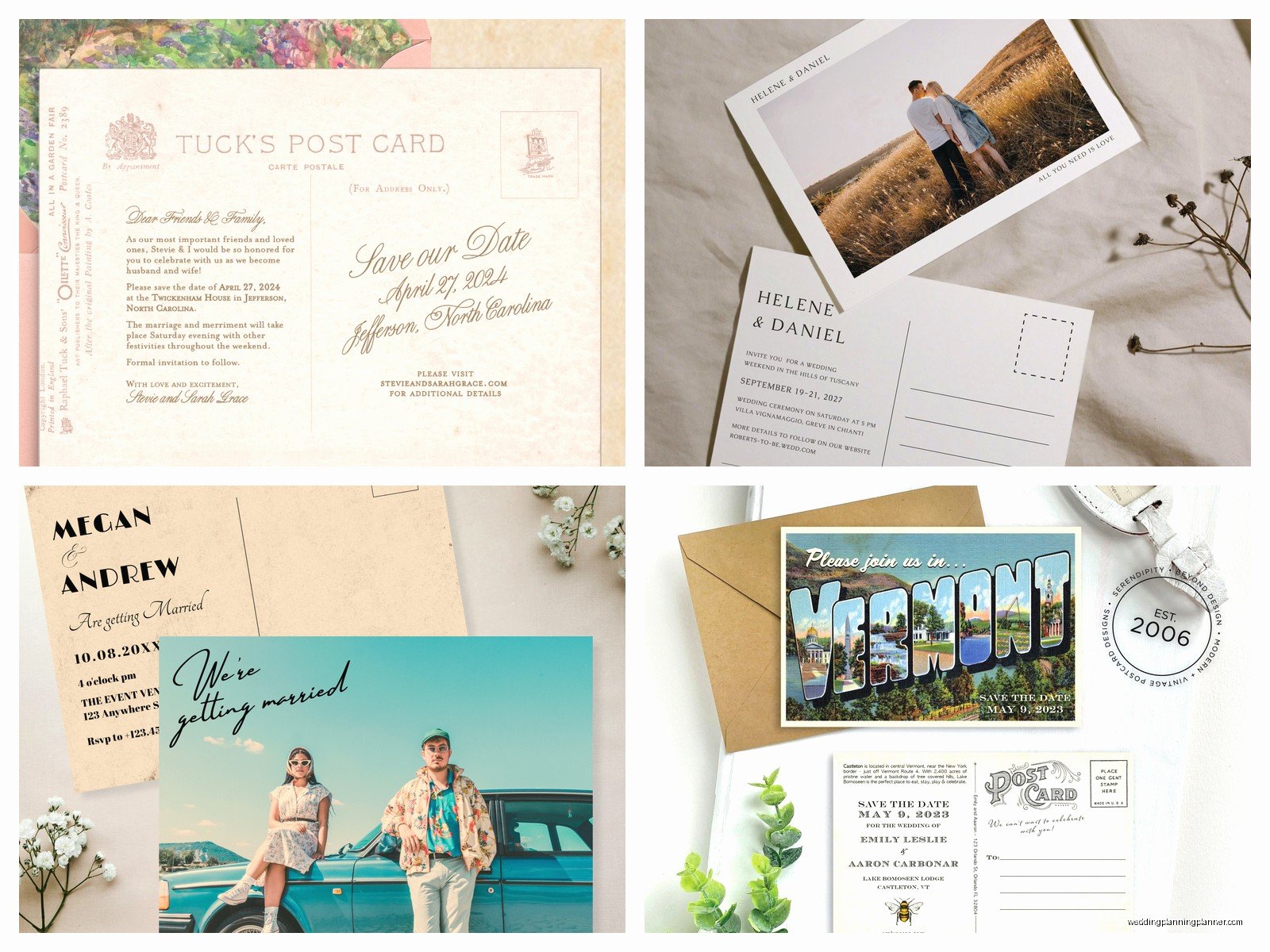
The beauty of postcard invitations is they’re already casual so you can kinda do whatever you want design-wise without worrying too much about breaking tradition. I’ve seen couples use vacation postcard designs with “Greetings from Our Wedding” across the top, vintage postcard styles with the divided back, modern minimalist designs with just typography, and even illustrated scenes of their venue.
Photography works really well on postcards. If you’ve got engagement photos you love, a postcard invitation is perfect for showcasing one big beautiful image with text overlaid. Or you could do a photo on the front and all the details on the back. Spring 2023 I had a couple who were both photographers and they created this whole series of postcard invites that looked like vintage travel postcards but with photos of them at different locations around their city and honestly it was one of the coolest invitation suites I’ve ever worked on.
Typography and Layout
Since you’re working with limited space, typography becomes really important. You can’t use tiny 8pt font because people need to actually read this thing. I recommend nothing smaller than 10pt for body text and 16-18pt for names and main details. You also gotta think about hierarchy – what’s most important? Usually that’s the couple’s names, the date, and the location.
Avoid putting too much text on a postcard. This isn’t the place for your entire wedding day timeline or long romantic quotes about love. Stick to the essentials: who’s getting married, when, where, RSVP info, and maybe your wedding website. Everything else can go on the website or in a separate details card if you really need it.
Paper and Printing Options
For printing, you’ve got a few routes. Online print services like Minted, Zazzle, or Vistaprint all offer postcard printing and they’re pretty affordable. You can also go with a local print shop if you want something more custom or if you wanna see paper samples in person. Or there are specialty wedding stationers who do postcard designs – they’ll cost more but the quality is usually better.
Paper finish matters more than you’d think. Matte finish is classic and easy to write on if you’re hand-addressing. Glossy makes photos pop but can show fingerprints and is harder to write on. There’s also this uncoated option that has a really nice tactile feel, almost like letterpress without the cost. My cat knocked over my coffee onto a stack of uncoated samples once and they were completely ruined within seconds, so just… be careful with liquids around uncoated paper.
Some couples do a painted edge on their postcards which looks really elevated. It’s where the edges of the cardstock are painted in a color – gold, rose gold, black, or something that matches your wedding colors. It’s a small detail but it makes the invitation feel way more expensive than it actually was.
Postage and Mailing Logistics
Here’s where it gets practical and slightly annoying. Standard postcards (under 4.25×6 inches) can be mailed with a postcard stamp which is cheaper than regular first-class. But most wedding postcards are 5×7, which means you need regular first-class postage. And if your cardstock is thick or you add any embellishments, you might need extra postage.
Take a finished sample to the post office and have them weigh it and check the dimensions before you mail 150 invitations with insufficient postage. Trust me on this. I had a bride in a total panic because half her invitations were returned for extra postage and the wedding was six weeks away.
You can hand-address postcards, print addresses directly on them, or use labels. Hand-addressing looks personal but it’s time-consuming. Printing directly is efficient but you need to make sure your printer can handle thick cardstock. Labels work but they can look… kinda cheap? Unless you get clear labels or really nice ones.
Do You Need Envelopes?
This is the big debate with postcard invitations. Technically, no, you don’t need envelopes – that’s the whole point of a postcard. But some people feel weird about their wedding details being visible to mail carriers and anyone who handles the mail. Plus, postcards can get dinged up in transit.
If you want to use envelopes, you lose some of the cost savings but you gain protection and privacy. I’d say about 60% of my clients who choose postcard designs still put them in envelopes. The other 40% mail them naked (the postcards, not the clients, just to be clear) and they turn out fine. Maybe a few arrive with slightly bent corners but it’s usually not a big deal.
What Info Actually Needs to Be on There
Okay so at minimum your postcard invitation needs: both of your names (or however you want to be identified), wedding date, wedding time, ceremony location with city and state, and how to RSVP. That’s it. That’s the absolute minimum.
Most people also include: reception location if it’s different from ceremony, your wedding website URL, dress code if it’s specific, and maybe a line about accommodations or a room block. Some couples put “adults only reception” or “unplugged ceremony” on their invitations but I usually recommend putting that kind of stuff on your website instead because it can come across as… I don’t know, it just reads better on a website where you can explain it properly.
You don’t need parent names on a postcard invitation unless you really want them. The casual nature of postcards kinda lends itself to just using the couple’s names. Same with formal wording – you can skip the “request the honor of your presence” stuff and just say “Join us for our wedding” or “Let’s get married” or whatever feels like you.
Coordinating Your Whole Suite
If you’re doing postcard invitations, you’ll probably want other pieces that match. Save the dates can also be postcards (actually, postcard save the dates are super popular and make even more sense than postcard invitations because they’re more casual by nature). For thank you cards, you could continue the postcard theme or switch to regular folded cards – totally up to you.
Some couples do postcard programs or postcard menus at their reception to tie everything together. Or they create a postcard guestbook where guests write messages on blank postcards. I had one couple who set up a postcard station at their reception with stamps and a mailbox, and guests could write postcards to the couple that would be delivered months later. It was really sweet and also kinda genius because who doesn’t love getting mail?
RSVP Cards and Details
Here’s where it gets tricky – do you include separate RSVP cards with postcard invitations? Some people do, some don’t. If you’re trying to keep costs down and maintain that casual vibe, just direct people to RSVP online through your wedding website. It’s easier for everyone and you’ll get responses faster.
If you need to include additional details like accommodations, weekend events, or directions, you can do a separate details card that coordinates with your postcard design. Or honestly, just put everything on your website. I know older relatives sometimes struggle with websites but you’d be surprised… even my 80-year-old grandmother figured out how to RSVP online, and she still has a flip phone, so.
Timing and Quantities
Order your postcard invitations at least 3-4 months before your wedding date. They should go out 6-8 weeks before the wedding (or 3-4 months before if it’s a destination wedding). Always order extras – I tell clients to order at least 15-20 more than they think they need because you’ll mess up addresses, forget people, or want keepsakes.
Speaking of keepsakes, order extra blank ones for yourself. You’ll want them for your wedding scrapbook or to frame or just to have. Trust me, you’ll be glad you have extras that aren’t covered in RSVP info and mailing addresses.
Cost Breakdown Reality Check
Postcard invitations typically cost between $1-4 per card depending on where you print them and what kind of paper you choose. Add another $0.50-1.50 if you’re using envelopes. Postage is around $0.68 for standard mail. So you’re looking at roughly $2-6 per invitation all-in, which is significantly cheaper than traditional folded invitations that can easily run $8-15+ per invite.
The savings really add up when you’re inviting 100+ people. That’s an extra $600-900 in your budget that could go toward better food or an open bar or… literally anything else. And honestly, your guests aren’t gonna remember what style invitation you sent. They’re gonna remember if your wedding was fun and if the food was good.
Common Mistakes People Make
Don’t make your design too busy. White space is your friend. I see couples try to cram every possible detail onto their postcard and it ends up looking cluttered and hard to read. Pick the most important information and let the rest live on your website.
Don’t forget about readability. If you’re using a photo background, make sure your text is still legible. Use text boxes with solid colors or semi-transparent overlays so your words don’t get lost in the image. Test your design by printing it at actual size and showing it to someone who hasn’t seen it before – if they squint or struggle to read anything, redesign it.
Don’t skip proofreading. Have like three different people check your invitation for typos, wrong dates, incorrect addresses, all of it. Once had a client who printed 200 invitations with the wrong year and didn’t realize until they were already mailed. That was… not a fun conversation.