Planning Guides, Style Guide
Nikkah Invitation: Design & Ordering Guide
Jun
Figure Out Your Nikkah Invitation Style First
Okay so the biggest mistake I see couples make is ordering invitations before they actually know what their Nikkah ceremony is gonna look like. I had this couple back in spring 2023 who ordered 200 elaborate invitations with gold foiling and the whole nine yards, then realized they were doing an intimate family-only Nikkah followed by a bigger walima reception later. They ended up needing completely different invites for each event and basically wasted like $600.
You need to sit down and decide: is this a combined Nikkah and reception? Separate events? Different days? Because that changes everything about your invitation design and what information you need to include.
Traditional vs. Modern Design Approaches
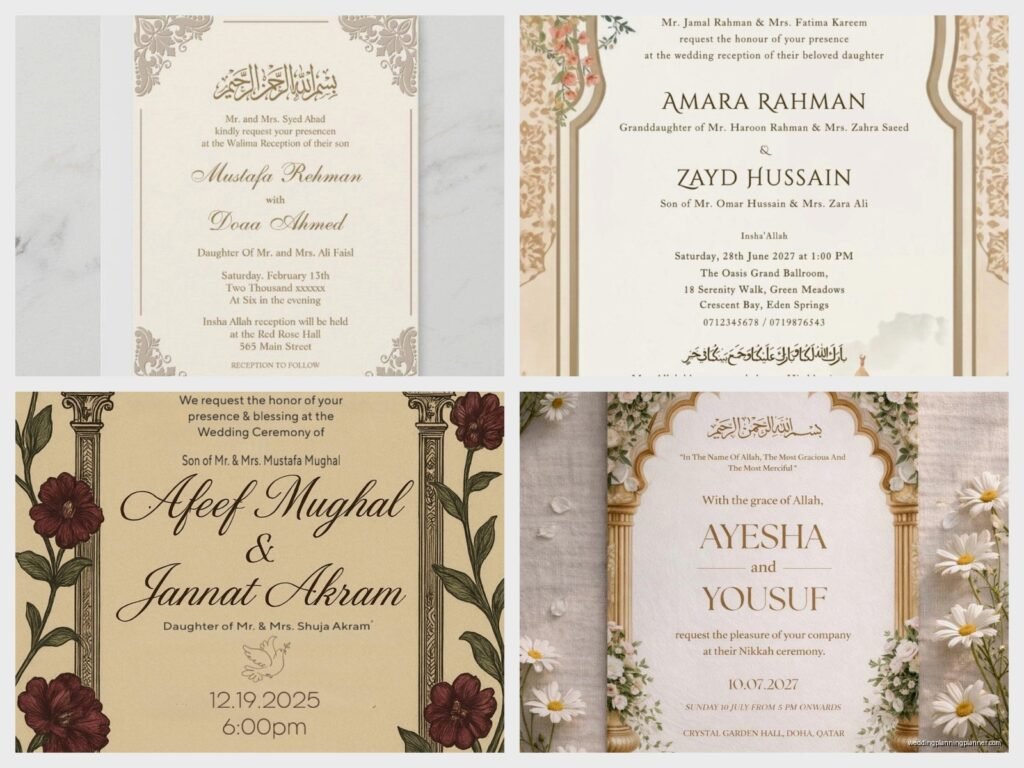
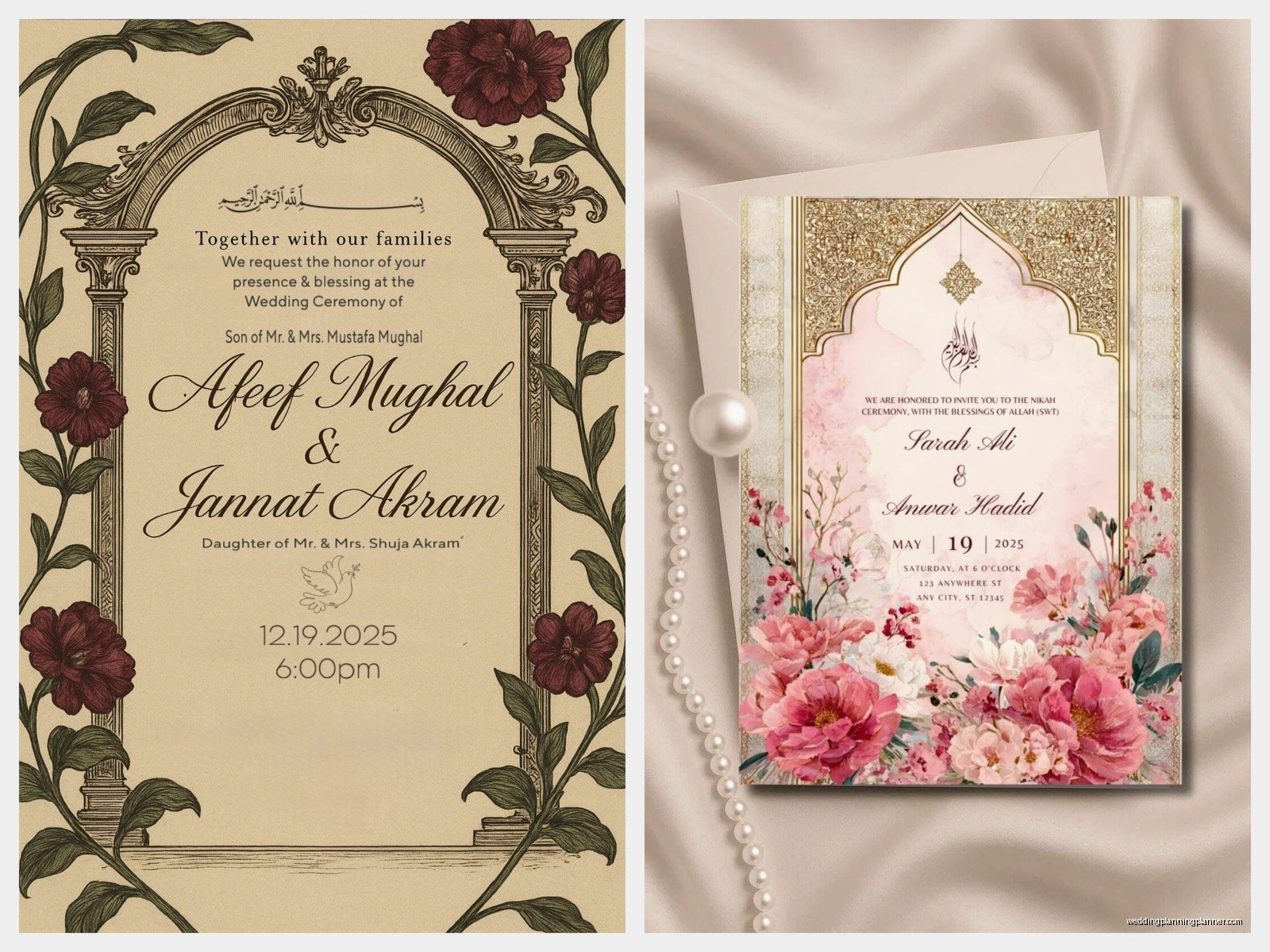
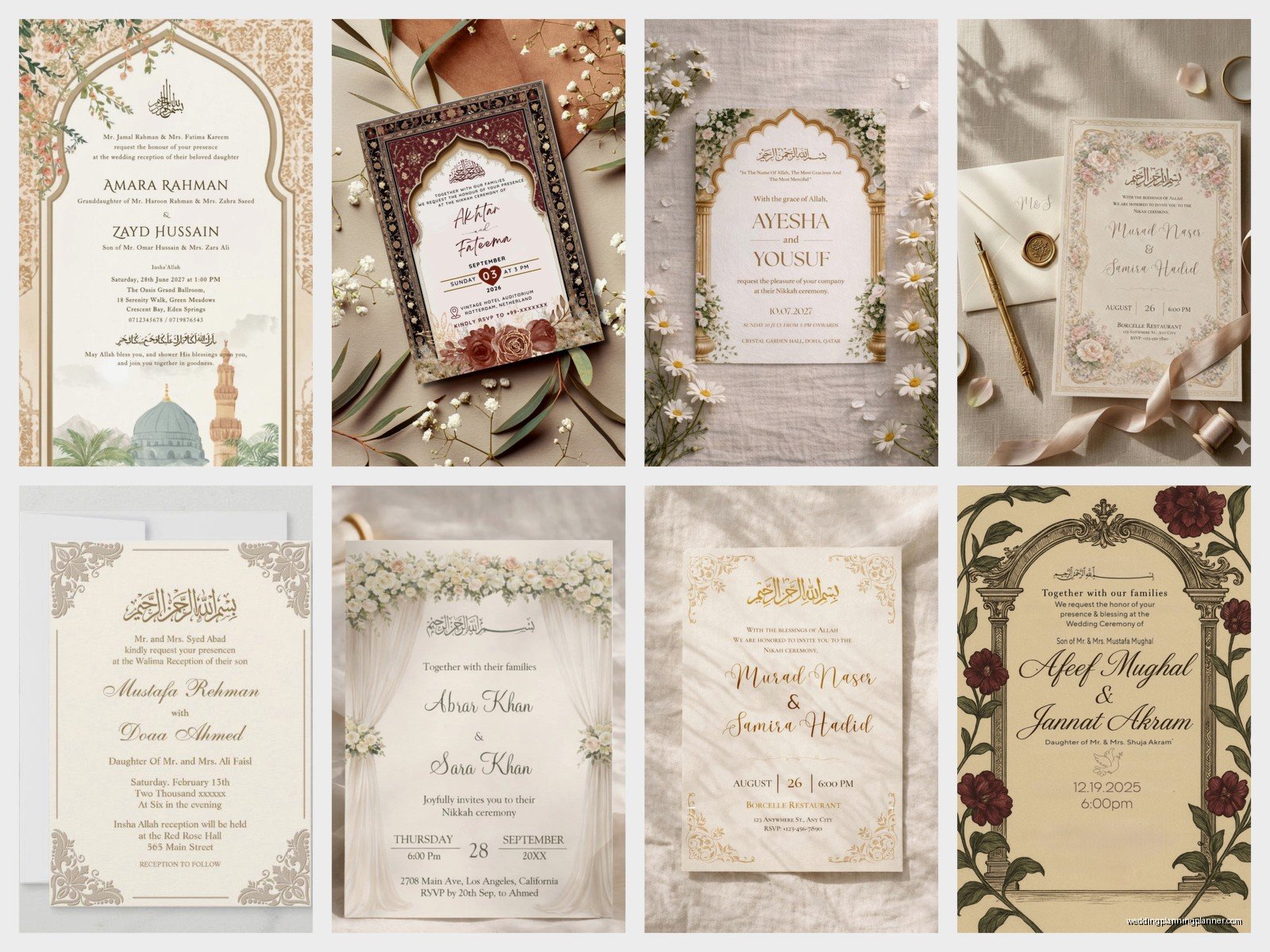
The traditional route usually means Islamic geometric patterns, Arabic calligraphy, maybe some mosque imagery or crescent moon details. Colors tend to be emerald green, gold, burgundy, or cream. You’ll often see Bismillah at the top or Quranic verses incorporated into the design.
Modern designs though… they’re kinda all over the place in a good way. I’ve seen minimalist invitations that just use beautiful typography with a single gold line. Watercolor florals mixed with Arabic script. Even some couples doing illustrated portraits of themselves in traditional wedding attire. The rules aren’t as strict as they used to be.
What annoys me is when people think they have to choose between “Islamic-looking” and “pretty” like those are mutually exclusive categories. You can have both.
Essential Information Your Invitation Needs
Alright so here’s what actually has to be on there:
- The couple’s names (full names, and decide if you’re using “daughter of” and “son of” phrasing)
- Parents’ names if you’re going traditional
- Date and time of the Nikkah ceremony
- Venue name and full address
- Dress code if you have one
- RSVP details and deadline
- Whether it’s gender-segregated seating (important to mention!)
Optional but nice to include:
- A Quranic verse or hadith about marriage
- Details about the walima if it’s happening the same day
- Accommodation information for out-of-town guests
- Wedding website URL
- Registry information (though some families prefer to skip this)
One thing that always causes confusion is the timing. Make sure you’re super clear about whether you’re listing the actual Nikkah ceremony time or when guests should arrive. I usually recommend putting “Nikkah ceremony begins at 6:00 PM, guests are requested to arrive by 5:30 PM” or something similar.
The Wording Thing That Everyone Overthinks
So traditional Islamic invitation wording often starts with “Bismillah ir-Rahman ir-Rahim” and includes phrases like “request the honor of your presence” or “invite you to share in their joy.” But honestly, you can word it however feels right to you and your families.
Some couples go with: “With the blessings of Allah and our families, we invite you to witness our Nikkah…”
Others keep it simple: “Please join us for the Nikkah ceremony uniting…”
If your parents are hosting (which is traditional), the wording usually comes from them: “Mr. and Mrs. [Name] request the pleasure of your company at the Nikkah of their daughter…”
Just make sure both families agree on the wording before you send anything to print because I’ve seen that cause drama and it’s really not worth it.
Digital vs. Print Invitations
Okay this is where things get interesting. Digital invitations have become way more acceptable, especially post-2020. You can design beautiful e-vites through sites like Greenvelope, Paperless Post, or even Canva if you wanna go the DIY route.
Pros of digital: they’re cheaper (obviously), faster to send out, easier to track RSVPs, you can include clickable links to your registry or wedding website, and they’re better for the environment if you care about that.
Cons: some older family members might not appreciate them or even know how to open them properly. My cat walked across my keyboard once while I was sending out digital invites for a client and somehow marked like 30 people as “attending” when they hadn’t even responded yet, which was a whole mess to untangle.
Print invitations feel more formal and special. People can display them, keep them as mementos, and there’s something about receiving physical mail that still feels important for weddings.
Where to Actually Order From
For print invitations, here are your main options:
Minted: Really high-quality printing, tons of design options, kind of pricey but they do free recipient addressing which saves you SO much time. They have some designs that work well for Nikkah invitations though you might need to customize the wording.
Etsy: This is where I send most of my clients honestly. You can find designers who specialize in Islamic wedding invitations and will work with you on custom designs. Prices vary wildly from like $2 per invitation to $15+ depending on printing methods and materials. Read reviews carefully and ask for samples.
Vistaprint: Budget-friendly option, decent quality for the price, but the designs are gonna look more generic. Good if you’re doing a simple, minimalist invitation and don’t want to spend a fortune.
Local print shops: Don’t sleep on these! Especially if you live in an area with a significant Muslim population, there might be local printers who specialize in Nikkah invitations and understand exactly what you need. Plus you can see paper samples in person.
Specialty Islamic stationers: Companies like Hilal Cards or Muslim Wedding Cards focus specifically on Islamic wedding invitations. They get the cultural nuances and often have designs you won’t find elsewhere.
Paper Types and Printing Methods
This is where I get kinda nerdy because paper quality really does make a difference in how your invitation feels.
Cardstock weight: You want at least 100lb (270gsm) cardstock for the main invitation. Anything lighter feels cheap and flimsy. Premium invitations use 120lb or even 130lb cardstock.
Paper finishes:
- Matte: sophisticated, easy to write on, doesn’t show fingerprints
- Glossy: colors pop more, photos look great, but can feel less formal
- Linen or textured: adds dimension and feels expensive
- Shimmer or pearl: catches light beautifully, popular for Nikkah invites
Printing methods:
Digital printing is the most affordable and works great for most designs. The quality has gotten really good and you can’t usually tell the difference unless you’re looking closely.
Letterpress creates this gorgeous debossed impression in the paper but it’s expensive and takes longer. Beautiful for minimalist designs.
Foil stamping (gold, silver, rose gold) is popular for Nikkah invitations because it adds that luxe touch. You can do foil on digitally printed invitations too. Just know it increases the cost significantly… like sometimes doubling or tripling the per-invitation price.
Thermography creates raised printing that you can feel, kind of mimics engraving but costs less.
The Envelope Situation
Don’t forget about envelopes because they’re the first thing people see! You can do:
- Standard white or cream envelopes (boring but fine)
- Colored envelopes that match your wedding colors
- Lined envelopes with patterned paper inside (so pretty but adds cost)
- Vellum or translucent envelopes for a modern look
- Wax seals with your initials or an Islamic symbol
For addressing, you can hand-write them (time-consuming but personal), print labels (efficient but looks cheap honestly), print directly on the envelopes (clean and modern), or hire a calligrapher (expensive but stunning).
Timeline for Ordering
Okay so working backwards from your Nikkah date:
You want invitations in guests’ hands 6-8 weeks before the ceremony. For destination Nikkahs or if lots of people are traveling, send them 10-12 weeks out.
Mail them 2 weeks before you want them to arrive (domestic) or 3-4 weeks for international guests.
That means you need your invitations printed and ready to mail 8-10 weeks before the Nikkah, maybe more if people are traveling.
Custom designed invitations take 2-4 weeks to design (back and forth with revisions), then 2-3 weeks to print and ship. Rush options exist but cost extra.
So realistically, start the invitation process 3-4 months before your Nikkah date. I know that sounds like a lot but trust me, time disappears when you’re planning a wedding.
How Many to Order
Here’s the formula I use: count your guest list by household, not individuals. One invitation goes to each family or couple, not each person.
Then add 15-20% extra for: last-minute additions (there are always some), keepsakes for yourself and your parents, mistakes when you’re assembling them, and a few extras just in case.
So if you’re inviting 100 households, order 115-120 invitations.
Most printing companies have price breaks at certain quantities (like 100, 150, 200) so sometimes it makes sense to round up to the next tier if you’re close.
DIY vs. Professional Design
Look, I’m gonna be real with you… DIY can save money but it’s also incredibly time-consuming and you might not love the results unless you have design experience.
Canva makes it easier than it used to be. They have templates you can customize and the learning curve isn’t terrible. You can create something decent-looking for your digital invitations or even print-ready files.
But for print invitations, I usually recommend working with a professional designer unless you’re really confident in your skills. The color calibration between what you see on screen and what prints can be tricky, and if you mess up the bleed or margins, you’ve just wasted money on unusable invitations.
Middle ground option: buy a template from Etsy (they have tons for like $10-30) that you can customize yourself with your details, then have it professionally printed.
Save the Dates for Nikkah?
This is sorta optional depending on your situation. If your Nikkah is a small family gathering, you probably don’t need save the dates. But if it’s a larger celebration or requires travel, send them out 4-6 months in advance.
Save the dates can be simpler and less formal than the actual invitation. A postcard, magnet, or digital announcement works fine. Just include the date, city, and that it’s for your Nikkah ceremony. You don’t need all the detailed information yet.
Extra Insert Cards
Depending on how much information you need to convey, you might include:
Reception card: If your walima is separate or at a different location/time
Accommodations card: Hotel room blocks and travel information
RSVP card: With a pre-addressed, stamped envelope (yes, you pay for their postage, it increases response rates dramatically)
Weekend events card: If you have a mehndi party, ladies’ gathering, or other pre-wedding events
Directions card: Though honestly most people just use their phones now so this feels a bit outdated unless your venue is really hard to find
Back in summer 2021, I had a bride who insisted on including a 6-page booklet with their invitation explaining every single wedding tradition, the significance of each event, what to wear, what to expect… it was too much. Half her guests told me they didn’t even read it. Keep inserts minimal and essential.
Proofreading is Not Optional
I cannot stress this enough: have at least three different people proofread your invitation before you send it to print. Check for:
- Spelling errors (especially names and Arabic text)
- Correct dates and times
- Accurate addresses
- Phone numbers and website URLs
- Consistent formatting
Print one sample invitation at home on regular paper and assemble it completely to make sure everything fits in the envelope, the pieces layer correctly, and nothing looks weird. This catches issues before you’ve printed 150 of them.
And when the actual invitations arrive, open the box immediately and check them even though you’re probably exhausted from wedding planning and just want to… I don’t know, watch something mindless on Netflix. Check them. I’ve seen colors print wrong, text get cut off, and entire pages missing.
Assembly and Mailing Tips
Set aside an afternoon for assembly. Put on a good playlist or podcast, get some snacks, maybe rope in a friend or family member to help.
Standard order for layering invitation pieces: main invitation on bottom, then reception card, then any other insert cards, RSVP card and envelope on top. Some people use a belly band or ribbon to keep everything together.
When you’re ready to mail, take one fully assembled invitation to the post office and have them weigh it. You might need extra postage if it’s heavy or oversized. Don’t just guess and slap regular stamps on there or they’ll all come back to you.
Hand-canceling is when the post office stamps your envelopes by hand instead of running them through machines. It costs a bit extra but prevents your beautiful invitations from getting mangled. Worth it in my opinion.
Mail invitations all at once from the same post office to ensure they arrive around the same time. Otherwise you get the awkward situation where some guests receive theirs a week before others and people think they weren’t invited or something got lost.