Planning Guides, Style Guide
Nikkah Card: Design & Ordering Guide
Jun
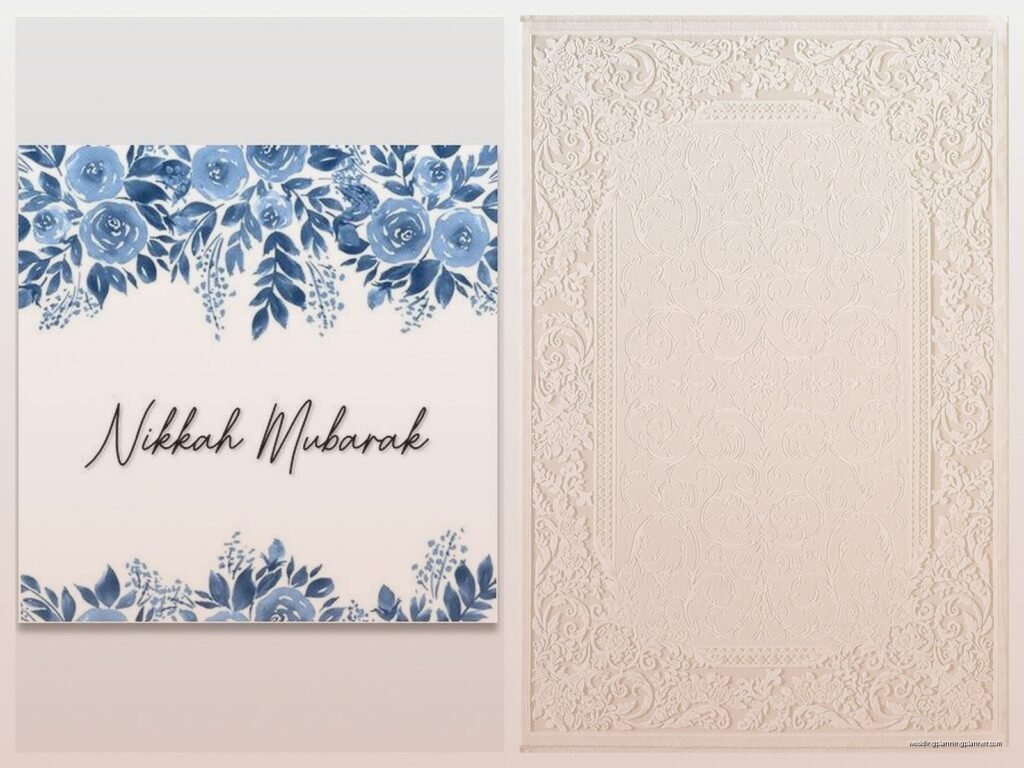
What Even Is a Nikkah Card and Do You Actually Need One
So Nikkah cards are basically the invitation you send out specifically for the Islamic marriage ceremony part of the wedding. It’s separate from your main wedding reception invite because the Nikkah ceremony itself is often more intimate, sometimes held at a mosque or at home, and you might not be inviting the same crowd. I learned this the hard way back in spring 2023 when a client assumed everyone would just “know” about both events from one generic invitation and then half the family showed up to the wrong venue at the wrong time. That was a fun afternoon of redirecting confused aunties.
You don’t technically need a separate card if your Nikkah and reception are happening back-to-back on the same day at the same place. But if they’re on different days or you’re inviting different guest lists, yeah, you’re gonna want separate invitations. It just makes everything clearer.
Design Elements That Actually Matter
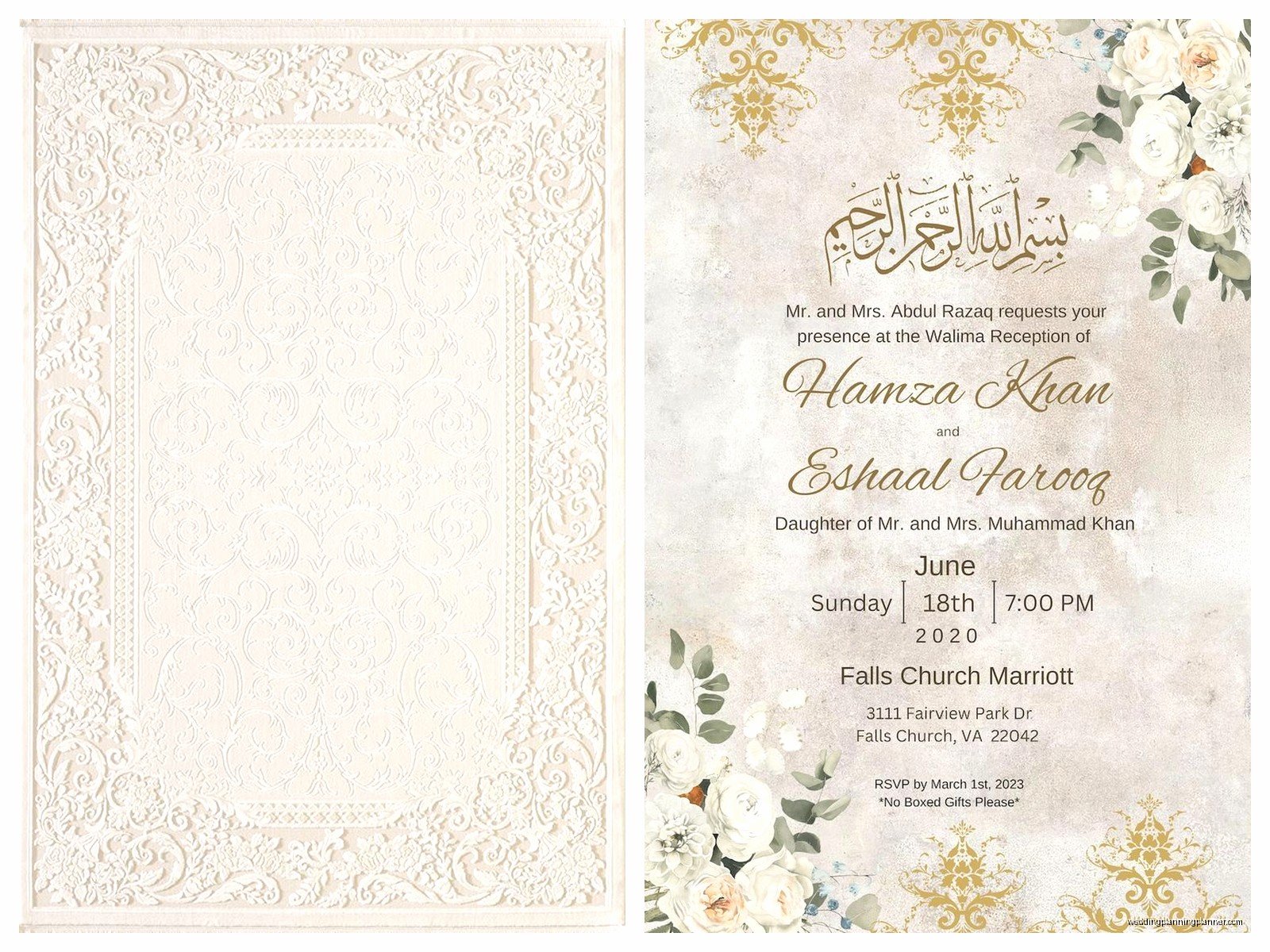
The design of your Nikkah card should reflect the solemnity and beauty of the ceremony itself. Most couples go for elegant, understated designs rather than super flashy ones. Think gold foiling, deep jewel tones like emerald or burgundy, Islamic geometric patterns, or Arabic calligraphy.
Here’s what you actually need to include on the card:
- The phrase “Nikkah Ceremony” or “Islamic Marriage Ceremony” so people know what they’re attending
- Both families’ names (traditionally the bride’s family hosts but this varies)
- The couple’s names obviously
- Date and time (be specific about timing because Nikkah ceremonies are usually shorter than receptions)
- Venue address with any specific instructions like which entrance to use
- Dress code if you have one
- RSVP details
Some people also add a verse from the Quran or a hadith about marriage. Surah Ar-Rum verse 21 is super popular because it talks about love and mercy between spouses. Just make sure if you’re including Arabic text that someone who actually reads Arabic checks it because I’ve seen some embarrassing typos where the calligraphy looked beautiful but said something completely wrong.
Color Schemes That Work
You can go traditional with gold and cream, or jewel tones like I mentioned. Lately I’ve been seeing a lot of sage green and gold combinations which look really fresh. Burgundy and blush pink is another combo that photographs beautifully. Navy blue with silver foiling gives a more formal, evening vibe.
What kinda annoys me though is when people pick colors that are so light you can barely read the text. I had a bride once who wanted everything in pale pink and white and the invitations were legitimately hard to read unless you held them under direct light. Pretty? Sure. Functional? Not so much.
Paper Quality and Printing Methods
Okay so this is where you can really tell the difference in quality. Your standard cardstock is fine and budget-friendly, but if you want something that feels more substantial, go for at least 300gsm cardstock. Anything less feels flimsy when people pick it up.
Printing methods to consider:
- Digital printing: Most affordable, quick turnaround, good for full-color designs
- Letterpress: That gorgeous pressed-in effect, looks incredibly elegant but costs more
- Foil stamping: Metallic foil in gold, rose gold, or silver adds luxury without breaking the bank completely
- Thermography: Raised printing that mimics engraving but cheaper
- Engraving: The most expensive but also the most traditional and formal looking
I usually tell couples to splurge on foiling if they’re gonna splurge on anything. It catches the light beautifully and makes even a simple design look expensive. My cat actually knocked over a whole stack of foiled samples once and I spent twenty minutes picking them up while he just watched me like nothing happened, but anyway—the point is the foiling really does make a difference.
Where to Actually Order These Things
You’ve got several options and honestly it depends on your budget and timeline.
Online Print Services
Websites like Minted, Zola, or Etsy have tons of templates you can customize. Etsy is great because you can find designers who specialize in Islamic wedding stationery and understand the cultural elements. Prices range wildly from like $1.50 per card to $8+ depending on how fancy you go.
The pro is that it’s easy and you can preview everything online. The con is that you can’t feel the paper quality until it arrives, and if there’s a mistake, the back-and-forth can eat up time.
Local Print Shops
I always recommend checking out local printers, especially in areas with larger Muslim communities. They often have experience with Nikkah cards and might have sample books you can flip through. Plus you can see and touch everything before committing. Supporting local businesses is nice too and you can usually walk in with questions instead of waiting for email responses.
Custom Designers
If you want something completely unique, hire a stationer or graphic designer who specializes in wedding invitations. This is the most expensive route but you get exactly what you want. I worked with a couple in summer 2021 who commissioned custom watercolor illustrations of the mosque where they were getting married, and the invitations were absolutely stunning. Cost them a fortune though.
DIY Route
Look, I’m gonna be honest—DIY can save money but it’s also incredibly time-consuming. If you’re crafty and have time, go for it. Canva has templates you can customize and then you can print them at a local print shop. Just don’t underestimate how long it takes to assemble 150 invitations or whatever your guest count is. Also printing at home rarely looks as professional as you think it will.
Timeline for Ordering
Here’s where people mess up constantly. You need way more time than you think.
Ideally, start looking at designs 4-6 months before your Nikkah. Order samples from 2-3 different vendors so you can compare quality. Once you’ve chosen your design, place your order at least 10-12 weeks before you need to mail them. This gives you time for:
- Design revisions (there are always revisions)
- Printing delays (they happen)
- Proofing (ALWAYS order a proof)
- Assembly if there are multiple pieces
- Addressing envelopes
- Actually mailing them 6-8 weeks before the event
I’ve had couples try to rush order invitations 3 weeks before their Nikkah and it’s just stressful for everyone involved. Rush fees are expensive and mistakes are more likely when everyone’s rushing.
The Whole Envelope Situation
Don’t forget about envelopes because they’re part of the whole presentation. You can go with standard envelopes in a matching color, or get fancy with lined envelopes (tissue or patterned paper inside) or even colored envelopes.
For addressing, you have options. Hand calligraphy looks gorgeous but costs extra—usually $2-5 per envelope depending on the calligrapher. Digital calligraphy (printed to look like hand calligraphy) is cheaper. Or you can just print labels or addresses directly on the envelopes, which is totally fine and saves time.
One thing that drives me absolutely bonkers is when people don’t double-check their guest addresses before sending them to the calligrapher or printer. I once had to redo 40 envelopes because the couple gave me an old spreadsheet with outdated addresses and…
Inserts and Extra Pieces
Your Nikkah invitation might need some additional insert cards depending on your situation:
- RSVP card: Makes it easier for guests to respond, include a deadline
- Details card: Parking info, dress code, what to expect at a Nikkah if you have non-Muslim guests
- Accommodation card: Hotel room blocks if you have out-of-town guests
- Reception card: If the reception is separate or at a different location/time
You don’t need all of these. Just include what’s actually helpful for your specific situation. I’ve seen invitation suites with like seven different insert cards and honestly it’s overwhelming. Keep it simple.
Wording Etiquette and Examples
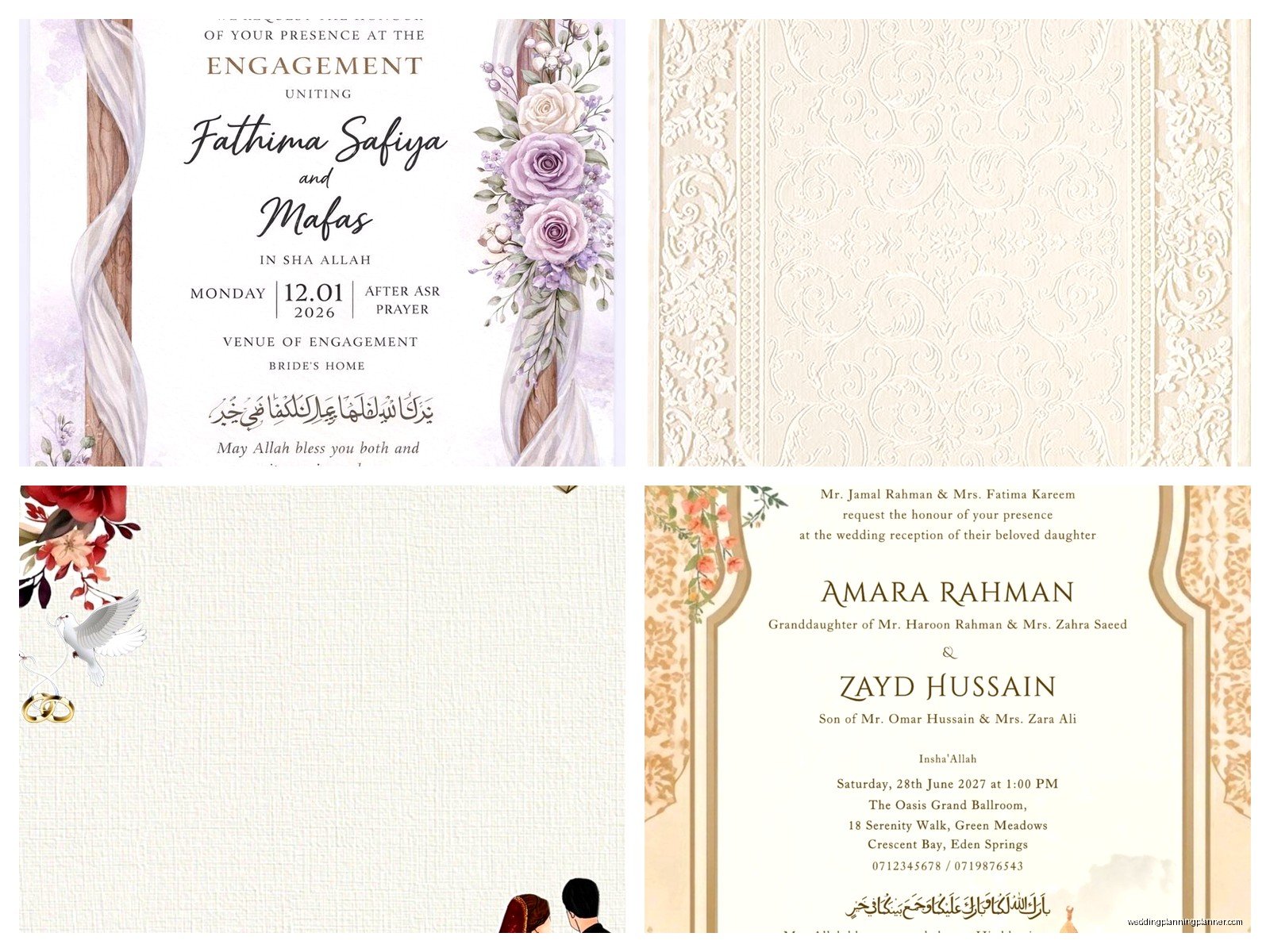
Traditional wording usually has the bride’s parents listed first since they’re technically hosting, but modern couples often list both sets of parents or just their own names if they’re hosting themselves. There’s no wrong way as long as it’s clear who’s getting married and when.
Traditional example:
Mr. and Mrs. Ahmed Hassan request the honor of your presence at the Nikkah ceremony of their daughter Fatima to Abdul Rahman son of Mr. and Mrs. Khalid Ibrahim
Modern example:
Together with their families, Fatima Hassan and Abdul Rahman Ibrahim invite you to witness their Nikkah ceremony
Both work fine. Just be consistent with formality level throughout the invitation.
Budget Breakdown Reality Check
Let’s talk actual numbers because that’s what you really wanna know. For 100 Nikkah invitations:
- Budget option (digital printing, simple design, standard cardstock): $150-300
- Mid-range (foil accents, quality cardstock, professional design): $400-700
- Luxury (letterpress or engraving, custom design, premium paper): $800-1500+
These prices usually don’t include calligraphy or assembly if there are multiple pieces. Postage is also extra—factor in about $0.70-1.20 per invitation depending on weight.
Common Mistakes to Avoid
Alright, from someone who’s seen it all, here’s what trips people up:
Not ordering extras. Always order at least 10-15 more than your guest count. You’ll want extras for keepsakes, last-minute additions, or mistakes in addressing.
Forgetting to proofread multiple times. Have at least three different people read the proof before approving it. I’ve seen invitations go out with the wrong date, misspelled names, incorrect times—it happens when you’re staring at the same text over and over.
Ignoring postage requirements. Thick invitations, square envelopes, or anything with embellishments might need extra postage. Take a fully assembled invitation to the post office and have them weigh it before you buy stamps.
Choosing a design that doesn’t photograph well. People will photograph your invitation for social media or keepsakes. Super light colors or super dark colors sometimes don’t show up well in photos.
Not considering your guests. If you’re inviting elderly relatives or non-Muslim friends, make sure the information is clear and easy to read. Fancy script fonts are pretty but not always legible.
Digital Invitations: Yay or Nay
Okay so digital invitations are becoming more common and honestly, they’re practical. You can send them via email or WhatsApp, they’re instant, they’re free (or very cheap), and you can track who’s opened them. Websites like Greenvelope or Paperless Post have beautiful designs.
But—and this is a big but—some families are really traditional about this stuff. Older relatives might see digital invitations as impersonal or not taking the ceremony seriously. It really depends on your specific family dynamics. I’ve had couples do both: nice printed invitations for close family and elders, digital for friends and distant relatives. That’s actually a smart compromise if you’re trying to save money but also respect tradition.
Sustainability Stuff If You Care About That
More couples are asking about eco-friendly options lately. You can get invitations printed on recycled paper, use soy-based inks, choose paperless options, or go with seed paper that guests can actually plant after the event. Some companies will plant a tree for every order placed which is kinda cool.
Just know that some eco-friendly options limit your design choices or printing methods. Not all sustainable papers work with foiling or letterpress, for example.