
Planning Guides, Style Guide
Christian Wedding Cards: Design & Ordering Guide
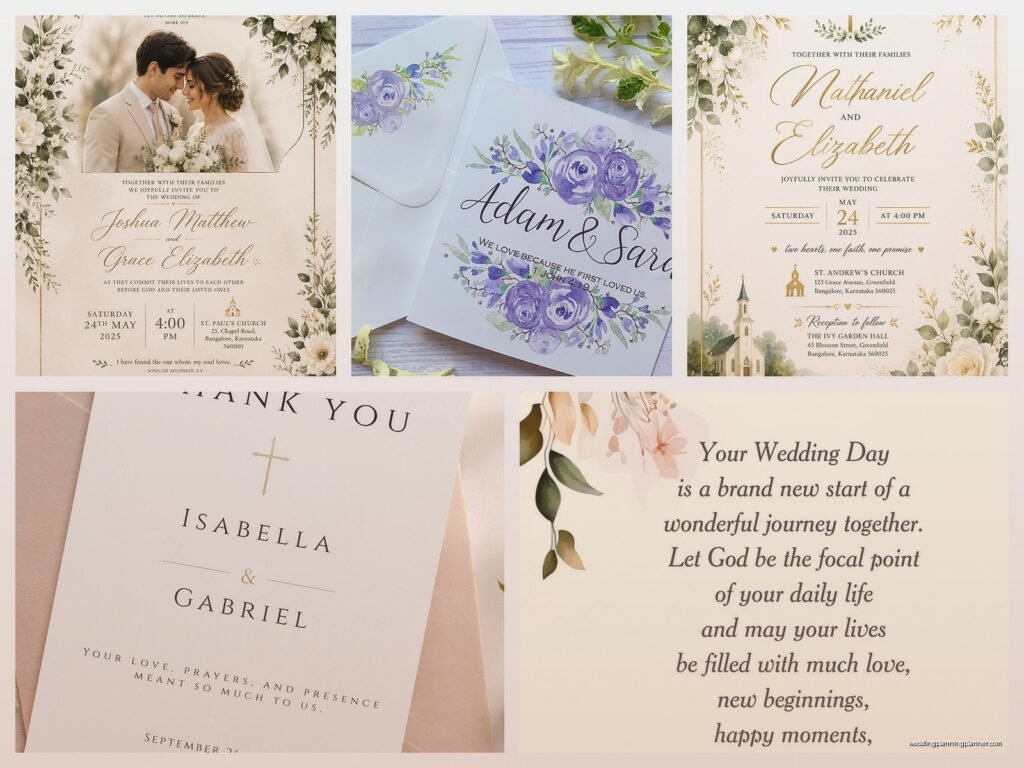
Jun
Getting Started with Christian Wedding Card Design
So the first thing you gotta know about Christian wedding cards is that they’re not just invitations—they’re like the first glimpse people get into what your ceremony is gonna be about. I learned this the hard way back in spring 2023 when a bride called me literally crying because her printer had put a generic quote on her invitations instead of the Bible verse she’d specifically requested. The cards had already gone out to 150 people and she felt like the whole spiritual foundation of her wedding announcement was just… wrong.
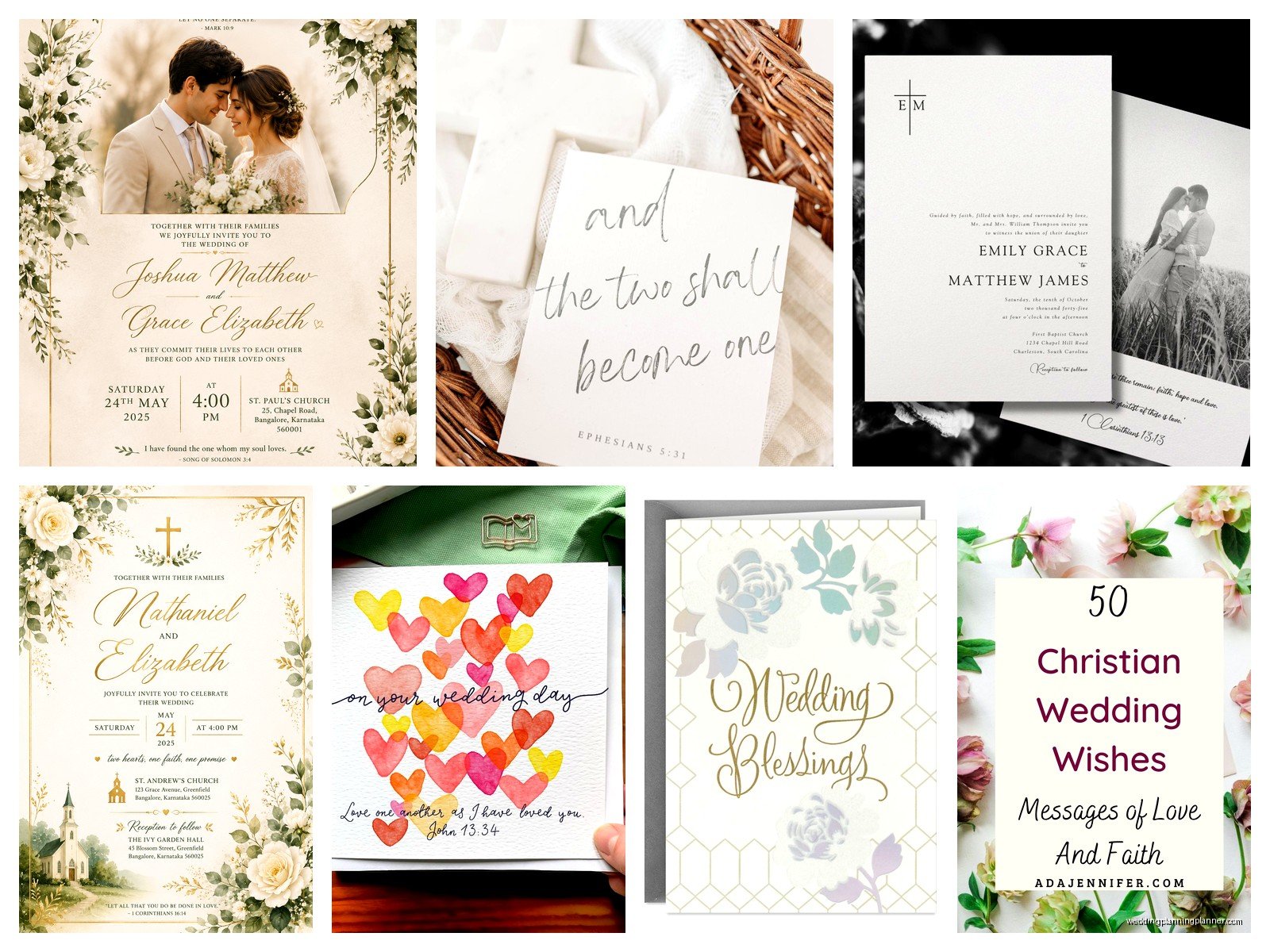
Start by deciding what scripture or Christian element matters most to you. Some couples go with 1 Corinthians 13 because everyone knows it, but honestly I’ve seen the most beautiful designs using less common verses like Ecclesiastes 4:9-12 (the cord of three strands one) or Song of Solomon 3:4. The verse you pick should actually mean something to your relationship, not just sound pretty on cardstock.
Design Elements That Actually Matter
You’re gonna want to think about symbols before you even look at fonts. Crosses are obvious but there’s so many ways to incorporate them—watermarked in the background, as a small accent at the top, woven into a monogram with your initials. I had a couple once who used a subtle trinity knot design and it was gorgeous without being too in-your-face religious for their guests who weren’t Christian.
Doves show up a lot because of the whole Holy Spirit thing, and they work great for spring or garden weddings. Olive branches, vines, crowns of thorns (though that’s pretty intense for a wedding card honestly), crosses made of flowers, infinity symbols combined with crosses. The key is not making it look like a church bulletin—I’ve seen so many cards that just scream “1987 Baptist newsletter” and that’s probably not the vibe you want.
Color choices matter more than you’d think. White and gold is classic and works for formal church ceremonies. Sage green with cream has been really popular lately for outdoor Christian weddings. Deep burgundy or navy with gold foiling looks incredible for evening ceremonies. I personally love when couples use colors that reflect their church’s sanctuary—like if you’re getting married in a church with beautiful stained glass, pulling colors from that feels really intentional.
Wording That Doesn’t Sound Weird
This is where people get tripped up constantly. You want to honor God in your invitation without making it sound like you’re inviting people to a revival meeting. The traditional “together with their families” opening can be modified to “by the grace of God and with the love of their families” or something similar.
Here’s what I usually recommend for the main wording structure:
- Opening line that acknowledges God’s role (keep it simple)
- Parents’ names if they’re hosting or you want to honor them
- The actual invitation line with your names
- Date, time, location
- Your chosen scripture verse
- Reception details if applicable
Something that really annoys me is when couples feel pressured to use King James English for their invitations just because it’s a Christian wedding. Like, nobody talks that way anymore and it’s gonna feel forced unless that’s genuinely your church tradition. Modern translations are fine. Your guests will actually understand what you’re saying.
For the scripture placement, you can put it at the top as an opening blessing, at the bottom as a closing thought, or even on the back of the card. I’ve also seen it printed on the inside flap of a gatefold invitation which looks really elegant. Just make sure it’s readable—don’t sacrifice legibility for the sake of fitting it somewhere weird.
Picking Your Printing Method
Digital printing is the most affordable and honestly looks great for most designs. It’s perfect if you’re doing watercolor elements or anything with lots of colors. Turnaround time is usually faster too, which matters if you’re working on a tight timeline.
Letterpress is beautiful for Christian wedding cards, especially if you’re doing something traditional. There’s something about that impression in the paper that feels substantial and… I don’t know, reverent? But it’s expensive and you’re limited on colors. Also if you want foil details, that’s a separate process which means more money.
Foil stamping is where you’ll see a lot of Christian wedding cards go all out. Gold foil crosses, silver foil scripture text, rose gold foil borders. It photographs beautifully and feels special when people open the envelope. Just know that foiling adds cost per color and per location on the card.
Thermography is kinda the middle ground—it gives you that raised printing effect without the letterpress cost. It works really well for text and simple designs. I used it for my own wedding invitations actually and people thought they were engraved.
Paper Stock Decisions
You need at least 100lb cardstock for the main invitation card itself. Anything thinner feels cheap and won’t hold up if you’re doing multiple enclosures. For Christian weddings I usually steer people toward textured papers—linen, cotton, or laid finishes—because they feel more substantial than smooth cardstock.
Vellum overlays are really popular right now for adding scripture verses. You can print the main invitation on cardstock and then have a translucent vellum layer on top with a verse printed in elegant script. It creates this layered effect that’s really pretty. My cat knocked over an entire stack of vellum overlays once right before a client meeting and I almost had a breakdown because they stick to everything when there’s any moisture in the air.
Recycled paper is great if environmental stewardship is part of your Christian values, and honestly some of the recycled cotton papers are the most beautiful options out there. They’ve got these natural fibers visible in the paper that look really organic and earthy.
Working with Designers vs DIY
If you’re going DIY, Canva has Christian wedding invitation templates but they’re gonna look like everyone else’s. Etsy has better options where you can buy a template and customize it yourself—just make sure you’re buying from someone who allows editing and gives you the right file formats.
Working with a professional stationery designer means you’ll get something unique, but expect to pay anywhere from $500 to $2000+ just for design before printing costs. The advantage is they’ll handle all the technical stuff like bleed lines, color profiles, and making sure your verse is formatted correctly.
Semi-custom is where you pick a base design from a stationer’s existing collection and they customize the colors, wording, and maybe add your specific verse. This is usually $200-400 for design and then printing costs on top. It’s what I recommend for most couples because you get professional quality without the full custom price tag.
Ordering Timeline and Quantities
Order your invitations at least 4 months before your wedding date. Like, seriously, don’t wait on this. You need time for design, proofing, printing, assembly, and mailing. Christian weddings often have larger guest lists because you’re inviting church family plus regular family plus friends, so you might be looking at 150-300 invitations.
Always order 10-15% more than your guest count. You’ll want extras for keepsakes, last-minute additions, and mistakes. I cannot tell you how many times I’ve had clients come back needing “just 5 more” and then they have to do a whole new print run because minimums are usually 25-50 pieces.
For quantities, here’s what you actually need:
- Save the dates: sent 6-8 months before (optional but helpful for destination weddings or holiday weekends)
- Invitations: mailed 8 weeks before the wedding
- Programs: one per person or one per couple, ordered 4 weeks before
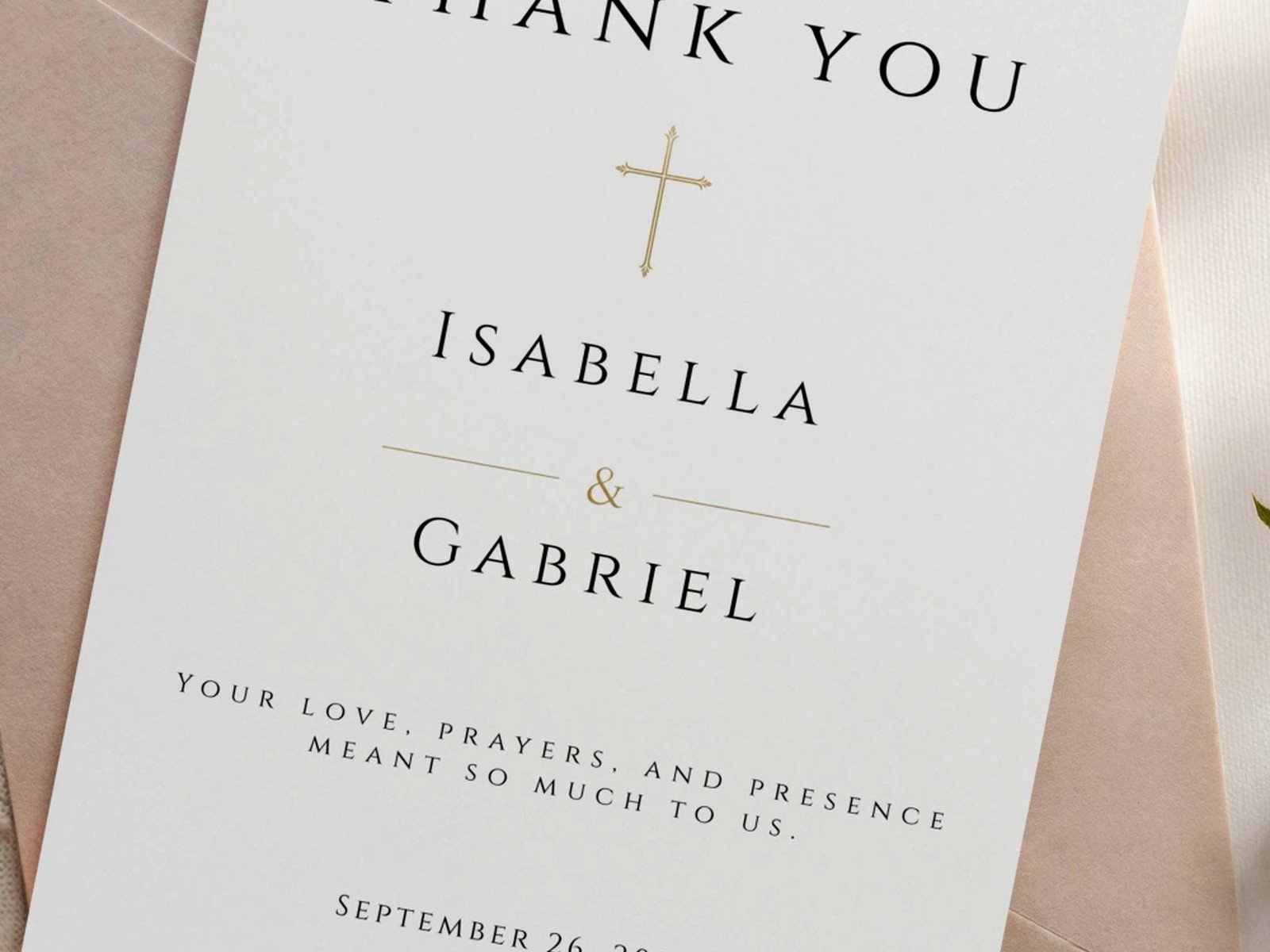
- Thank you cards: order these with your invitations to get matching designs and bulk pricing
Enclosures and Insert Cards
Okay so besides the main invitation, you’ll probably need some combination of these insert cards. RSVP cards are essential unless you’re doing online RSVPs only (which honestly saves money and is easier to track). Include a pre-stamped envelope for RSVPs because people are lazy and won’t respond otherwise.
Reception cards are needed if your ceremony and reception are in different locations or if the reception is at a different time. Details cards can include your wedding website, hotel information, dress code, or any special notes about your Christian ceremony—like if it’s going to be a full worship service or if communion will be offered.
Direction cards or maps are helpful if your church is hard to find, though honestly most people just use Google Maps now so… maybe skip this unless your venue is really remote or doesn’t show up correctly in GPS.
I’ve seen couples include a separate card explaining the significance of their chosen scripture verse or sharing their testimony about how they met and how God brought them together. It’s sweet but make sure it doesn’t read like a tract you’d hand out on a street corner, you know?
Envelope Addressing Options
You can hand-address envelopes with calligraphy which looks gorgeous but takes forever or costs a lot if you hire a calligrapher. Digital calligraphy (printed directly on envelopes) is way more affordable and still looks elegant. Regular printing works fine too, especially if your invitation design is more modern.
For return addresses, you can do a custom return address stamp, pre-printed envelopes, or envelope wraps/stickers. Those clear return address labels from your home printer? Nah, they look cheap on a wedding invitation.
Guest addressing should use proper titles and full names. For Christian weddings you might have pastors, deacons, or other church leaders on your list—make sure you’re using their correct titles (Pastor, Reverend, Deacon, etc.).
Budget Real Talk
Christian wedding invitations can range from like $1.50 per invitation suite on the low end (digital printing, simple design, minimal enclosures) to $15+ per suite if you’re doing letterpress with foil on handmade paper with vellum overlays and wax seals.
Most couples I work with spend between $3-6 per complete invitation suite. For 150 invitations that’s $450-900 total. Factor in another $100-150 for postage because wedding invitations are usually over 1 ounce which means extra postage.
Ways to save money without looking cheap: skip the foiling, use digital printing, reduce the number of enclosures by putting everything on your wedding website, do your own assembly, print your own envelope addresses, and order thank you cards at the same time as invitations for bulk pricing.
Common Mistakes to Avoid
Don’t put registry information on the invitation itself—that’s what the wedding website is for or what your mom tells people when they ask. Don’t use 47 different fonts trying to make it look fancy; stick to 2-3 fonts max. Don’t forget to proofread everything multiple times because I once had a couple misspell their church’s name and didn’t catch it until after printing.
Don’t order invitations before you’ve confirmed your venue and date (seems obvious but it happens). Don’t assume your printer knows what you mean by “Christian themed”—be specific about symbols, verses, and design elements you want. And don’t wait until the last minute because rush fees are brutal and you’ll be stressed.
Make sure your verse is from the translation you actually want—if you’re copying from online, double-check it against your Bible because there are differences between NIV, ESV, KJV, NKJV, etc.
Also heads up that some printers have minimum orders, so if you’re having a tiny wedding you might need to find a printer who does smaller runs or go with a print-on-demand service. The per-unit cost will be higher but you won’t be stuck with 100 extra invitations you’ll never use.