Planning Guides, Style Guide
Punjabi Wedding Invitation Card: Design & Ordering Guide
Jun
Okay so Punjabi wedding invitations are their own beast
Look, I’m gonna be real with you – Punjabi wedding invitation cards are not like your standard cream-and-gold Western invites. They’re bold, they’re colorful, and honestly if you try to go minimalist your aunties will have opinions. Trust me on this.
The first thing you need to wrap your head around is that these invitations are doing way more work than just telling people when to show up. They’re announcing multiple events (because Punjabi weddings are never just one day), they’re respecting religious traditions, and they’re basically a preview of how elaborate your whole wedding is gonna be. No pressure or anything.
The design elements you actually need to think about
So I had this client in spring 2023 – lovely couple, but the bride’s mom kept sending me Pinterest boards of invitations that were like… for completely different cultural weddings? And I had to gently redirect her like fifteen times. Here’s what actually matters for Punjabi invitations:
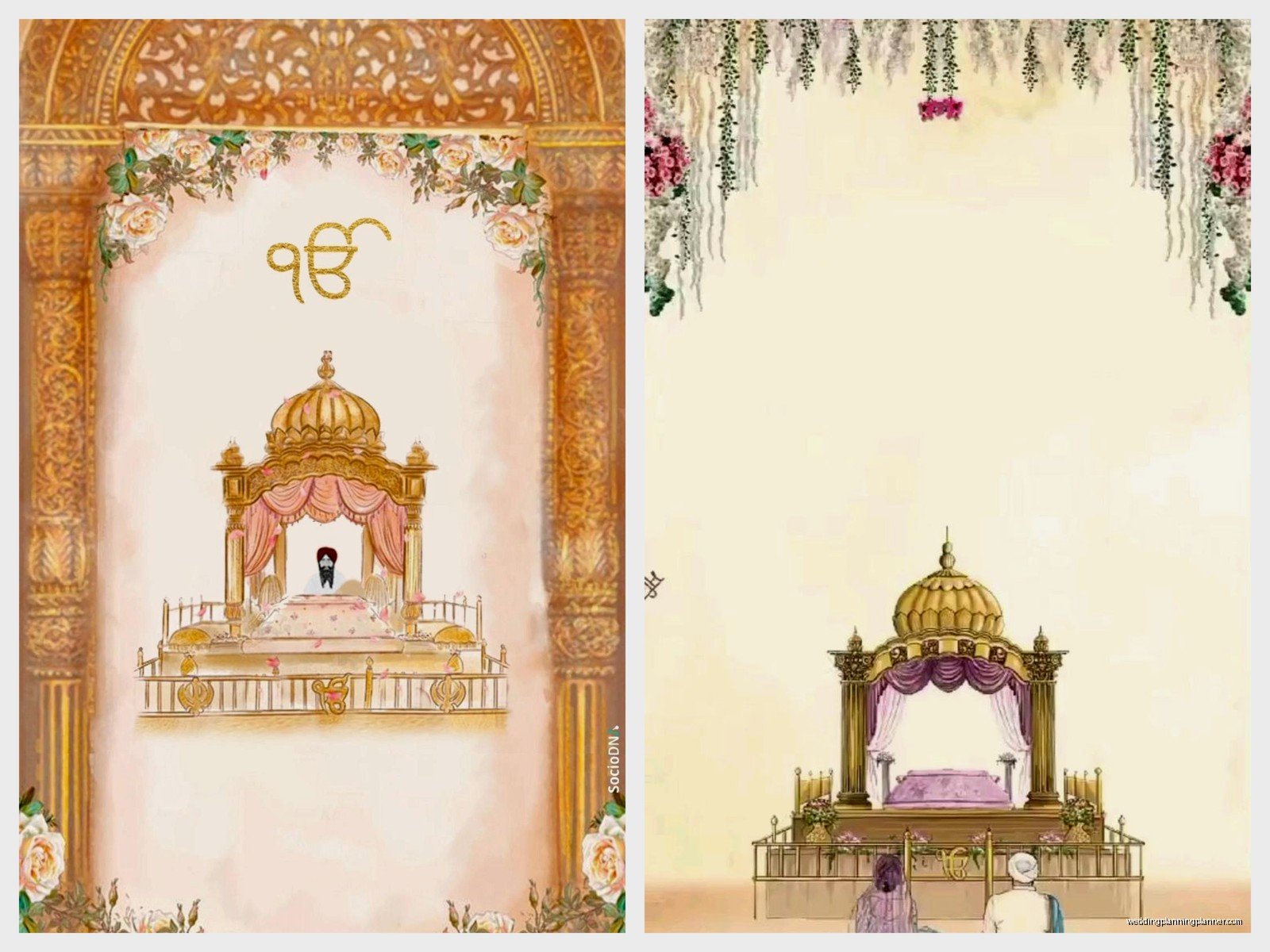
The Ik Onkar symbol is pretty much essential if you’re Sikh. It goes at the top usually, and it’s that symbol that represents “One Universal Creator.” Don’t just slap any version of it on there though – make sure it’s rendered properly and respectfully. I’ve seen some designers who clearly just grabbed a random image off Google and it looked… off.
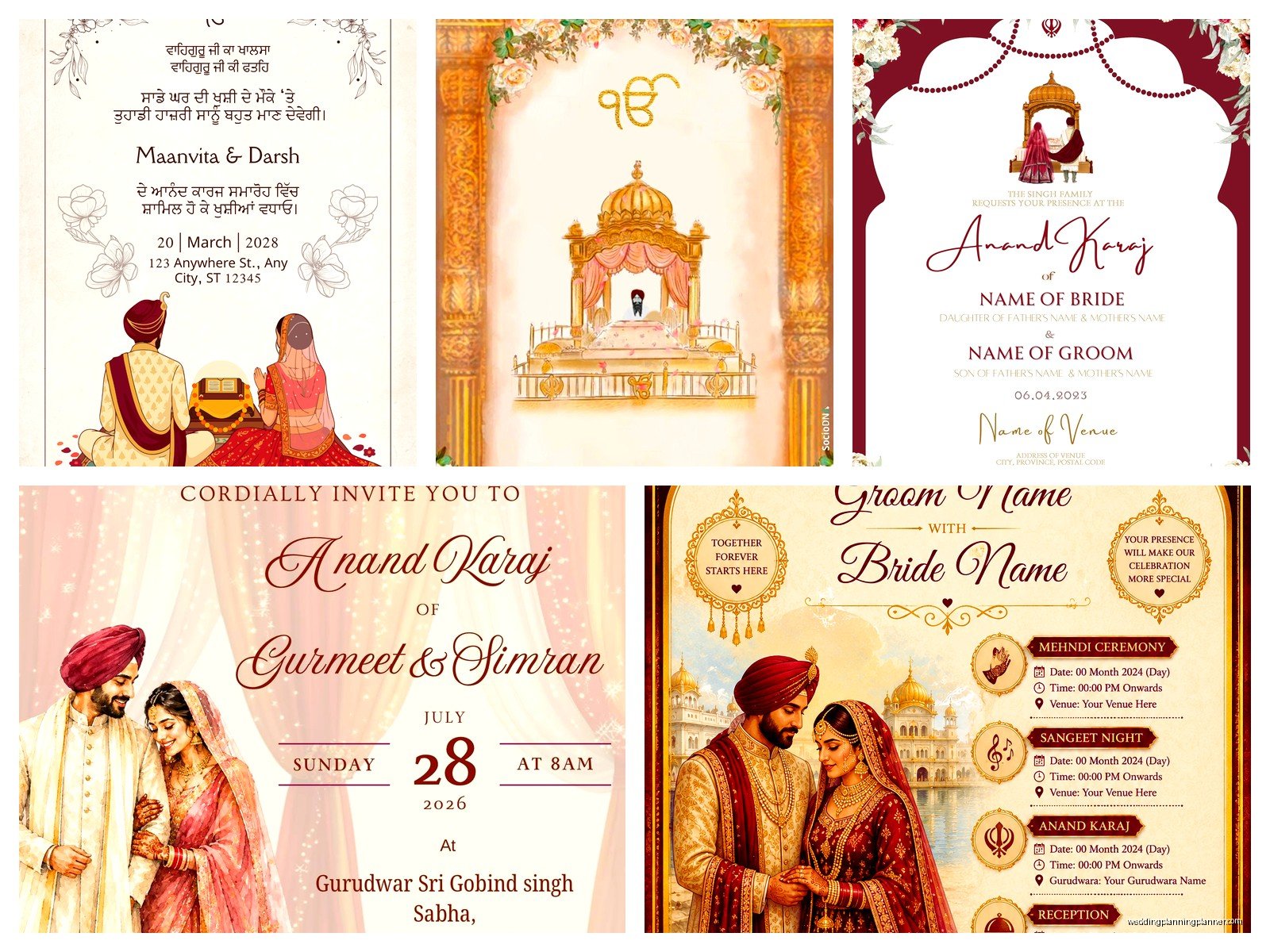
Color schemes are where you can actually have some fun. Traditional colors are red, gold, and maroon, but lately I’m seeing a lot of fuchsia and orange combinations, royal blue with gold, even emerald green. The key is richness – these are not pastel situations. Punjabi weddings are vibrant and the invitation should reflect that energy.
You’ll also want to incorporate traditional motifs like paisley patterns, elephants, peacocks, lotus flowers, or mango designs. The elephant thing used to kinda annoy me because not every Indian wedding needs elephants everywhere, but honestly? Clients love them and they do photograph well on invitations.
Text and wording that won’t make your parents cringe
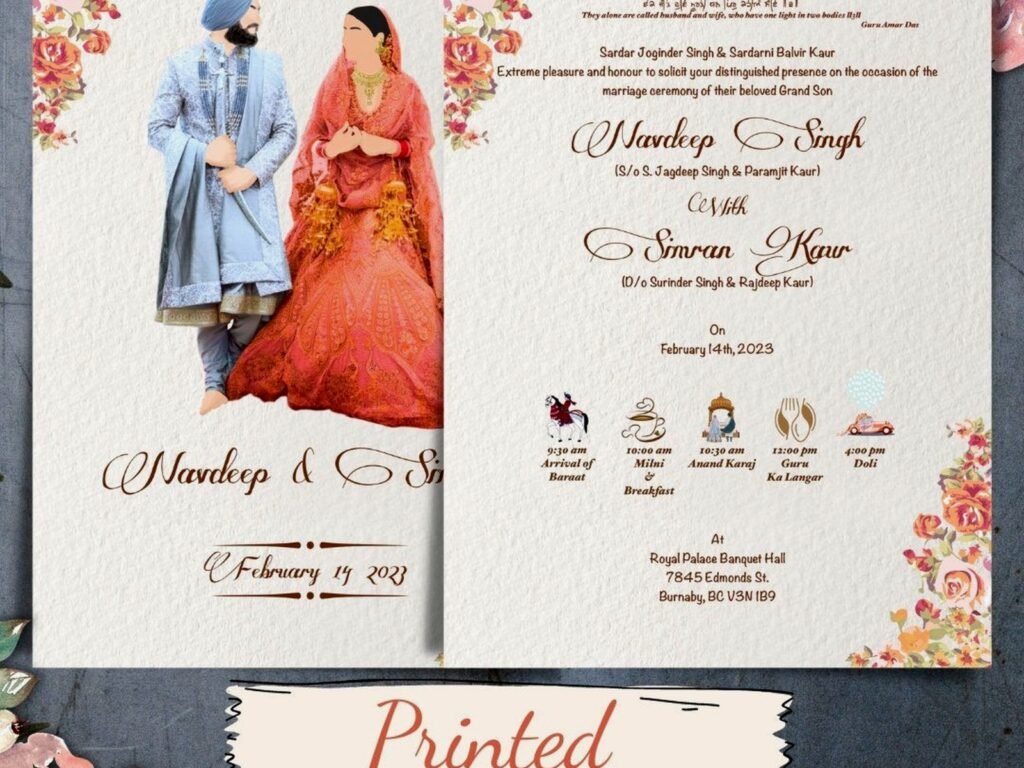
This is where things get tricky because you’re balancing traditional expectations with modern reality. Most Punjabi invitations will include:
- An opening with a religious symbol or prayer
- Parents’ names (and yes, both sets of parents are hosting traditionally)
- The couple’s names – though sometimes bride’s name comes first, sometimes groom’s, depends on the family
- Multiple event details because you’ve got the Mehndi, the Sangeet, the wedding ceremony, the reception…
- Dress code hints (this is actually important because guests need to know if they’re going full traditional or if Indo-Western is okay)
- RSVP information
The language can be in English, Punjabi, or both. I usually recommend both if you have older relatives who prefer Punjabi. But make sure whoever is translating actually knows what they’re doing – I once saw an invitation where the Punjabi translation was clearly from Google Translate and it was… not great.
The actual design process and timeline
Alright so you need to start this process like 6-8 months before your wedding. I know that sounds insane but hear me out – Punjabi weddings have a LOT of guests. Like, 300-500 is pretty standard, and I’ve worked on weddings with 800+ guests. That’s a lot of printing.
Finding a designer: You’ve got a few options here. You can go with a designer who specializes in South Asian weddings (this is what I usually recommend), you can use online platforms like Minted or Zola that have some Punjabi-specific templates, or you can hire a local Indian print shop that does this stuff all the time.
The specialized designers are gonna cost you anywhere from $800 to $3000+ depending on how custom you want to go. The online platforms are cheaper, maybe $300-$800 for everything, but less personalized. The local print shops are somewhere in the middle and often have the fastest turnaround.
What really matters is that they understand the cultural elements. I worked with a mainstream designer once who kept trying to put the couple’s engagement photo on the front of the invitation in this huge way and that’s just… not how Punjabi invitations typically work? Photos are usually inside if they’re included at all, and even then it’s not always expected.
The stuff that goes inside the envelope
So this is where Punjabi invitations get really different – you’re not just sending one card. You’re sending a whole packet of information. Here’s what typically goes in:
- The main invitation card (the fancy one with all the design work)
- A details card for each event with specific timing, venue, dress code
- Accommodation card if you have out-of-town guests
- RSVP card with a stamped return envelope
- Sometimes a program explaining the ceremonies for non-Punjabi guests
- Maybe a map or directions card
And then there’s the envelope situation. You can go with a standard envelope but a lot of Punjabi invitations come in these gorgeous boxes or folders. Like, actual rigid boxes with magnetic closures or ribbon ties. They’re beautiful but they’re also expensive – we’re talking $8-$15 per box just for the packaging.
My cat knocked over an entire box of invitation samples once while I was working from home and I nearly had a heart attack because these things are not cheap to replace.
Ordering and printing logistics
Okay so once you’ve finalized your design, you need to think about quantities. Here’s my formula: take your guest count, add 20% for last-minute additions (because someone’s cousin will suddenly be in town), add another 10 for keepsakes for parents and grandparents, and then add 5 more just because things happen.
Proofread everything seventeen times. No seriously. Check the dates, check the times, check that you spelled the gurdwara name correctly, check that Uncle Rajvir’s name isn’t spelled “Rajveer” because those are different names and he will notice. I once had an invitation go to print with the wrong venue address and we had to rush order corrections and it was a nightmare.
The printing timeline usually looks like:
- 1-2 weeks for the first proof
- Another week for revisions (you’ll probably do 2-3 rounds)
- 2-3 weeks for printing once you approve the final proof
- 1 week for assembly if there are multiple pieces or embellishments
So yeah, that’s why I said start 6-8 months out. You want to mail these invitations 8-10 weeks before your wedding, which is earlier than typical Western weddings but necessary when you’re coordinating multiple events.
The embellishments and fancy stuff
This is where you can really make your invitation stand out or where you can blow your entire budget on cardstock – your choice. Popular embellishments include:
Foil stamping in gold, rose gold, or copper – this gives that metallic shine and looks super luxe. It’s also expensive, adding like $2-5 per invitation.
Laser cutting creates these intricate cutout patterns on the card. Gorgeous but delicate, and you’ll need to be careful with mailing because they can get bent.
Embossing or letterpress adds texture and dimension. Very elegant, very traditional feeling.
Ribbon, tassels, or fabric wraps – I’ve seen invitations wrapped in silk fabric with gold thread, tied with velvet ribbons, adorned with crystal brooches… The sky’s the limit here but remember each embellishment adds time and cost.
Wax seals are having a moment right now. You can get custom wax seals with your initials or a symbol. They look amazing but they make your envelopes non-machinable at the post office which means hand-canceling which means extra postage.
Speaking of postage – and this annoyed me SO MUCH when I first started planning South Asian weddings – oversized or heavy invitations need extra postage. That beautiful boxed invitation with all the inserts? It’s gonna cost you like $2-3 to mail instead of one regular stamp. Factor this into your budget or you’ll be shocked when you get to the post office.
Digital vs. physical invitations
So there’s this growing trend of digital invitations and… look, I’m gonna be honest. For Punjabi weddings, you probably need physical invitations. I know it’s 2024 or whatever and we all live on our phones, but the older generation expects that physical card. It’s a respect thing, it’s a tradition thing.
HOWEVER, you can do digital save-the-dates or digital invitations for some of the pre-wedding events. I’ve had clients do physical invitations for the main ceremony and reception but send WhatsApp invites for the Mehndi or Sangeet, especially if those are more casual or if the guest list is different.
There are also these cool video invitations now – like animated versions of your invitation card with music. They’re fun for sharing on social media or sending to younger guests, but they shouldn’t replace the physical invitation entirely.
Working with vendors and avoiding disasters
Get everything in writing. I mean everything. The paper quality, the printing method, the exact colors (with Pantone numbers if possible), the delivery date, the assembly details, all of it. I had a situation where a printer substituted a different cardstock because the original was “temporarily unavailable” and the client hated it and we had to reprint everything.
Ask for a physical sample before you commit to a big order. Photos on a screen look different than the actual printed piece in your hand. Colors shift, textures matter, weight matters.
Build in buffer time for everything. If they say it takes 2 weeks, assume it takes 3. Things go wrong – printers break, shipments get delayed, someone realizes they forgot to include Chacha ji’s name and needs a reprint.
Also make sure your designer understands the religious aspects if you’re incorporating them. The Ik Onkar symbol, any Gurbani verses, the way religious elements are positioned – these matter and should be handled respectfully. If your designer seems confused or dismissive about this stuff, find someone else.
Budget breakdown because let’s talk money
So what’s this actually gonna cost you? Here’s a realistic breakdown for like 350 invitations:
Budget option: $400-$800 total. You’re using online templates, minimal customization, standard printing, simple envelopes. It’ll look nice but not super unique.
Mid-range option: $1200-$2500 total. Custom design, good quality cardstock, maybe one embellishment like foil stamping, nice envelopes or simple folders, professional assembly.
Luxury option: $3000-$6000+ total. Fully custom design, premium materials, multiple embellishments, boxed invitations, hand assembly, maybe even hand-painted elements or custom illustrations.
Don’t forget to add postage costs – for 350 invitations with extra postage that’s another $700-$1000 potentially.
The stuff nobody tells you about
You need to address envelopes properly and this takes FOREVER. You can hire a calligrapher (adds $2-5 per envelope), print them yourself (looks less formal but saves time), or hand-write them (traditional but your hand will fall off).
Some families do this thing where they personally deliver invitations to close relatives and elders as a sign of respect. Factor in time for that if it’s part of your tradition.
Keep a detailed spreadsheet of who you sent invitations to and track RSVPs obsessively. With large guest lists this is the only way to maintain sanity.
Order extra envelopes – like 50 extra – because you WILL mess some up while addressing them or assembling the invitations.
The invitation is often the first impression guests get of your wedding vibe, so it should kinda match your overall aesthetic. If you’re doing a modern minimalist Punjabi wedding (yes this exists), your invitation should reflect that. If you’re going full traditional elaborate everything, the invitation should signal that.
Weather and timing matter for mailing – don’t mail invitations with chocolate or wax seals in July if your guests are in hot climates. Things melt and it’s a mess… or so I’m watching this documentary about wedding disasters on Netflix and apparently this happens more than you’d think.
Some printers offer rush services but they’re expensive – like 50-100% upcharge expensive. Don’t put yourself in that position if you can avoid it.