
Planning Guides, Style Guide
Nigerian Wedding Invitation Card: Design & Ordering Guide
Jun
Okay so Nigerian wedding invitations are basically their own universe
Look, if you’re planning a Nigerian wedding or you’re working with a Nigerian couple, the invitation cards aren’t just “send some pretty paper in the mail.” They’re honestly more like a statement piece, a cultural document, and sometimes a whole book depending on how traditional the families are. I learned this the hard way back in spring 2023 when I had a client whose mom showed up to our stationery consultation with a binder—an actual three-ring binder—of invitation samples from every wedding she’d attended in Lagos over the past decade.
The first thing you gotta understand is that Nigerian wedding invitations are usually way more detailed than what you’d see at your typical Western wedding. We’re talking multiple events listed, sometimes multiple cards in one envelope, specific dress codes for each ceremony, and cultural elements that you absolutely cannot skip unless you want the aunties talking.
The cultural background stuff you need to know
Nigerian weddings typically have at least two main events: the traditional wedding and the white wedding (church ceremony). Some families do three or even four events when you factor in the introduction ceremony and the reception. Each event might need its own mention on the invitation, which is why these cards can get kinda chunky.
The traditional wedding is usually the big cultural showcase—this is where you’ll see the bride in her traditional attire (aso oke for Yoruba weddings, george wrapper for Igbo, etc.), and the invitation needs to reflect that heritage. The colors, the patterns, the wording, everything matters. I’ve seen couples go with gold and burgundy, emerald green and gold, or the classic royal blue combinations that just scream elegance.
What really annoyed me when I first started working with Nigerian wedding invitations was that nobody—and I mean nobody—told me about the timeline expectations. These invitations often go out way earlier than typical invitations because there’s so much coordination involved, but also… sometimes they go out super late? It’s this weird contradiction where families want everything perfect but also procrastinate on finalizing details.
Design elements that actually matter
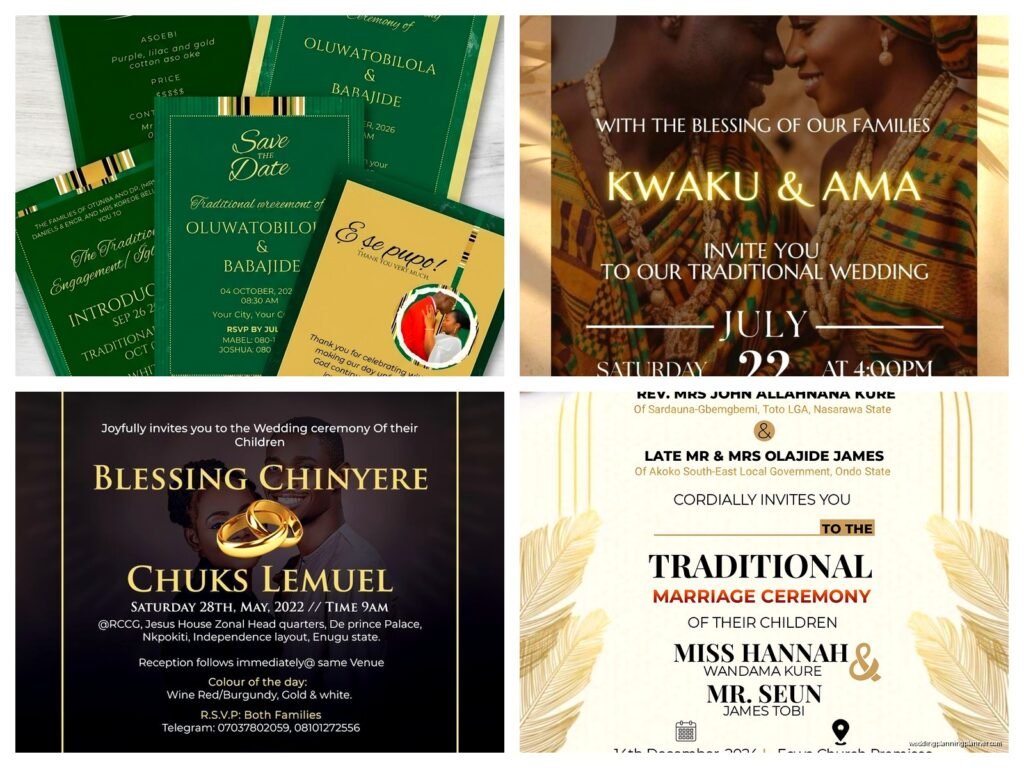
The design of a Nigerian wedding invitation usually incorporates traditional fabrics or patterns. You’ll see invitations that literally look like they’re wrapped in aso oke fabric, with the traditional woven patterns printed or embossed on the card. Metallic finishes are huge—gold foiling, silver embossing, raised lettering that you can feel when you run your fingers over it.
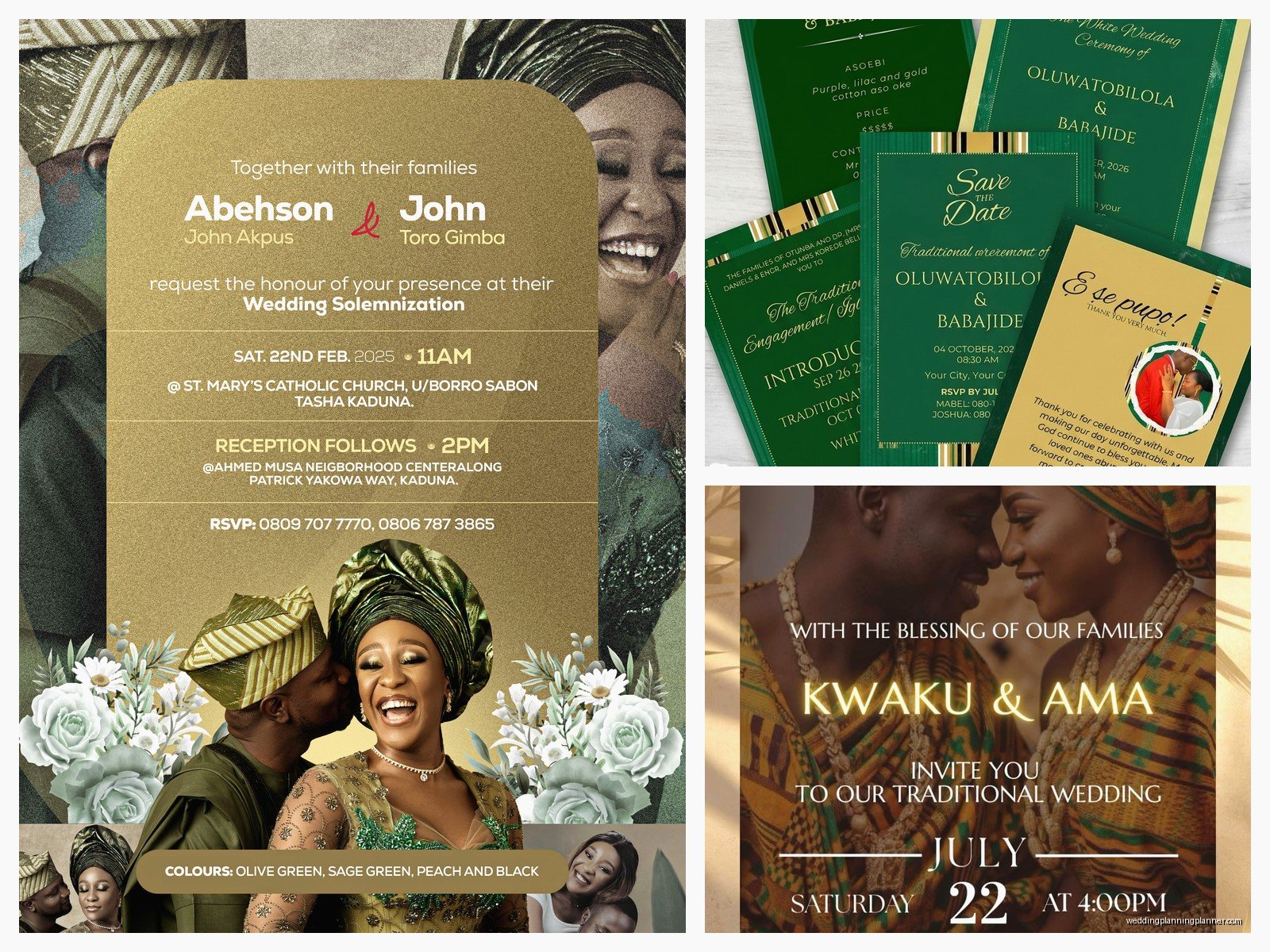
Colors are symbolic too. Gold represents royalty and prosperity, which is why you see it everywhere. Red can symbolize love but also vitality in some Nigerian cultures. Purple is associated with royalty in certain contexts. I had this one couple who insisted on using coral and gold because coral beads are super significant in Edo culture, and honestly the final product was stunning.
You’re also gonna see monograms or couple logos on Nigerian invitations way more often than on Western ones. These aren’t just initials—they’re full designed emblems that might incorporate cultural symbols, the couple’s photo, or traditional motifs. Some couples use these monograms on everything from the invitation to the cake to the dance floor decal.
The actual components of the invitation suite
A typical Nigerian wedding invitation suite might include the main invitation card, an RSVP card (though honestly, people rarely use these the way you’d expect—everyone just calls or texts), a details card with dress code and venue information, sometimes a program card, and often a separate card for the traditional wedding if it’s on a different day.
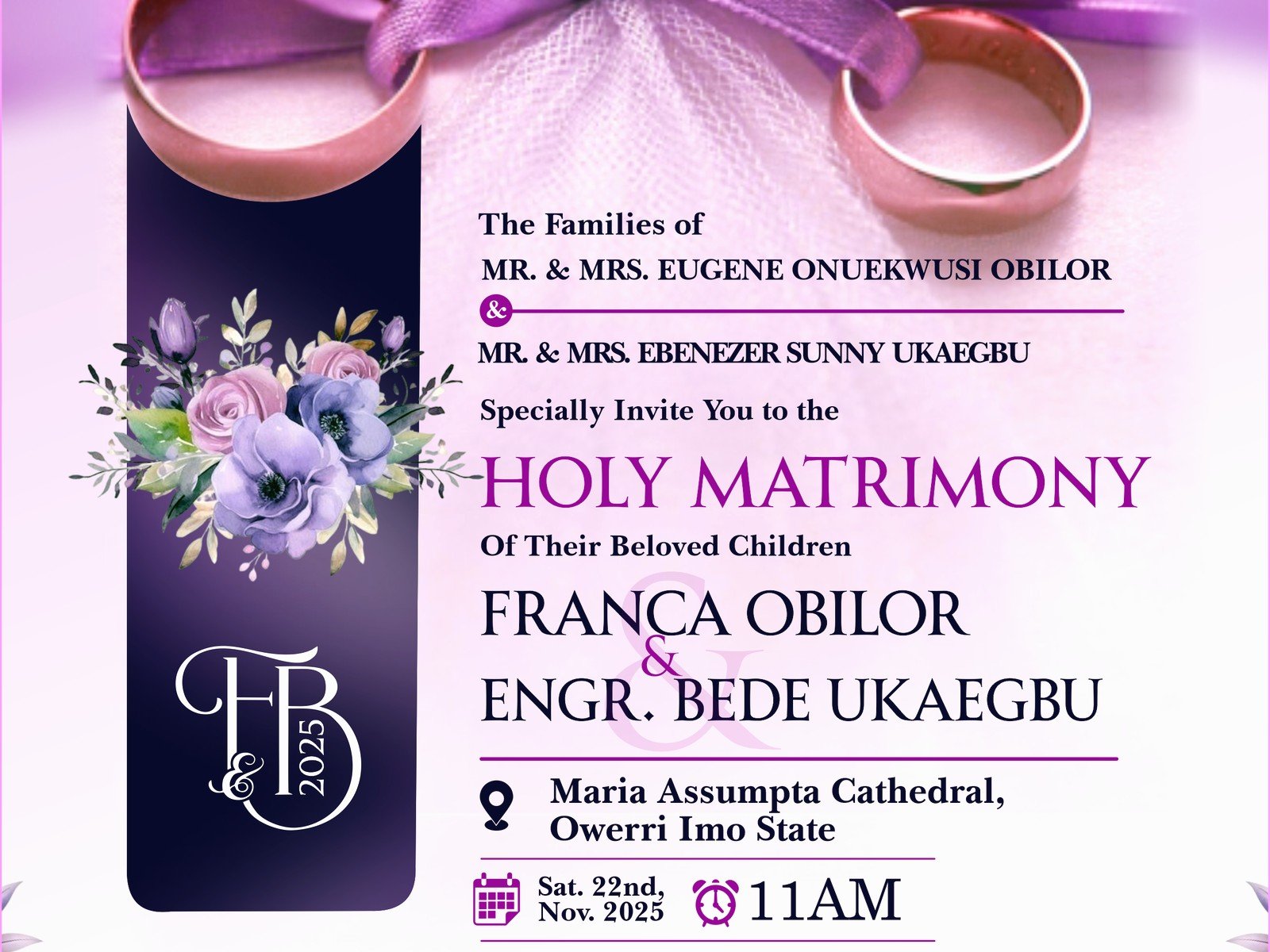
The main invitation card is where you list both sets of parents as hosts, because in Nigerian culture, marriage is between two families, not just two people. The wording is usually pretty formal, even if the couple themselves are super casual. You’ll see phrases like “request the honor of your presence” or “cordially invite you to witness and celebrate.”
Oh, and the dress code section is critical. For traditional weddings, you need to specify if guests should wear specific colors or fabrics. Some families go full aso ebi (matching fabric for guests), and the invitation needs to include information about where to purchase that fabric or who to contact. I remember my cat knocked over my coffee right onto a proof copy of an invitation where we’d forgotten to include the aso ebi vendor contact info—disaster averted only because it wasn’t the final version.
Ordering process and vendors
So when you’re actually ordering these invitations, you’ve got options. There are Nigerian-specific invitation companies both in Nigeria and in major cities like London, Houston, Atlanta, and New York where there are large Nigerian populations. These vendors already understand the cultural requirements, which honestly makes your life so much easier.
If you’re working with a general stationer, you need to educate them or be super hands-on. I’ve partnered with several general invitation companies over the years, and the learning curve is real. They don’t automatically know that the invitation should list both parents’ names, or that certain color combinations have meaning, or that the traditional wedding details need equal or sometimes more prominence than the white wedding.
Timing-wise, order your invitations at least 4-5 months before the wedding. Nigerian invitations often require more production time because of all the customization—the foiling, the embossing, the multiple inserts. Plus you need time for proofs, corrections, and shipping if you’re ordering from overseas.
Digital vs. physical and what actually works
There’s this whole debate about digital invitations for Nigerian weddings and honestly… it’s complicated. Older generations expect physical invitations, period. Like, you will offend people if you only send a digital invite to a Nigerian wedding. But younger couples are starting to use digital invitations as a supplement, not a replacement.
What I’ve seen work is sending physical invitations to parents, elders, and VIPs, then using digital versions for younger friends or for save-the-dates. You can create beautiful animated digital invitations that incorporate traditional patterns and music, which is kinda cool actually. But don’t skip the physical cards for key people or you’re gonna hear about it.
WhatsApp is huge in Nigerian communities, so a lot of couples will send their digital invitations through WhatsApp or create wedding websites with all the details. The website thing is smart because you can include way more information—travel details, hotel blocks, full weekend itinerary—without cramming it all onto the physical card.
Wording and language considerations
The wording on Nigerian wedding invitations tends to be formal and follows certain conventions. You typically start with both sets of parents’ names as hosts, even if the couple is paying for everything themselves. It goes something like “Mr. and Mrs. [Father’s full name] and Mr. and Mrs. [Father’s full name] request the honor of your presence…”
Some families include traditional greetings or blessings in their native language—Yoruba, Igbo, Hausa, or others. This might be a single line at the top or bottom of the invitation, or sometimes there’s a whole insert in the native language alongside the English version. I worked with a couple who included an Igbo blessing that the groom’s grandmother specifically requested, and it made the whole invitation feel more personal and rooted in their heritage.
You also need to be specific about timing because Nigerian weddings don’t really start on time (this is just cultural reality, not me being stereotypical). Some couples will actually put an earlier time on the invitation knowing that people will arrive late, or they’ll include language like “prompt arrival appreciated” if they’re really trying to start on schedule. During a particularly stressful client situation in summer 2021, we had a bride who wanted to put “African time NOT in effect” on her invitations, and while her mom vetoed it, I thought it was hilarious.
Budget considerations because these can get expensive
Nigerian wedding invitations can range from like $3 per suite to $25+ per suite depending on how elaborate you go. Foiling, embossing, custom envelope liners, wax seals, ribbon—it all adds up fast. If you’re inviting 300-500 people (which is pretty normal for Nigerian weddings), you’re looking at a significant line item.
Ways to save money: limit the number of inserts, choose digital printing over letterpress, skip the envelope liners, use standard envelope sizes to save on postage. You can also do a simpler design for the majority of guests and splurge on fancier versions for close family and VIPs—nobody needs to know that not everyone got the same exact invitation.
But here’s the thing—invitations are one area where Nigerian families often don’t want to cut corners because they set the tone for the entire wedding. If your invitation looks cheap, people will assume your wedding will be cheap, and that reflects on both families. It’s sorta unfair pressure, but it’s the reality of the cultural expectations.
Working with family opinions (aka surviving the process)
Oh man, this is where things get tricky. Nigerian weddings involve a lot of family input, and the invitations are no exception. Both mothers usually have strong opinions about colors, wording, who gets listed where, and… everything basically.
My advice is to create a clear decision-making process upfront. Decide who has final approval—is it the couple, is it one set of parents, is it a committee situation? Get samples approved in stages so you’re not redoing everything at the last minute. And build in extra time for “consultation” with various family members because it’s gonna happen whether you plan for it or not.
I’ve learned to schedule a specific invitation review meeting where all the key decision-makers can voice their opinions at once, rather than getting feedback in drips and drabs over weeks. It’s more intense in the moment, but way more efficient overall.
Printing methods and quality stuff
For Nigerian wedding invitations, you typically want to go with high-quality printing methods. Digital printing is the most affordable and works fine for simpler designs. Thermography gives you that raised text effect that people love, and it’s cheaper than engraving. Foil stamping adds metallic elements and looks really luxe. Letterpress is gorgeous but expensive and might be overkill unless you’re going for ultra-premium.
Paper weight matters too—you want something substantial, at least 110lb cardstock, so the invitation feels expensive when people hold it. Cheap thin paper just doesn’t convey the right message for a Nigerian wedding. Textured papers, linen finishes, or pearlescent stocks are all popular choices.
Addressing and mailing logistics
Addressing Nigerian wedding invitations can be its own project because you’re often mailing to multiple countries. Some guests will be in Nigeria, some in the UK, some in the US, Canada, etc. You need to account for international postage rates and longer delivery times for overseas addresses.
Inner and outer envelopes are traditional, with the outer envelope having the mailing address and the inner envelope listing the specific guests invited. This helps clarify whether children are invited or if it’s adults only—though honestly, Nigerian weddings usually welcome children, so this is less of an issue than with some other cultures.
Calligraphy is a nice touch if budget allows, especially for the outer envelopes. You can hire a calligrapher or use digital calligraphy (printed addresses in calligraphy style), which looks almost as good for way less money. Just make sure whoever’s doing it can handle Nigerian names properly—the last thing you want is someone’s name butchered on their invitation envelope.
Postage can be a surprise expense because these invitations are often bulky with multiple inserts, fancy envelopes, maybe ribbon or belly bands. They might require extra postage beyond a standard stamp. Take a fully assembled invitation to the post office and have them weigh it before you buy stamps for 400 invitations.
Common mistakes to avoid
Don’t forget to include accommodation information, especially if you have a lot of out-of-town or international guests. Nigerian weddings often turn into whole weekend events with people traveling from far away, so hotel blocks and transportation details are important.
Don’t skimp on proofreading. With multiple names, multiple events, potentially multiple languages, there are so many opportunities for typos or errors. Have at least three people review the final proof before it goes to print, including someone from each family.
Don’t assume people will RSVP in the traditional sense. Many Nigerian wedding guests will confirm attendance verbally or through family networks rather than sending back an RSVP card. Plan your tracking system accordingly—maybe a Google form or a dedicated phone number for confirmations.
And please, please don’t order the exact number of invitations you need. Order at least 10-15% extra to account for addressing mistakes, last-minute additions to the guest list, damaged invitations, or keepsakes. I cannot tell you how many times I’ve had clients frantically trying to reorder 20 invitations at the last minute because they didn’t order extras initially, and then the printing company has moved on to other jobs and there’s a wait time and it’s just a whole mess.
Also don’t forget that some people will want their invitation hand-delivered rather than mailed, especially elder family members or very important guests—it’s a sign of respect. Factor this into your distribution plan and timeline because hand-delivering 50 invitations across a city takes way longer than you’d think… ask me how I know after spending an entire Saturday in Atlanta traffic doing exactly that