
Planning Guides, Style Guide
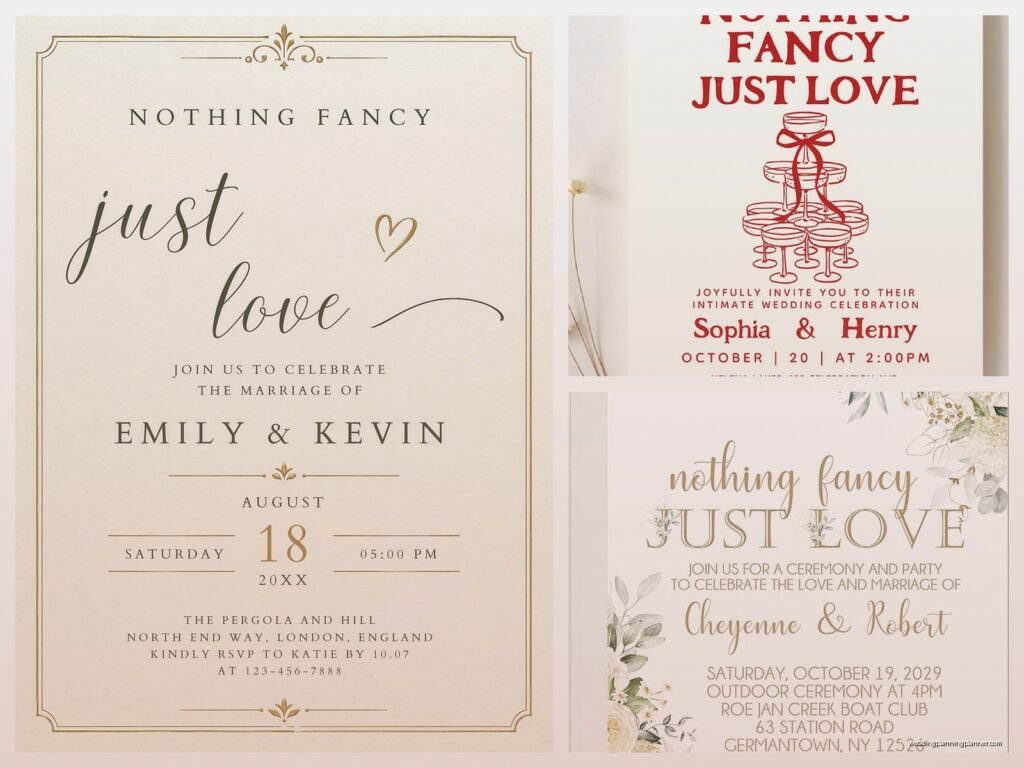
Nothing Fancy Just Love Wedding Invitations: Casual Simple Style
Nov
The Nothing Fancy Approach Actually Works Better Than You Think
So you want invitations that basically say “we’re getting married, come hang out” without all the fussy calligraphy and tissue paper inserts that cost more than your dress? Yeah, I get it. I’ve been doing this for like fifteen years and honestly the casual invitations are sometimes my favorite projects because couples actually relax during the process instead of stressing about whether the envelope liner matches the napkin shade.
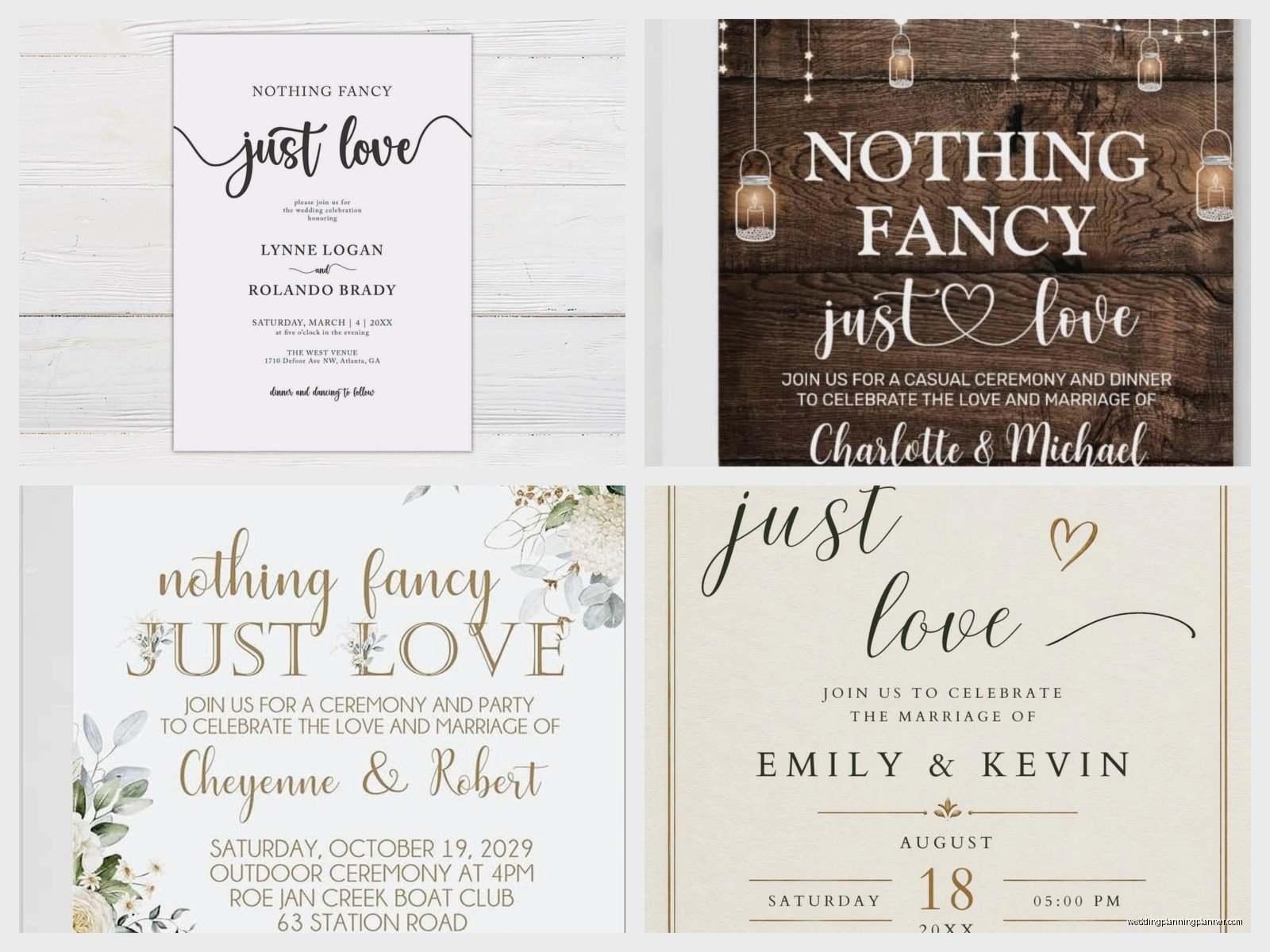
The whole “nothing fancy just love” vibe is kinda having a moment right now but also it’s always been around. It’s for couples who’d rather spend money on good food and an open bar than on invitations with three different fonts and a wax seal. Which, look, I love a good wax seal but not everyone needs that energy.
What Makes an Invitation Casual Without Looking Cheap
There’s a difference between simple and looking like you forgot to plan your wedding. The trick is intentional simplicity. You’re choosing to keep it minimal, not just… failing to make decisions.
First off, the paper quality still matters. You can have a super simple design on nice cardstock and it’ll feel way better than a complicated design on flimsy paper. I usually tell clients to go with at least 100lb cardstock, maybe 110lb if you want it to feel substantial when people pick it up. The weight matters more than people think.
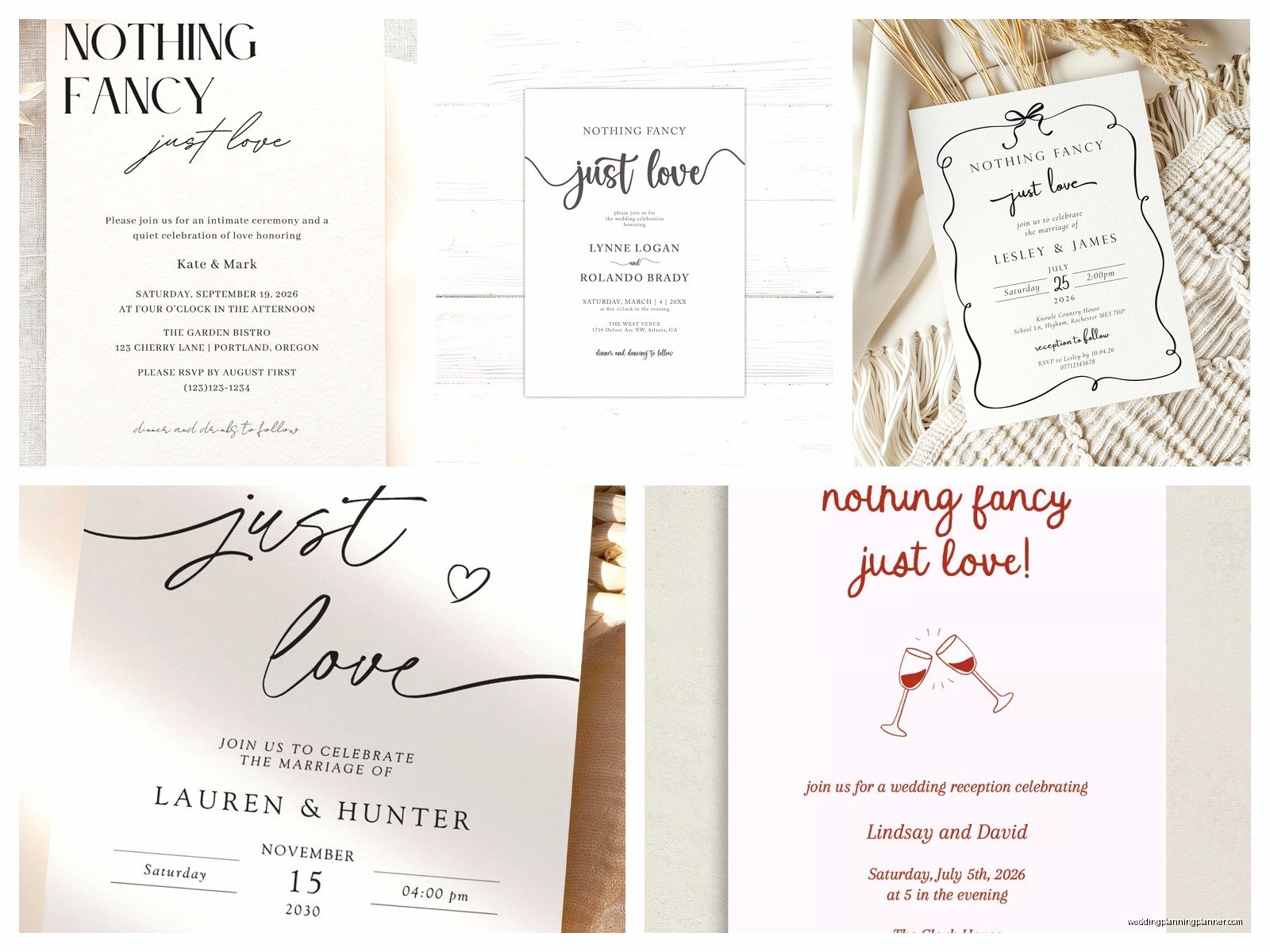
For the actual design, you’re looking at maybe one or two fonts max. I had this couple in spring 2023 who wanted “the most basic invitation possible” and we did this gorgeous thing with just black text on white paper, one clean sans-serif font, and it was literally perfect. They spent like $200 total for 80 invitations and everyone kept telling them how elegant they looked. Because sometimes less really is… well you know.
Your color palette should be simple too. Black and white is classic. Or pick one accent color and stick with it. Navy blue. Sage green. Terracotta if you’re doing a fall wedding. Don’t overthink it.
The Actual Wording Part
This is where you can really let the casual vibe shine. You don’t need “Mr. and Mrs. Jonathan Edward Richardson III request the honour of your presence” or whatever. Nah.
Try something like:
- Sarah and Mike are getting married!
- We’re tying the knot
- Join us for our wedding
- Let’s celebrate [Names]
- Come party with us
You can totally skip the parents’ names if that’s not your thing. I know traditional etiquette says you’re supposed to include them especially if they’re paying but honestly if you’re going for casual, you make your own rules. Just be prepared for maybe one older relative to mention it. There’s always one.
For the details section, just be clear and include what people actually need to know. Date, time, location with full address, and where to find more info. That’s it. You don’t need flowery language about “an evening of dinner and dancing” unless you want it.
One thing that really annoys me though is when couples go SO casual that they forget to include basic information. Like I had a client who wanted to just put “Details on our website” and nothing else. And I’m like… what if someone’s grandma doesn’t have internet access or what if your website crashes? Always include the actual venue address and time on the physical invitation. The website is for extra stuff like hotel blocks and your registry and maybe your cute proposal story.
Design Elements That Keep It Simple But Interesting
You can add little touches without going overboard. A thin border around the text. A small illustration or icon that means something to you. Maybe a simple line drawing of the venue or a mountain range if you’re outdoorsy people.
I’m gonna be honest, I use Canva for a lot of these simple designs now. The templates are actually pretty good if you strip out all the extra stuff they include. Start with a template, delete like 75% of what’s there, adjust the fonts, and you’ve got something clean and custom-looking. You can also hire a designer on Etsy who specializes in minimalist invitations, usually runs between $50-150 for a custom design.
Or if you’re crafty, you could design them yourself in Word or Pages. Just watch your margins and do a test print before you order 100 copies. Trust me on this one.
Printing Options For Real People Budgets
You don’t need letterpress or foil stamping for a casual invitation. Digital printing is totally fine and way cheaper. Minted, Zazzle, Vistaprint, even Costco does wedding invitations now and they’re surprisingly decent.
For the truly budget-conscious, you can print at home if you have a good printer. Get some nice cardstock from a paper store, do test runs, and print away. It takes time and your printer might jam seventeen times (mine did when I was testing samples for a client and my cat jumped on the printer and somehow made it worse) but it’s doable.
The middle ground is ordering printed cards but doing your own envelopes. Like get the invitations professionally printed but hand-write the addresses or print labels. Saves money and adds a personal touch.
Envelope Situation
White envelopes. Done. You can get them anywhere and they look clean and classic. If you want slightly more personality, kraft paper envelopes give that rustic casual vibe. Or pick one color that matches your wedding colors.
You definitely don’t need inner envelopes for a casual invitation. That’s old school formal stuff. One envelope is plenty.
For addressing, your options are handwriting them, printing labels, or printing directly on the envelopes. Handwriting is free but time-consuming. I spent an entire weekend in summer 2021 addressing envelopes for a couple who decided last minute they wanted handwritten and it was like 150 invitations and my hand cramped so bad I couldn’t hold my coffee mug properly for two days. But they looked nice!
Labels are fine. The clear ones look better than white labels. Or you can get a template and print directly on the envelopes which looks clean and modern.
RSVP Cards or Nah
For super casual weddings, you might skip physical RSVP cards entirely and just do online RSVPs through your wedding website. Saves money on printing and postage, plus you don’t have to manually track who sent back cards and who didn’t.
But some people (especially older guests) prefer physical cards. So maybe include them but keep them simple. Small card, checkbox for accepts/declines, maybe a line for number of guests attending, done. Include a pre-stamped envelope to make it easy for people to send back.
Or do a postcard RSVP which is cheaper than a card with an envelope. Just remember postcards can get beat up in the mail and sometimes the postal service… well they’re doing their best but things happen.
What to Actually Include in Your Invitation Suite
For a nothing fancy approach, you probably just need:
- The main invitation card
- RSVP card (or just direct people online)
- Maybe a details card if you have hotel info or schedule stuff
That’s it. You don’t need direction cards if you include the full address and people can use Google Maps. You don’t need reception cards if the ceremony and reception are at the same place. You don’t need six tissue paper layers.
Some couples do a postcard for save-the-dates and then slightly nicer invitations, or they keep the same minimal vibe throughout. Both work.
Timing and Logistics
Send save-the-dates about 6-8 months before if you want to do them. For casual weddings, sometimes people skip save-the-dates entirely and just send invitations 8-10 weeks before the wedding. Depends on how many out-of-town guests you have and whether it’s a holiday weekend or something.
Invitations should go out 6-8 weeks before. RSVP deadline should be about 3 weeks before your wedding so you have time to finalize catering numbers and seating charts and all that fun stuff.
Order your invitations at least 3-4 weeks before you need to mail them. This gives you time for shipping, addressing, assembly, and any fixes if something gets messed up. I always pad timelines because something always takes longer than you think.
DIY Assembly Tips
If you’re assembling these yourself, set up a little assembly line. Put on a show you’ve seen before (I usually do The Office reruns because I don’t need to actually watch), get your cards and envelopes organized, and just work through them.
The order doesn’t super matter for casual invitations since you don’t have tons of layers, but generally you’d put the invitation on bottom, then any insert cards on top, then tuck into the envelope with the printed side facing up so when someone opens it they see the invitation first.
For sealing, you can lick them but that gets gross after like ten envelopes. Get a glue stick or envelope moistener. Or those envelopes that are self-sealing where you just peel off a strip.
Little Personal Touches That Don’t Cost Much
Even with a simple invitation, you can add personality. A photo of you two on the back of the invitation or on a separate insert. A simple map illustration if your venue is tricky to find. A short quote or song lyric that means something to you at the bottom.
Your return address can be casual too. Just your names and address, no need for formal titles. Some couples get a custom stamp made with their names or initials which is like $30 and kinda fun.
You could also do a fun postage stamp. The post office has lots of designs beyond the flag stamps. Find something that fits your vibe… flowers, vintage trucks, whatever.
Common Mistakes I See
Forgetting to include your wedding website URL. People need that for hotel blocks and registry info and all the details you didn’t put on the invitation.
Not proofreading. I cannot stress this enough. Have like three different people read your invitation before you print 100 of them. Typos happen and they’re expensive to fix after printing.
Making the font too small to read. Simple doesn’t mean tiny text. Keep it at least 10pt, preferably 11 or 12pt for the main information.
Choosing a font that’s hard to read because it looks “fun” but actually your aunt can’t tell if that says 4:00 or 7:00. Stick with clean, readable fonts.
Not ordering extras. Get at least 10-15 more than you think you need. You’ll forget someone, you’ll mess up an envelope, whatever. Extras are cheaper when you order them all at once.
Real Budget Breakdown
Just so you have realistic numbers, here’s what a casual invitation suite might cost for 100 invitations:
Digital printing from an online service: $100-200 for invitations, $50-75 for RSVP cards. Envelopes usually $20-40. Postage is gonna be around $70-100 depending on weight. So you’re looking at roughly $250-400 total if you do most of the work yourself.
If you want someone else to design it custom, add $50-200 for design work. If you want someone to address them for you, calligraphy addressing runs like $2-5 per envelope so that adds up fast, but printed addressing is usually included in online printing services or you can do it yourself.
You can definitely do it cheaper if you print at home and use online RSVPs. Or spend more if you want letterpress or fancy paper. But the middle range for nice casual invitations is a few hundred bucks, not thousands.
The Nothing Fancy Just Love Philosophy
The whole point is that your invitation sets the tone. If you’re having a backyard barbecue wedding or a casual restaurant reception or a laid-back outdoor ceremony, your invitation should match that energy. You’re not trying to impress anyone, you’re just inviting people you love to celebrate with you.
And honestly? Guests care way more about whether there’s good food and if they’re gonna have fun than they do about your invitation having three layers and a silk ribbon. I’ve seen people keep elaborate invitations as keepsakes, sure, but I’ve also seen simple invitations stuck on fridges with magnets because people actually liked them and wanted to remember the date.
The casual approach also takes so much pressure off the whole planning process. You’re not agonizing over whether the envelope liner matches the bridesmaid dresses. You’re not stressed about wax seal colors. You just pick a clean design, order it, send it out, and focus on the actual wedding instead of the paper goods.
Plus it’s better for the environment probably? Less paper waste, less shipping of fancy materials, more recycling friendly. I mean I’m not gonna pretend that’s why most people choose simple invitations but it’s a nice bonus.
