
Planning Guides, Style Guide
Vintage Wedding Invitations: Retro Antique Designs
Nov
okay so vintage wedding invitations are having a MAJOR moment right now
Look, I’ve been doing wedding stationery consultations for almost fifteen years and the vintage aesthetic just never dies. Like literally never. Every few years it comes back stronger and right now in 2024 we’re seeing brides obsessed with anything that looks like it came from their grandmother’s attic in the best possible way.
So first thing you gotta know is that “vintage” means different things to different people. Some couples want 1920s Art Deco vibes, others are all about that 1950s retro diner aesthetic, and then there’s the whole Victorian lace situation which honestly can go really wrong if you’re not careful. I had this bride in spring 2023 who showed me a Pinterest board with literally six different decades represented and she was like “I want ALL of this” and I had to gently explain that mixing Edwardian with 1970s boho was gonna look kinda chaotic.
picking your actual era matters more than you think
You need to commit to a timeframe. I usually tell clients to pick a 20-30 year window max. Here’s what works:
- Victorian/Edwardian (1880s-1910s): lots of ornate borders, cameos, lace patterns, sepia tones
- Art Nouveau (1890s-1910s): those flowy organic lines, botanical illustrations, muted colors
- Art Deco (1920s-1930s): geometric patterns, gold foiling, black and gold, Great Gatsby energy
- Mid-Century (1950s-1960s): clean lines, retro fonts, pastel colors, atomic age graphics
- Bohemian Vintage (1970s): earthy tones, macramé vibes, hand-drawn flowers, that whole free spirit thing
The Art Deco ones are my personal favorite to work with because they photograph SO well and the symmetry makes layout easier, but that’s just me being picky about design stuff.
paper stock is where people mess up constantly
Okay this is gonna sound snobby but regular cardstock is not gonna cut it for authentic vintage vibes. You want textured paper. I’m talking about cotton paper, handmade paper with deckled edges, or even tea-stained effects if you’re going for that aged look.
One thing that really annoyed me last year was when a big box stationery company started selling “vintage” invitations on this super glossy photo paper. Like no. Just no. Vintage means it should feel old and tactile, not like a photograph from Costco. The whole point is that texture and weight.
Here’s what actually works for paper:
- Cotton fiber paper in ecru or ivory (110-130 lb weight minimum)
- Kraft paper for rustic vintage looks
- Handmade paper with visible fibers
- Vellum overlays for that layered antique effect
- Parchment-style paper but be careful it doesn’t look too medieval unless that’s your thing
I once tried to convince a client that regular printer paper with a vintage design printed on it would look cheap and she didn’t believe me until the samples came in. Then she spent an extra $800 upgrading everything because she saw how bad it looked. Always do paper samples first, I’m serious.
fonts will make or break the whole thing
This is where I see the most disasters honestly. People find some crusty old font on a free website and slap it on their invitation and wonder why it looks like a haunted house flyer instead of elegant vintage stationery.
For Victorian/Edwardian: you want ornate serif fonts but not too fancy. Bodoni, Didot, or Playfair Display work great. Pair them with delicate script fonts like Edwardian Script or Snell Roundhand.
Art Deco needs those geometric sans-serifs. Poiret One, Metropolis, or Gatsby are good choices. You can mix in some inline fonts or ones with that characteristic 1920s elongated look.
Mid-century retro wants clean fonts with personality – think Futura, Neutraface, or even some of those fun display fonts from that era. Just don’t go full diner menu unless that’s literally your wedding theme.
The biggest mistake is using too many fonts. Stick to two, maybe three if one is just for small details. I had a invitation proof once with FIVE different fonts and it looked like a ransom note, not a wedding invitation.
color palettes that actually read as vintage
Bright colors are not your friend here unless you’re doing 1950s retro. Most vintage palettes are muted, dusty, or aged-looking.
My go-to vintage color combos:
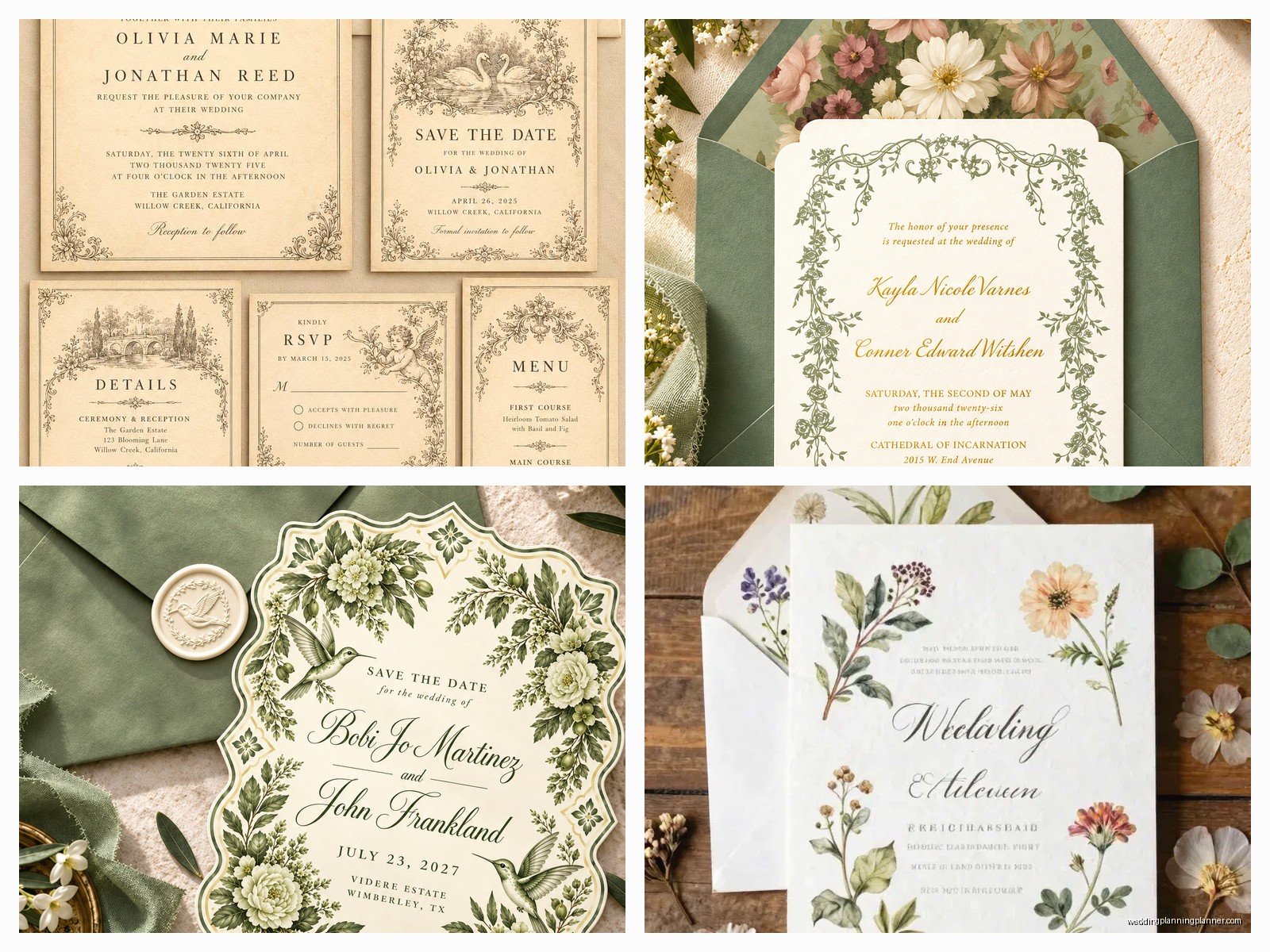
- Dusty rose, sage green, and cream
- Sepia brown, ivory, and gold
- Navy, blush, and champagne gold
- Burgundy, forest green, and antique white
- Powder blue, mauve, and silver
- Mustard yellow, burnt orange, and brown (for 70s vibes)
You can also do the whole tea-stained effect where everything looks aged and yellowed. Some people DIY this by literally soaking paper in tea or coffee but I gotta tell you, that’s risky if you’re doing a lot of invitations. The color comes out uneven and sometimes the paper warps. There are professional printing techniques that achieve this look way better.
design elements and embellishments
This is where you make it actually look vintage instead of just… old-timey font on nice paper.
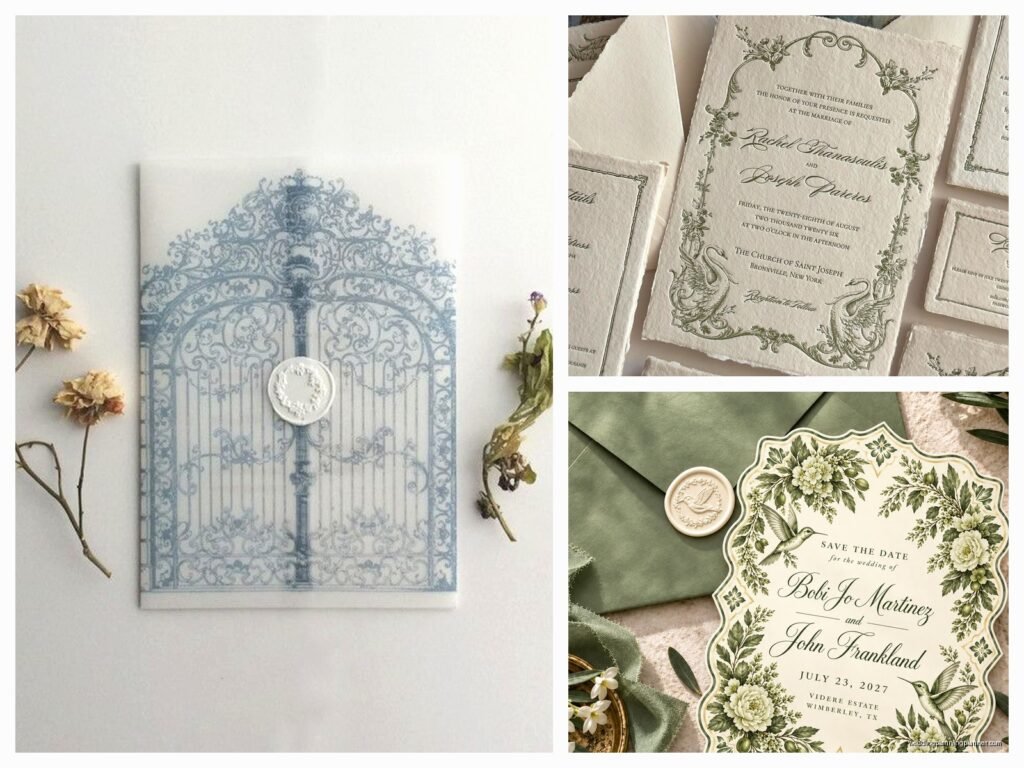
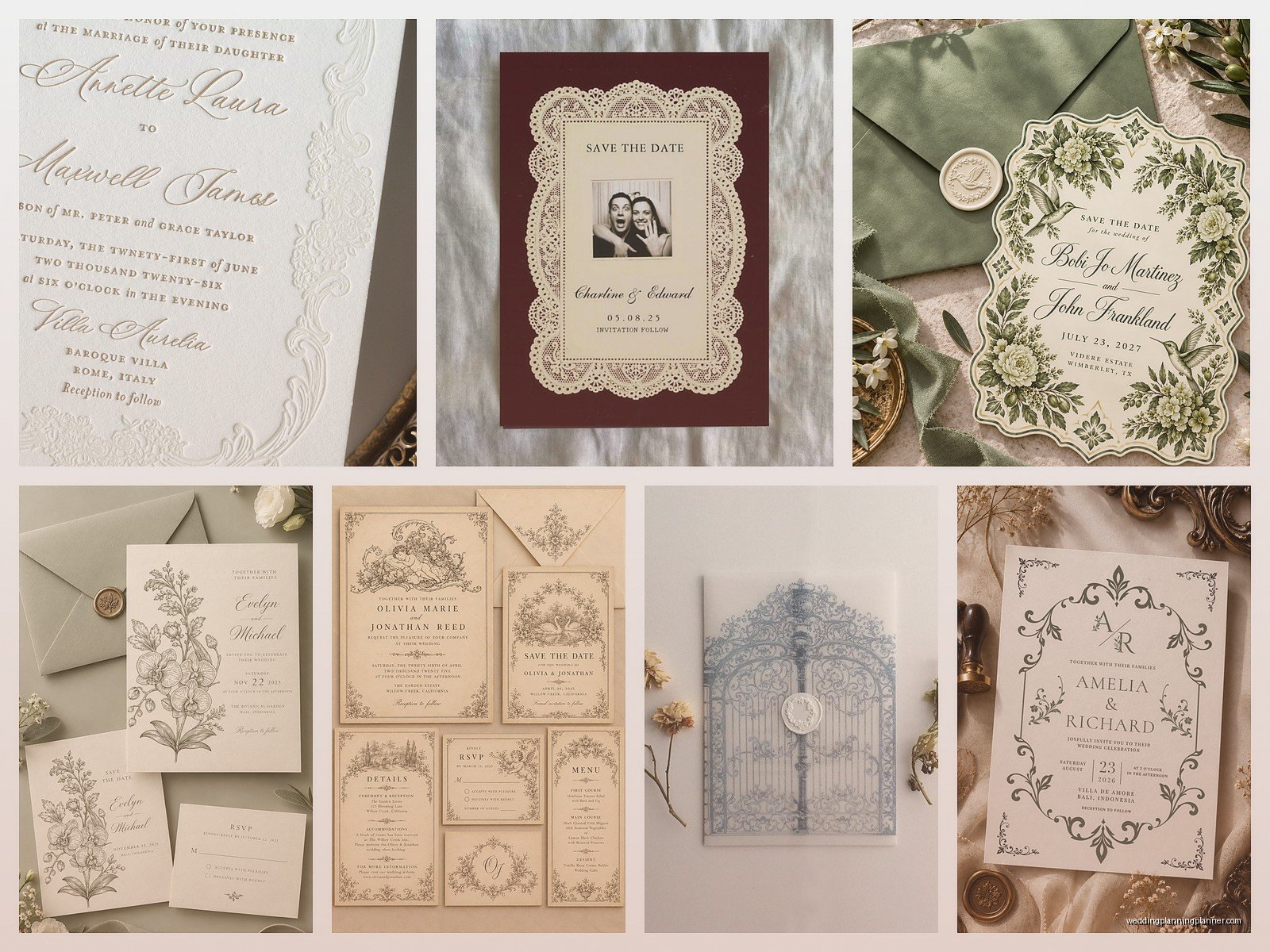
Borders and frames are essential. Ornate corner flourishes, art deco geometric borders, delicate floral frames – these instantly transport your invitation to another era. You can find vintage border graphics on sites like Creative Market or even adapt real antique designs from old books and postcards.
Wax seals are having such a comeback and they’re perfect for vintage invitations. You can get custom stamps made with your initials or wedding date. Just know that wax seals sometimes get crushed in the mail or they add extra postage because of thickness, which brings me to…
Oh right, I was gonna mention – my cat knocked over an entire box of wax seal supplies while I was working on invitations last month and I’m still finding little bits of gold wax stuck to my office floor. Anyway.
printing methods that enhance the vintage aesthetic
Digital printing is fine but if you really want authentic vintage vibes, letterpress is where it’s at. The impression in the paper, that tactile quality – it’s literally how invitations were made for decades before digital printing existed.
Letterpress is expensive though, not gonna lie. You’re looking at probably $8-15 per invitation suite depending on colors and complexity. But the effect is stunning and very obviously high-quality.
Foil stamping (especially gold, rose gold, or copper) gives you that antique metallic look without the full cost of letterpress. You can do foil details on digitally printed invitations as a compromise.
Engraving is the most formal and traditional but also the most expensive. It’s that raised ink effect that you can feel on the back of the paper. Very Victorian, very elegant, very $$$$.
Thermography is like fake engraving – it gives you raised printing at a fraction of the cost. It doesn’t have quite the same quality but honestly most guests won’t know the difference.
suite components for a complete vintage look
Don’t just do the invitation and call it done. A full vintage suite includes:
- Main invitation card
- RSVP card with envelope
- Details card (accommodation, website, etc.)
- Envelope liner in a coordinating pattern
- Belly band or ribbon wrap
- Wax seal or vintage-style stamp
- Maybe a vellum overlay if you’re feeling fancy
I worked with a couple in summer 2021 who wanted authentic 1920s invitations and we created this whole suite with an Art Deco envelope liner, gold wax seals, and these tiny RSVP cards that looked like old telegram forms. It was so much work – like probably 40 hours of design time – but when we photographed the final product it looked like something from a museum collection.
where to actually get vintage invitations made
You’ve got options depending on budget and how involved you wanna be.
DIY route: You can design them yourself using Canva or Adobe Illustrator if you have design skills. Then print through a professional service like Minted, Catprint, or a local print shop. This gives you control but requires time and some design knowledge. Also Canva has SO many vintage templates now that honestly make it pretty easy even if you’re not a designer.
Semi-custom: Work with an Etsy designer who does vintage styles. You can usually customize their existing templates with your colors and details. Price range is moderate, like $200-600 for a full suite design.
Full custom: Hire a stationery designer (hi, that’s literally what I consult on) who will create something completely unique. This costs more but you get exactly what you want. Expect to pay $500-2000+ just for design, then printing costs on top.
Box companies: Places like Minted, Paperless Post, or Shutterfly have vintage collections. These are the most affordable but everyone else is using the same designs. If that doesn’t bother you, go for it.
details that make vintage invitations look authentic vs costume-y
There’s a fine line between elegant vintage and Halloween invitation vibes. Here’s how to stay on the right side:
Use restraint with embellishments. Not every square inch needs decoration. Vintage design often had lots of white space with strategic ornate details, not just… chaos everywhere.
Match your era consistently. Don’t put a 1920s font with Victorian flourishes and 1970s colors. Pick one era and commit to its aesthetic principles.
Quality matters more than quantity. One beautifully letterpress printed invitation is better than five layers of mediocre digital printing with ribbon and wax seal and glitter and…
Consider the whole picture – your invitations should coordinate with your wedding aesthetic. If your venue is a restored Victorian mansion, those Art Deco invitations might feel off even if they’re gorgeous on their own.
postage and mailing considerations
Okay this is boring but important. Vintage invitations are usually thicker and heavier than standard invitations because of all the nice paper and embellishments.
You need to take a fully assembled invitation to the post office and have them weigh it before you buy stamps. You’ll probably need extra postage. Which is fine, but budget for it.
Also – and this drives me crazy – get vintage stamps if possible! The USPS sells old stamp designs and you can often find vintage-style stamps that coordinate with your invitation era. It’s such a small detail but it completes the whole aesthetic when your guests receive it.
Square envelopes cost extra to mail. Wax seals sometimes require hand-canceling. Ribbons can get caught in sorting machines. Just… be aware that fancy invitations sometimes need special mailing arrangements.
timing for vintage invitation orders
If you’re doing custom design work, start at least 6 months before you need to mail them. Design takes time, especially if you’re doing revisions. Then printing can take 2-4 weeks depending on the method. Then you need time to assemble everything.
I’ve had panicked brides contact me 8 weeks before their wedding wanting custom letterpress vintage invitations and I’m like… that’s not really gonna happen unless you pay rush fees on literally everything and even then it’s tight.
Order samples before you commit to printing 150 invitations. This seems obvious but you’d be surprised how many people skip this step and then hate how something looks in person.
DIY assembly tips if you’re going that route
Assembly parties with bridesmaids and wine are cute in theory but in practice someone always puts the insert cards in upside down or uses too much glue on the envelope liners.
Set up an assembly line system. One person does envelope liners, one does belly bands, one does wax seals, etc. It’s way faster than everyone doing complete invitations start to finish.
Use a bone folder for crisp folds. Your fingers won’t get it sharp enough and vintage invitations need those clean lines.
If you’re doing wax seals, practice first. Like a lot. The wax temperature matters, the pressure matters, and you will mess up probably 20% of them at first which is fine but budget extra supplies.
Glue dots are your friend for assembling layers. They’re cleaner than liquid glue and won’t warp your nice paper.
common vintage invitation mistakes I see constantly
Using modern language on vintage designs. If your invitation looks like it’s from 1920, don’t write “We’re getting hitched!” in casual modern slang. The wording should sorta match the formality of the design aesthetic or it feels jarring.
Overdoing the distressing. A little tea-staining or aged effects is nice. Making it look like the invitation survived a house fire is… not the vibe.
Ignoring readability. Some vintage fonts are genuinely hard to read, especially for older guests. Make sure critical information (date, time, location) is in a clear font even if decorative elements use fancier typography.
Forgetting about your venue’s vibe. I cannot stress this enough – if you’re getting married at a modern industrial loft, Victorian lace invitations are gonna confuse your guests about what to expect.
Not considering your wedding colors. Your invitations should coordinate with your overall wedding palette. If your wedding is blush and navy, don’t do burgundy and gold invitations just because you like that vintage color combo better.

Canva
Wedding Memories Hardcover Template Canva Editable For Notebook, Journal, Novel, Hard Covers, Canva template For KDP Cover 6×9″ 120 pages
Canva
The Ultimate Wedding Planning Bundle, Canva Editable.
Canva
Customizable Wedding Video Invitations templates, Canva Editable Digital Wedding invitation Minimalist, Animated Custom Invitation
Digital Planning Templates
Wine Wedding Planner Bundle – 200-Page Printable PDF + 10 Editable Wedding Invitations | Instant Digital Download
Canva
Orange Wedding Planner Bundle – 200-Page Editable Canva Templates + 10 Editable Wedding Invitations | Instant Digital Download
Digital Planning Templates
Champagne Wedding Planner Bundle – 200-Page Printable PDF + 10 Editable Wedding Invitations | Instant Digital Download
Canva
Wedding Memories Hardcover Template Canva Editable For Notebook, Journal, Novel, Hard Covers, Canva template For KDP Cover 6×9″ 120 pages
Digital Planning Templates
Yellow Wedding Planner Bundle – 200-Page Printable PDF + 10 Editable Wedding Invitations | Instant Digital Download
Canva
Dusty Blue Wedding Planner Bundle – 200-Page Editable Canva Templates + 10 Editable Wedding Invitations | Instant Digital Download