
Planning Guides, Style Guide
Walima Invitation Card: Design & Ordering Guide
Jun
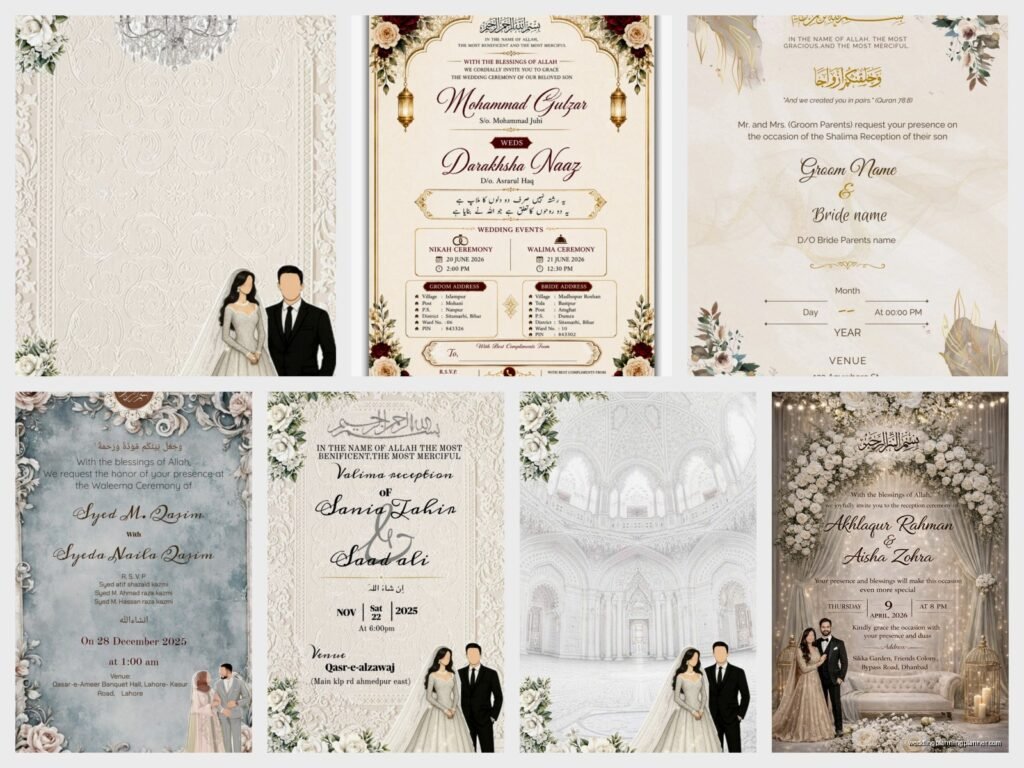
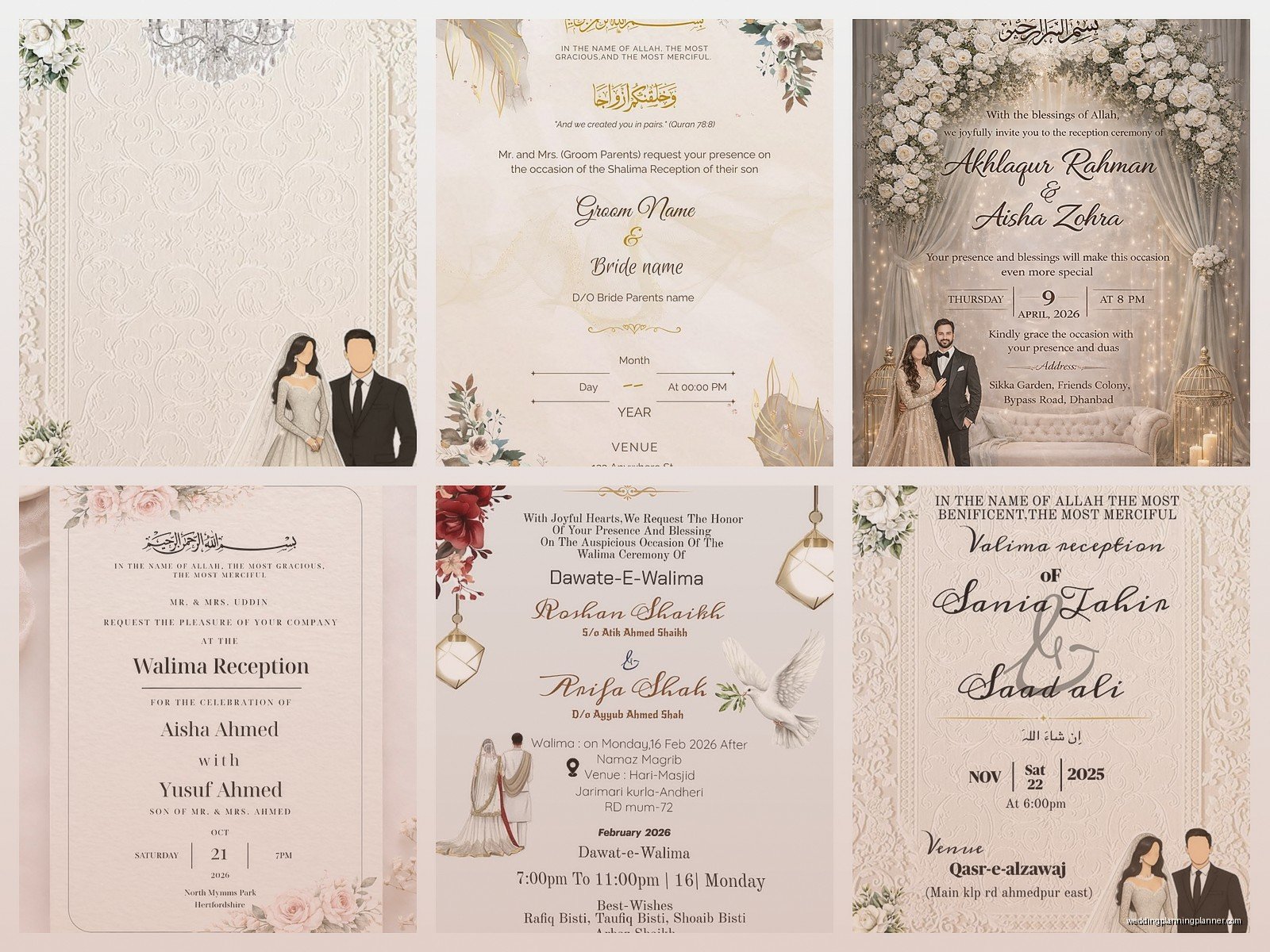
Understanding Walima Invitations vs Regular Wedding Cards
Okay so Walima invitations are different from your Nikah cards and honestly this confused one of my clients so badly back in spring 2023 that she ordered 200 of the wrong style and we had to rush-order replacements. The Walima is the reception hosted by the groom’s family, right? So the invitation tone is usually a bit more celebratory and less formal than the Nikah ceremony cards. You’re basically inviting people to come celebrate and feast, which means the design can be more relaxed and joyful rather than super traditional and serious.
The wording matters too because you gotta make it clear this is the reception/Walima specifically. I’ve seen so many couples just write “wedding reception” which like, technically works, but if you’re going traditional you want that Walima terminology in there. The host line should mention the groom’s family since they’re traditionally the hosts, though modern couples sometimes do joint hosting and that’s totally fine too.
Design Elements That Actually Work
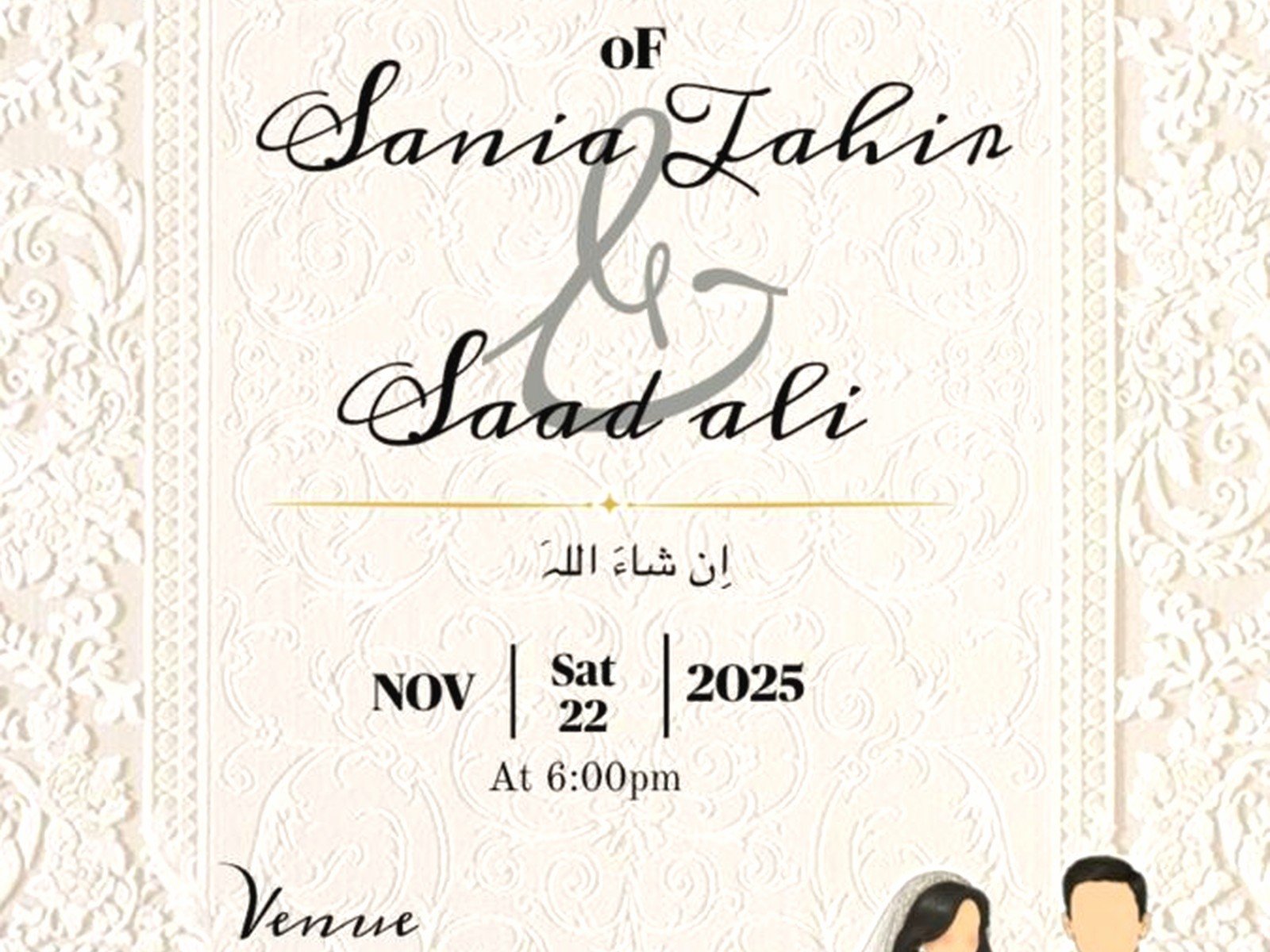
I’m gonna be real with you – the Instagram-worthy designs you see online? Half of them don’t translate well to actual printed cards. Learned this the hard way when a client showed me this gorgeous card with super light gold foiling on ivory paper and when it arrived it was basically invisible unless you held it at a weird angle in direct sunlight.
For Walima cards specifically, you want:
- Rich colors that photograph well – jewel tones are your friend here
- Clear, readable fonts (I know everyone loves those swirly calligraphy fonts but your grandmother needs to actually read the thing)
- Cultural motifs that feel authentic – paisley, mandala patterns, geometric Islamic art
- Good contrast between text and background
The trend right now is these laser-cut covers with intricate patterns, and they’re stunning but also like… they catch on everything when you’re stuffing envelopes. My cat knocked over a stack of them once and they all linked together like some kind of paper chain disaster. Just something to keep in mind if you’re doing the assembly yourself.
Color Schemes That Don’t Look Tacky
Emerald green with gold is classic and never looks cheap. Deep burgundy or wine colors with rose gold accents are gorgeous. Navy blue with silver is sophisticated. What you wanna avoid is like, those super bright combinations that look like a circus – hot pink with lime green unless that’s genuinely your vibe, then go for it I guess.
One thing that really annoys me is when couples pick colors that have zero connection to their actual wedding colors or theme. Your Walima invitation is part of your wedding story, so if your reception decor is all blush and champagne, maybe don’t send out royal purple invitations? Just makes everything feel disconnected.
Information You Actually Need to Include
This is where people mess up constantly. You need the obvious stuff but also the non-obvious stuff:
- Full names of the couple (and honestly, include parents’ names if you’re going traditional)
- Date and day of the week spelled out completely
- Time – and be specific about whether it’s the start time or when you want people to arrive
- Full venue address including the actual hall name if it’s in a hotel
- Dress code if you have one
- RSVP details with an actual deadline
- Contact information for questions
What trips people up is the timing notation. In South Asian weddings, there’s sometimes this vague “evening onwards” thing and I get it, there’s flexibility in the culture, but you’re gonna have confused aunties calling at 3am asking what time they should show up. Pick an actual time. You can say “Reception to follow at 7:00 PM” or whatever works for your schedule.
The RSVP Situation
Okay so traditional Walima invitations didn’t really do RSVPs the same way Western weddings do, but if you’re planning catering and need headcounts, you gotta include this. I usually tell couples to do a combination approach – include RSVP details on the card but also follow up personally with a text or call because let’s be honest, half your guests won’t respond anyway.
You can include a separate RSVP card with a pre-addressed stamped envelope, or just put your wedding website or phone number. The website option is cheaper and easier to track, but older relatives might not be comfortable with that, so… know your audience.
Where to Actually Order These Things
You’ve got basically three routes here and they all have pros and cons that I’ll break down.
Online Print Services
Places like Minted, Shutterfly, Zazzle – they’re convenient and relatively affordable. You can customize templates which saves design time. The quality is decent for the price point. Shipping is usually pretty fast.
BUT (and this is a big but), the designs tend to be kinda generic and you’ll see the same templates at other weddings. Also the customization is limited to what their system allows. I had a client who wanted to add an Urdu verse and the template literally wouldn’t accept the script properly, it kept flipping the text direction.
Specialized South Asian Wedding Card Companies
There are companies that specifically do South Asian wedding stationery – 123WeddingCards, Shaadi Bazaar, Indian Wedding Card – and these folks GET IT. They understand the cultural elements, they have designs that actually look authentic, they can handle multiple language scripts without issues.
The quality is generally better than generic online printers. You get more ornate options, better paper stocks, actual foiling that looks good. The customer service usually understands what you’re asking for when you say you want a Walima card versus a Nikah card.
Downside? More expensive, obviously. And sometimes the shipping times are longer, especially if they’re printing internationally. Order early, like 3-4 months before your Walima if you’re going this route.
Local Printers or Custom Designers
This is the route I usually recommend if budget allows because you get exactly what you want. Find a local print shop that does wedding invitations, or hire a graphic designer to create something custom that you then take to a printer.
Summer 2021 I worked with this amazing couple who hired a calligrapher to hand-letter their design which we then digitized and printed, and it was absolutely stunning, like each card was a work of art. Yeah it cost more but these are the invitations people keep.
The benefit is complete control over every element. The risk is that it takes more time and coordination, and if you’re not experienced with print terminology you might end up with… well, with cards that don’t look like you expected. Always get a printed proof before ordering the full batch.
Quantity and Timing Strategy
Here’s my formula: take your guest count and divide by 2.5 – that’s roughly how many invitations you need because you’re sending one per household, not per person. Then add 15-20 extra for last-minute additions, keepsakes, and mistakes (there will be mistakes).
So if you’re inviting 200 people, order about 95-100 invitations.
Timeline-wise, you wanna order at least 8 weeks before you need to mail them. That gives you time for design revisions, printing, shipping, and assembly. Mail them 6-8 weeks before the Walima, or 4 weeks minimum if you’re cutting it close.
One thing people don’t think about is assembly time – if your invitations have multiple inserts, belly bands, wax seals, or whatever Pinterest told you to add, you’re looking at like 2-3 minutes per invitation. Multiply that by 100 and you’ve got yourself a whole weekend project.
Paper Quality and Printing Techniques
Not all cardstock is created equal and this is where you can really tell the difference between a $2 invitation and a $8 invitation. Standard cardstock is fine, it works, it’s affordable. But if you want something that feels substantial and expensive, you’re looking at:
- Cotton paper (has texture, feels luxurious)
- Linen finish (subtle texture, photographs beautifully)
- Pearl or shimmer cardstock (catches light, very elegant)
- Thick 120lb+ weight (doesn’t feel flimsy)
For printing techniques, digital printing is cheapest and totally acceptable for most designs. Offset printing is better for large quantities and solid colors. Thermography gives you raised text that feels fancy. Letterpress is gorgeous but expensive and has limitations on colors. Foil stamping (gold, silver, rose gold) adds that luxury touch but increases cost significantly.
I sorta think foiling is worth it for at least one element, like the couple’s names or a border design, because it just elevates the whole look.
What Actually Matters vs What’s Just Marketing
Printers will try to upsell you on everything. Rounded corners? Barely noticeable and doesn’t change anything about the invitation’s function. Envelope liners? Pretty but nobody really cares once they open it. Wax seals? They look amazing in photos but add significant time and cost, plus they make envelopes thicker which can affect postage.
What actually matters: paper quality, print clarity, color accuracy, and whether the information is readable. That’s it. Everything else is nice-to-have.
Wording Templates That Work
Traditional Walima invitation wording goes something like:
Mr. and Mrs. [Groom’s Parents Names]request the honor of your presence
at the Walima reception
celebrating the marriage of their son[Groom’s Name]to[Bride’s Name]daughter of Mr. and Mrs. [Bride’s Parents Names]
But honestly you can adapt this however feels right. Modern couples often do “Together with their families” or list both sets of parents as equal hosts. Some include a short verse from the Quran or a romantic quote. Some go fully bilingual with Urdu or Arabic alongside English.
Just make sure whoever is proofreading knows both languages if you’re doing bilingual because I’ve seen some truly unfortunate translation errors that nobody caught until after printing.
Dealing With Vendors and What to Ask
When you’re talking to invitation companies or printers, here are the questions that’ll tell you if they know what they’re doing:
- What’s included in the quoted price? (design, printing, envelopes, shipping?)
- How many revision rounds do I get?
- What’s the turnaround time from approval to delivery?
- Do you provide a printed proof or just digital?
- What’s your policy on reprints if there’s an error?
- Can you accommodate custom sizes or unique paper stocks?
- Do you handle assembly or is that on us?
Get everything in writing. I mean everything. I had a situation where a printer verbally promised a rush order and then claimed they never said that when the cards showed up late. Email confirmations are your friend.
The Envelope Addressing Nightmare
Nobody warns you about this part but addressing 100+ envelopes is actually terrible. Your options are: hand-write them (time-consuming, potential for cramping and errors), print labels (easy but looks kinda cheap), print directly on envelopes (looks professional but you need the right printer), or hire a calligrapher (beautiful but $$$).
I usually suggest printing directly on envelopes using a nice font – it’s the sweet spot between looking good and being practical. Most home printers can handle envelopes if you feed them one at a time, or your print shop can do it for an additional fee.
Also postage – those oversized or heavy invitations need extra postage. Take a fully assembled invitation to the post office and have them weigh it before you buy stamps. Nothing worse than having invitations returned for insufficient postage, trust me on this one.
Digital Invitations Are Also A Thing Now
Look, I’m a stationery person obviously, but I gotta acknowledge that digital Walima invitations are becoming more common and they’re not automatically tacky anymore. Paperless Post, Greenvelope, even custom-designed PDFs or videos that you send via WhatsApp – they work for certain situations.
Benefits: instant delivery, no printing costs, easy to track RSVPs, can include links to your wedding website or registry, environmentally friendly if that matters to you.
Drawbacks: feels less formal, older relatives might not engage with it, you can’t keep a physical memento, and honestly some people just won’t check their email or messages.
My take is that digital works well as a supplement to physical invitations – like send the fancy printed ones to close family and older relatives, do digital for everyone else. Or do digital save-the-dates and physical Walima invitations. Mix and match based on your guest list and budget.