Planning Guides, Style Guide
Wedding Ceremony Seating Plan: Complete Guide
May
Okay so seating plans are basically the thing that keeps me up at night
The ceremony seating plan is honestly one of those things couples either completely overthink or don’t think about at all until like two days before the wedding when suddenly everyone’s panicking. I had this bride in spring 2023 who called me at 9pm on a Thursday absolutely losing it because her aunt just told her that her parents were divorced and couldn’t sit together and she had already printed the programs with “parents of the bride” listed together and I was like… deep breath, we can fix this.
So here’s the thing about ceremony seating – it’s not as complicated as reception seating (thank god) but you still gotta have a plan. Most people think “oh it’s just the ceremony, people will figure it out” and nah, that’s how you end up with your groom’s elderly grandmother standing in the back because all the seats filled up.
Reserved Seating vs Open Seating
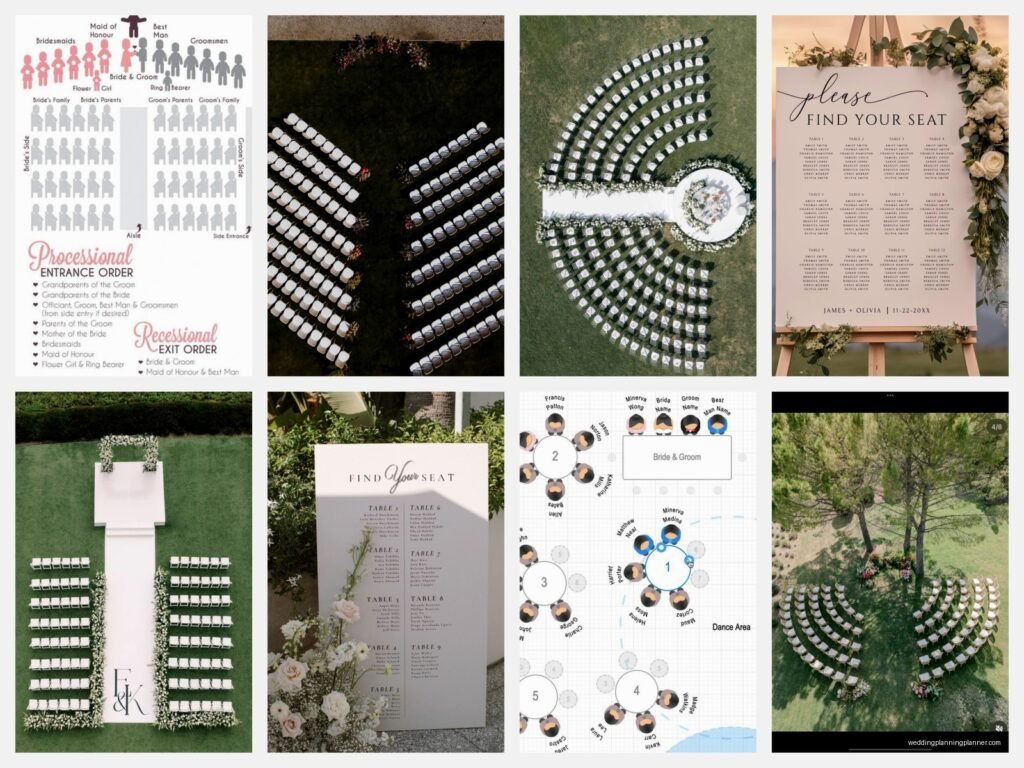
First decision you need to make is whether you’re doing reserved seats or open seating. Reserved seating means specific rows are held for specific people – usually family and VIPs. Open seating means everyone just sits wherever except maybe the first few rows.
I’m gonna be honest, I usually recommend doing at least some reserved seating because family drama is real and you don’t want your mom’s college roommate accidentally sitting in the front row while your grandmother is in row 8. That actually happened at a wedding I planned in 2019 and the mother of the bride was NOT happy.
For reserved seating, you typically reserve:
- First row on each side for parents (and sometimes stepparents)
- Second row for grandparents and siblings
- Third row for other close family like aunts, uncles, godparents
- Sometimes fourth row for special guests or wedding party parents
Everything behind that can be open seating. You‘ll need ushers to direct people and maybe some signage that says “Reserved” on those rows.
The Traditional Layout (and why it’s kinda outdated)
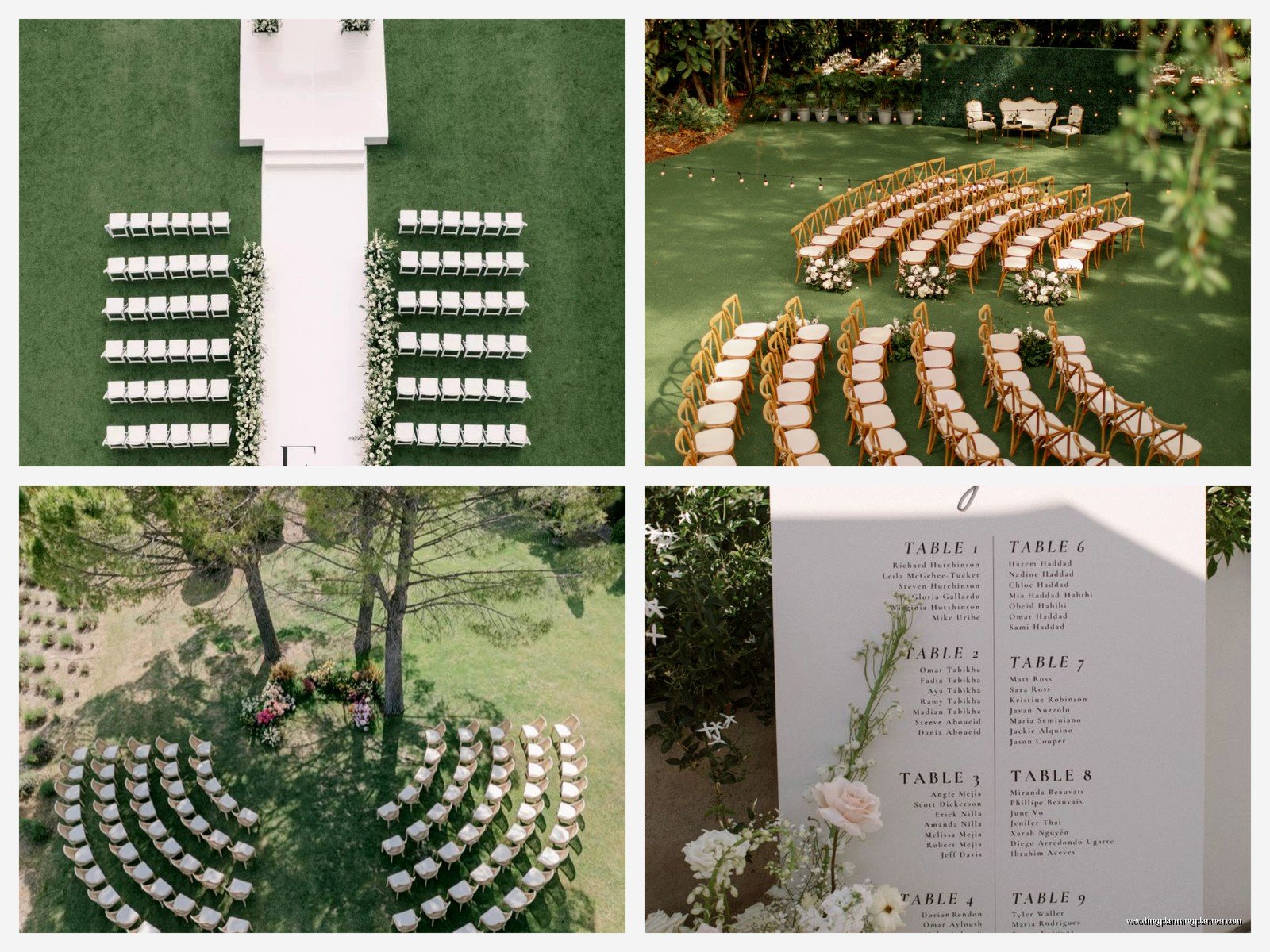
Traditional wedding seating has the bride’s family and friends on the left side (when you’re facing the altar) and groom’s side on the right. This comes from some old tradition about the bride standing on the left so the groom could draw his sword with his right hand to defend her or something which like… okay medieval times, sure.
But here’s what annoys me about this – SO many couples have uneven sides. Maybe the bride has a huge family and the groom has like 10 people total. Or one person is from out of state and most guests are local friends of the other person. Following strict sides means one side is packed and the other looks empty in photos and that’s just awkward.
So I usually tell couples to do “choose a seat not a side” which is way more relaxed. You can put a sign at the entrance that says that, or have your officiant announce it at the beginning. People still kinda default to sides anyway because habits are hard to break but at least it gives permission for things to balance out naturally.
Working With Different Family Situations
This is where it gets messy and real. Divorced parents, stepparents, estranged family members, deceased parents – all of this affects your seating plan and you need to address it early.
For divorced parents who are civil with each other, you can seat them in the same row with their current spouses. Mom and stepdad on the aisle, dad and stepmom on the other end of the same row. Or mom in front row, dad in second row. Whatever makes everyone comfortable.
For divorced parents who hate each other (been there, seen that), you definitely separate them. One parent gets front row, the other gets second row, or you can put them on opposite sides if you’re doing the traditional layout. The key is talking to your couple about this ahead of time because they know the family dynamics.
If a parent has passed away, some couples reserve a seat with a photo or flower. I find this really touching but make sure you tell your ushers about it so they don’t try to seat someone there. Also my cat knocked over a memorial photo at a wedding once during setup and I almost had a heart attack but we got it back in place before anyone noticed.
Stepparents and Second Spouses
Stepparents should absolutely get good seats if they’ve been involved in raising the couple. Don’t stick them in row 5 just because they’re not biological parents – that’s rude and everyone will notice. If the couple is close to their stepparent, seat them in the front row with the biological parent or in the second row.
Sometimes you’ll have situations where there are multiple sets of stepparents and it gets complicated. I had a wedding where the bride had her mom, stepdad, dad, stepmom, and then her dad’s ex-wife who had also helped raise her and like… we needed a spreadsheet. We ended up doing two rows of reserved seating just for parents and parent figures.
VIP Seating and Special Guests
Besides family, you might have other people who need reserved seats:
- Officiant’s family (if they’re someone close to you)
- Readers or ceremony participants who aren’t in the wedding party
- Elderly guests or those with mobility issues who need aisle seats
- Special mentors, godparents, or parent figures
For elderly guests or anyone with accessibility needs, mark specific seats on the aisle in the front section. Tell your ushers about this specifically. These guests should be seated first, before general seating starts.
The Usher System
You need ushers for any wedding over like 50 people, and they need actual instructions not just “help people find seats.” I usually give ushers a printed sheet with:
- Which rows are reserved and for whom
- Where to seat elderly guests or those with mobility issues
- Any family members who should NOT be seated together (yes really)
- What time to start seating guests (usually 45 minutes to 30 minutes before ceremony)
- What time to seat the mothers (usually right before the ceremony starts)
The traditional thing is ushers offer their arm to women and walk them down the aisle, but honestly most people just walk alongside now or lead the way. Whatever feels natural. Just make sure ushers know they should actually escort people not just wave vaguely toward the seats.
Seating Timing
Guests should be seated starting about 45 minutes before the ceremony. The mothers are traditionally seated last, right before the ceremony begins – groom’s mother first, then bride’s mother. This signals that the ceremony is about to start. Then the officiant and groom enter, then the processional begins.
If you’re having grandparents or other special family escorted in, they usually go before the mothers but after regular guests are seated.
Special Ceremony Setups
Not all ceremonies have traditional rows of chairs. You might have:
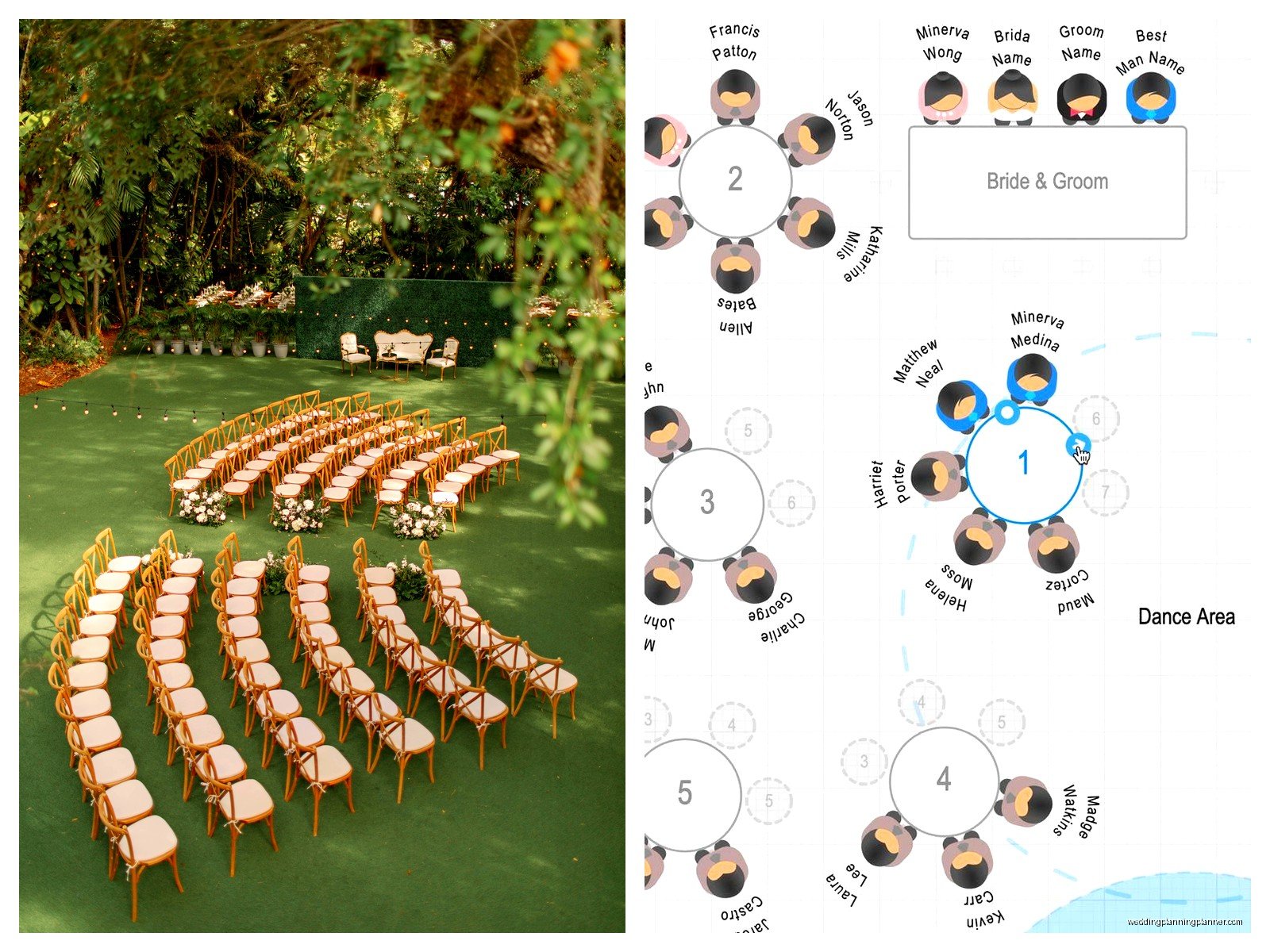
Circle or semicircle seating: Everyone sits around the couple in a circle or U-shape. This is gorgeous and inclusive but makes the reserved seating thing harder. Usually you just reserve the front arc for family and let everyone else fill in.
Theater-in-the-round: Couple in the center, guests all around. I’ve done this once and it was beautiful but the photographer had trouble getting clear shots without guests in the background of everything, so just keep that in mind.
Long banquet-style: Everyone sits at long tables instead of rows. More common for intimate weddings. You can do place cards for this if you want assigned seating or just reserve one table for family.
Standing room or informal: Some couples skip seating entirely for very short ceremonies. Just make sure you have a few chairs available for elderly guests or anyone who needs them.
Programs and Signage
If you’re doing programs, you can include a note about seating like “Please choose a seat on either side” or “The first three rows are reserved for family.” This helps manage expectations as guests arrive.
I also recommend signage at the entrance or on reserved rows. You can use:
- “Reserved for Family” signs on the appropriate rows
- “Choose a seat not a side, we’re all family once the knot is tied” signs at the entrance (cheesy but effective)
- Specific name cards on seats if you’re doing fully assigned ceremony seating (rare but sometimes necessary)
One thing that drives me crazy is when couples spend $$$ on beautiful ceremony programs and then no one reads them because they’re too busy looking at their phones or chatting, but that’s a whole other rant.
Outdoor Ceremony Considerations
Outdoor ceremonies need extra planning for seating. Things to think about:
Sun position: Where will the sun be during your ceremony time? You don’t want guests staring directly into the sun for 30 minutes. Position seating so the sun is behind guests or to the side. I learned this the hard way at a summer 2021 wedding where half the guests were literally shielding their eyes during the vows and it looked ridiculous in photos.
Ground surface: Are you on grass, sand, gravel? Chair legs sink into soft ground. You might need heel protectors for chairs or special stands. For beach weddings, some couples skip chairs entirely and provide blankets or cushions.
Weather backup: Have a plan for rain or extreme heat. Where will you move the ceremony? Will the seating plan stay the same or change?
Accessibility: Is the ceremony site accessible for wheelchairs and walkers? Is there a smooth path from parking to seating? Sometimes the prettiest location is up a hill or across uneven ground and you need to think about your guests who can’t navigate that easily.
How Many Seats Do You Actually Need
This seems obvious but I’ve seen couples get it wrong. Count your guest list, not your invitation count. If you invited 150 people and 120 RSVPed yes, you need 120 seats minimum. I usually recommend adding 5-10% extra because someone always brings an unexpected plus-one or a kid who wasn’t originally counted.
Also consider that some guests will arrive late (they will, trust me) and might need to stand in the back rather than walking down the aisle mid-ceremony. Having a few extra chairs in the back row gives them somewhere to slip in quietly.
Ceremony Seating vs Reception Seating
These are completely separate things and you plan them differently. Ceremony seating is looser and less assigned (usually). Reception seating is where you need the detailed floor plan and escort cards and all that. Don’t confuse the two or try to use the same system for both – they serve different purposes and have different requirements.
Some couples do assigned ceremony seating with place cards on every seat and honestly? That’s a lot of work for something that lasts 30 minutes and I don’t usually recommend it unless you have a really specific reason, like… I don’t know, you’re filming for TV or something and need people in exact spots.
Cultural and Religious Considerations
Different cultures and religions have different seating traditions. Jewish weddings often have more flexible seating with both families mixed together. Hindu weddings might have the couple seated on a stage with guests in front. Catholic ceremonies might have specific requirements about where people sit during different parts of the mass.
If you’re incorporating cultural traditions, research them or talk to your officiant about proper seating etiquette. You don’t want to accidentally disrespect an important custom because you didn’t know.
Last Minute Changes
Someone will get sick, someone will have a flight delay, someone will bring an unexpected guest. Your seating plan needs to be flexible enough to handle this. This is why I don’t love super rigid assigned ceremony seating – you can’t adapt quickly.
Give your ushers permission to make judgment calls. If row 2 is reserved for grandparents but one set couldn’t make it, those seats can go to other close family rather than sitting empty. If someone important shows up late, ushers should know they can squeeze in an extra chair rather than turning them away.
The goal is for everyone to feel welcome and comfortable, not to execute a perfect seating chart. Some flexibility actually makes the whole thing run smoother because you’re not constantly trying to enforce rules that don’t matter once everyone’s actually there