Planning Guides, Style Guide
Wedding Card Design Ideas: Design & Ordering Guide
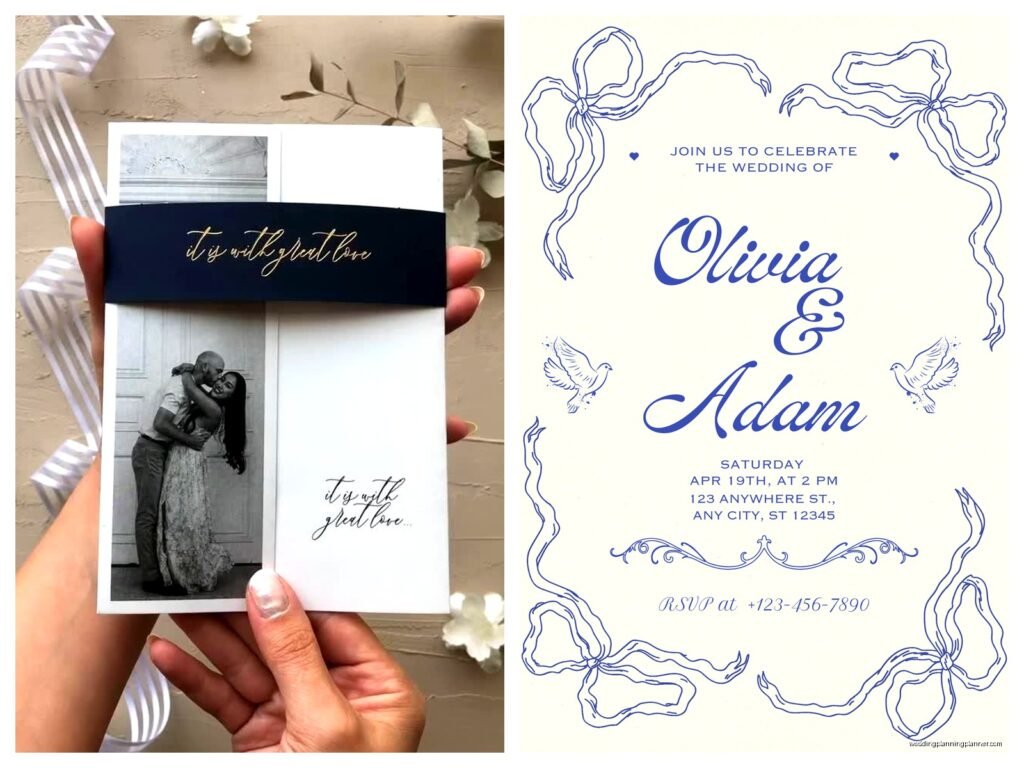
Apr
Okay so wedding card design is where people lose their minds
The first thing you gotta know is that your save-the-dates and invitations aren’t the same thing and I still have clients in 2024 who think they can just send one card and call it done. Nah. Save-the-dates go out 6-8 months before (destination weddings need 8-12 months), and actual invitations go out 6-8 weeks before. I had this couple in spring 2023 who wanted to send their invitations 4 months early because they were “excited” and I literally had to explain that guests will forget, lose the card, or assume the date changed if you send too early.
The actual design part that everyone overthinks
You’re gonna see a million styles and honestly it’s overwhelming. Here’s what I tell people: pick your vibe first, then find designs that match. Don’t do it backwards. Your main style categories are:
- Classic/Traditional – think engraved lettering, cream cardstock, formal fonts like Copperplate or Garamond
- Modern Minimalist – clean lines, lots of white space, sans-serif fonts, maybe one accent color
- Rustic/Bohemian – kraft paper, watercolor elements, casual script fonts
- Romantic/Whimsical – florals everywhere, soft colors, flowing calligraphy
- Bold/Contemporary – geometric shapes, bright colors, unexpected layouts
I’m not gonna lie, the rustic thing is kinda overdone at this point but if that’s your wedding aesthetic then go for it. What annoys me is when couples pick a design style that has NOTHING to do with their actual wedding – like you’re having a black-tie ballroom wedding but your invites look like they’re for a barn dance. Make it make sense.
Colors and how to not mess them up
Your invitation colors should complement your wedding colors but they don’t have to match exactly. Actually, using slightly different shades can look more sophisticated. If your wedding colors are navy and blush, maybe your invites are navy with cream instead of straight-up pink.
Metallics are tricky. Gold foiling looks expensive because it IS expensive – we’re talking $3-8 per card extra depending on how much foiling you want. Rose gold was huge for like five years and now it’s… I mean people still use it but it feels very 2019, you know? Silver and copper are having a moment though.
One thing about printing methods – digital printing is cheapest and totally fine for most people. Letterpress is gorgeous but costs way more and you need thick cardstock. Thermography (that raised printing) is a middle ground that gives you texture without letterpress prices. Engraving is the most traditional and formal but also the most expensive, so unless you’re doing a super formal wedding or your parents are paying and insist on it…
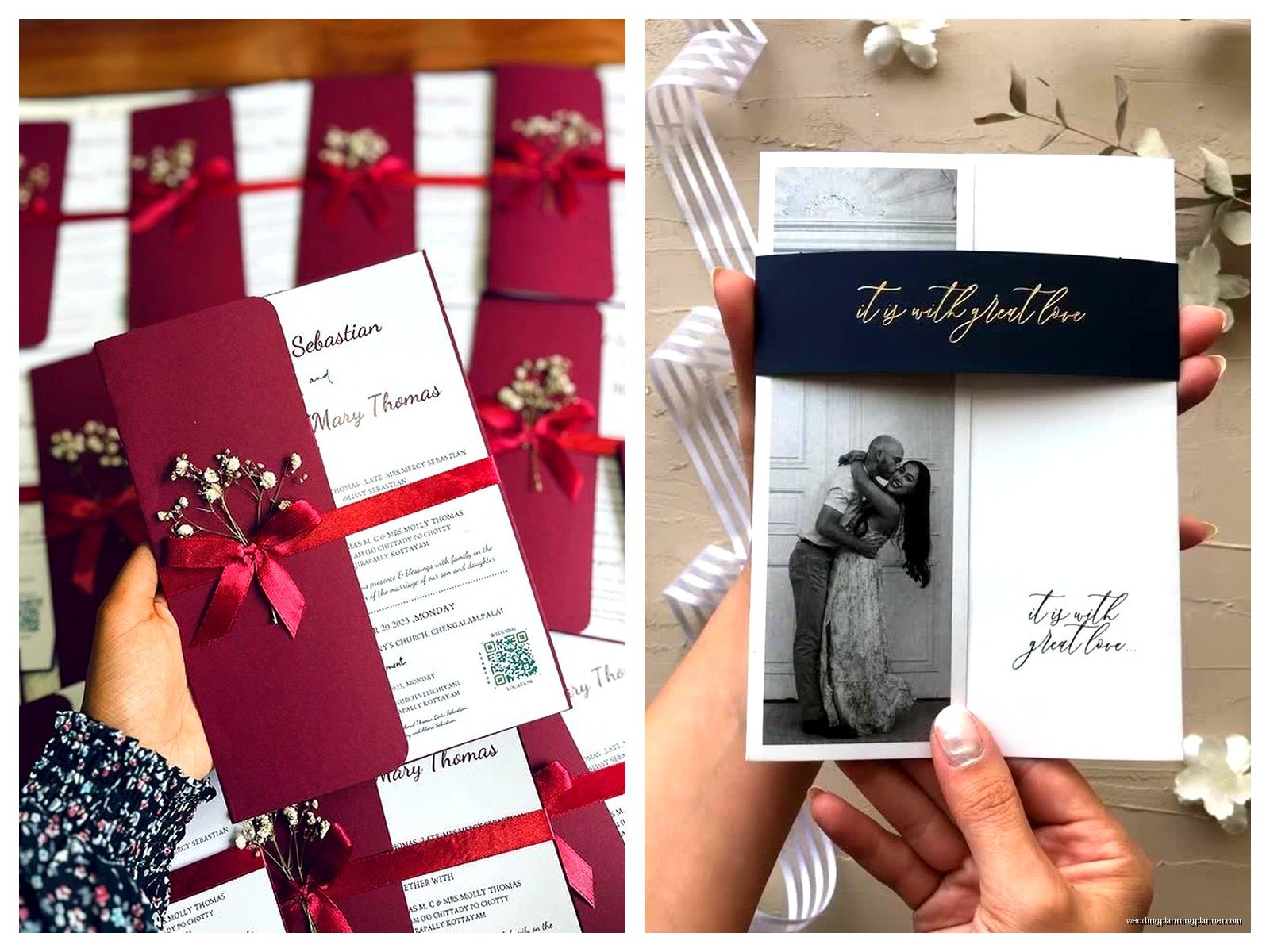
What actually needs to be on the card
Okay this is where people get confused and honestly I’ve seen some wild stuff. Your main invitation needs:
- Host line (who’s hosting – traditionally parents but lots of couples host themselves now or do “together with their families”)
- Request line (“request the honor of your presence” for religious, “request the pleasure of your company” for non-religious)
- Couple’s names (bride’s name traditionally first but do whatever feels right)
- Date and time (spell it out for formal, numerals are fine for casual)
- Location name and city/state
- Reception info if it’s at the same location OR a separate reception card
The wording is where traditional etiquette gets really specific and some people care about this a LOT. Like, if the ceremony is in a church you say “honor” but if it’s not you say “pleasure” – I had a mother of the bride correct me on this once and she was so smug about it that I still think about it when I’m trying to fall asleep at night.
All the extra cards nobody tells you about
So your invitation suite isn’t just one card. You’re probably gonna need:
- Main invitation (obviously)
- RSVP card with envelope
- Reception card if ceremony and reception are different locations
- Details card for hotel blocks, website, dress code, etc.
- Direction card if your venue is hard to find (though honestly most people just use their phones now)
- Inner and outer envelopes if you’re doing formal (outer has address, inner has names)
My cat just knocked over my coffee while I’m writing this so if this section seems scattered that’s why.
The RSVP situation is its own thing. You can do traditional mail-back cards with pre-stamped envelopes (yes you pay for the stamps), or you can do online RSVPs through your wedding website. I’m gonna be honest – online is easier for tracking and costs less, but some older guests struggle with it. A compromise is including both options or at least putting your wedding website on the details card so people can find info.
Fonts are secretly the most important decision
You want two fonts MAX, maybe three if one is just for a small detail. One script/decorative font and one simple readable font. If you use all script fonts nobody can read anything and I’ve seen invitations where I literally couldn’t tell what the venue name was because the calligraphy was so elaborate.
Popular combos right now are like a modern serif (like Libre Baskerville) with a simple sans-serif (like Montserrat), or an elegant script (like Allura) with a classic serif (like Playfair Display). Stay away from fonts that came standard on your computer in 2003 – no Papyrus, no Comic Sans obviously, no Curlz MT.
Size matters too. Your main text should be at least 10-11 point, names can be bigger (14-18 point), and any small details shouldn’t go below 8 point or people will need reading glasses.
The ordering process that everyone underestimates
Timeline is crucial and this is where I see couples mess up constantly. Here’s the real timeline:
Start looking at designs 6-8 months before you need to mail them. Order samples from 3-5 companies (samples usually cost $5-15 each but it’s worth it to see paper quality in person). Make your decision and place your order at least 3-4 months before your mail date. This gives you time for proofing, printing, addressing, and assembly.
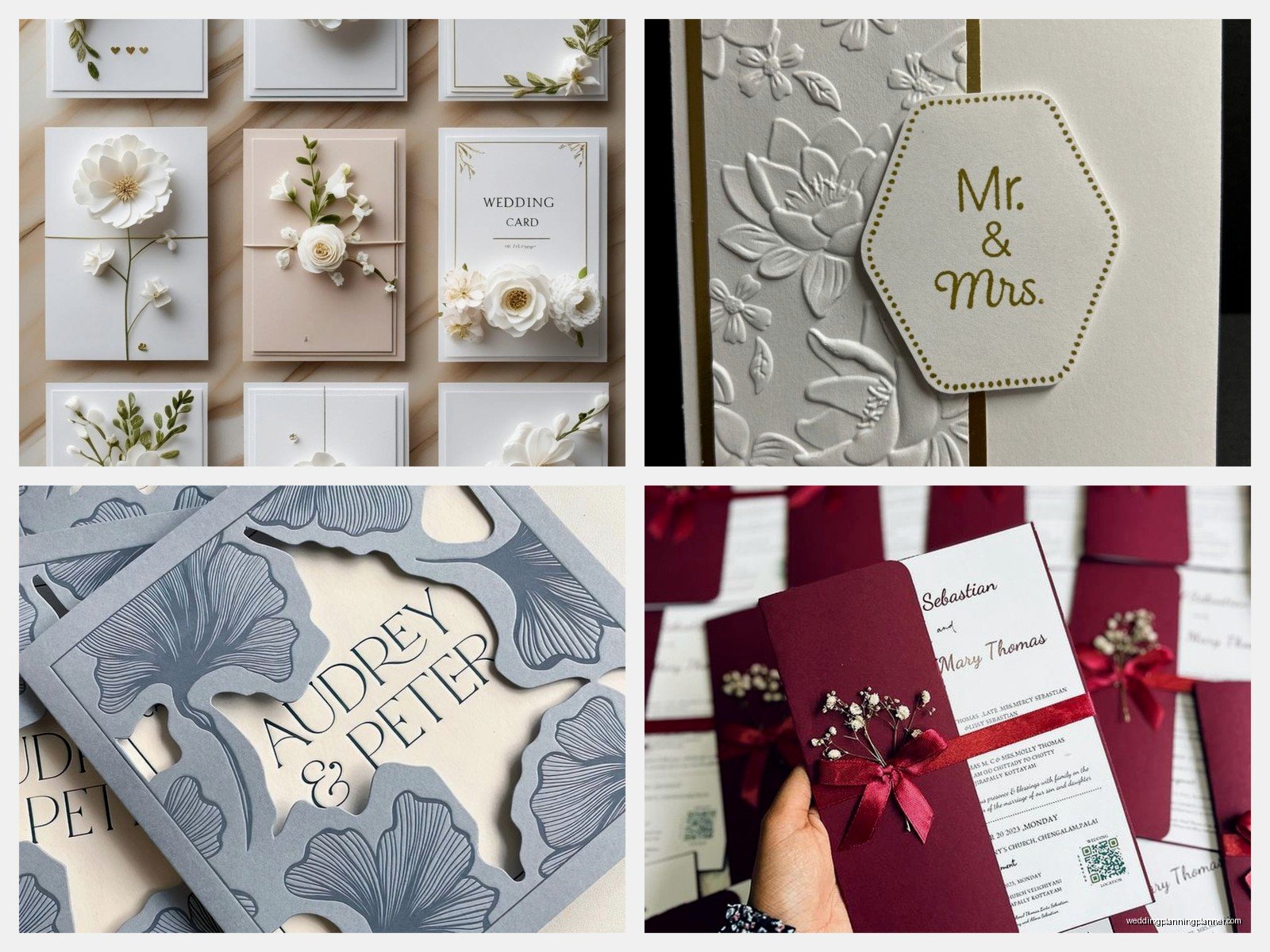
Speaking of proofing – READ EVERY WORD MULTIPLE TIMES. Have someone else read it. Then read it again. I had a couple in summer 2021 who approved their invitations with the wrong year on them because they were so focused on the design they didn’t actually read the date carefully. The printer remade them but it delayed everything by three weeks and caused so much stress.
Where to actually order from
You’ve got lots of options and they’re all very different:
Online retailers (Minted, Paperless Post, Zola, The Knot): These are convenient and have tons of templates. Prices are mid-range. Minted does free recipient addressing which is amazing. Quality is good but not like luxury-level. Customization is somewhat limited to their templates.
Etsy shops: You can find unique designs and work directly with designers. Prices vary wildly. You usually get a digital file and print yourself or through their recommended printer. This is good if you want something custom but you need to vet the seller carefully – check reviews and response times.
Local stationers: More expensive but you get personalized service and can see/touch samples. They’ll handle everything including addressing and assembly. Worth it if you have a bigger budget or want something really custom.
DIY printing: You can design in Canva or hire a designer for the file, then print at a local print shop or online printer like CatPrint or PrintingCenterUSA. Cheapest option but most work for you.
Paper quality because apparently this matters
Cardstock weight is measured in pounds (lb) or GSM. You want at least 80 lb cover / 216 GSM for invitations or they feel flimsy. 100-120 lb is better. The RSVP cards can be lighter, like 65-80 lb.
Paper finishes: matte is classic and easy to write on, glossy is more vibrant but can look cheap if not done well, linen has texture, and cotton/handmade papers are luxury but cost more. Honestly for most weddings, a nice matte or linen finish in 100 lb cardstock is perfectly fine.
Addressing and assembly which takes forever
You need addresses finalized before you order if you’re doing printed addressing. Outer envelopes get formal addressing – no abbreviations except Mr., Mrs., Ms., Dr. Inner envelopes (if you’re using them) are more casual with just first names or “and Guest.”
Addressing options are: hand calligraphy (expensive, $3-8 per envelope), printed directly on envelopes (looks nice, costs extra but not as much as calligraphy), or printing on labels (cheaper but less formal), or doing it yourself (free but time-consuming and your handwriting better be decent).
Assembly order from bottom to top: invitation card, then tissue paper if you’re fancy, then reception card, then other insert cards, then RSVP card and envelope tucked under the flap or on top. The whole thing goes into the inner envelope (if using) with text facing the back flap, then into the outer envelope.
Sealing: you can use the envelope glue (lick it or use a damp sponge, don’t make them too wet or they’ll wrinkle), glue dots, or wax seals. Wax seals look amazing but add weight which means extra postage, and they sometimes break in the mail sorters so…
Postage is gonna cost more than you think
Take a fully assembled invitation to the post office and have them weigh it BEFORE you buy stamps. Square envelopes cost extra. Anything over 1 oz costs extra. Wax seals or thick embellishments might make it non-machinable which costs even more.
Forever stamps are fine but you can also get vintage or pretty stamps from USPS that match your colors. Just make sure you have enough postage value – a standard invitation usually needs $0.73-$1.00 in stamps, sometimes more.
Mail them all at once from the post office, don’t just drop them in a mailbox, so you can make sure they’re processed correctly. And mail yourself one first as a test to see how it arrives.
Budget real talk
Invitations typically cost $300-800 for 100 guests (so like 75-80 invitations since couples/families get one). That’s for a basic to mid-range suite. Luxury custom suites can be $1500-3000+. Save-the-dates are usually $100-300 for 100.
Ways to save: skip inner envelopes, do online RSVPs, limit the number of insert cards, choose digital printing over letterpress, order from online retailers instead of custom stationers, or DIY the whole thing if you’re crafty and have time. You can also do digital save-the-dates to save money there since those are less formal anyway.
Common mistakes I see all the time
Not ordering enough – get at least 10-15 extra for mistakes, last-minute additions, and keepsakes. Ordering exactly 75 for 75 invitations is gonna bite you.
Forgetting to include important info – your wedding website URL, hotel block info, and dress code should be somewhere in the suite. Don’t assume people will just know.
Making the RSVP deadline too close to the wedding – give yourself at least 3 weeks after the RSVP date to get final counts to vendors. So if your wedding is June 15, make RSVPs due by May 15.
Not considering readability – light gray text on white paper looks pretty in mockups but is hard to read in real life, especially for older guests.
Ordering without seeing samples – colors on screen look different than printed, and paper quality varies a lot between companies.
The whole process kinda feels overwhelming when you’re in it but once you break it down it’s really just: pick a style, choose a vendor, customize the design, proofread like crazy, order with extras, address them, assemble them, mail them on time. That’s it. Don’t let the wedding industry convince you that you need $15 per invitation suites with six insert cards and hand-painted envelopes unless that’s actually your thing and you have the budget for it