Planning Guides, Style Guide
Best Friend Wedding Card: Personal Message Designs
Jun
Getting Real About Writing Your Best Friend’s Wedding Card
Okay so your best friend is getting married and you’re staring at this blank card thinking “what the hell do I write that doesn’t sound like every generic wedding card ever” and I get it because I’ve been there SO many times. Like, you want it to be meaningful but not cheesy, personal but not too inside-jokey that other people reading it at the reception are confused, and heartfelt without making everyone cry into their champagne.
The biggest mistake people make is trying to write something that sounds “wedding-appropriate” instead of just talking to their actual friend. I had this moment back in spring 2023 when my college roommate was getting married and I must’ve started that card four different times because I kept writing stuff that sounded like I copied it from Pinterest. Finally I just wrote it like I was texting her and it turned out perfect.
The Structure That Actually Works
You don’t need some fancy formula but having a loose structure helps when you’re stuck. I usually tell people to think of it in three chunks—but not like, official sections or anything, just mental guideposts.
Start with something specific about your friendship. Not “we’ve been friends forever” because duh, they know that. Pick an actual memory. Like “remember when we drove to that terrible beach town and your car broke down and we ended up spending the night in that weird motel with the vending machine that only sold expired Combos?” That kind of specific. It immediately makes the card feel like it’s actually FROM you and not from some wedding card writing robot.
Then transition into something about them as a couple or about their partner. This is where people get weird and formal but you don’t have to. If you genuinely like their partner, say what you actually appreciate about them. “I love how Sarah makes you laugh at your own jokes even when they’re terrible” or “watching you two try to cook together is chaotic but you’re both so happy being chaotic together.”
The third part is the future stuff but again, skip the “wishing you a lifetime of happiness” garbage unless that’s genuinely how you talk. You can be hopeful about their future without sounding like a greeting card. More on this in a sec because I have thoughts…
The Personal Touch Elements
So here’s what makes a best friend wedding card different from like, a coworker’s card or your cousin’s card. You have history. Use it. But strategically.
Include an inside reference but make it readable. You know how annoying it is when someone tells a story and it’s ALL inside jokes and you’re just standing there like “cool I guess that’s funny?” Don’t do that in the card. Give just enough context. Instead of “REMEMBER THE THING” write “remember when we thought taking that 6am yoga class would change our lives and we went exactly twice before deciding sleep was better than enlightenment.”
Mention specific qualities about them that you’ve witnessed. I’m gonna be honest, one thing that annoys me is when people write these vague cards about how someone is “kind and beautiful” like okay those are nice words but they’re meaningless. Get specific. “You’re the person who remembered my mom’s surgery date and sent her flowers” or “you’ve never once made me feel stupid for asking the same question seventeen times about how to fold fitted sheets.”
Bring up a moment they might not remember. This is kinda magic actually. Like summer 2021, I was working with this bride who was stressed about everything and her best friend’s card mentioned this tiny moment from their sophomore year when the bride had helped her pick out an outfit for a date. The bride didn’t even remember it but her friend did, and it made her cry (the good kind). Those forgotten moments are gold.
Design Elements That Matter
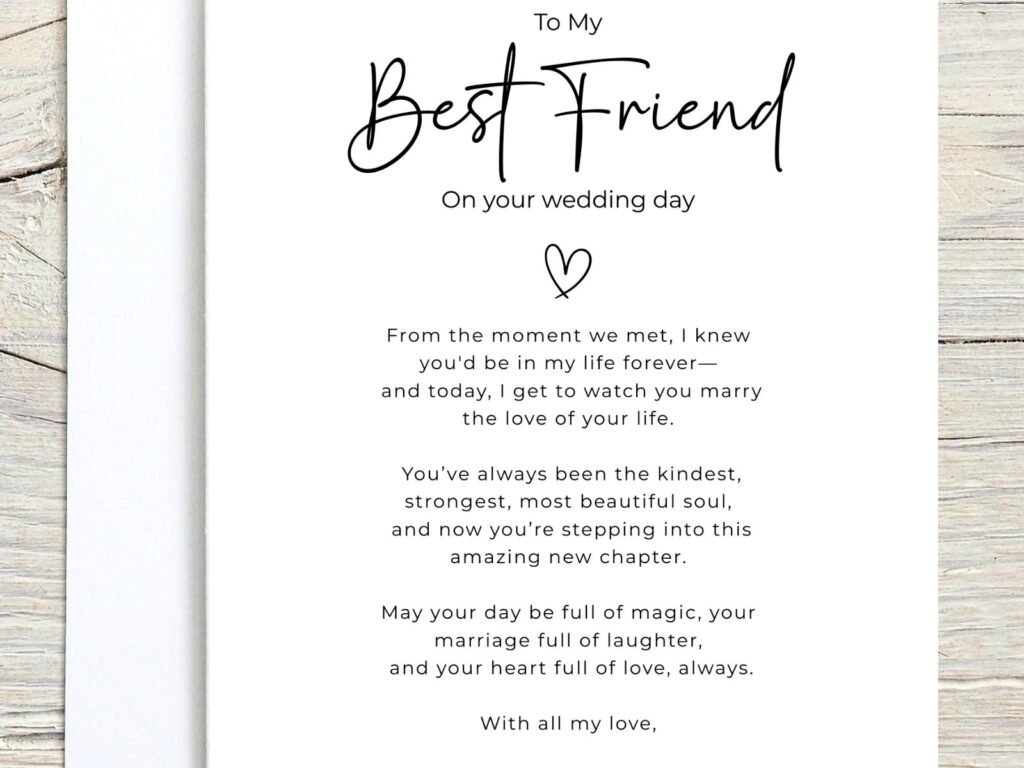
Okay so the actual design of your message matters too, not just what you write. If you’re hand-writing it—which honestly I recommend for your best friend because it feels more personal—think about the layout.
Don’t cram everything into one massive paragraph. Break it up. Use the card space wisely. If it’s one of those big cards with lots of room, you can even do little sections with space between them. Makes it easier to read and less overwhelming visually.
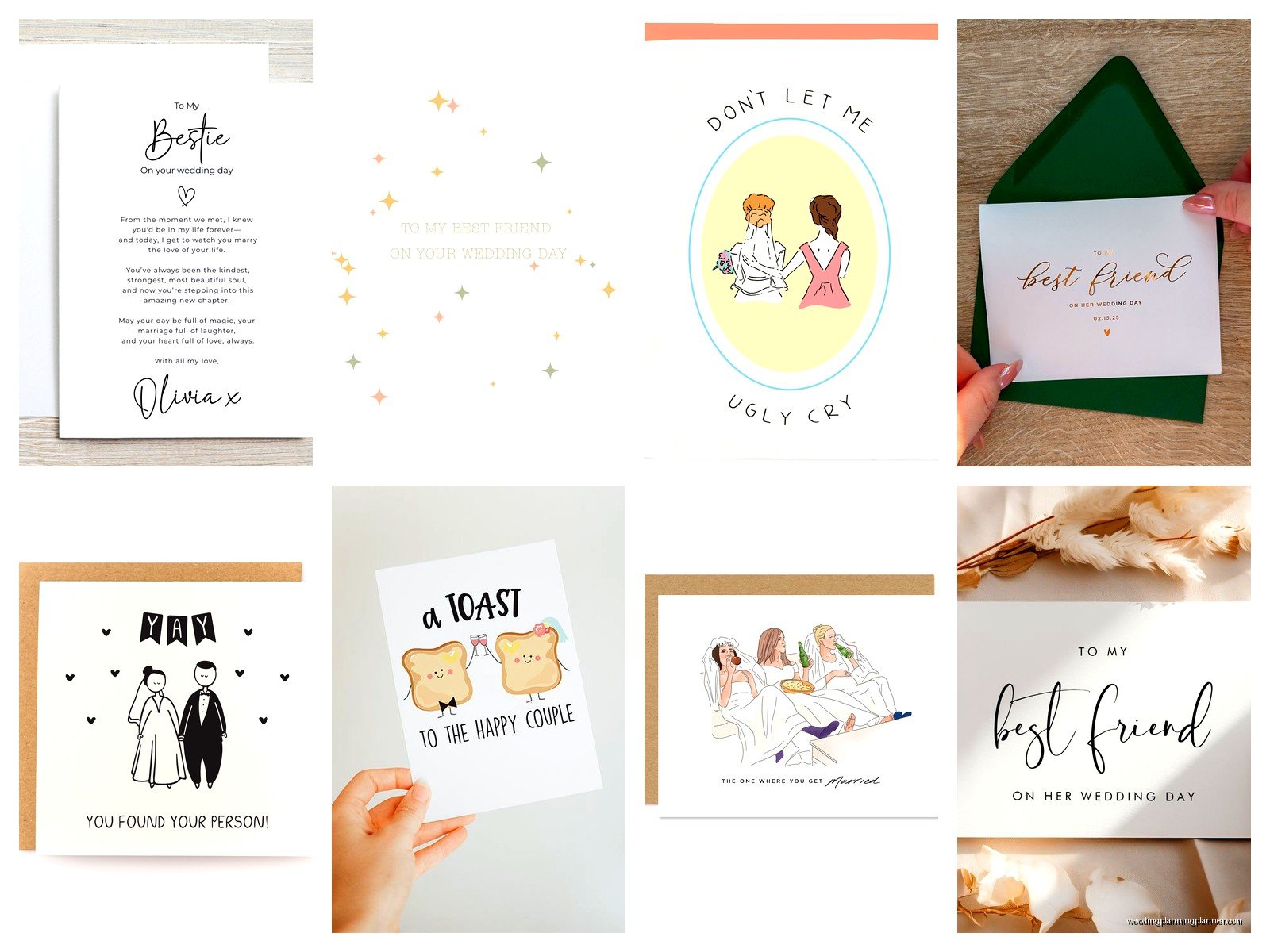
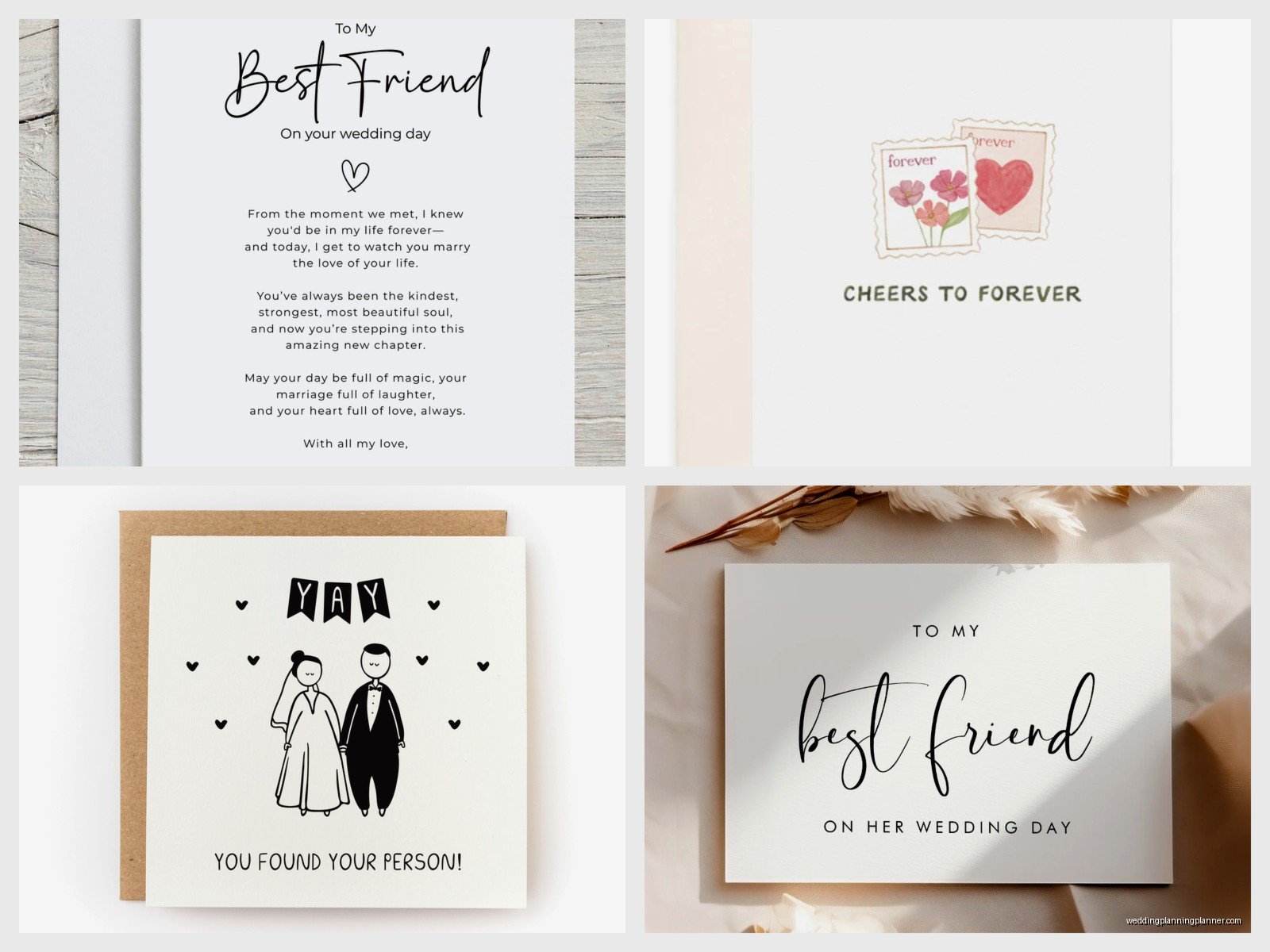
Some people like to include little drawings or doodles if that’s your thing. I can’t draw to save my life—my cat literally knocked over my pen cup while I was writing a card once and the ink splatter looked better than anything I could’ve drawn intentionally—but if you’re artistic, a little sketch of something meaningful can be really sweet.
If you’re doing a printed insert or designing something digitally to put in a card, keep the font readable. I’ve seen people use these super fancy script fonts that are gorgeous but impossible to read. Your heartfelt message doesn’t matter if they need a magnifying glass and a decoder ring.
What To Actually Say (Examples That Don’t Suck)
Alright, let me give you some actual frameworks that work. These aren’t templates to copy word-for-word because that defeats the whole purpose, but they’re starting points.
The Memory Lane Approach: Start with a specific early friendship memory, connect it to who they are now, mention something about their growth or their relationship. “I still think about us in your basement trying to choreograph that dance routine to [specific song] and how you insisted we could totally perform it at the talent show even though we were objectively terrible. You’ve always had this confidence in people and possibilities, and I see that same energy in how you love [partner’s name]. Watching you two plan this life together has been…”
The Real Talk Approach: Be honest about your friendship in a way that’s meaningful. “I’m not gonna lie, when we first met I thought you were kind of intimidating because you seemed to have everything figured out. Turns out you were just as confused as me but better at faking it. We’ve figured out a lot together since then—terrible jobs, worse apartments, that phase where we thought we should both get bangs—and now you’re figuring out marriage. I’m so glad you found someone who gets that you’re both confident and chaotic…”
The Gratitude Spin: Focus on what their friendship has meant to you. “Thank you for being the person who [specific thing]. Thank you for the 2am phone calls and the times you told me I was being ridiculous (I was). Thank you for [another specific]. Seeing you marry someone who also sees how incredible you are feels really right, and I’m just grateful I get to be here for this…”
Things To Avoid (Learned The Hard Way)
Don’t bring up their exes. I mean, you’d think this is obvious but I’ve seen it happen. Even as a joke. Even as a “so glad you didn’t marry THAT guy” thing. Just nah. This card might get saved forever. Don’t put that energy in it.
Skip any joke about marriage being hard or “ball and chain” or “the old ball and chain” or losing freedom. It’s not funny, it’s tired, and it’s kinda depressing at a wedding? Save that energy for like, never.
Don’t make it about you. Yes, you’re writing from your perspective and your friendship, but the focus should be them and their happiness. There’s a balance between “I remember when we” and “I’m so sad things are changing” — stay on the right side of that line.
Avoid any “advice” unless they specifically asked for it or unless it’s very gently worded. Nobody wants a lecture in their wedding card. You can share a hope or an observation but don’t be out here telling them how to have a successful marriage in their wedding card.
The Actual Writing Process
Here’s how I actually write these cards when I need to do it right. First, I sit down with the blank card and just… don’t write in it yet. I grab scrap paper or open a notes app on my phone and brain dump everything I wanna say. All the memories, all the feelings, all the random thoughts. It’s gonna be messy and too long and repetitive and that’s fine.
Then I walk away. Like for a few hours or even overnight if I have time. When I come back, I read through what I dumped and I circle or highlight the parts that feel most true. The parts that made me smile or feel something when I reread them.
Then I craft the actual message using those highlighted pieces. I’m cutting out probably 60% of what I originally wrote. The first draft is always too long and tries too hard. The second version is tighter and more honest.
Write it on scrap paper first before you commit to the actual card. Cannot stress this enough. I’ve ruined more nice cards than I can count by writing in them directly and then messing up or changing my mind halfway through.
Digital vs. Handwritten
Look, there’s something about a handwritten card that just hits different. It takes more time, it’s more personal, they can keep it forever and see your actual handwriting. For your best friend, I really think handwritten is the way to go unless your handwriting is genuinely illegible—and I mean truly unreadable, not just “not perfect.”
If you’re designing something digital to print and insert, you have more flexibility with layout and you can include photos or design elements. This works great if you’re doing like, a whole collage-style message with pictures from throughout your friendship. I’ve seen people do a timeline design where they pair photos with little captions leading up to the wedding day. That’s pretty cool for a best friend situation.
Some people do both—a designed piece with photos and memories, plus a handwritten note. That’s next level but if you have the time and energy, it’s really special.
When You’re Not Sure What Your Relationship With The Partner Is
Okay real talk, sometimes you’re best friends with someone but you don’t know their partner super well yet. Maybe it’s a shorter relationship, maybe you live far away, maybe you just haven’t clicked with them independently. That’s okay and actually pretty common.
You can still write a great card. Focus more on your friend and less on the couple dynamics you’re not sure about yet. You can say something like “I’m still getting to know [partner] but I can already see how happy you are together, and that makes me happy” or “I love seeing this new chapter of your life unfold.” You don’t have to pretend you’re best friends with both of them if you’re not.
Just be genuine about where you actually are in the relationship. It’s better than forcing some fake “you’re both my best friends now!” thing that nobody believes.
Adding Humor Without Being Weird
If you have a funny friendship, the card should reflect that. But wedding humor is tricky because you’re dealing with families and traditions and people have different boundaries about what’s appropriate.
Keep any humor affectionate, not roasting. This isn’t the time for your tightest five minutes of stand-up about all their quirks. Gentle, loving humor about shared experiences works. Self-deprecating humor works. Observations about their cute relationship quirks can work if done right.
Test it with this question: would you be comfortable if their mom read this out loud at the reception? If the answer is no, dial it back. I learned this during a really stressful client situation where the best man’s card was… let’s just say it was not appropriate and the mother of the bride found it before the couple did and there was a whole thing. Don’t be that person.
Final Thoughts On Length
Your card doesn’t need to be a novel. Honestly, 150-300 words is plenty. That’s like, a solid paragraph or two. Quality over quantity. A short, specific, heartfelt message beats a long rambling one every time. I’ve written cards that were literally three sentences and had people tell me they were perfect, and I’ve seen cards that filled the entire page that were just… too much. You’ll know when you’ve said what you needed to say. Trust that feeling and stop writing.